Systems That Shape Education: Funding Inequality and Segregation Impacting Access to Learning
Generated from prompt:
Slide 1 – Title Slide Title: Systems That Shape Education: Access to Learning Subtitle: How school funding and segregation affect students today Your Name Date Slide 2 – Research Question How does school funding inequality impact student access to quality education? Slide 3 – Examples of Systems School segregation – separation by race or socioeconomic status School funding inequality – differences in resources based on local wealth Slide 4 – Evidence 1: School Funding Inequality Low-income schools receive less funding than wealthy districts Fewer resources: textbooks, technology, extracurriculars Who benefits: Wealthy students Who is harmed: Students in low-income areas Long-term consequence: Limited future opportunities (college, careers) Slide 5 – Evidence 2: School Segregation Segregation still exists despite civil rights laws Students often attend schools reflecting neighborhood wealth and race Who benefits: Students in affluent, predominantly white schools Who is harmed: Students in segregated, low-income schools Long-term consequence: Perpetuates poverty and social inequality Slide 6 – Modern Connection Students in underfunded schools face: Larger class sizes Outdated materials Limited advanced courses Affects academic outcomes and future opportunities Slide 7 – Sources Brookings: Unequal Opportunity NPR: School Segregation Learning for Justice
This presentation investigates how school funding inequality and segregation limit student access to quality education. It poses a key research question, provides examples of these systemic issues, presents evidence from sources like Wikipedia and Brookings on resource disparities and ongoing segregation, discusses modern effects such as larger classes and limited opportunities, and lists key references.
Slide 2 - Research Question
- How does school funding inequality impact student access to quality education?
Slide 3 - Examples of Systems
- School segregation – separation by race or socioeconomic status
- School funding inequality – differences in resources based on local wealth
Slide 4 - Evidence 1: School Funding Inequality
- Low-income schools receive less funding than wealthy districts
- Fewer resources: textbooks, technology, extracurriculars
- Who benefits: Wealthy students
- Who is harmed: Students in low-income areas
- Long-term consequence: Limited future opportunities (college, careers)
Source: Wikipedia: Public school funding in the United States; Education in the United States
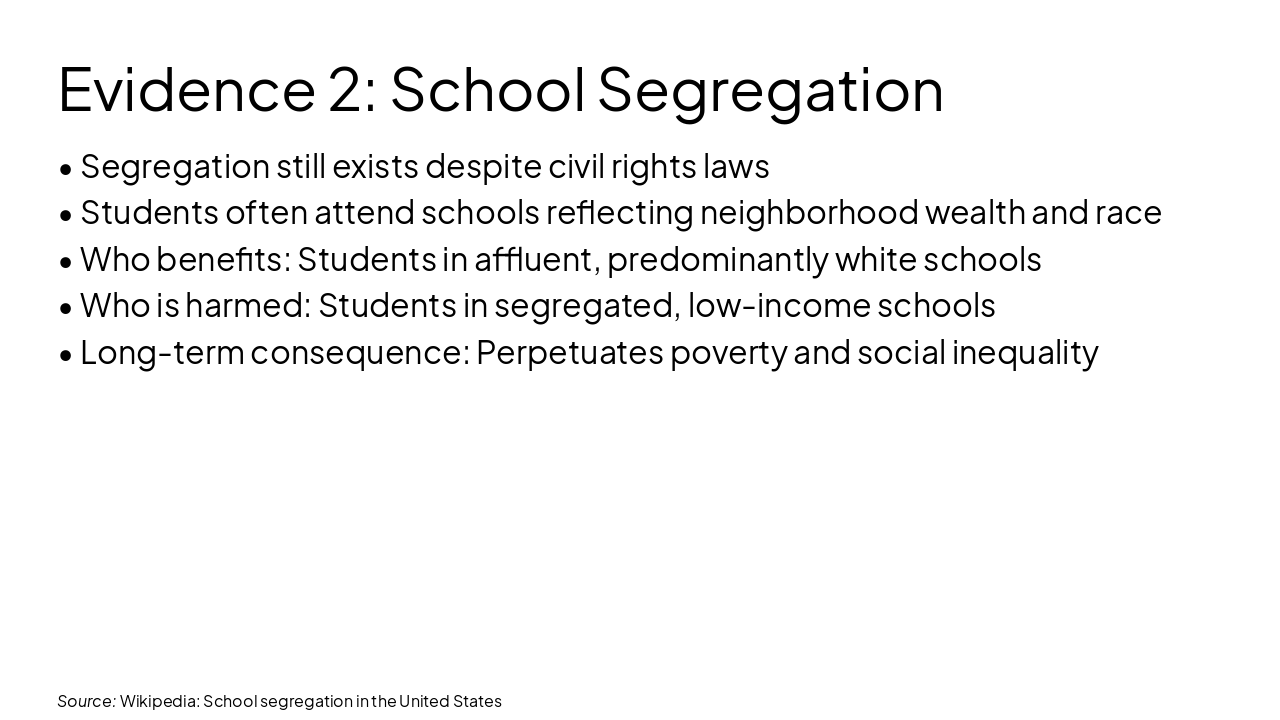
Slide 5 - Evidence 2: School Segregation
- Segregation still exists despite civil rights laws
- Students often attend schools reflecting neighborhood wealth and race
- Who benefits: Students in affluent, predominantly white schools
- Who is harmed: Students in segregated, low-income schools
- Long-term consequence: Perpetuates poverty and social inequality
Source: Wikipedia: School segregation in the United States
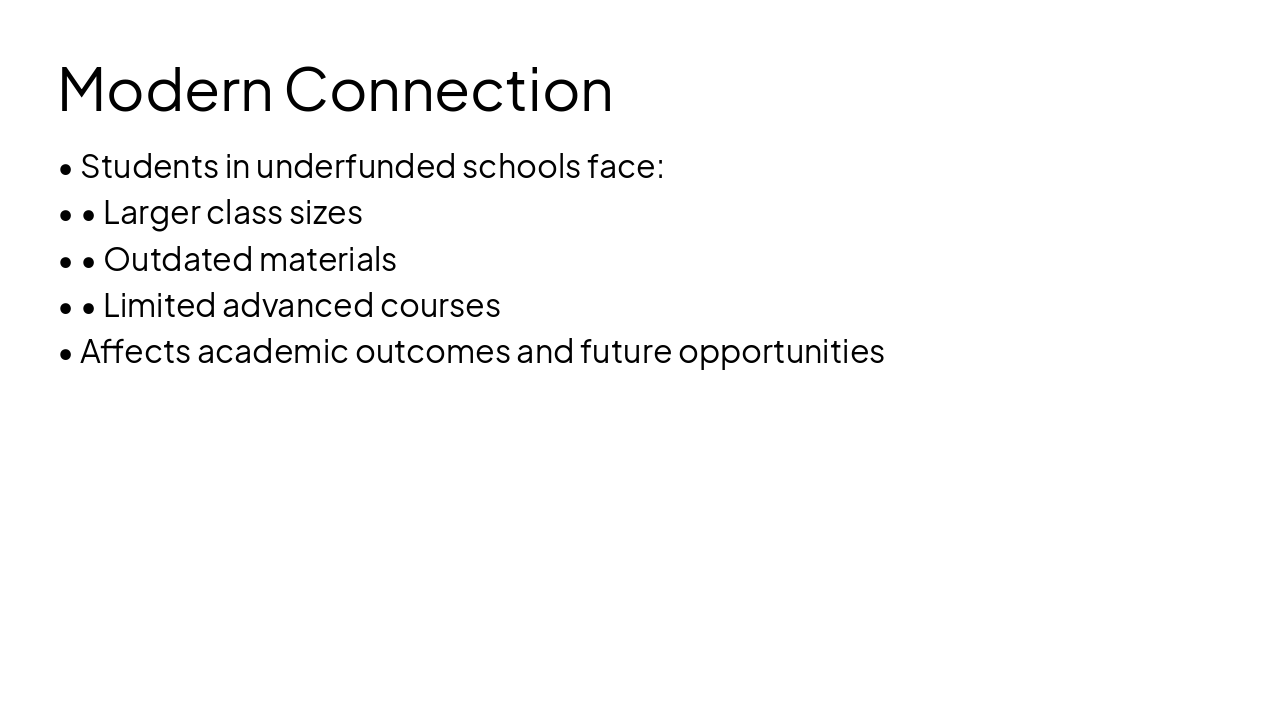
Slide 6 - Modern Connection
- Students in underfunded schools face:
- • Larger class sizes
- • Outdated materials
- • Limited advanced courses
- Affects academic outcomes and future opportunities
Slide 7 - Sources
- Brookings: Unequal Opportunity
- NPR: School Segregation
- Learning for Justice
---
Photo by Ian Harber on Unsplash
Source: Brookings: Unequal Opportunity; NPR: School Segregation; Learning for Justice; Wikipedia: School segregation, Public school funding, Education inequality
Discover More Presentations
Explore thousands of AI-generated presentations for inspiration
Create Your Own Presentation
Generate professional presentations in seconds with Karaf's AI. Customize this presentation or start from scratch.