Basic First Aid & CPR for Maritime Industry

Generated from prompt:

Create a professional workplace training presentation titled 'Basic First Aid & CPR for Maritime Industry'. Include 14-16 slides tailored to ship crews and offshore workers. Use the uploaded company logo (Khalid Faraj Shipping) on the title slide and footer of all slides. Match the presentation color theme to the logo colors (red and blue). Cover: Introduction to Maritime First Aid, Common Maritime Hazards (falls, drowning, burns, machinery injuries), Importance of Immediate Response at Sea, Emergency Action Plan (DRABC adapted for vessels), Communication & Calling for Help (radio protocols), Checking Responsiveness, CPR Overview, Adult CPR Steps (on deck conditions), Child/Infant CPR (if applicable onboard), Use of AED onboard vessels, Drowning Response & Rescue Breathing, Recovery Position (in confined spaces), Treating Severe Bleeding & Wounds, Burns (chemical/thermal), Choking response onboard, Shock management, Hypothermia treatment, Safety precautions for rescuers at sea, and Basic First Aid Kit contents for ships. Include concise bullet points and maritime-themed visuals/icons suggestions for each slide. File path for logo: /mnt/data/KFS _ JJJ.jpg

Comprehensive workplace safety training for ship crew and offshore workers, covering maritime hazards, DRABC emergency protocols, communication at sea, CPR & AED procedures, treatment for wounds, burns, choking, shock, hypothermia, drowning, firstaid

March 25, 202616 slides
Slide 1 of 16

Slide 1 - Title Slide

Basic First Aid & CPR for Maritime Industry

Workplace Safety Training for Ship Crew and Offshore Workers
Slide 1 - Title Slide
Slide 2 of 16

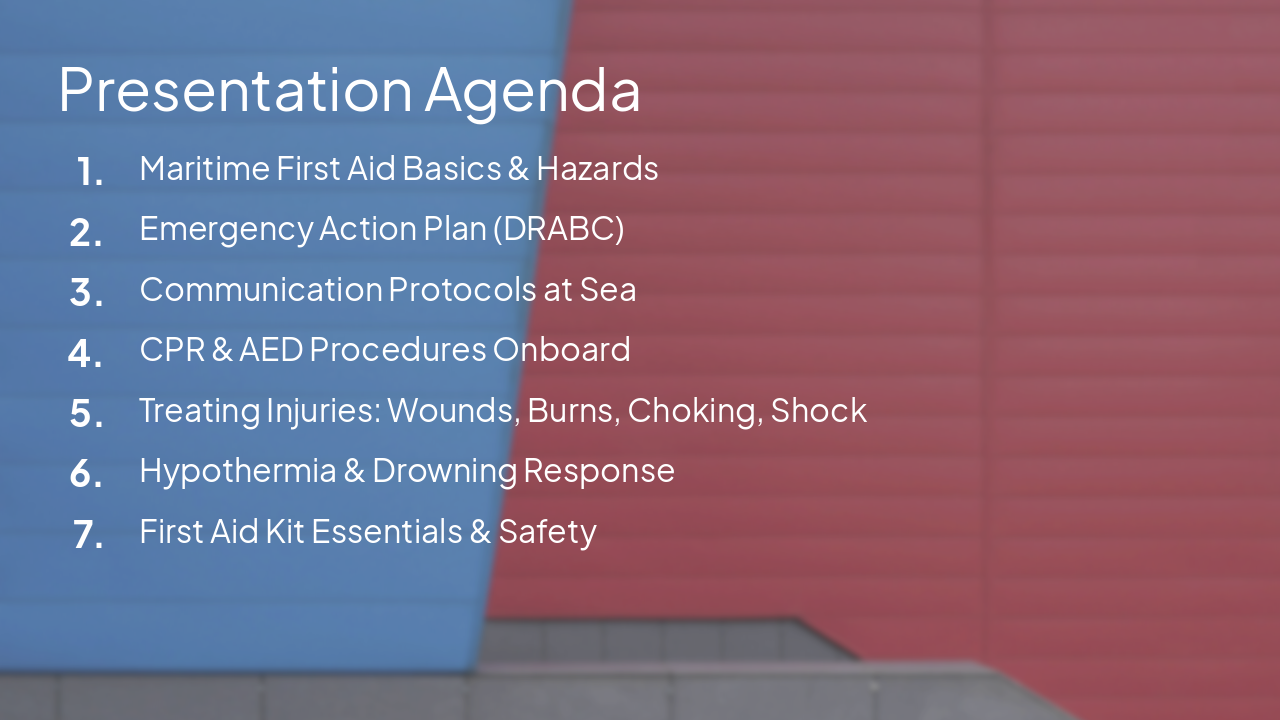
Slide 2 - Presentation Agenda

  • Maritime First Aid Basics & Hazards
  • Emergency Action Plan (DRABC)
  • Communication Protocols at Sea
  • CPR & AED Procedures Onboard
  • Treating Injuries: Wounds, Burns, Choking, Shock
  • Hypothermia & Drowning Response
  • First Aid Kit Essentials & Safety

---

Photo by Simeon Galabov on Unsplash
Slide 2 - Presentation Agenda
Slide 3 of 16

Slide 3 - Section Header

1

Maritime Safety Fundamentals

Hazards and the Importance of Immediate Response
Slide 3 - Section Header
Slide 4 of 16

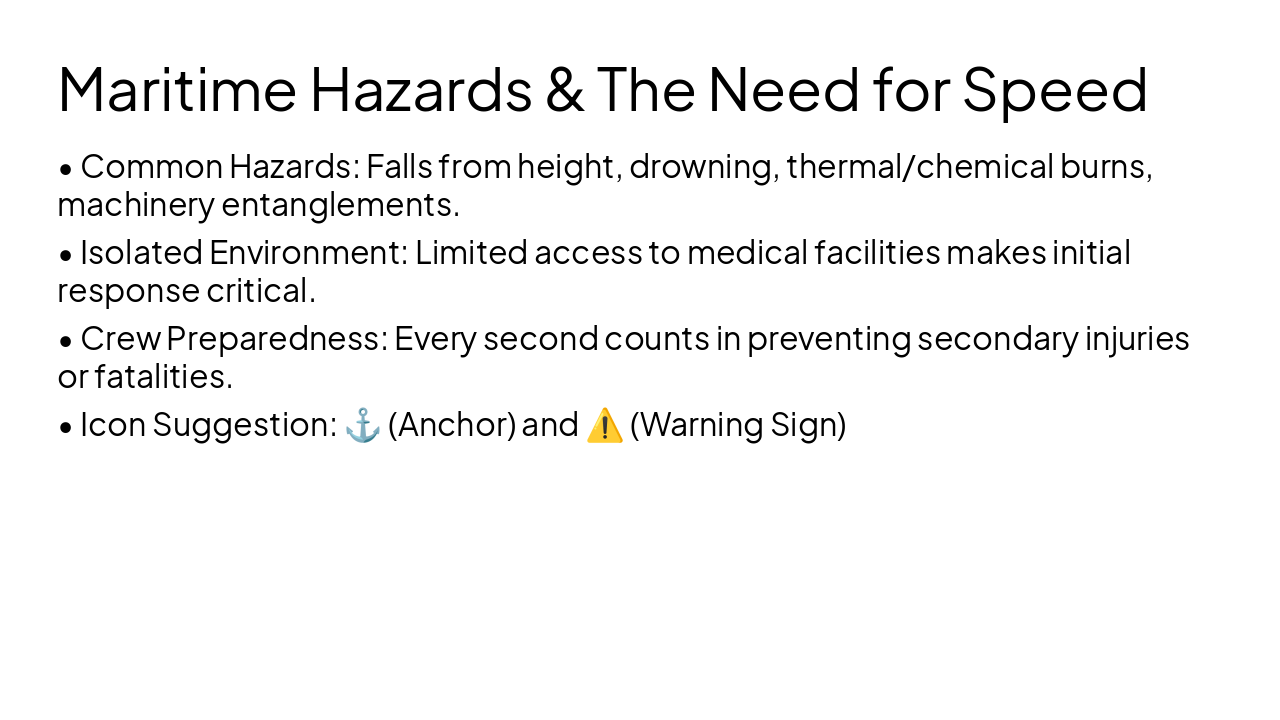
Slide 4 - Maritime Hazards & The Need for Speed

  • Common Hazards: Falls from height, drowning, thermal/chemical burns, machinery entanglements.
  • Isolated Environment: Limited access to medical facilities makes initial response critical.
  • Crew Preparedness: Every second counts in preventing secondary injuries or fatalities.
  • Icon Suggestion: ⚓ (Anchor) and ⚠️ (Warning Sign)
Slide 4 - Maritime Hazards & The Need for Speed
Slide 5 of 16

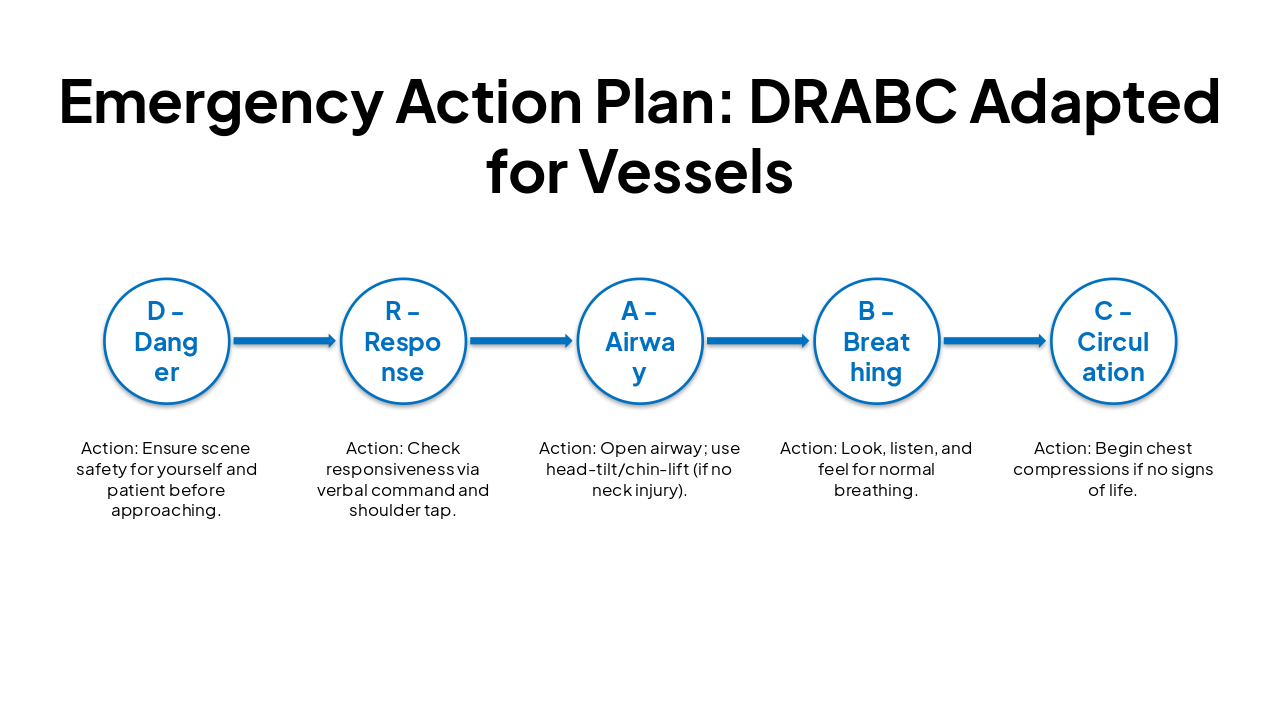
Slide 5 - Emergency Action Plan: DRABC Adapted for Vessels

StepAction
D - DangerEnsure scene safety for yourself and patient before approaching.
R - ResponseCheck responsiveness via verbal command and shoulder tap.
A - AirwayOpen airway; use head-tilt/chin-lift (if no neck injury).
B - BreathingLook, listen, and feel for normal breathing.
C - CirculationBegin chest compressions if no signs of life.
Slide 5 - Emergency Action Plan: DRABC Adapted for Vessels
Slide 6 of 16

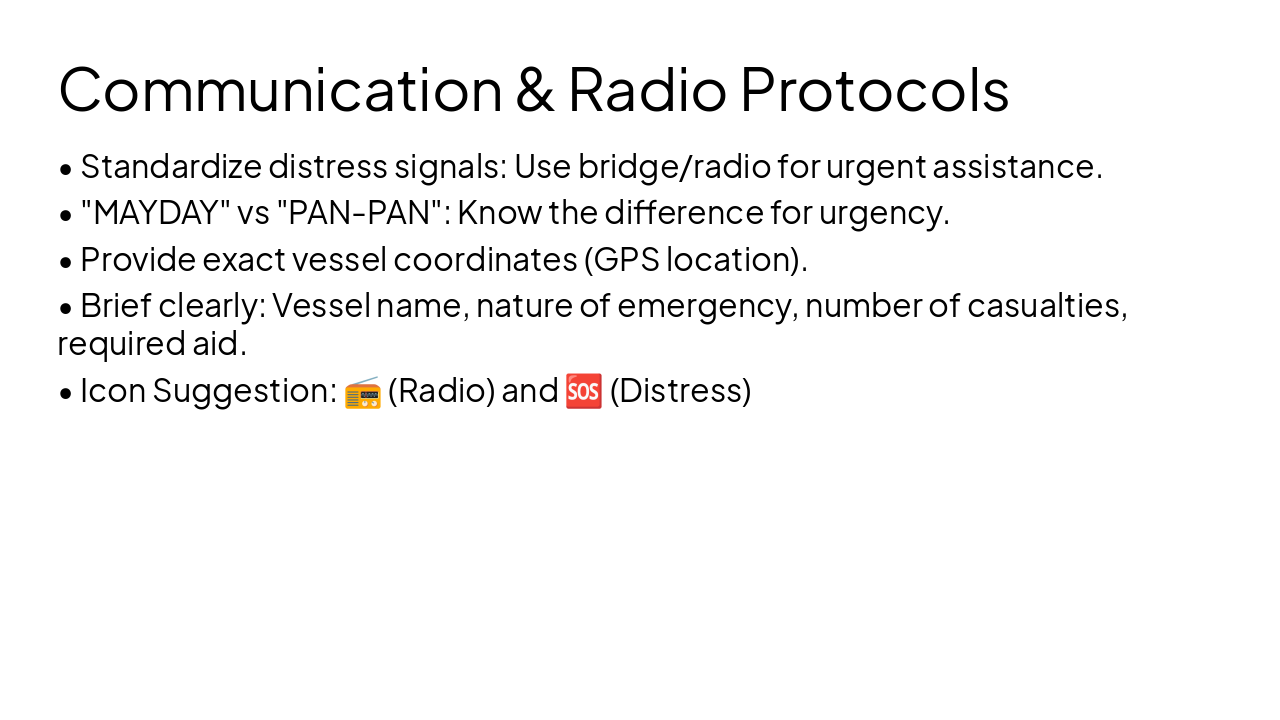
Slide 6 - Communication & Radio Protocols

  • Standardize distress signals: Use bridge/radio for urgent assistance.
  • "MAYDAY" vs "PAN-PAN": Know the difference for urgency.
  • Provide exact vessel coordinates (GPS location).
  • Brief clearly: Vessel name, nature of emergency, number of casualties, required aid.
  • Icon Suggestion: 📻 (Radio) and 🆘 (Distress)
Slide 6 - Communication & Radio Protocols
Slide 7 of 16

Slide 7 - Section Header

2

Advanced Lifesaving Protocols

CPR, AED, and Drowning Response

Slide 7 - Section Header
Slide 8 of 16

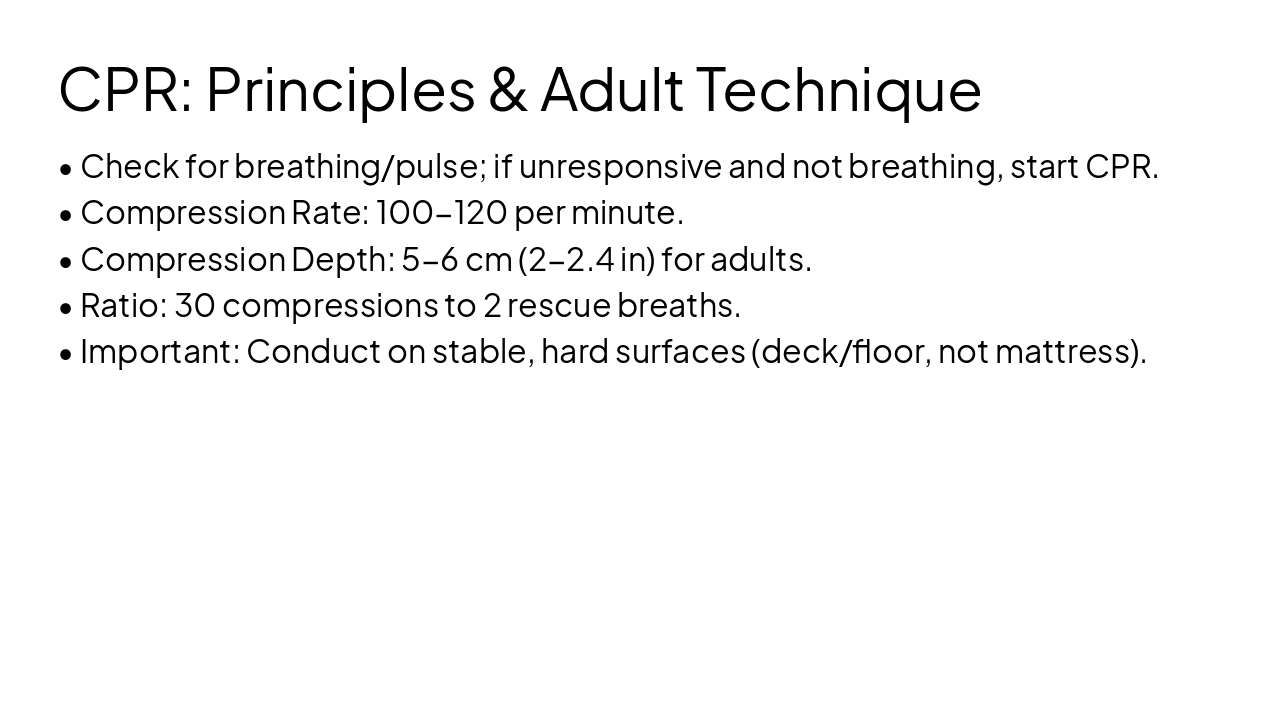
Slide 8 - CPR: Principles & Adult Technique

  • Check for breathing/pulse; if unresponsive and not breathing, start CPR.
  • Compression Rate: 100-120 per minute.
  • Compression Depth: 5-6 cm (2-2.4 in) for adults.
  • Ratio: 30 compressions to 2 rescue breaths.
  • Important: Conduct on stable, hard surfaces (deck/floor, not mattress).
Slide 8 - CPR: Principles & Adult Technique
Slide 9 of 16

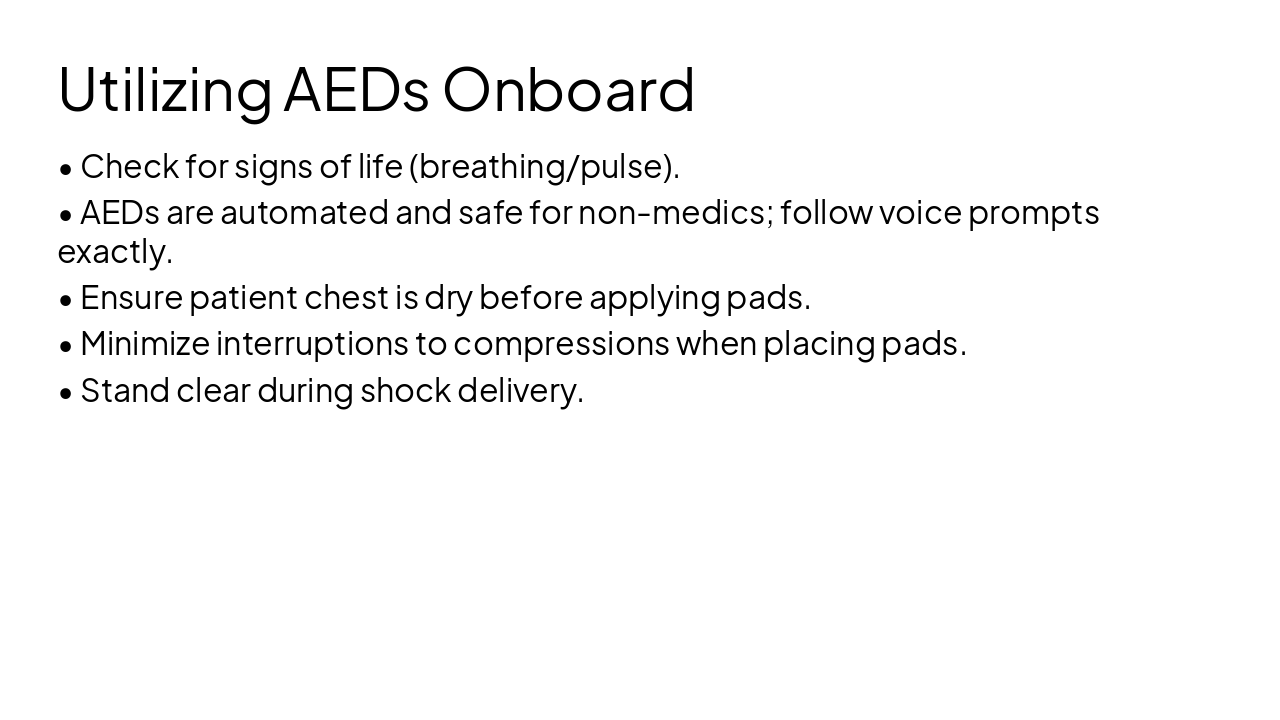
Slide 9 - Utilizing AEDs Onboard

  • Check for signs of life (breathing/pulse).
  • AEDs are automated and safe for non-medics; follow voice prompts exactly.
  • Ensure patient chest is dry before applying pads.
  • Minimize interruptions to compressions when placing pads.
  • Stand clear during shock delivery.
Slide 9 - Utilizing AEDs Onboard
Slide 10 of 16

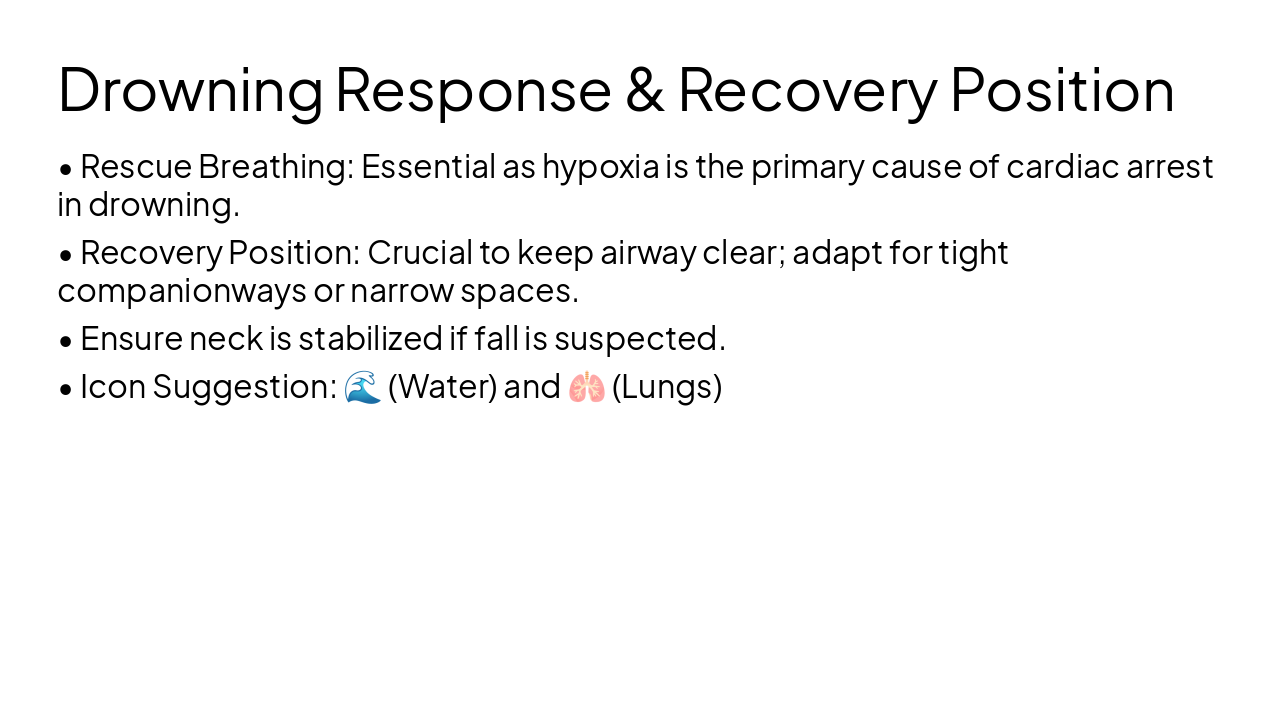
Slide 10 - Drowning Response & Recovery Position

  • Rescue Breathing: Essential as hypoxia is the primary cause of cardiac arrest in drowning.
  • Recovery Position: Crucial to keep airway clear; adapt for tight companionways or narrow spaces.
  • Ensure neck is stabilized if fall is suspected.
  • Icon Suggestion: 🌊 (Water) and 🫁 (Lungs)
Slide 10 - Drowning Response & Recovery Position
Slide 11 of 16

Slide 11 - Section Header

3

Treating Injuries & Survival Skills

Managing Wounds, Burns, Shock, and Hypothermia

Generating slide...

Slide 12 of 16

Slide 12 - Treating Wounds & Burns

Severe Bleeding Apply direct, firm pressure. Use tourniquets for uncontrolled limb bleeding. Keep patient warm to prevent shock.

Burns (Chemical/Thermal) Cool with water for at least 20 minutes. Cover with clean, sterile, non-adherent dressing. Remove chemical contaminants cautiously.
Slide 12 - Treating Wounds & Burns
Slide 13 of 16

Slide 13 - Managing Emergencies: Choking, Shock, Hypothermia

  • Choking: Use 5 back blows followed by 5 abdominal thrusts (Heimlich). If unresponsive, start CPR.
  • Shock Management: Lay patient down, elevate legs (if no fractures), keep warm/covered. No fluids by mouth.
  • Hypothermia: Remove wet clothing, insulate from cold deck, apply external heat (if mild) or warm blankets. Avoid sudden movements.
Slide 13 - Managing Emergencies: Choking, Shock, Hypothermia
Slide 14 of 16

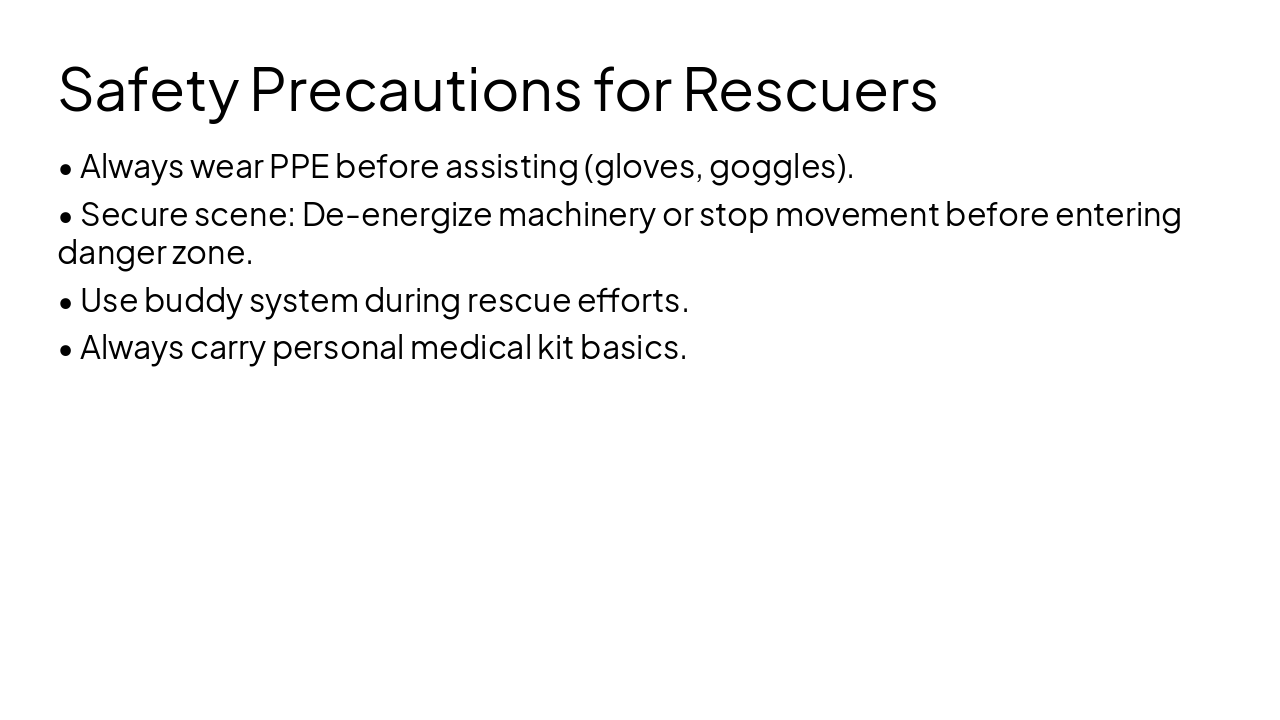
Slide 14 - Safety Precautions for Rescuers

  • Always wear PPE before assisting (gloves, goggles).
  • Secure scene: De-energize machinery or stop movement before entering danger zone.
  • Use buddy system during rescue efforts.
  • Always carry personal medical kit basics.
Slide 14 - Safety Precautions for Rescuers
Slide 15 of 16

Slide 15 - Basic Maritime First Aid Kit Essentials

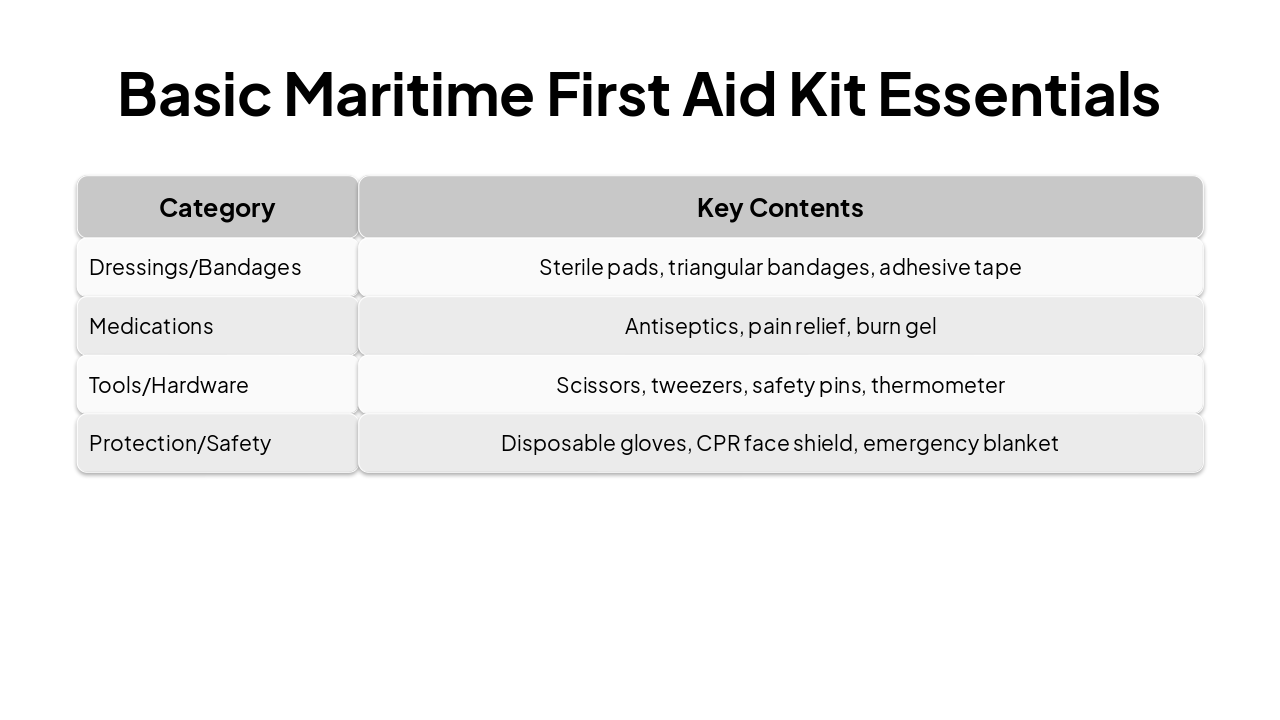
CategoryKey Contents
Dressings/BandagesSterile pads, triangular bandages, adhesive tape
MedicationsAntiseptics, pain relief, burn gel
Tools/HardwareScissors, tweezers, safety pins, thermometer
Protection/SafetyDisposable gloves, CPR face shield, emergency blanket
Slide 15 - Basic Maritime First Aid Kit Essentials
Slide 16 of 16

Slide 16 - Thank You / Conclusion

Ensure all crew are familiar with the location of the First Aid Kit and AED.

Be prepared, act safely, and save lives at sea.
Slide 16 - Thank You / Conclusion

Discover More Presentations

Explore thousands of AI-generated presentations for inspiration

Browse Presentations
Powered by AI

Create Your Own Presentation

Generate professional presentations in seconds with Karaf's AI. Customize this presentation or start from scratch.

Create New Presentation

Powered by Karaf.ai — AI-Powered Presentation Generator