Unit 1: Foundations of Organization, Administration &amp

Generated from prompt:

Create a full detailed presentation for Unit 1: Introduction. Include simple, attractive language and examples, and suggest images for each slide. Slides: 1. Title Slide – Unit 1: Introduction to Organization, Administration and Management 2. Learning Objectives 3. Definition of Organization (simple explanation + example + image suggestion) 4. Concept of Organization (structure, roles, goals + example + image suggestion) 5. Definition of Administration (simple explanation + example + image suggestion) 6. Concept of Administration (policy making, decision level + example + image suggestion) 7. Definition of Management (simple explanation + example + image suggestion) 8. Concept of Management (planning, organizing, leading, controlling + example + image suggestion) 9. Difference between Organization, Administration and Management (simple table + example + image suggestion) 10. Importance of Effective Management (points + real-life example + image suggestion) 11. Impact of Effective Management (business success, productivity, employee satisfaction + example + image suggestion) 12. Elements of Management – Overview 13. Planning (definition, example + image suggestion) 14. Organizing (definition, example + image suggestion) 15. Leading (definition, example + image suggestion) 16. Controlling (definition, example + image suggestion) 17. Conclusion Slide (summary of key points) 18. Thank You Slide Use simple English, short bullet points, and engaging examples like school, business, or daily life. Include image suggestions for each slide (e.g., teamwork, office, planning board, leader guiding team).

This introductory unit explores the definitions, core concepts, structures, and differences between organization, administration, and management. It highlights the four elements of management, its importance, and real-world impacts on business and

April 12, 202618 slides
Slide 1 of 18

Slide 1 - Unit 1: Introduction to Organization, Administration and Management

Unit 1: Introduction to Organization, Administration and Management

Foundations of Business and Management Success

---

Photo by Willem Chan on Unsplash
Slide 1 - Unit 1: Introduction to Organization, Administration and Management
Slide 2 of 18

Slide 2 - Learning Objectives

  • Understand the definitions of Organization, Administration, and Management.
  • Explore the core concepts and structures of each.
  • Differentiate between the three key business pillars.
  • Analyze the importance and impact of effective management in real-world scenarios.
  • Overview the four primary elements of management.
Slide 2 - Learning Objectives
Slide 3 of 18

Slide 3 - Definition of Organization

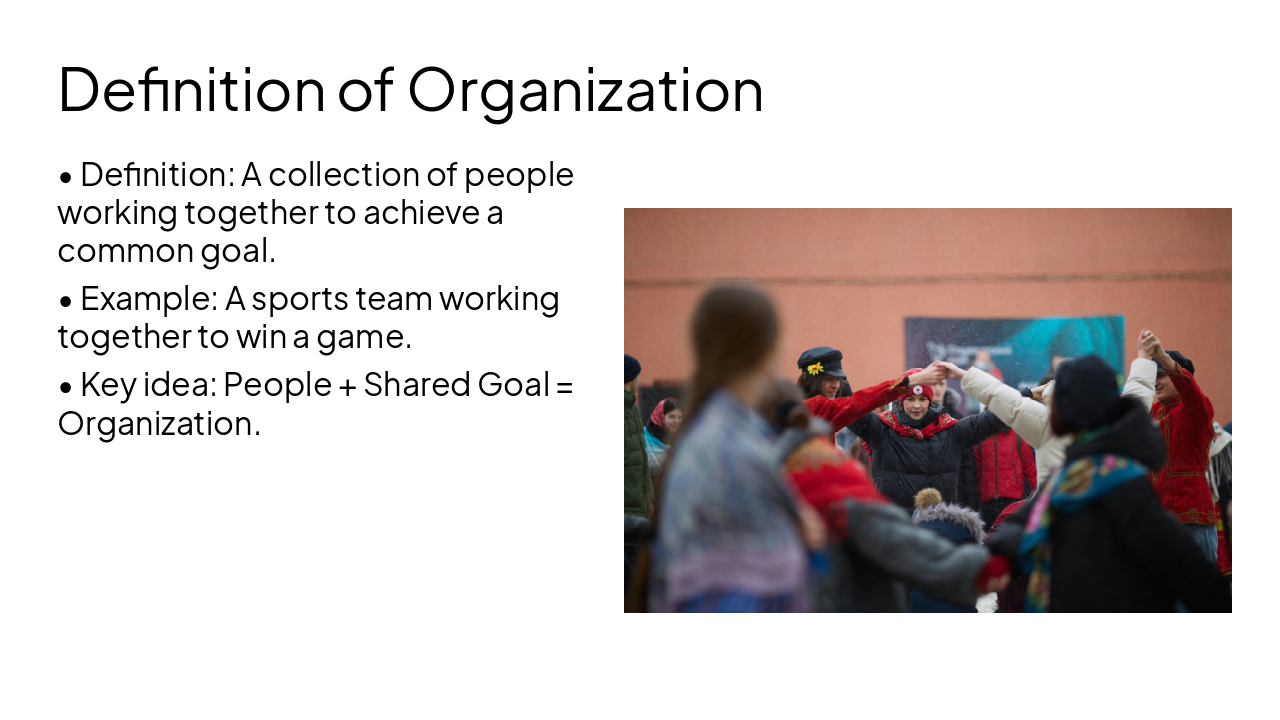
  • Definition: A collection of people working together to achieve a common goal.
  • Example: A sports team working together to win a game.
  • Key idea: People + Shared Goal = Organization.

---

Photo by Ilya Semenov on Unsplash
Slide 3 - Definition of Organization
Slide 4 of 18

Slide 4 - Concept of Organization

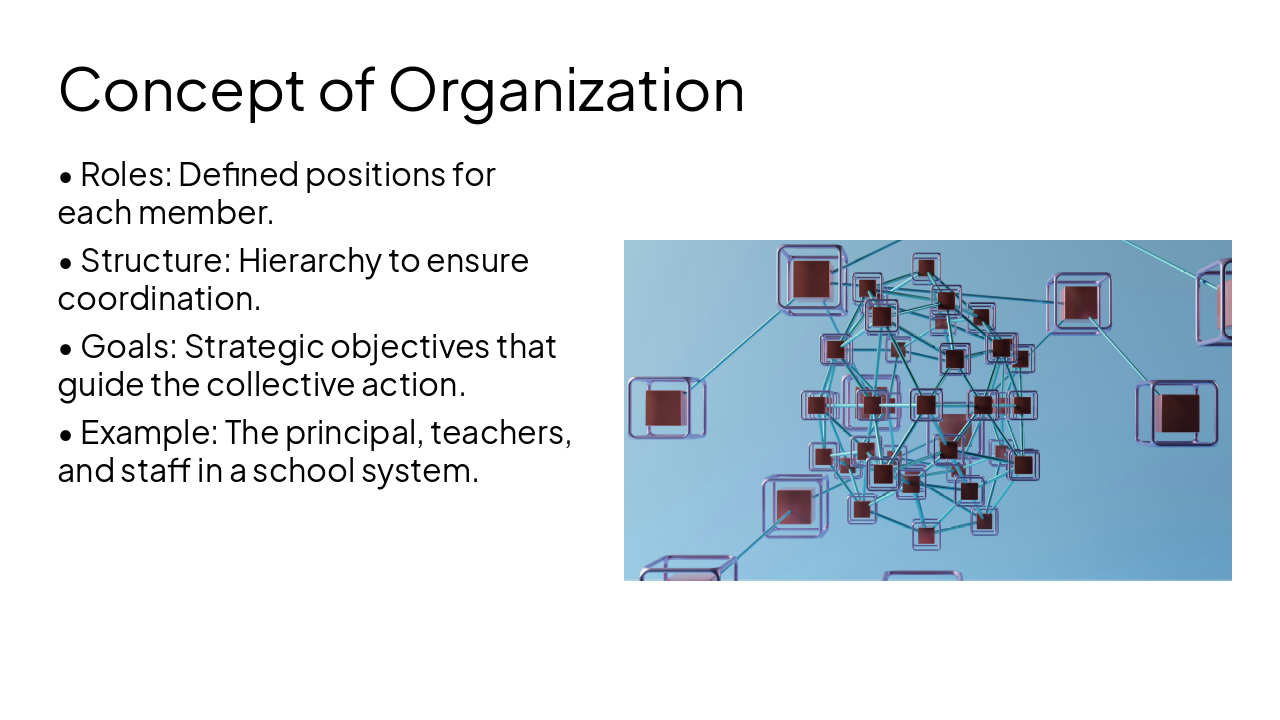
  • Roles: Defined positions for each member.
  • Structure: Hierarchy to ensure coordination.
  • Goals: Strategic objectives that guide the collective action.
  • Example: The principal, teachers, and staff in a school system.

---

Photo by GuerrillaBuzz on Unsplash
Slide 4 - Concept of Organization
Slide 5 of 18

Slide 5 - Definition of Administration

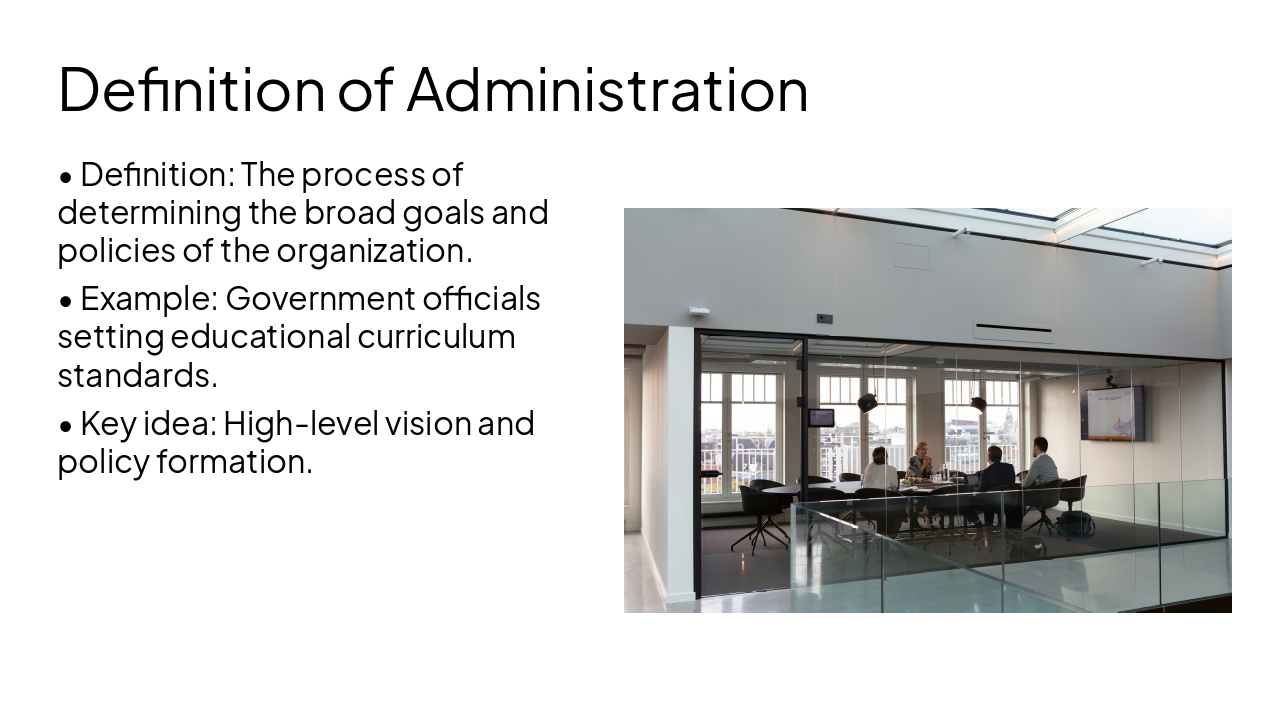
  • Definition: The process of determining the broad goals and policies of the organization.
  • Example: Government officials setting educational curriculum standards.
  • Key idea: High-level vision and policy formation.

---

Photo by Rodeo Project Management Software on Unsplash
Slide 5 - Definition of Administration
Slide 6 of 18

Slide 6 - Concept of Administration

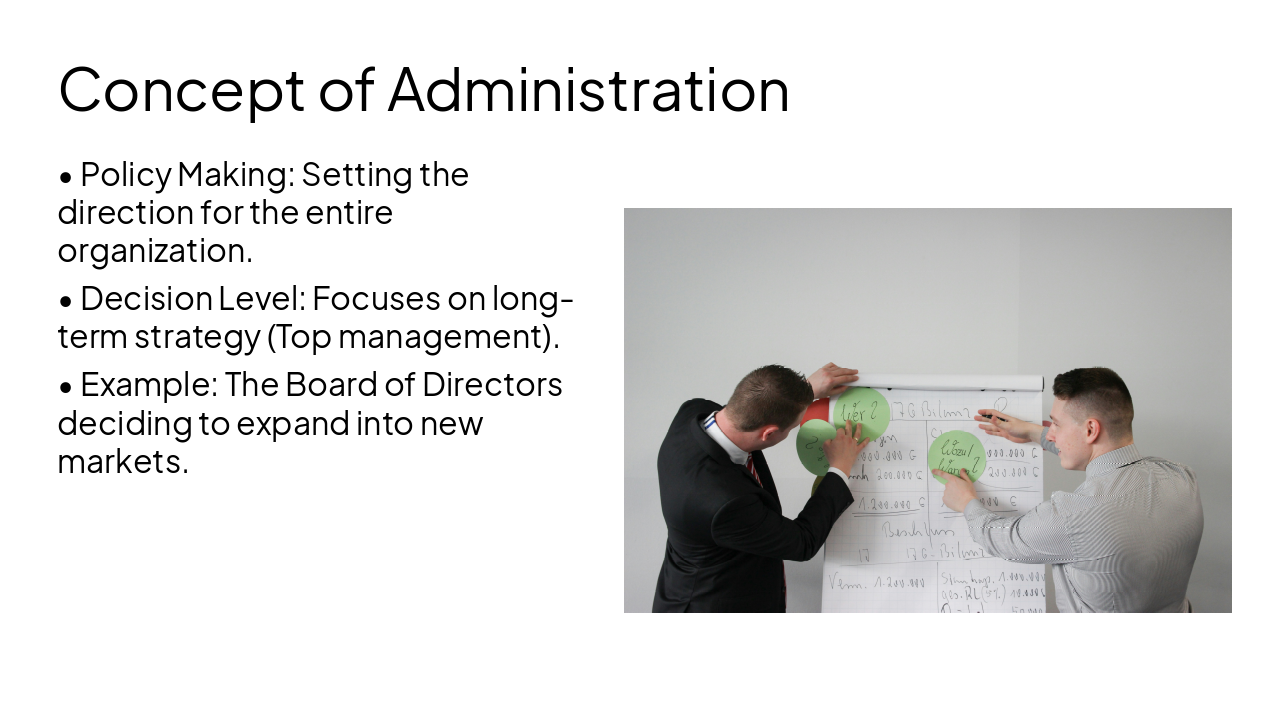
  • Policy Making: Setting the direction for the entire organization.
  • Decision Level: Focuses on long-term strategy (Top management).
  • Example: The Board of Directors deciding to expand into new markets.

---

Photo by Sebastian Herrmann on Unsplash
Slide 6 - Concept of Administration
Slide 7 of 18

Slide 7 - Definition of Management

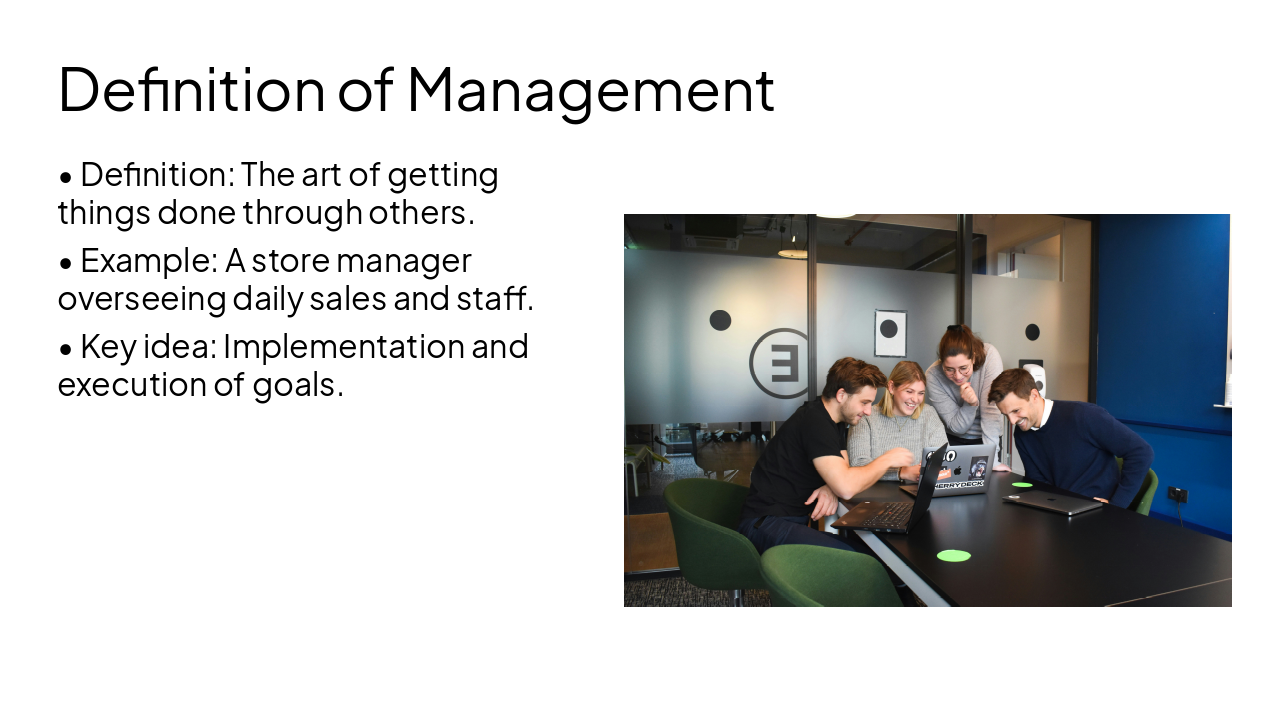
  • Definition: The art of getting things done through others.
  • Example: A store manager overseeing daily sales and staff.
  • Key idea: Implementation and execution of goals.

---

Photo by Cherrydeck on Unsplash

Slide 7 - Definition of Management
Slide 8 of 18

Slide 8 - Concept of Management

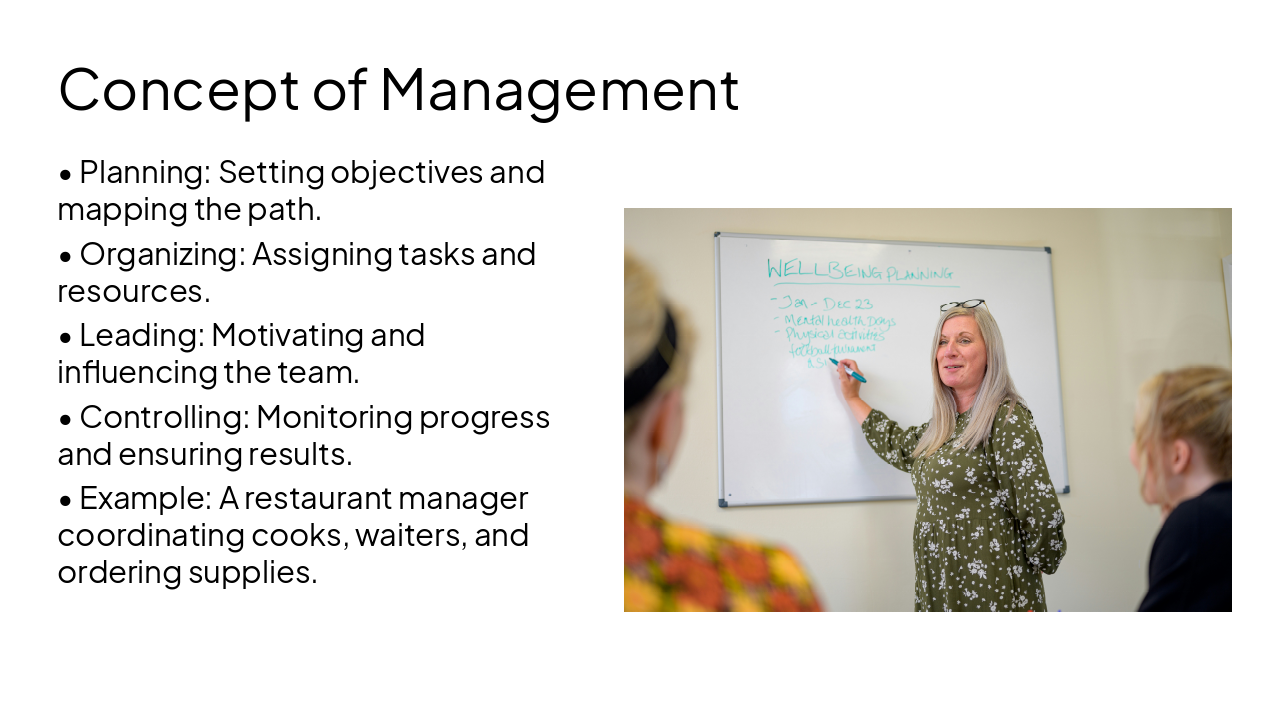
  • Planning: Setting objectives and mapping the path.
  • Organizing: Assigning tasks and resources.
  • Leading: Motivating and influencing the team.
  • Controlling: Monitoring progress and ensuring results.
  • Example: A restaurant manager coordinating cooks, waiters, and ordering supplies.

---

Photo by Centre for Ageing Better on Unsplash
Slide 8 - Concept of Management
Slide 9 of 18

Slide 9 - Comparing Business Pillars

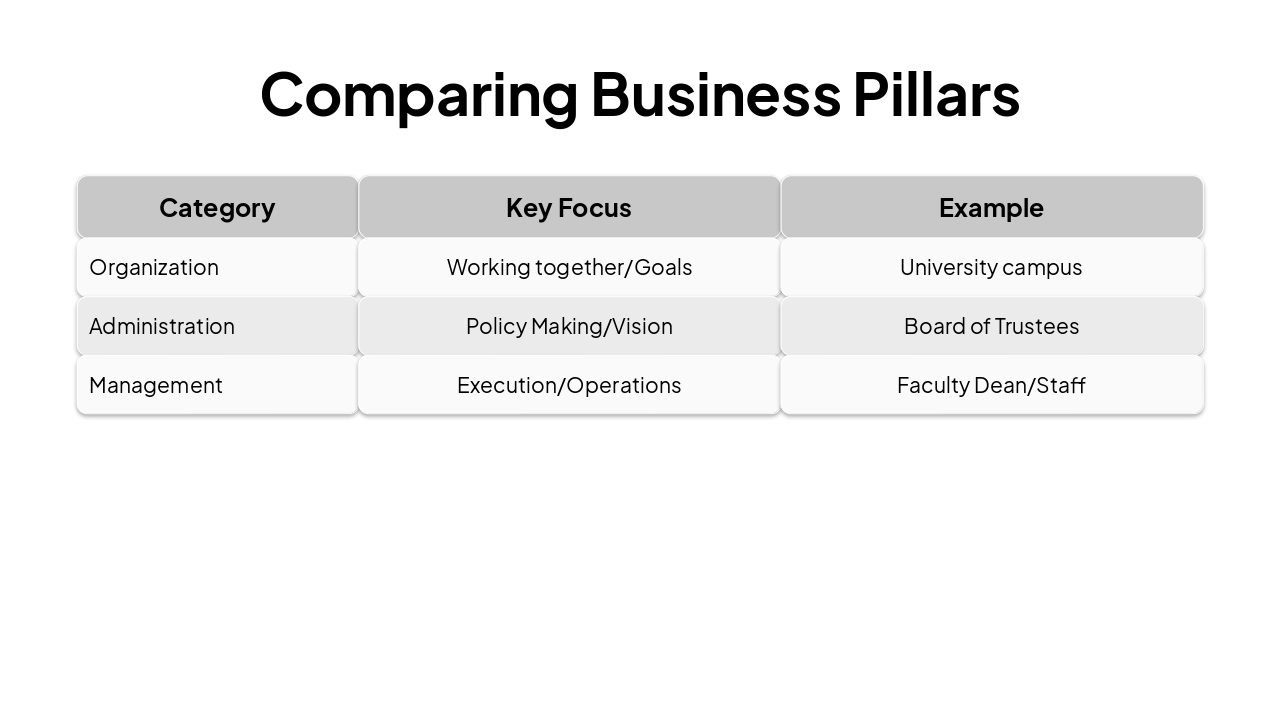
CategoryKey FocusExample
OrganizationWorking together/GoalsUniversity campus
AdministrationPolicy Making/VisionBoard of Trustees
ManagementExecution/OperationsFaculty Dean/Staff
Slide 9 - Comparing Business Pillars
Slide 10 of 18

Slide 10 - Importance of Effective Management

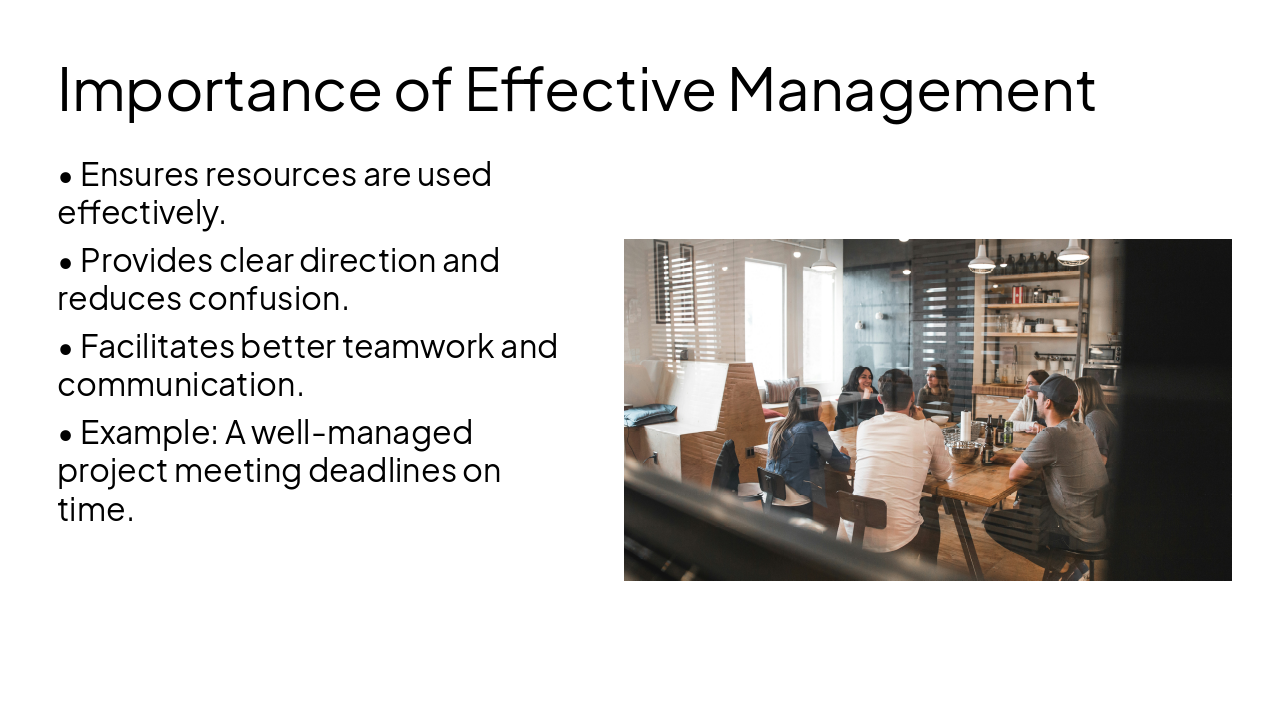
  • Ensures resources are used effectively.
  • Provides clear direction and reduces confusion.
  • Facilitates better teamwork and communication.
  • Example: A well-managed project meeting deadlines on time.

---

Photo by Redd Francisco on Unsplash
Slide 10 - Importance of Effective Management
Slide 11 of 18

Slide 11 - Impact of Effective Management

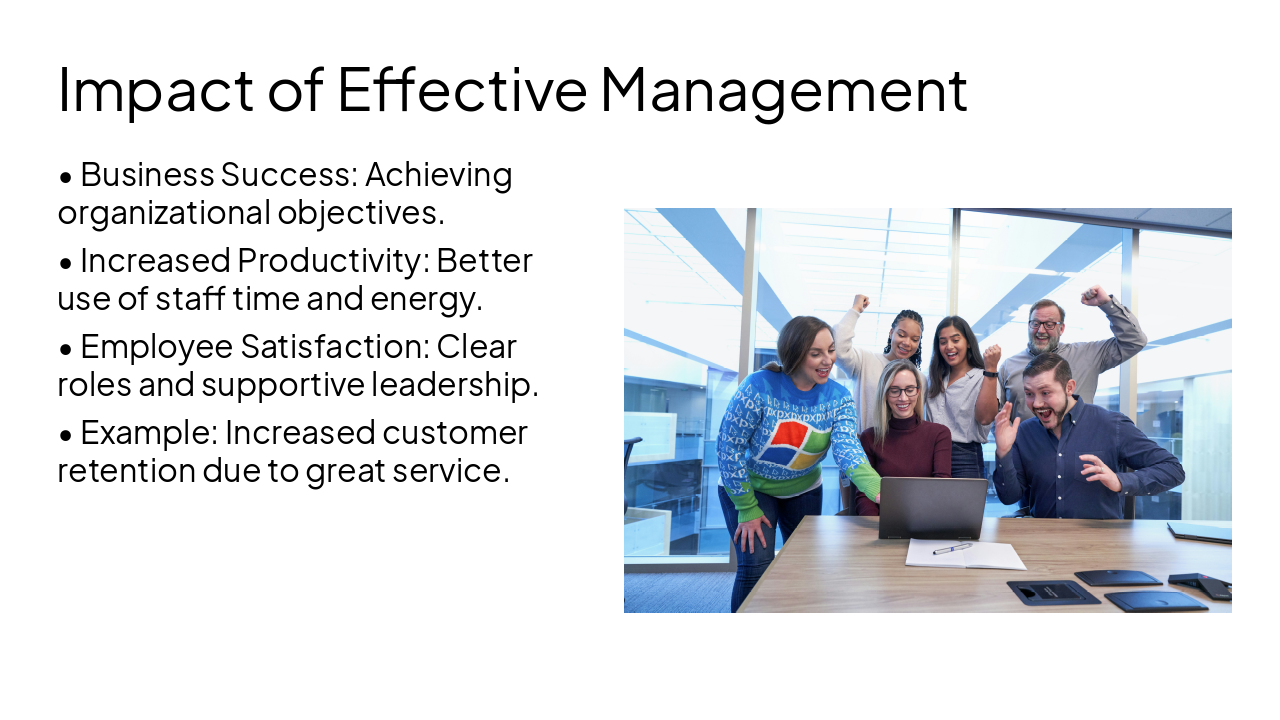
  • Business Success: Achieving organizational objectives.
  • Increased Productivity: Better use of staff time and energy.
  • Employee Satisfaction: Clear roles and supportive leadership.
  • Example: Increased customer retention due to great service.

---

Photo by Windows on Unsplash

Slide 11 - Impact of Effective Management
Slide 12 of 18

Slide 12 - Elements of Management Overview

12

Elements of Management Overview

The four pillars of effective management practice

---

Photo by Nick Fewings on Unsplash

Slide 12 - Elements of Management Overview
Slide 13 of 18

Slide 13 - Planning

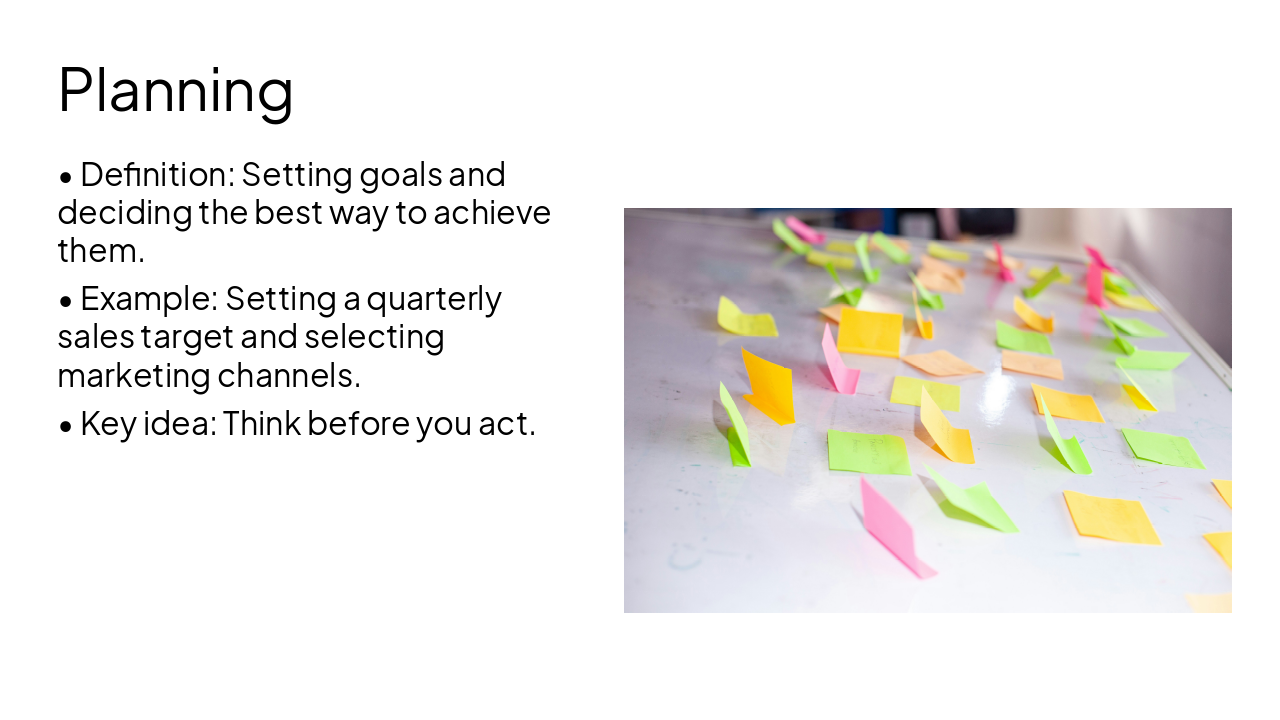
  • Definition: Setting goals and deciding the best way to achieve them.
  • Example: Setting a quarterly sales target and selecting marketing channels.
  • Key idea: Think before you act.

---

Photo by Akinyemi Gbadamosi on Unsplash
Slide 13 - Planning
Slide 14 of 18

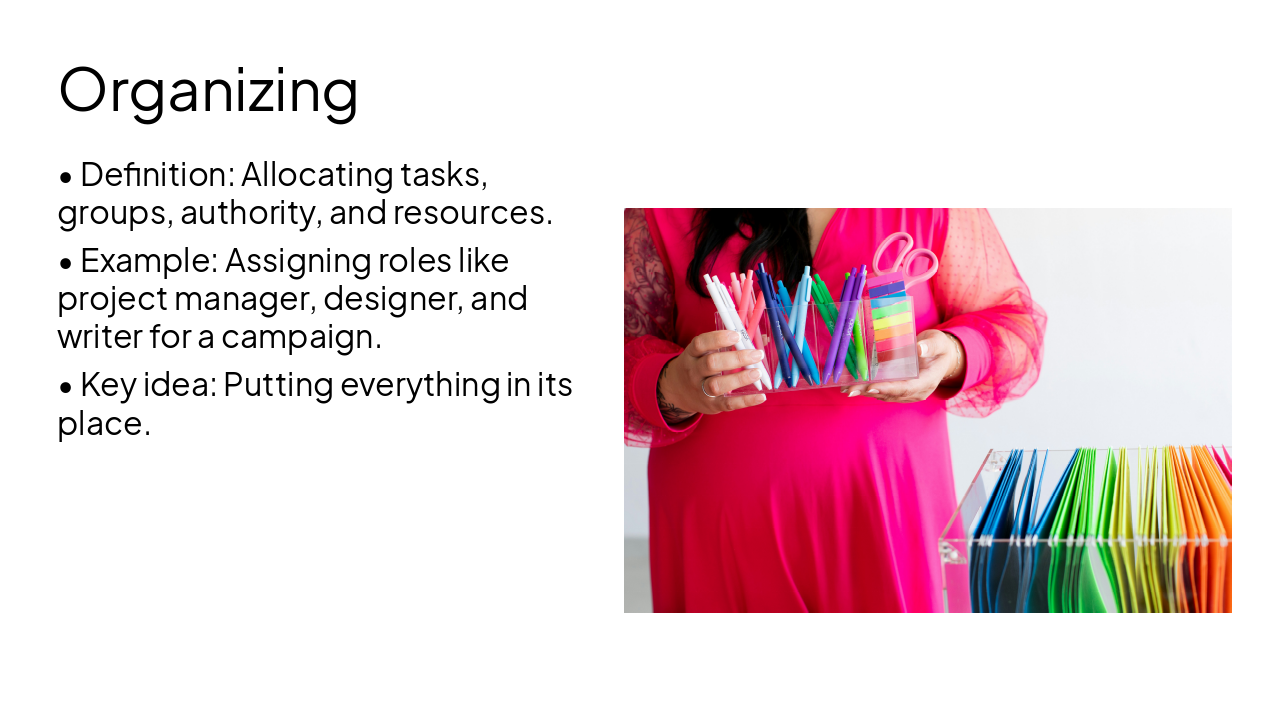
Slide 14 - Organizing

  • Definition: Allocating tasks, groups, authority, and resources.
  • Example: Assigning roles like project manager, designer, and writer for a campaign.
  • Key idea: Putting everything in its place.

---

Photo by Cabri Caldwell on Unsplash
Slide 14 - Organizing
Slide 15 of 18

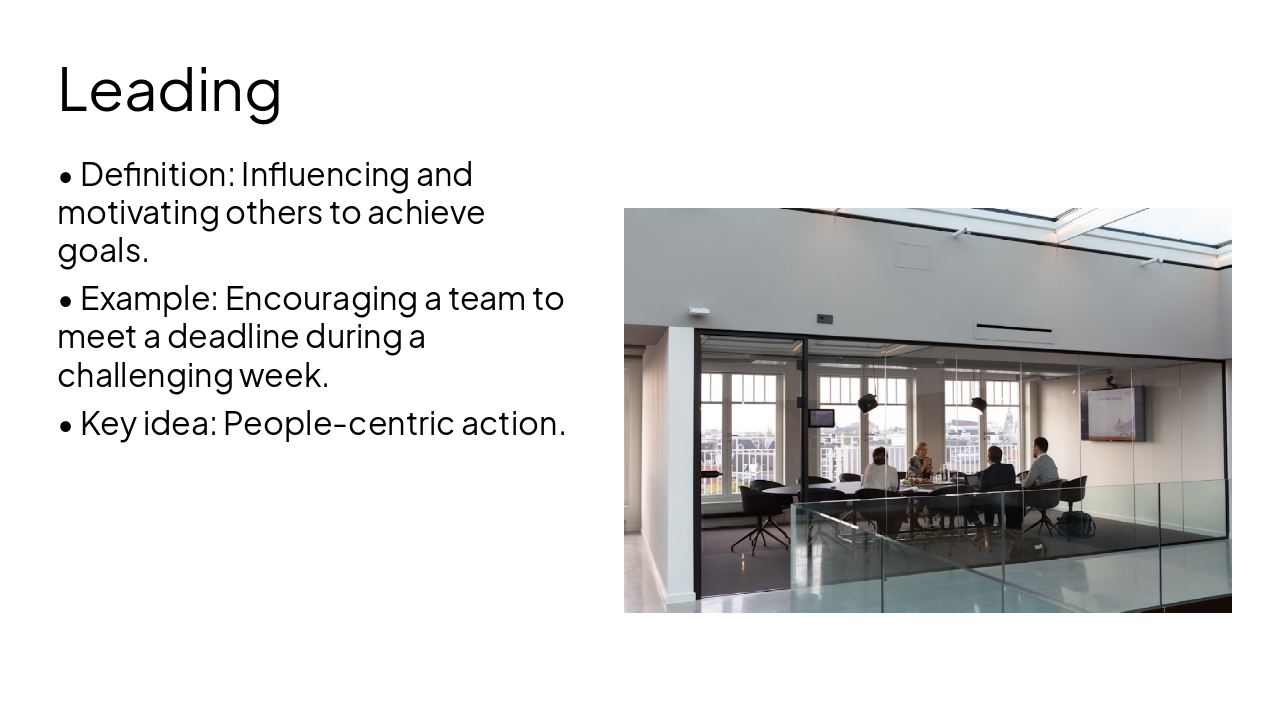
Slide 15 - Leading

  • Definition: Influencing and motivating others to achieve goals.
  • Example: Encouraging a team to meet a deadline during a challenging week.
  • Key idea: People-centric action.

---

Photo by Rodeo Project Management Software on Unsplash
Slide 15 - Leading
Slide 16 of 18

Slide 16 - Controlling

  • Definition: Measuring performance and making corrections.
  • Example: Checking monthly budget reports and adjusting spending.
  • Key idea: Staying on track.

---

Photo by Luke Chesser on Unsplash

Slide 16 - Controlling
Slide 17 of 18

Slide 17 - Conclusion

Effective management combines planning, organizing, leading, and controlling to drive success.

Organization, Administration, and Management Summary

---

Photo by Nastuh Abootalebi on Unsplash
Slide 17 - Conclusion
Slide 18 of 18

Slide 18 - Thank You

Thank You!

Thank you for your attention. Any questions?

---

Photo by Nastuh Abootalebi on Unsplash

Slide 18 - Thank You

Discover More Presentations

Explore thousands of AI-generated presentations for inspiration

Browse Presentations
Powered by AI

Create Your Own Presentation

Generate professional presentations in seconds with Karaf's AI. Customize this presentation or start from scratch.

Create New Presentation

Powered by Karaf.ai — AI-Powered Presentation Generator