Slide 1 of 10
Slide 1 - Price Elasticity of Cloud Services
Price Elasticity of Cloud Services
Measuring How Sensitive CS Students Are to Price Changes in Cloud Hosting Credits Presented by: Your Name
---
Photo by Logan Voss on Unsplash

Generated from prompt:
Create a 9-slide professional PowerPoint presentation titled "Price Elasticity of Cloud Services: Measuring CS Student Sensitivity to Cloud Hosting Credit Price Changes". Design Theme: - Modern tech theme with blue, purple, and white gradient color scheme - Clean sans-serif fonts (e.g., Calibri or Montserrat style) - Consistent layout with subtle cloud and network background graphics - High-quality technology and cloud computing visuals Slides: Slide 1: Title Slide - Title: Price Elasticity of Cloud Services - Subtitle: Measuring How Sensitive CS Students Are to Price Changes in Cloud Hosting Credits - Presented by: [Your Name] - Background: Abstract cloud computing graphic with network connections Slide 2: Introduction - Define price elasticity of demand - Explain why elasticity matters in digital/cloud markets - Relevance to CS students using AWS, Firebase, and Heroku credits - Include simple elasticity formula visual Slide 3: Overview of Cloud Services - Brief summaries of AWS, Firebase, and Heroku - Include logos or representative visuals for each - Bullet points describing primary use cases for students Slide 4: Understanding Price Elasticity - Define Elastic (>1), Inelastic (<1), Unitary (=1) - Include demand curve graph with price and quantity axes - Show visual shift when prices increase Slide 5: Measuring Student Sensitivity - Methods: * Surveys (willingness-to-pay questions) * Experimental price simulations * Historical usage data analysis - Include example survey questions Slide 6: Statistical Analysis Methods - Regression analysis - Percentage change formula - Cross-price elasticity - Include simple example calculation Slide 7: Case Studies - Case Study 1: AWS free tier reduction impact - Case Study 2: Heroku pricing change impact on student projects - Include infographic-style visuals Slide 8: Visual Data Representation - Bar chart: % of students reducing usage after price increase - Line graph: Price vs. usage trend - Pie chart: Student preference distribution Slide 9: Conclusion - Key findings - Implications for cloud providers - Implications for students - Strategic recommendations Slide 10: References - Academic elasticity references - Cloud provider documentation (AWS, Firebase, Heroku) Ensure visual clarity, consistent iconography, engaging graphics, and minimal text per slide with speaker notes where appropriate.
This presentation analyzes price elasticity of demand for cloud hosting credits (AWS, Firebase, Heroku) among CS students. It covers PED concepts, measurement methods via surveys and regressions, case studies, statistical findings showing elastic需求 (
Price Elasticity of Cloud Services
Measuring How Sensitive CS Students Are to Price Changes in Cloud Hosting Credits Presented by: Your Name
---
Photo by Logan Voss on Unsplash
Source: Wikipedia: Price elasticity of demand
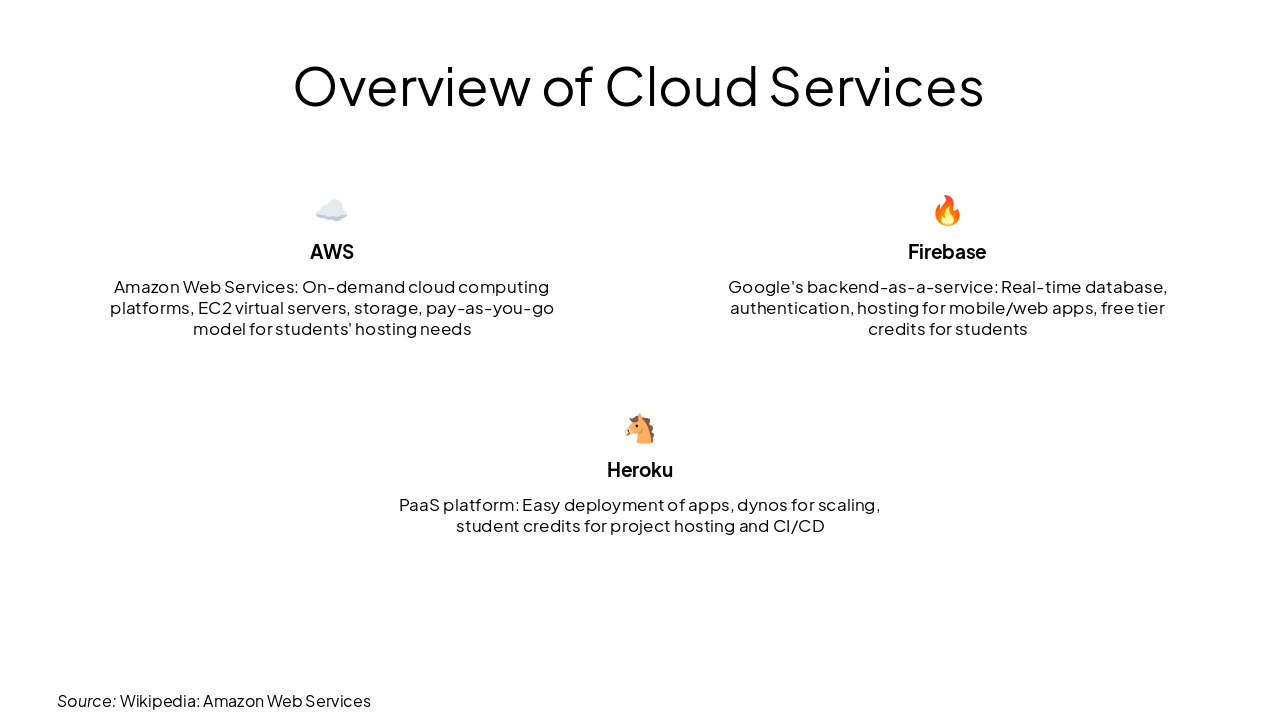
☁️ AWS Amazon Web Services: On-demand cloud computing platforms, EC2 virtual servers, storage, pay-as-you-go model for students' hosting needs
🔥 Firebase Google's backend-as-a-service: Real-time database, authentication, hosting for mobile/web apps, free tier credits for students
🐴 Heroku PaaS platform: Easy deployment of apps, dynos for scaling, student credits for project hosting and CI/CD
Source: Wikipedia: Amazon Web Services
---
Photo by Hennie Stander on Unsplash
Source: Wikipedia: Price elasticity of demand

Source: Wikipedia: Price elasticity of demand
Source: Wikipedia: Price elasticity of demand, Cross elasticity of demand
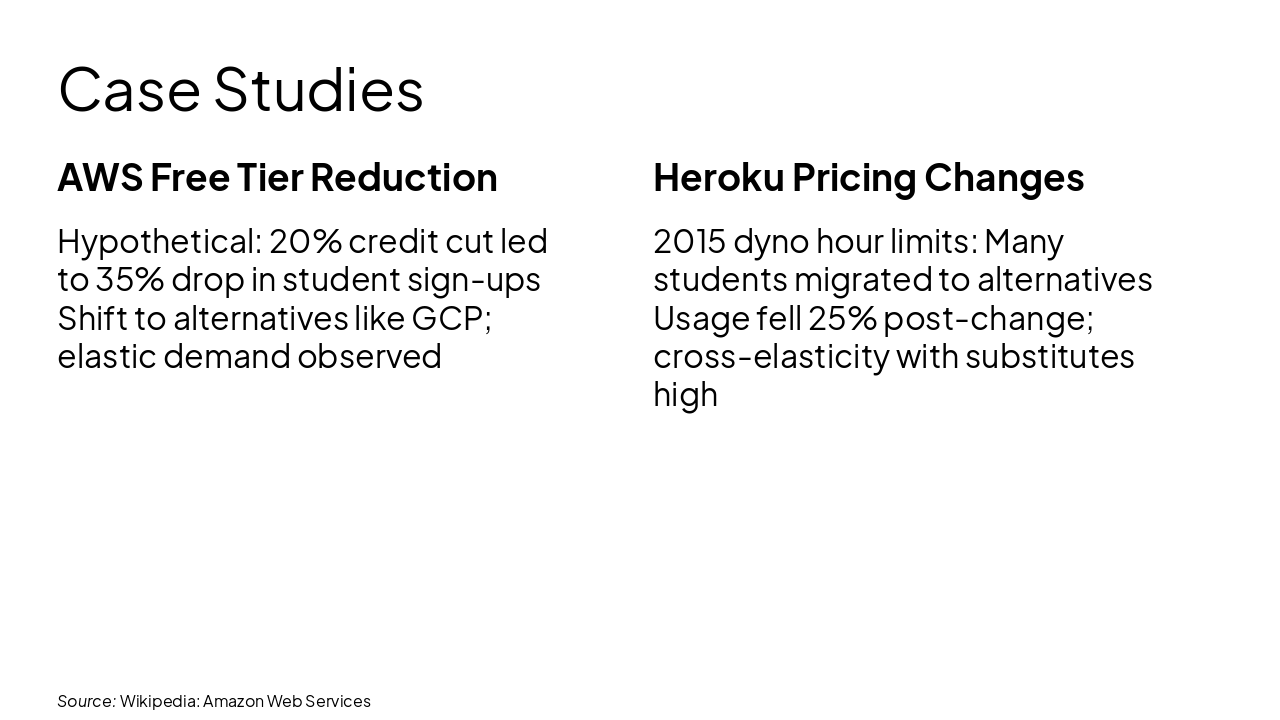
AWS Free Tier Reduction Hypothetical: 20% credit cut led to 35% drop in student sign-ups Shift to alternatives like GCP; elastic demand observed
Heroku Pricing Changes 2015 dyno hour limits: Many students migrated to alternatives Usage fell 25% post-change; cross-elasticity with substitutes high
Source: Wikipedia: Amazon Web Services
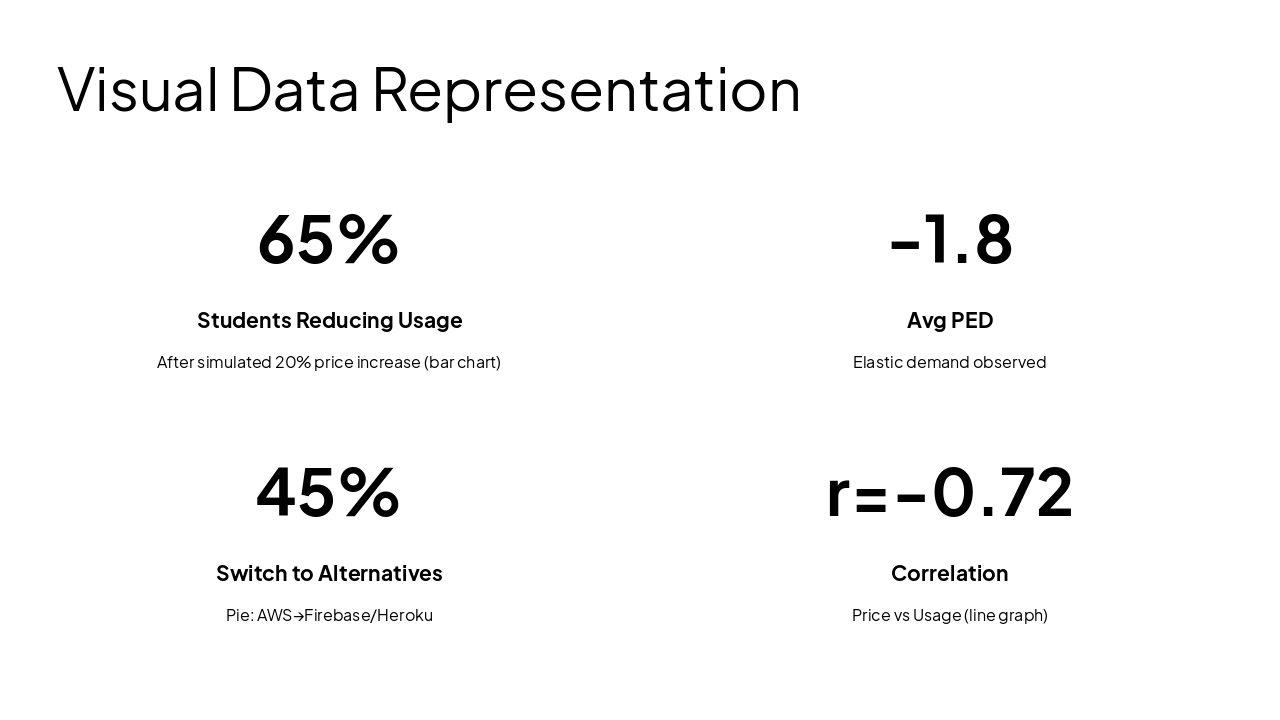
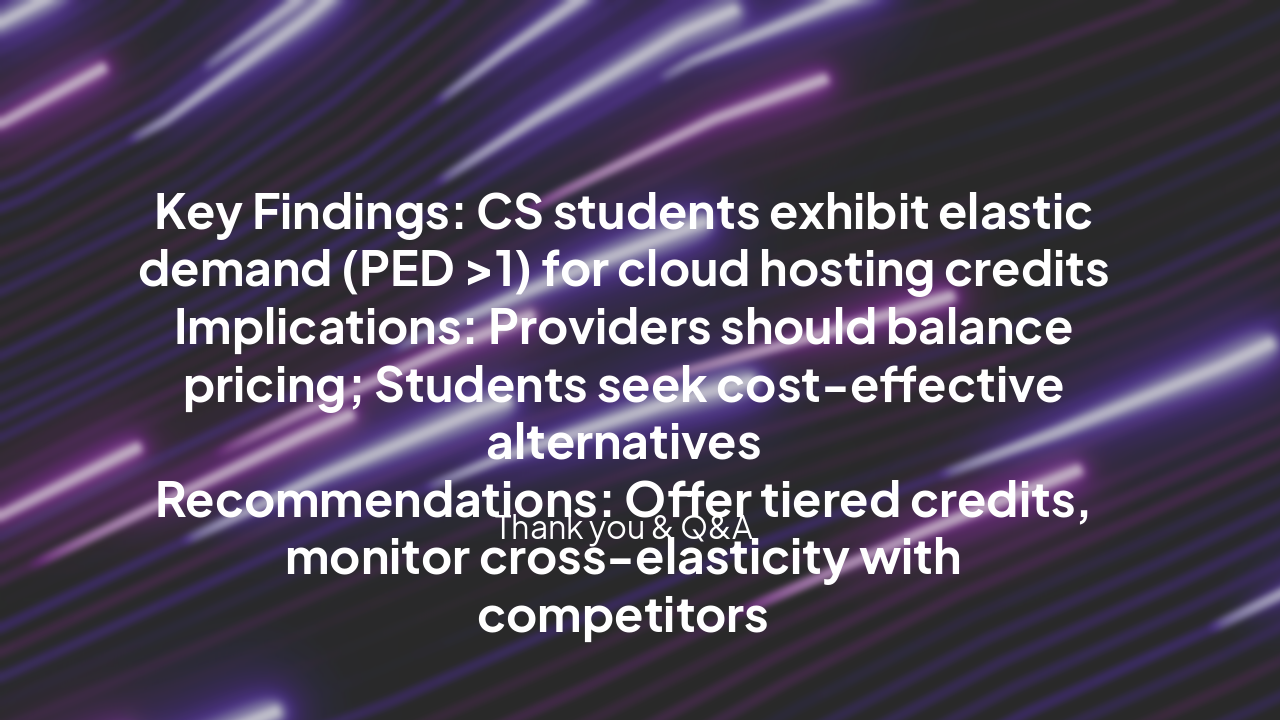
Key Findings: CS students exhibit elastic demand (PED >1) for cloud hosting credits Implications: Providers should balance pricing; Students seek cost-effective alternatives Recommendations: Offer tiered credits, monitor cross-elasticity with competitors
Thank you & Q&A
---
Photo by Logan Voss on Unsplash
Explore thousands of AI-generated presentations for inspiration
Generate professional presentations in seconds with Karaf's AI. Customize this presentation or start from scratch.