The Kingfisher: Nature's Master Angler

Generated from prompt:

Create a fresh PowerPoint presentation about the Kingfisher bird with modern design, animations, and fully functional export links. Slides: Title; Introduction; Physical Characteristics; Habitat; Diet & Hunting; Species (Common & Belted Kingfisher); Behavior; Reproduction; Ecosystem Importance; Fun Facts; Conservation; Conclusion. Use a vibrant blue, teal, and orange theme, include animation suggestions and clean layouts.

This presentation provides a comprehensive overview of kingfishers (Alcedinidae family), exploring their introduction, physical characteristics, habitats, diet and hunting, notable species, behaviors, reproduction, ecosystem role, fun facts, and thei

March 21, 202612 slides
Slide 1 of 12

Slide 1 - Title Slide

The Kingfisher: Nature's Master Angler

A deep dive into the Alcedinidae family

Generating slide...
Slide 2 of 12

Slide 2 - Introduction to Kingfishers

  • Kingfishers belong to the family Alcedinidae, order Coraciiformes.
  • Small to medium-sized birds known for their bright, striking plumage.
  • Cosmopolitan distribution across tropical regions of Africa, Asia, and Oceania.
  • Also found in temperate zones of Europe and the Americas.
Slide 2 - Introduction to Kingfishers
Slide 3 of 12

Slide 3 - Physical Characteristics

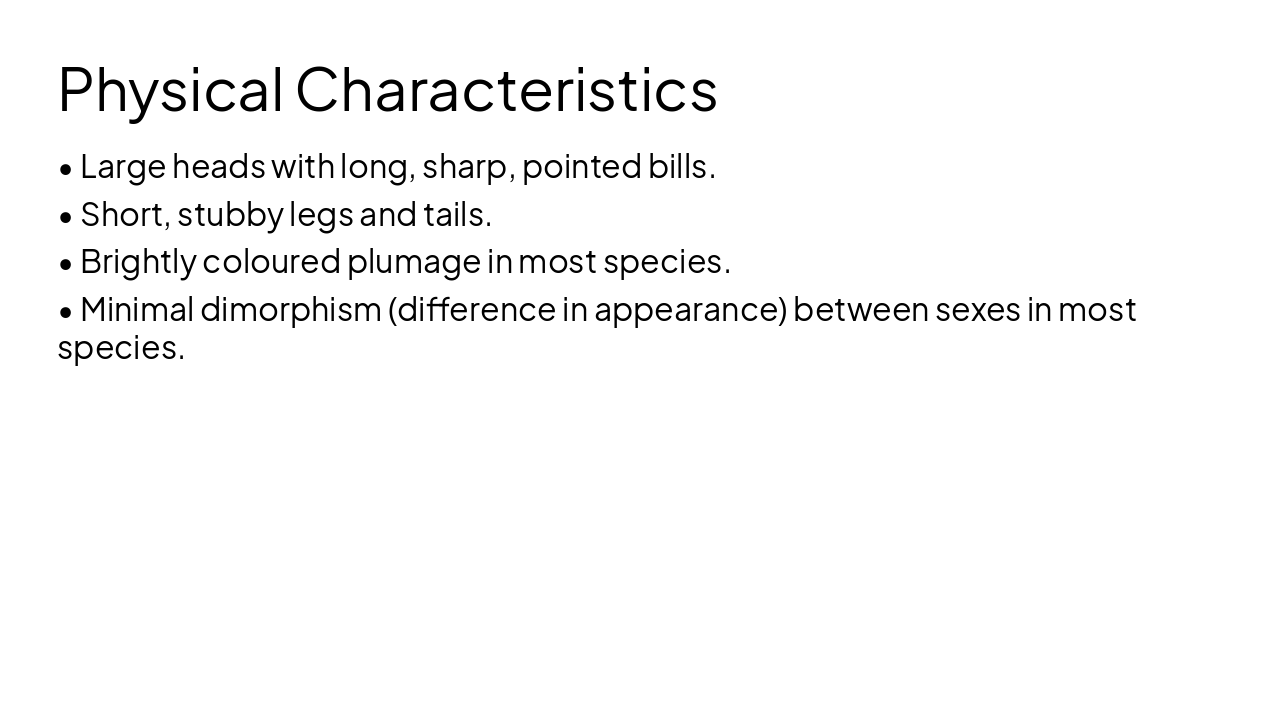
  • Large heads with long, sharp, pointed bills.
  • Short, stubby legs and tails.
  • Brightly coloured plumage in most species.
  • Minimal dimorphism (difference in appearance) between sexes in most species.
Slide 3 - Physical Characteristics
Slide 4 of 12

Slide 4 - Habitat & Range

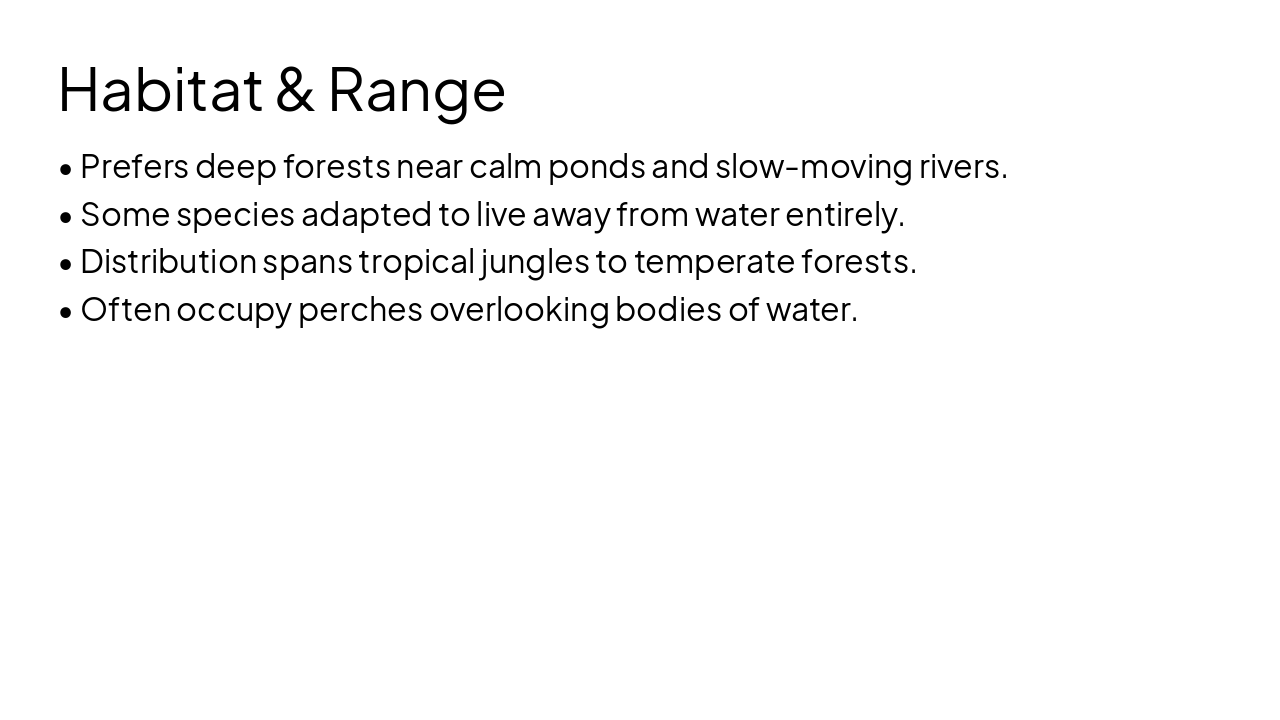
  • Prefers deep forests near calm ponds and slow-moving rivers.
  • Some species adapted to live away from water entirely.
  • Distribution spans tropical jungles to temperate forests.
  • Often occupy perches overlooking bodies of water.
Slide 4 - Habitat & Range
Slide 5 of 12

Slide 5 - Diet & Hunting Techniques

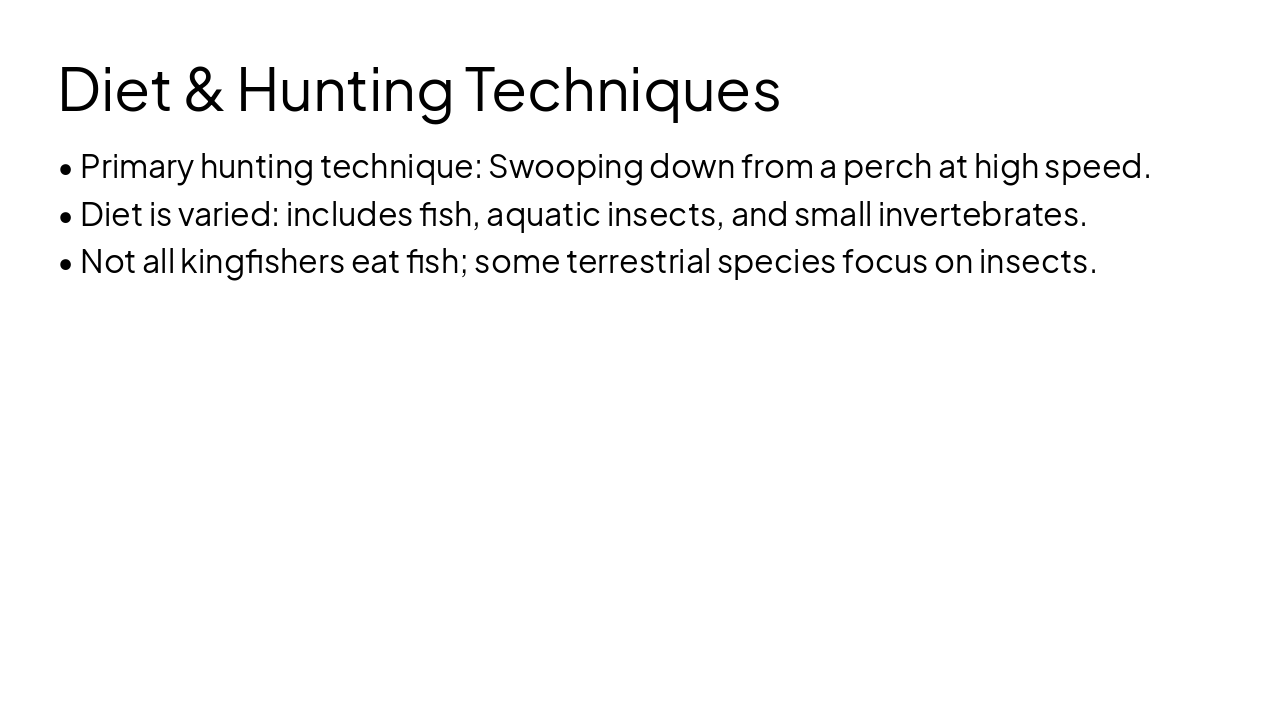
  • Primary hunting technique: Swooping down from a perch at high speed.
  • Diet is varied: includes fish, aquatic insects, and small invertebrates.
  • Not all kingfishers eat fish; some terrestrial species focus on insects.
Slide 5 - Diet & Hunting Techniques
Slide 6 of 12

Slide 6 - Notable Species

Common Kingfisher Found throughout Europe and Asia, iconic orange-and-teal coloration, heavily tied to riverside habitats.

Belted Kingfisher Predominant species in North America, recognizable by its ragged crest and greyish-blue plumage.
Slide 6 - Notable Species
Slide 7 of 12

Slide 7 - Behavioral Patterns

  • Highly territorial birds, often defending their favored fishing spots.
  • Solitary or pair-living behavior during non-breeding seasons.
  • Known for being patient predators when perched.
Slide 7 - Behavioral Patterns
Slide 8 of 12

Slide 8 - Reproduction & Nesting

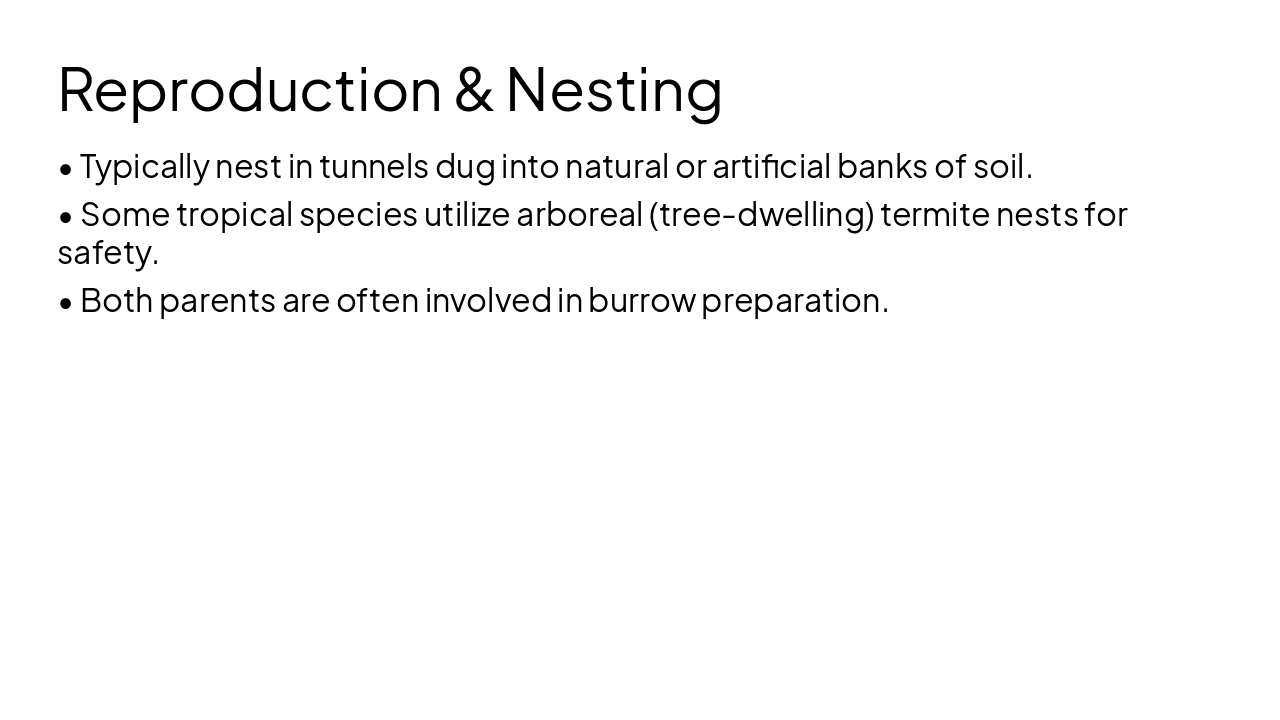
  • Typically nest in tunnels dug into natural or artificial banks of soil.
  • Some tropical species utilize arboreal (tree-dwelling) termite nests for safety.
  • Both parents are often involved in burrow preparation.
Slide 8 - Reproduction & Nesting
Slide 9 of 12

Slide 9 - Ecosystem Importance

  • Act as predators helping to control insect and fish populations.
  • Indicator species: their health reflects the health of surrounding freshwater ecosystems.
Slide 9 - Ecosystem Importance
Slide 10 of 12

Slide 10 - Kingfisher Fun Facts

  • The name "Kingfisher" is most famously associated with the Common Kingfisher in Britain.
  • There are 118 known species of Kingfishers globally.
  • They are divided into 3 distinct subfamilies and 19 genera.
Slide 10 - Kingfisher Fun Facts
Slide 11 of 12

Slide 11 - Conservation Status

  • While most species are thriving, some insular (island-dwelling) forms are at risk.
  • Habitat loss and environmental pollution are primary threats.
  • Conservation efforts focus on wetland protection and pollution control.
Slide 11 - Conservation Status
Slide 12 of 12

Slide 12 - Conclusion

Protecting our freshwater ecosystems ensures the future of the Kingfisher.

Thank you for learning about these remarkable birds.

---

Photo by Yousef Espanioly on Unsplash
Slide 12 - Conclusion

Discover More Presentations

Explore thousands of AI-generated presentations for inspiration

Browse Presentations
Powered by AI

Create Your Own Presentation

Generate professional presentations in seconds with Karaf's AI. Customize this presentation or start from scratch.

Create New Presentation

Powered by Karaf.ai — AI-Powered Presentation Generator