Key Features of Ancient BES

Generated from prompt:

> Create a 10-slide presentation on the topic “Describe the key features of the Bharatiya Education System (BES) in ancient India.” Use a light green theme, simple layout, and no effects or images. Include on the first slide: Bhagwaan Mahaveer College of Legal Education Name: Saini Manshvi Deepak Class: BBA LLB Semester: 05 Roll No: 10 Submitted to: Prof. Janki Vyas / Prof. Mitisha Mody Topic: Describe the key features of the Bharatiya Education System (BES) in ancient India. Keep the language simple and detailed.

This presentation explores the Bharatiya Education System (BES) in ancient India, covering its Vedic origins, Gurukul structure, holistic curriculum, Guru's role, teaching methods, inclusivity, and la

November 23, 202511 slides
Slide 1 of 11

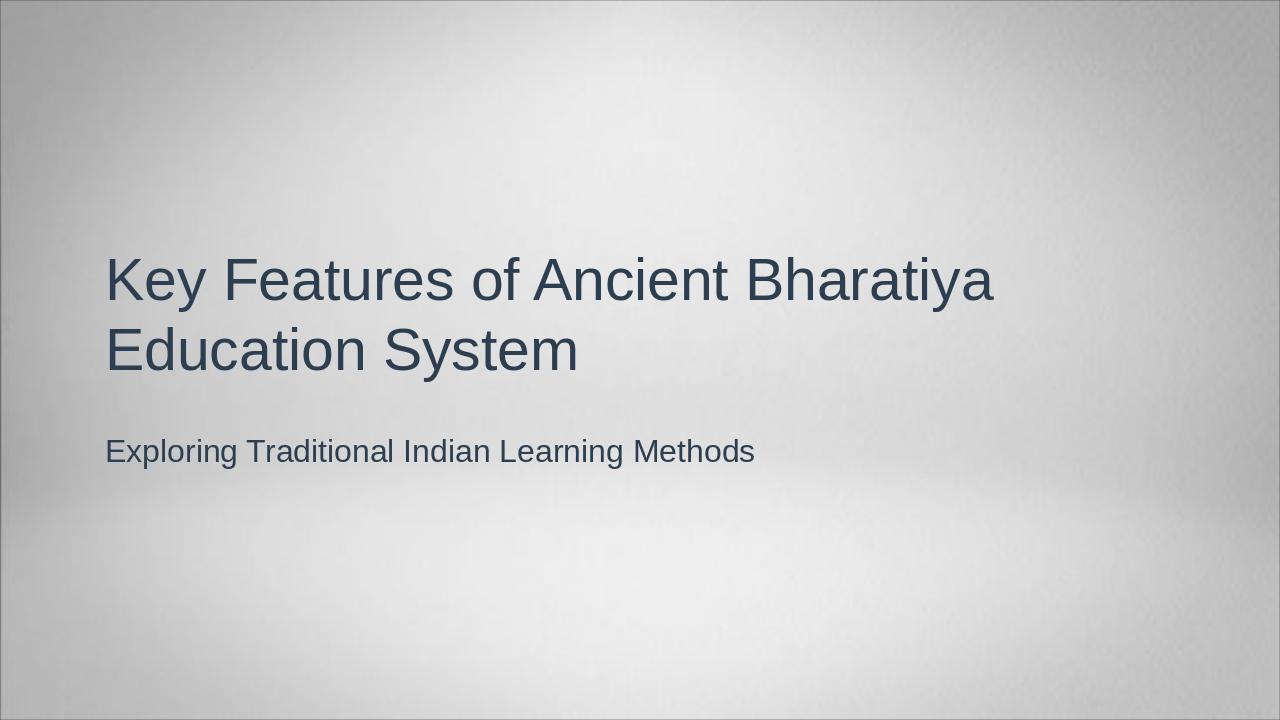
Slide 1 - Key Features of Ancient Bharatiya Education System

This title slide introduces a presentation on the key features of the ancient Bharatiya Education System, prepared by Saini Manshvi Deepak, a BBA LLB student in semester 5 (Roll No. 10) at Bhagwaan Mahaveer College of Legal Education. It is submitted to Professors Janki Vyas and Mitisha Mody, with a subtitle exploring traditional Indian learning methods.

Bhagwaan Mahaveer College of Legal Education

Name: Saini Manshvi Deepak Class: BBA LLB Semester: 05 Roll No: 10

Submitted to: Prof. Janki Vyas / Prof. Mitisha Mody

Topic: Describe the key features of the Bharatiya Education System (BES) in ancient India.

Exploring Traditional Indian Learning Methods
Slide 1
Slide 2 of 11

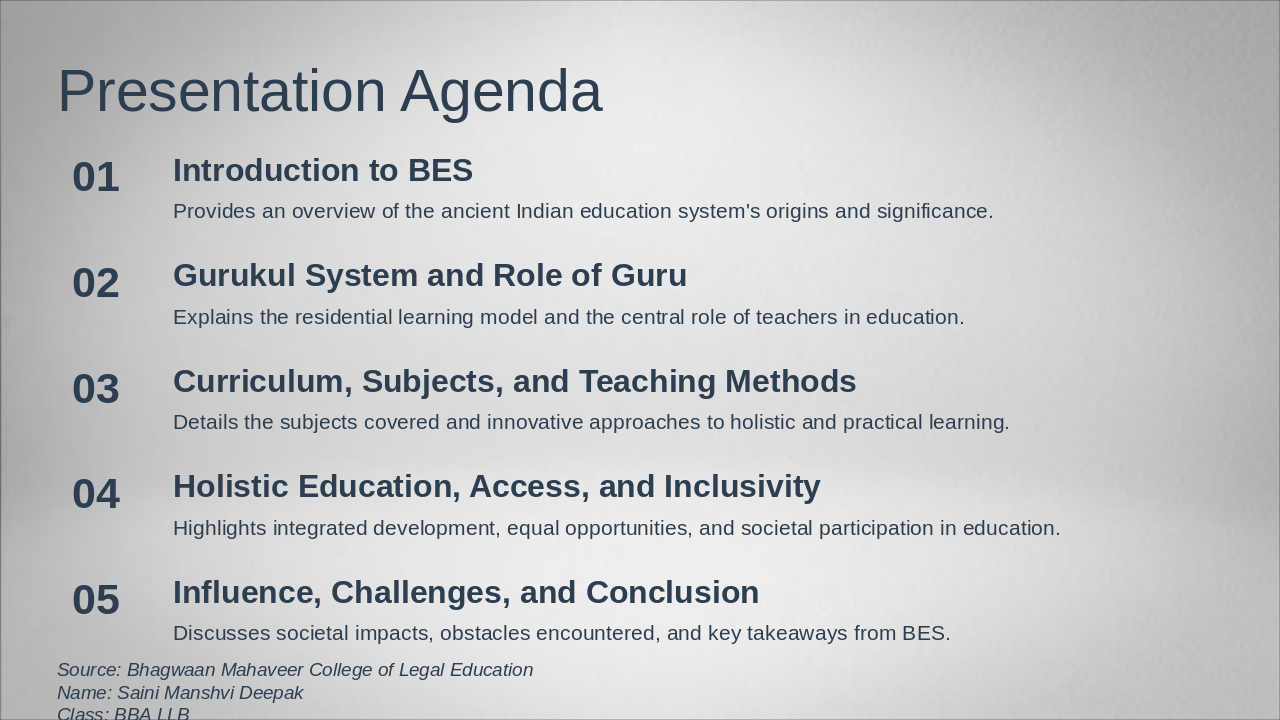
Slide 2 - Presentation Agenda

The agenda slide outlines a presentation on the ancient Indian education system known as BES, starting with an introduction to its origins and significance. It covers key topics including the Gurukul residential model and guru's role, curriculum with holistic teaching methods, aspects of inclusivity and access, and concludes with its influences, challenges, and takeaways.

Presentation Agenda

  1. Introduction to BES

Provides an overview of the ancient Indian education system's origins and significance.

  1. Gurukul System and Role of Guru

Explains the residential learning model and the central role of teachers in education.

  1. Curriculum, Subjects, and Teaching Methods

Details the subjects covered and innovative approaches to holistic and practical learning.

  1. Holistic Education, Access, and Inclusivity

Highlights integrated development, equal opportunities, and societal participation in education.

  1. Influence, Challenges, and Conclusion

Discusses societal impacts, obstacles encountered, and key takeaways from BES.

Source: Bhagwaan Mahaveer College of Legal Education Name: Saini Manshvi Deepak Class: BBA LLB Semester: 05 Roll No: 10 Submitted to: Prof. Janki Vyas / Prof. Mitisha Mody Topic: Describe the key features of the Bharatiya Education System (BES) in ancient India.

--- Speaker Notes: This agenda outlines the structure of the presentation on ancient BES using a light green theme and simple layout.

Slide 2
Slide 3 of 11

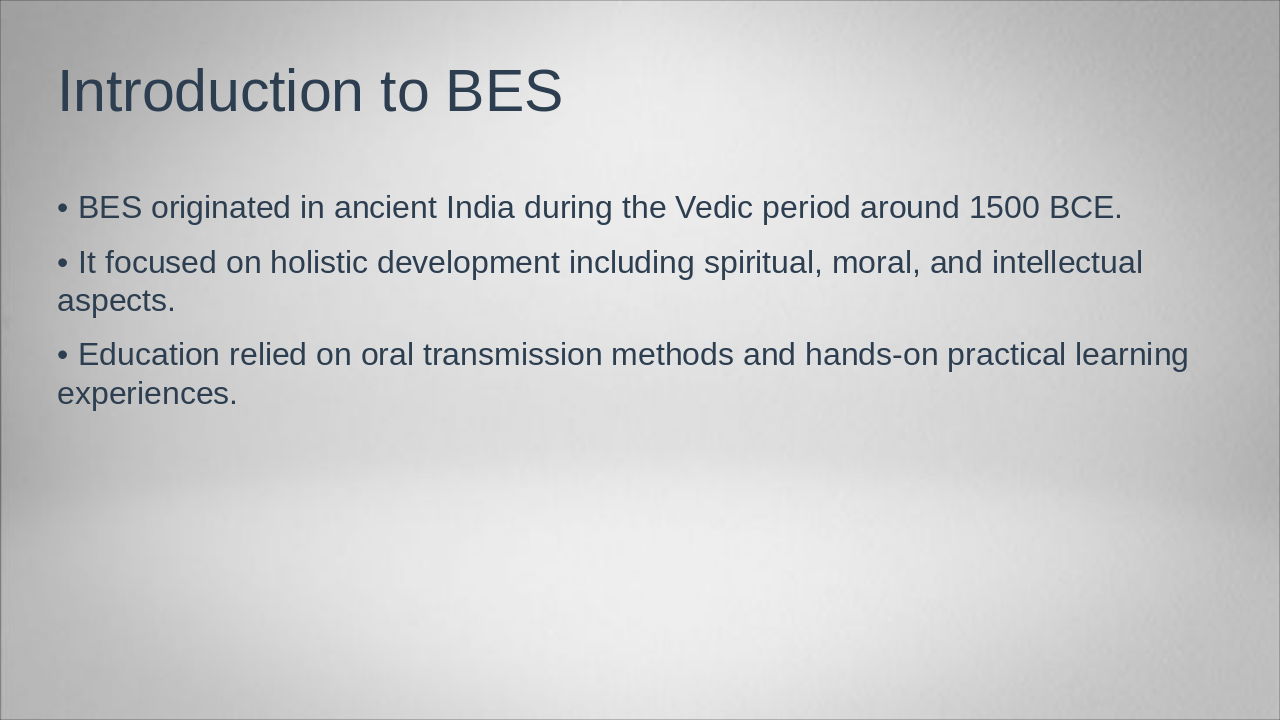
Slide 3 - Introduction to BES

BES originated in ancient India during the Vedic period around 1500 BCE, emphasizing holistic development across spiritual, moral, and intellectual dimensions. Education was delivered through oral transmission and hands-on practical experiences.

Introduction to BES

  • BES originated in ancient India during the Vedic period around 1500 BCE.
  • It focused on holistic development including spiritual, moral, and intellectual aspects.
  • Education relied on oral transmission methods and hands-on practical learning experiences.
Slide 3
Slide 4 of 11

Slide 4 - Gurukul System: Core of Ancient BES

Slide 4
Slide 5 of 11

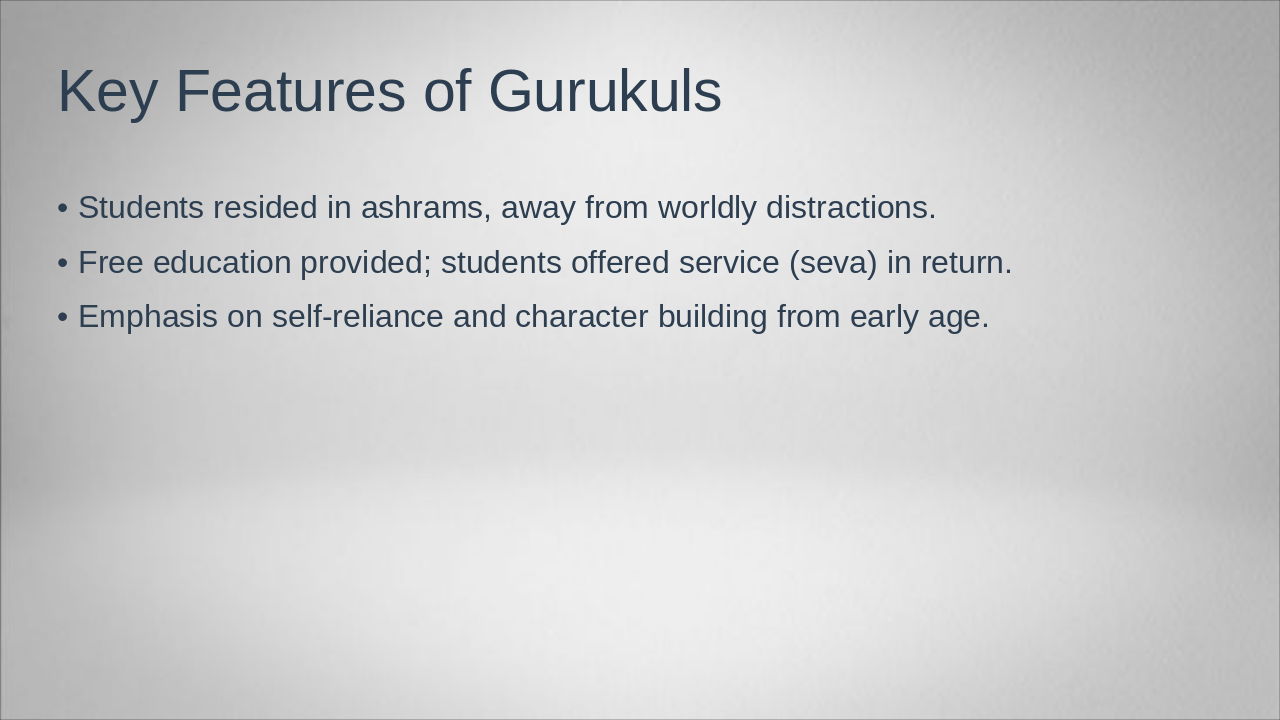
Slide 5 - Key Features of Gurukuls

Gurukuls featured students living in ashrams away from worldly distractions, where they received free education in exchange for offering service, or seva, to their teachers. The system placed strong emphasis on fostering self-reliance and building strong character from an early age.

Key Features of Gurukuls

  • Students resided in ashrams, away from worldly distractions.
  • Free education provided; students offered service (seva) in return.
  • Emphasis on self-reliance and character building from early age.
Slide 5
Slide 6 of 11

Slide 6 - Curriculum and Subjects

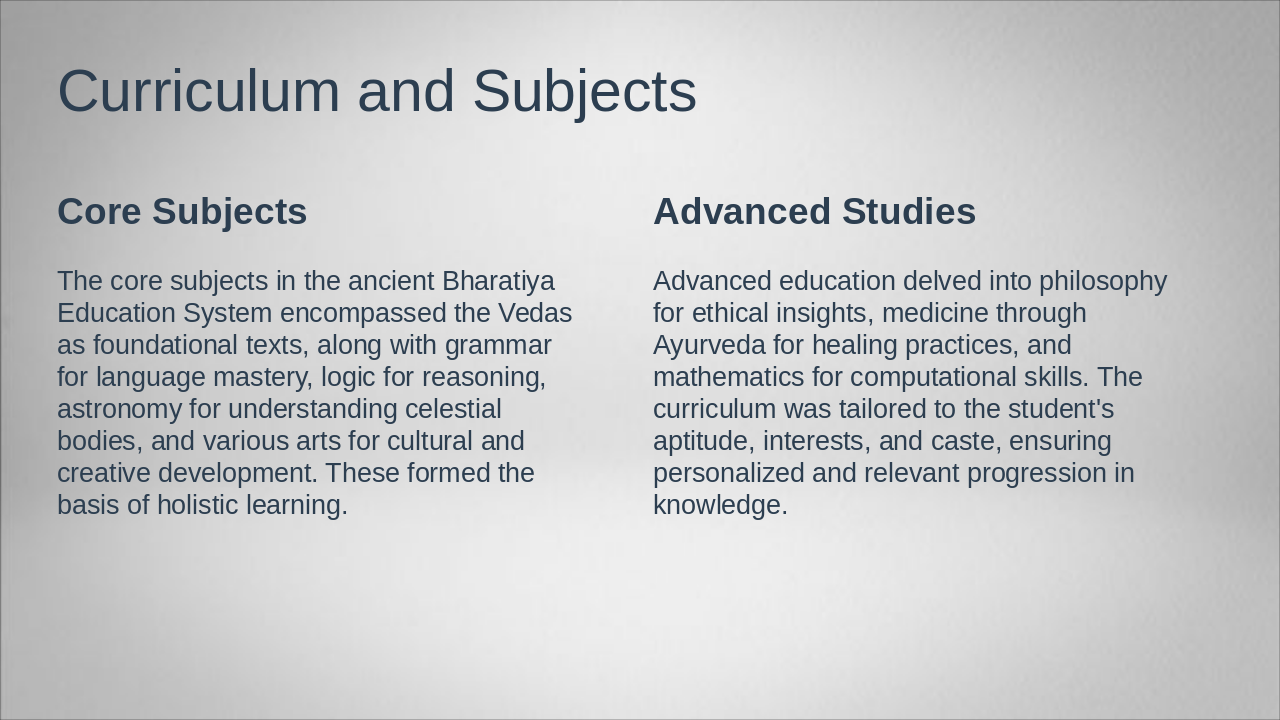
The ancient Bharatiya Education System's core subjects included the Vedas, grammar, logic, astronomy, and various arts, forming the foundation for holistic learning and cultural development. Advanced studies focused on philosophy, Ayurveda for medicine, and mathematics, with the curriculum customized to each student's aptitude, interests, and caste for personalized progression.

Curriculum and Subjects

Core SubjectsAdvanced Studies
The core subjects in the ancient Bharatiya Education System encompassed the Vedas as foundational texts, along with grammar for language mastery, logic for reasoning, astronomy for understanding celestial bodies, and various arts for cultural and creative development. These formed the basis of holistic learning.Advanced education delved into philosophy for ethical insights, medicine through Ayurveda for healing practices, and mathematics for computational skills. The curriculum was tailored to the student's aptitude, interests, and caste, ensuring personalized and relevant progression in knowledge.
Slide 6
Slide 7 of 11

Slide 7 - Role of the Guru

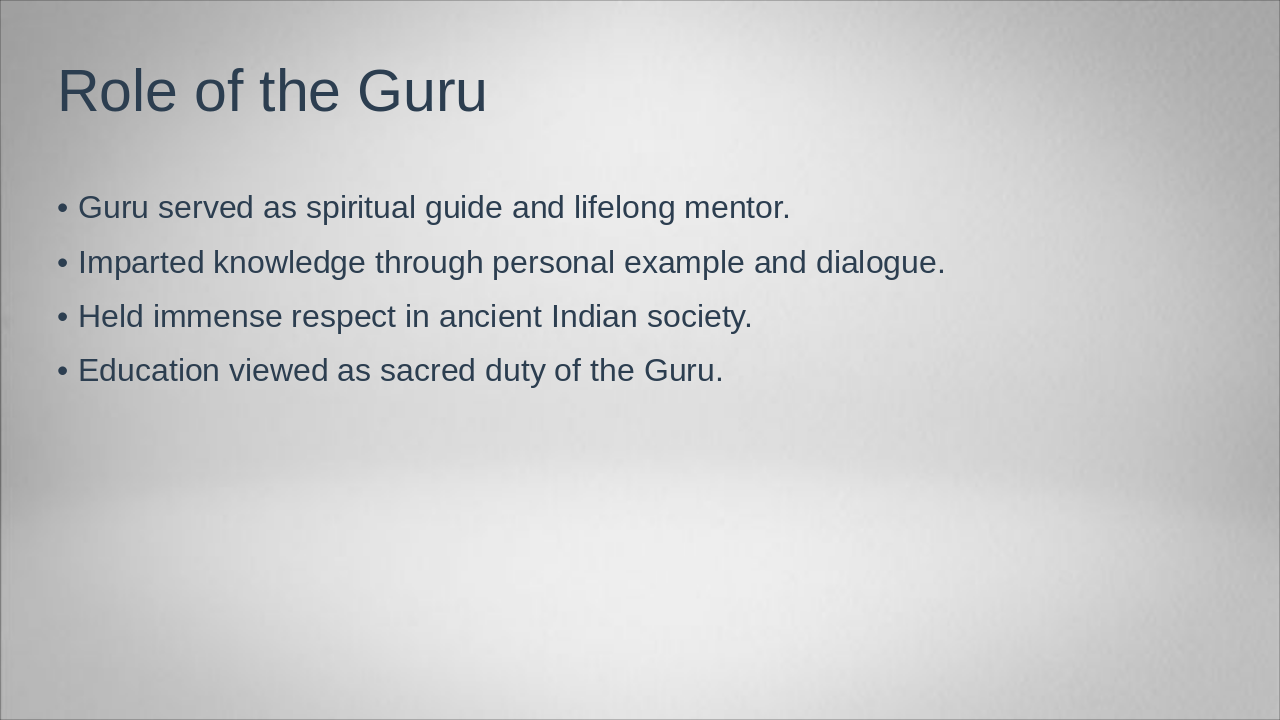
In ancient Indian society, the Guru functioned as a revered spiritual guide and lifelong mentor, imparting knowledge through personal example and dialogue. Education was regarded as the Guru's sacred duty, earning them immense respect.

Role of the Guru

  • Guru served as spiritual guide and lifelong mentor.
  • Imparted knowledge through personal example and dialogue.
  • Held immense respect in ancient Indian society.
  • Education viewed as sacred duty of the Guru.
Slide 7
Slide 8 of 11

Slide 8 - Holistic Education Approach

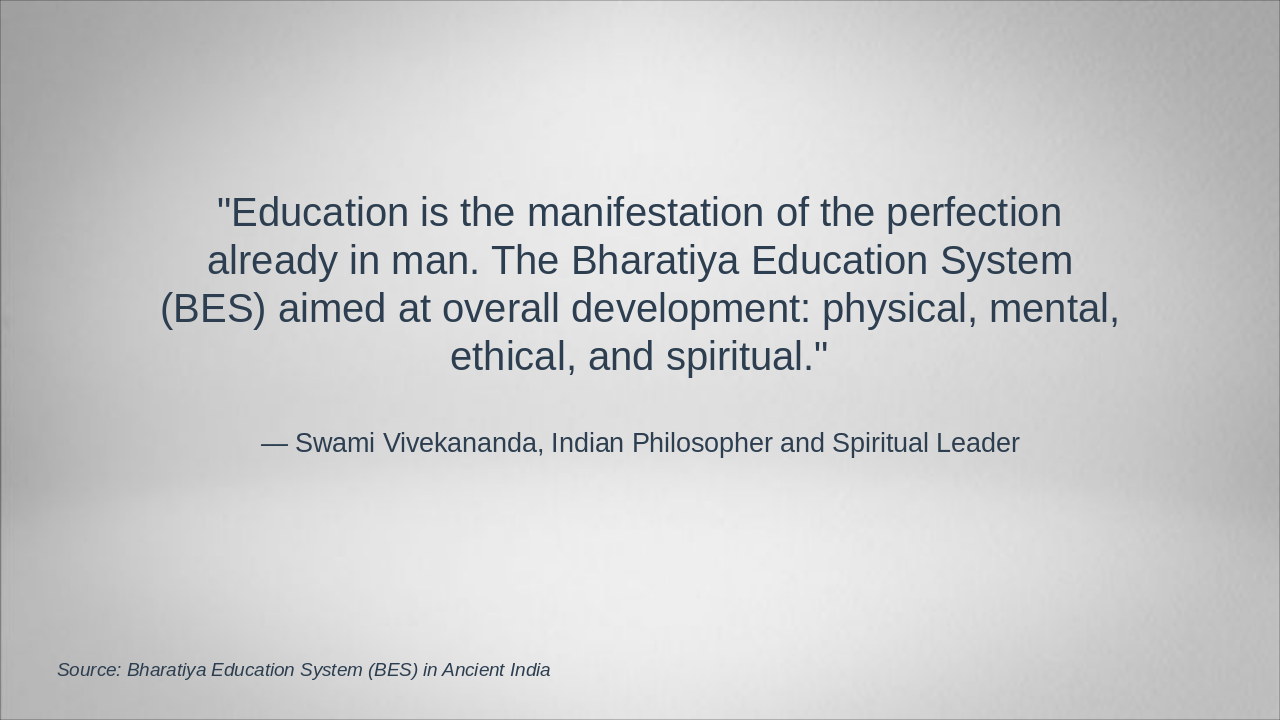
The slide features a quote from Swami Vivekananda, an Indian philosopher and spiritual leader, stating that "Education is the manifestation of the perfection already in man." It highlights how the Bharatiya Education System (BES) focuses on holistic development encompassing physical, mental, ethical, and spiritual aspects.

Holistic Education Approach

> Education is the manifestation of the perfection already in man. The Bharatiya Education System (BES) aimed at overall development: physical, mental, ethical, and spiritual.

— Swami Vivekananda, Indian Philosopher and Spiritual Leader

Source: Bharatiya Education System (BES) in Ancient India

--- Speaker Notes: BES emphasized holistic growth, integrating physical, mental, ethical, and spiritual dimensions for complete human development. This slide highlights the philosophical foundation drawing from ancient Indian wisdom.

Slide 8
Slide 9 of 11

Slide 9 - Evolution and Methods

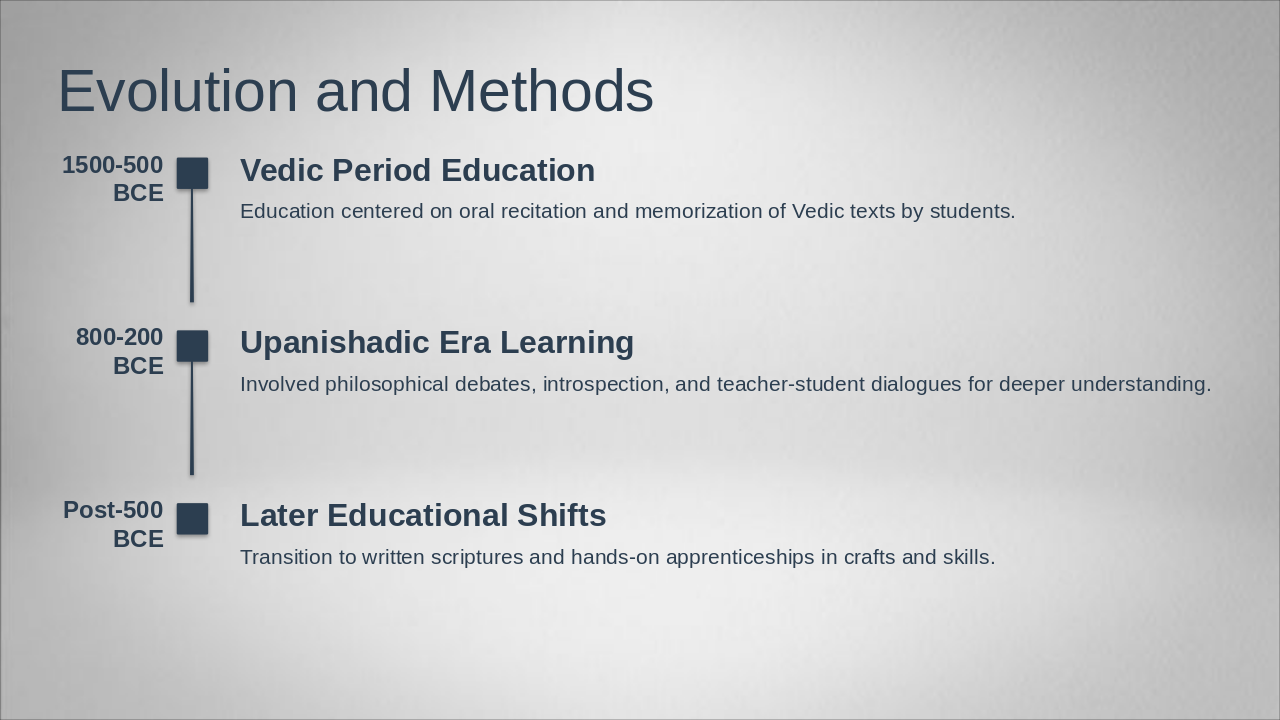
The timeline slide "Evolution and Methods" traces ancient Indian education from the Vedic Period (1500-500 BCE), where learning focused on oral recitation and memorization of sacred texts, to the Upanishadic Era (800-200 BCE), emphasizing philosophical debates, introspection, and teacher-student dialogues. It concludes with post-500 BCE shifts toward written scriptures and practical apprenticeships in crafts and skills.

Evolution and Methods

1500-500 BCE: Vedic Period Education Education centered on oral recitation and memorization of Vedic texts by students. 800-200 BCE: Upanishadic Era Learning Involved philosophical debates, introspection, and teacher-student dialogues for deeper understanding. Post-500 BCE: Later Educational Shifts Transition to written scriptures and hands-on apprenticeships in crafts and skills.

Slide 9
Slide 10 of 11

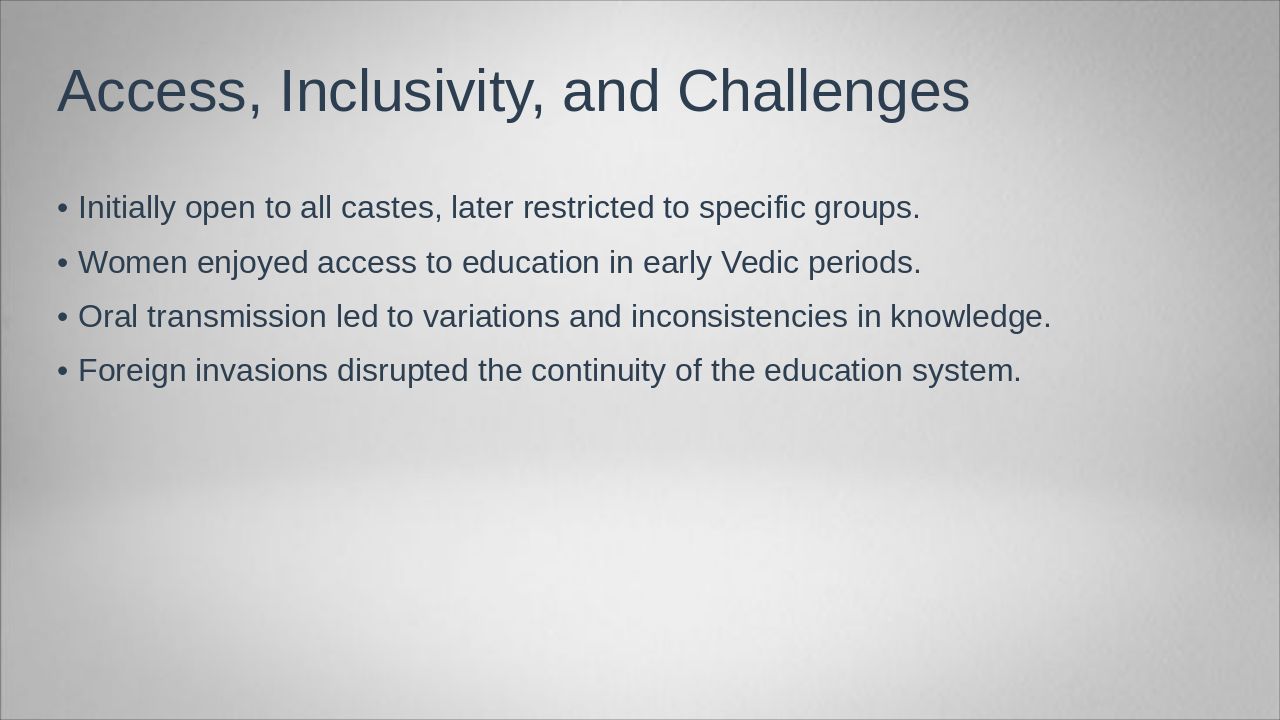
Slide 10 - Access, Inclusivity, and Challenges

The slide discusses the evolution of access and inclusivity in ancient Vedic education, noting that it was initially open to all castes but later restricted to specific groups, while women enjoyed access during early periods. It also highlights key challenges, including variations from oral transmission and disruptions caused by foreign invasions.

Access, Inclusivity, and Challenges

  • Initially open to all castes, later restricted to specific groups.
  • Women enjoyed access to education in early Vedic periods.
  • Oral transmission led to variations and inconsistencies in knowledge.
  • Foreign invasions disrupted the continuity of the education system.
Slide 10
Slide 11 of 11

Slide 11 - Conclusion

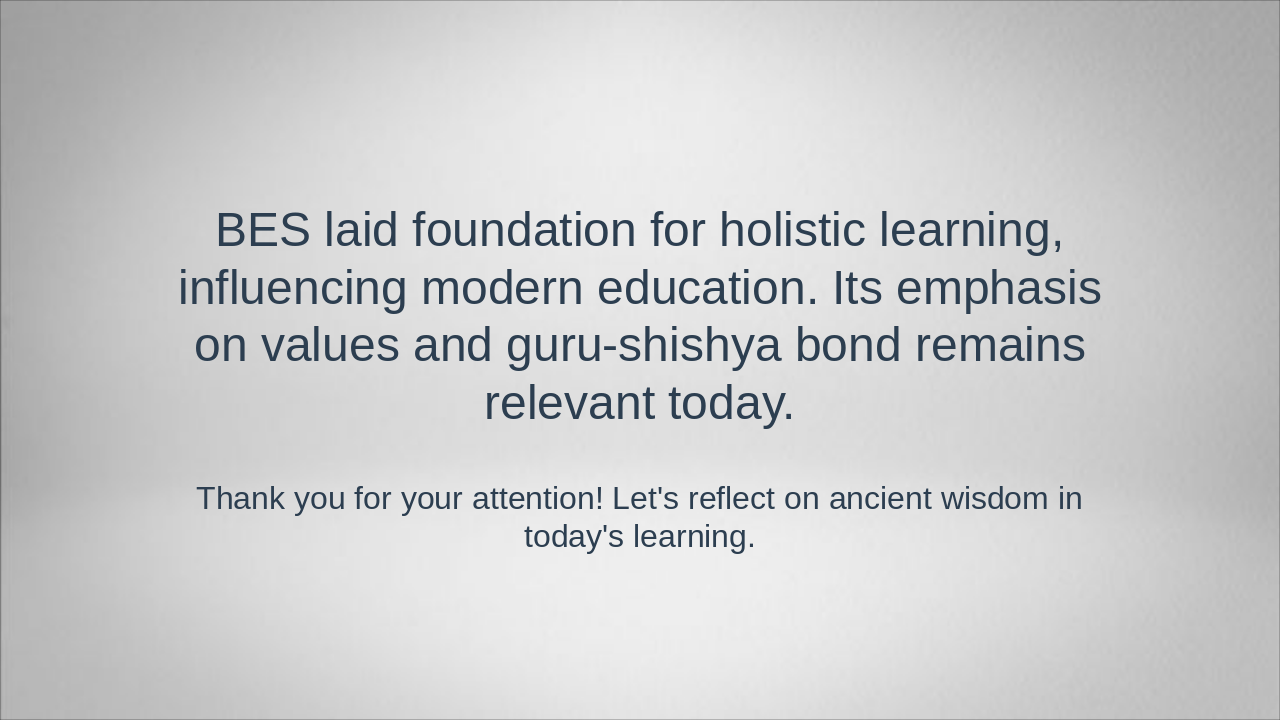
The slide concludes that the Buddha Education System (BES) established a foundation for holistic learning, profoundly influencing modern education, with its focus on values and the guru-shishya bond remaining highly relevant today. It ends with a thank you for attention and an invitation to reflect on ancient wisdom in contemporary learning.

Conclusion

BES laid foundation for holistic learning, influencing modern education. Its emphasis on values and guru-shishya bond remains relevant today.

Thank you for your attention! Let's reflect on ancient wisdom in today's learning.

Slide 11
Powered by AI

Create Your Own Presentation

Generate professional presentations in seconds with Karaf's AI. Customize this presentation or start from scratch.

Create New Presentation

Powered by Karaf.ai — AI-Powered Presentation Generator