Slide 1 of 9
Slide 1 - Foundations of EIPIC Social Work Training
Foundations of EIPIC Social Work Training
Building Competency in Family-Centred Early Intervention Social Work
---
Photo by Nastuh Abootalebi on Unsplash
Generated from prompt:
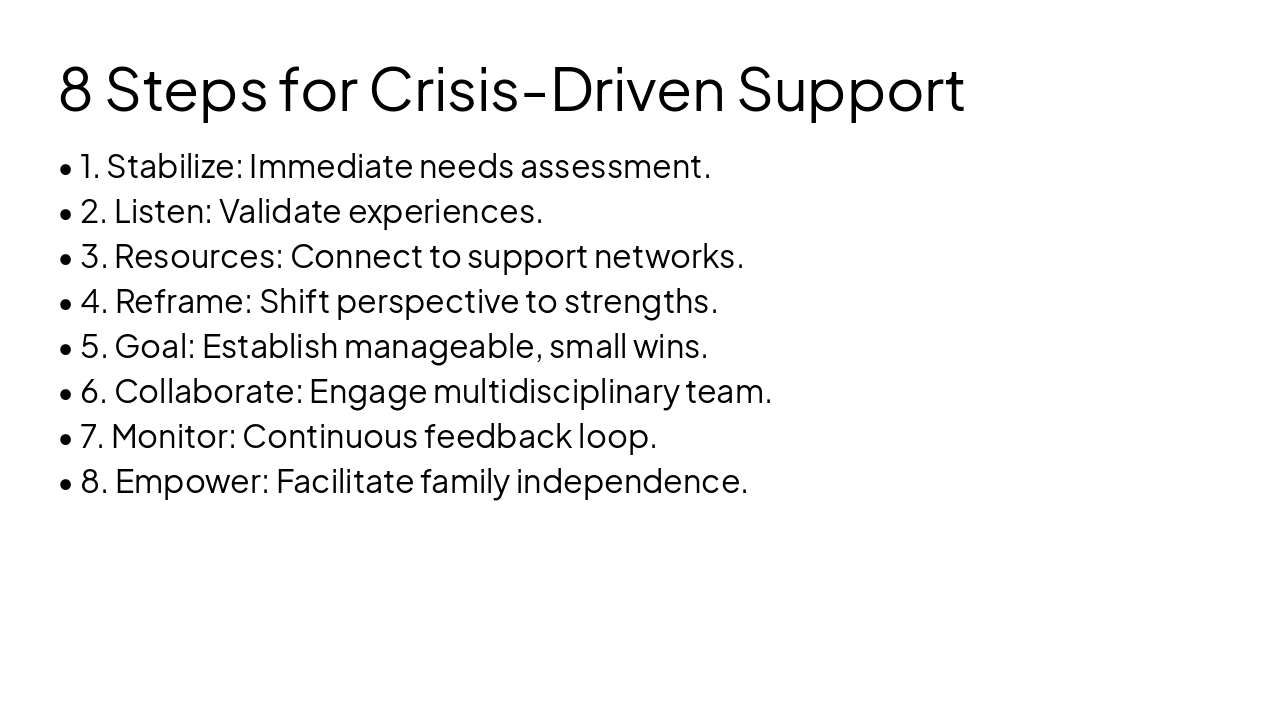
Beautify and redesign a training presentation titled 'Foundations of EIPIC Social Work Training'. Create a clean, modern, professional slide deck with strong visual hierarchy. Include sections: 1) Objectives, 2) EI Philosophy, 3) Key Frameworks (Developmental Lens, Family-Centred Practice, Strength-Based), 4) Crisis vs Developmental Comparison, 5) Practical Case Example, 6) Steps to Support Crisis-Driven Families (8 steps), 7) Role of EIPIC Social Worker, 8) FSC vs EIPIC Mindset Shift, 9) EIC Workflow (Intake → FSNA → TDA → FSP → Review/Transition), 10) Theoretical Lenses (Ecological, Strengths-Based, Family Systems, Trauma-Informed), 11) Key Takeaways. Use icons, minimal text per slide, bold headings, and consistent color palette (teal/blue + warm accent). Include diagrams for flow and comparison tables. Add speaker notes summarizing detailed content.
This training deck outlines the core foundations of EIPIC (Early Intervention Programme for Infants and Children) social work, including objectives, philosophies, key frameworks like developmental and family-centred approaches, crisis vs. development
Foundations of EIPIC Social Work Training
Building Competency in Family-Centred Early Intervention Social Work
---
Photo by Nastuh Abootalebi on Unsplash
---
Photo by Tom Parkes on Unsplash
1
Setting the foundation for effective Early Intervention practice.
---
Photo by Nastuh Abootalebi on Unsplash

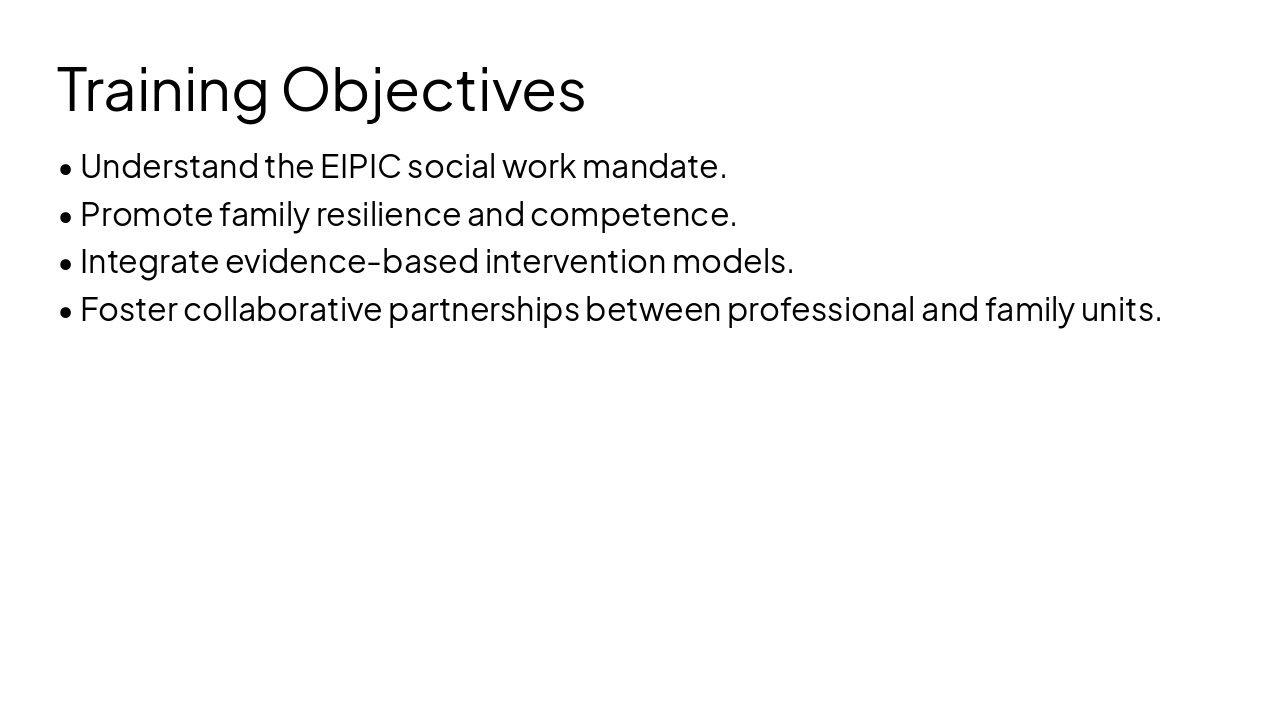
🌱 Developmental Lens Views the child within their unique growth path.
🏠 Family-Centred Practice Family as the constant in the child's life.
💪 Strengths-Based Approach Focuses on potential, resilience, and resources.
🛡️ Trauma-Informed Lens Understanding the impact of trauma and history.
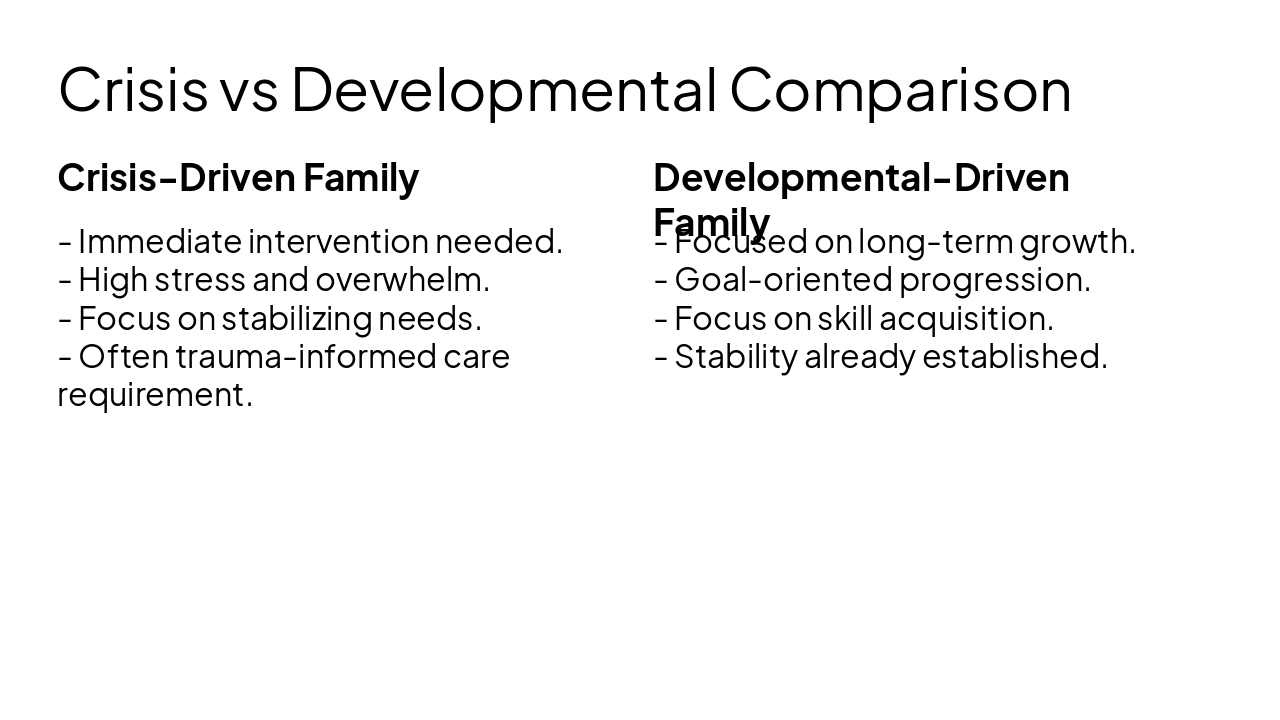
Crisis-Driven Family
Developmental-Driven Family
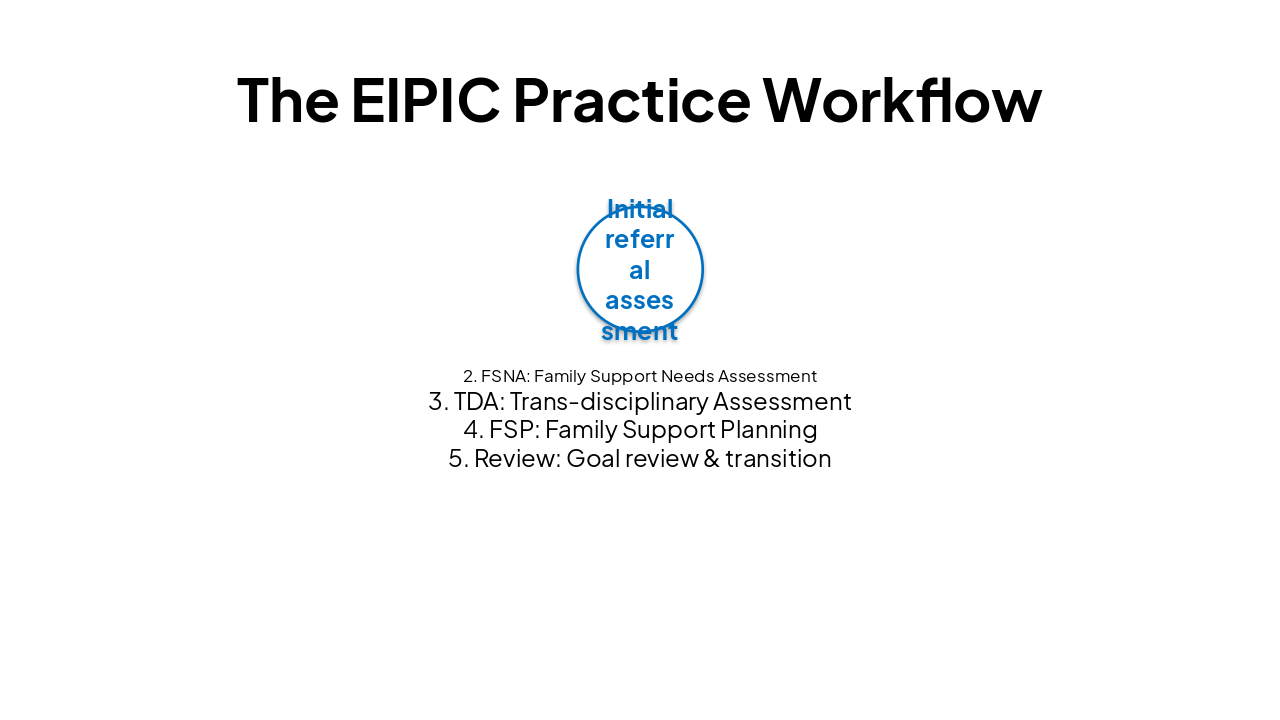
| 1. Intake | 2. FSNA | 3. TDA | 4. FSP | 5. Review |
|---|---|---|---|---|
| Initial referral assessment | Family Support Needs Assessment | Trans-disciplinary Assessment | Family Support Planning | Goal review & transition |
Key Takeaways: Keep families at the core, focus on strengths, and always adapt your approach.
Professional and resilient practices lead to better outcomes.
---
Photo by Tom Parkes on Unsplash
Explore thousands of AI-generated presentations for inspiration
Generate professional presentations in seconds with Karaf's AI. Customize this presentation or start from scratch.