Slide 1 - نشأة الكويت
This title slide is titled "نشأة الكويت," meaning "The Origin of Kuwait." Its subtitle describes a formal historical narrative presentation about Kuwait's founding.
نشأة الكويت
عرض تقديمي رسمي تاريخي روائي عن نشأة الكويت

Generated from prompt:
عرض تقديمي رسمي وسردي بعنوان "نشأة الكويت" مكوّن من 12 شريحة. الأسلوب تاريخي روائي. الشرائح: 1️⃣ العنوان: نشأة الكويت ⭐ 2️⃣ مقدمة عامة: لمحة عن نشأة الكويت في القرن 17 وأهمية موقعها. 3️⃣ تأسيس الكويت: تأسست على يد بني خالد بقيادة براك بن عريعر وبناء الكوت. 4️⃣ تجمع السكان حول الكوت وتحولها إلى قرية الكويت. 5️⃣ الأراضي ونفوذ بني خالد (الأحساء، قطر، البصرة، وسط الجزيرة العربية). 6️⃣ وصول العتوب للكويت وموافقة بني خالد. 7️⃣ من هم العتوب: تجمع قبلي من عنزة (آل صباح، آل خليفة، الجلاهمة). 8️⃣ أسباب هجرتهم ومسار هجرتهم من الهدّار إلى الكويت. 9️⃣ تنوع المجتمع الكويتي بعد استقرار العتوب. 10️⃣ أصل تسمية الكويت من الكوت ومعنى القرين عند الأوروبيين. 11️⃣ ازدهار الكويت في القرن 18 بقيادة العتوب. 12️⃣ عوامل نمو وتطور الكويت: محلية وخليجية (القوى البحرية، حماية بني خالد، ضعف فارس، اضطرابات العراق، ازدهار التجارة).
Explores Kuwait's 17th-century founding by Bani Khalid via the Kut fort, Utub migration from Anaza (Al Sabah, Al Khalifa), societal diversity, name origins, and 18th-century growth amid regional dynam
This title slide is titled "نشأة الكويت," meaning "The Origin of Kuwait." Its subtitle describes a formal historical narrative presentation about Kuwait's founding.
عرض تقديمي رسمي تاريخي روائي عن نشأة الكويت

Kuwait originated in the 17th century with a strategic location on the Arabian Gulf. This position established it as a key commercial center, marking the start of its historical and economic development.
Source: نشأة الكويت

Kuwait was founded by the Bani Khalid tribe under the leadership of Barak bin Gharair. They built Al-Qut as an initial defensive fortress, which became the nucleus of stability, security, and population attraction.
Source: نشأة الكويت

The slide illustrates populations gathering around the Kot fort for protection, marking the growth of Kuwait's first settlement. It depicts a gradual transformation into an emerging village.
Source: History of Kuwait

Bani Khalid's influence extended to coastal regions like Al-Ahsa, Qatar, and Basra, where they controlled Gulf ports and maritime trade routes, boosting their economic and military power. It also reached central Arabia via strong tribal alliances, securing inland roads and resources for greater regional dominance.
| المناطق الساحلية | وسط الجزيرة العربية |
|---|---|
| امتد نفوذ بني خالد إلى الأحساء وقطر والبصرة، حيث سيطروا على الموانئ والطرق التجارية البحرية في الخليج، مما عزز قوتهم الاقتصادية والعسكرية بشكل كبير. | وصل نفوذهم إلى قلب الجزيرة العربية، من خلال تحالفات قبلية قوية، مما سمح بالسيطرة على الطرق البرية والموارد الداخلية، وتعزيز هيمنتهم الإقليمية. |
Source: نشأة الكويت

The Utubs arrived in Kuwait with Bani Khalid's approval and settled in the developing village. This event radically altered Kuwait's history, marking the start of a new era of maritime prosperity.

The Utubs are a tribal confederation from the great Anaza tribe, consisting of the Al Sabah, Al Khalifa, and Al Jalhama families. The Al Sabah historically ruled Kuwait, while the Al Khalifa later ruled Bahrain.

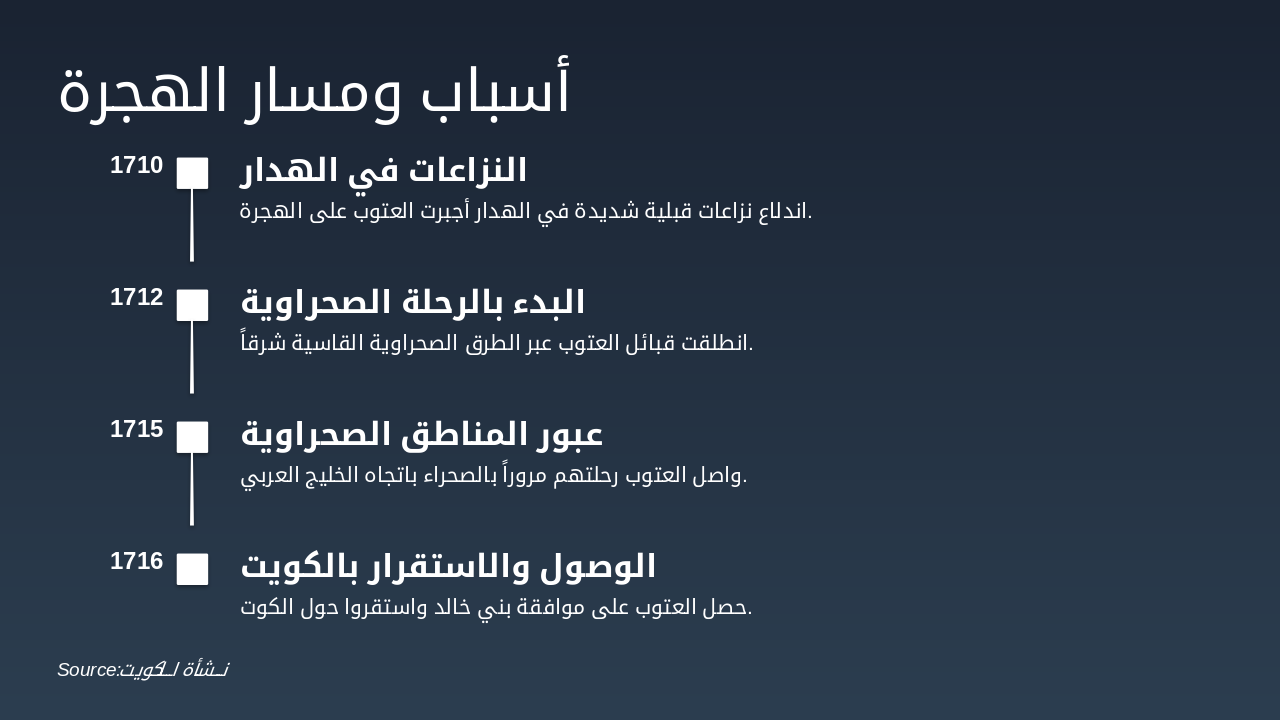
In 1710, tribal conflicts in Al-Hadar forced the Utub to begin migrating eastward. From 1712 to 1716, they crossed harsh deserts and settled in Kuwait with Bani Khalid's approval around Al-Kut.
1710: النزاعات في الهدار اندلاع نزاعات قبلية شديدة في الهدار أجبرت العتوب على الهجرة. 1712: البدء بالرحلة الصحراوية انطلقت قبائل العتوب عبر الطرق الصحراوية القاسية شرقاً. 1715: عبور المناطق الصحراوية واصل العتوب رحلتهم مروراً بالصحراء باتجاه الخليج العربي. 1716: الوصول والاستقرار بالكويت حصل العتوب على موافقة بني خالد واستقروا حول الكوت.
Source: نشأة الكويت

The diversity of Kuwaiti society grew after the Utub settlement, as Bedouin tribes joined Bani Khalid and merchants arrived from various Gulf regions. This created a multi-ethnic, multi-professional community that formed the foundation for commercial and cultural prosperity.

The slide, titled "Origin of the Name Kuwait," features a quote from Kuwaiti historian Dr. Badour Al-Ghanim. It explains that Kuwait derives from "Al-Kout," a 17th-century fort around which tribes gathered, while Europeans named it "Al-Qurain" for its prominent hill-like shape.
> 'سميت الكويت من "الكوت"، الحصن العتيق الذي بني في القرن السابع عشر، حول الذي تجمعت القبائل. أما الأوروبيون، فأطلقوا عليها "القرين" لشكلها البارز كالتل العالي.'
— د. بدور الغانم، مؤرخة كويتية
Source: من كتاب 'نشأة الكويت'

This slide showcases Kuwait's 18th-century prosperity with a city population exceeding 20,000 and 10x growth from village to major city. It highlights over 400 commercial ships, forming the Gulf's largest fleet.
نمو هائل بنهاية القرن
أكبر أسطول في الخليج
من قرية إلى مدينة كبرى Source: تقديرات تاريخية

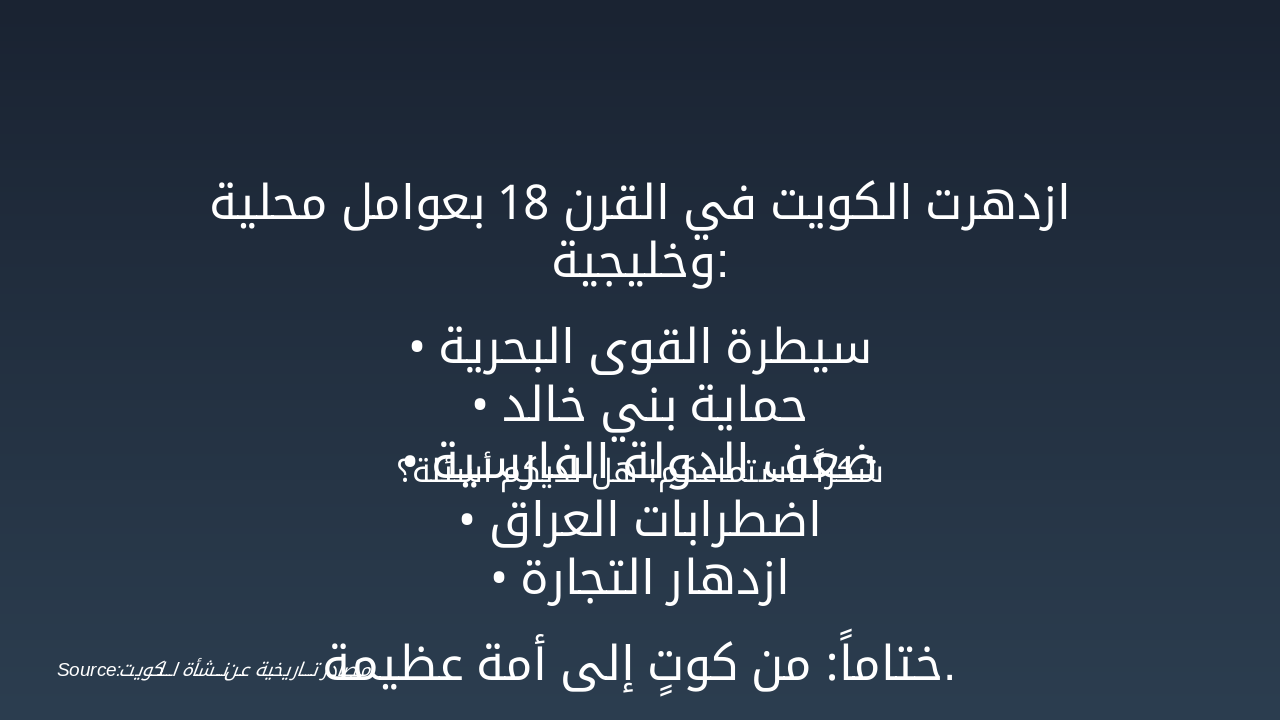
Kuwait flourished in the 18th century due to local and Gulf factors like naval dominance, Bani Khalid protection, Persian weakness, Iraqi instability, and trade prosperity. The slide concludes with "From Kout to a great nation" and thanks the audience while inviting questions.
ازدهرت الكويت في القرن 18 بعوامل محلية وخليجية:
ختاماً: من كوتٍ إلى أمة عظيمة.
شكراً لاستماعكم! هل لديكم أسئلة؟
Source: مصادر تاريخية عن نشأة الكويت

Explore thousands of AI-generated presentations for inspiration
Generate professional presentations in seconds with Karaf's AI. Customize this presentation or start from scratch.