Slide 1 of 9
Slide 1 - USSR: Joseph Stalin & WWII
USSR: Joseph Stalin & WWII
Leadership, Strategy, and the Crucible of Global Conflict
Generated from prompt:
Enhance and redesign a PowerPoint presentation about the USSR under Joseph Stalin during WWII. Improve visual design, layout, and clarity while keeping the content. Use a modern, professional theme with consistent colors (reds, dark grays, white), strong typography, icons, and visuals. Add slide titles, concise bullet points, and visual hierarchy. Slides: 1. Title Slide: USSR: Joseph Stalin & WWII (with subtitle and impactful background image) 2. Objective & Context (clean layout with icons) 3. USSR Goals (split into political, strategic, primary) 4. USSR Fears (use icons and sections) 5. USSR Strengths (visual comparison or infographic style) 6. Strategy: Prepare for War (timeline or process diagram) 7. Response to Crisis Events (timeline with key events: Germany rearmament, Anschluss, Czechoslovakia, Poland) 8. Reflection & Analysis (clean bullet + emphasis) 9. Conclusion (strong closing statement slide) Add visuals such as maps, timelines, and icons. Keep text concise and readable. Use animations subtly.
Analyze Joseph Stalin's leadership, the Soviet Union's goals, fears, strengths, and strategic preparations during WWII, from the Great Purge to victory, reflecting on the immense costs and superpower emergence.
USSR: Joseph Stalin & WWII
Leadership, Strategy, and the Crucible of Global Conflict
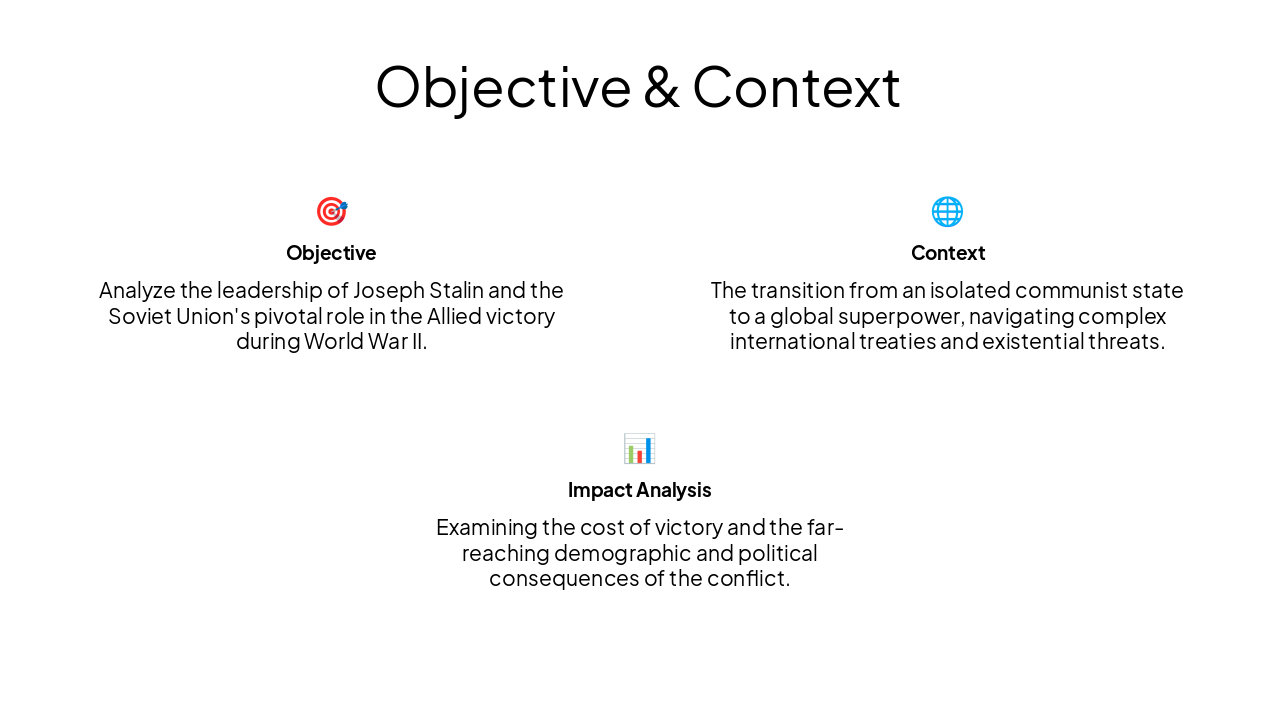
🎯 Objective Analyze the leadership of Joseph Stalin and the Soviet Union's pivotal role in the Allied victory during World War II.
🌐 Context The transition from an isolated communist state to a global superpower, navigating complex international treaties and existential threats.
📊 Impact Analysis Examining the cost of victory and the far-reaching demographic and political consequences of the conflict.
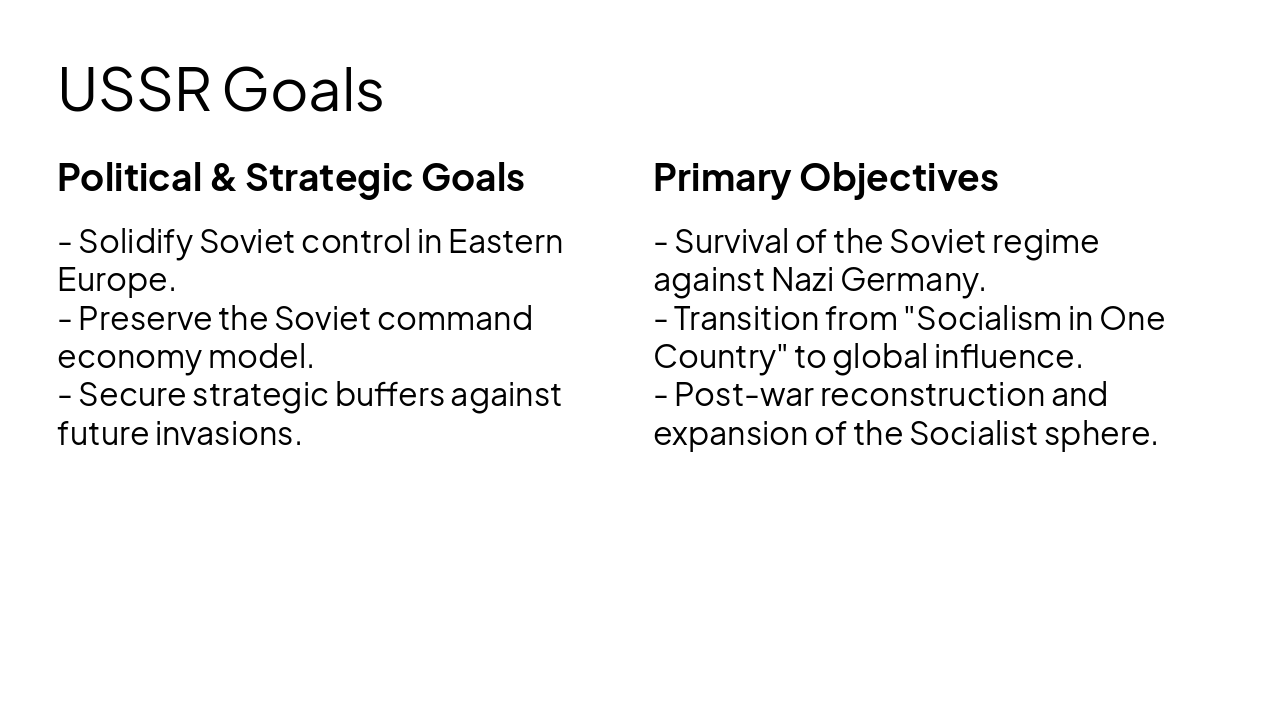
Political & Strategic Goals
Primary Objectives
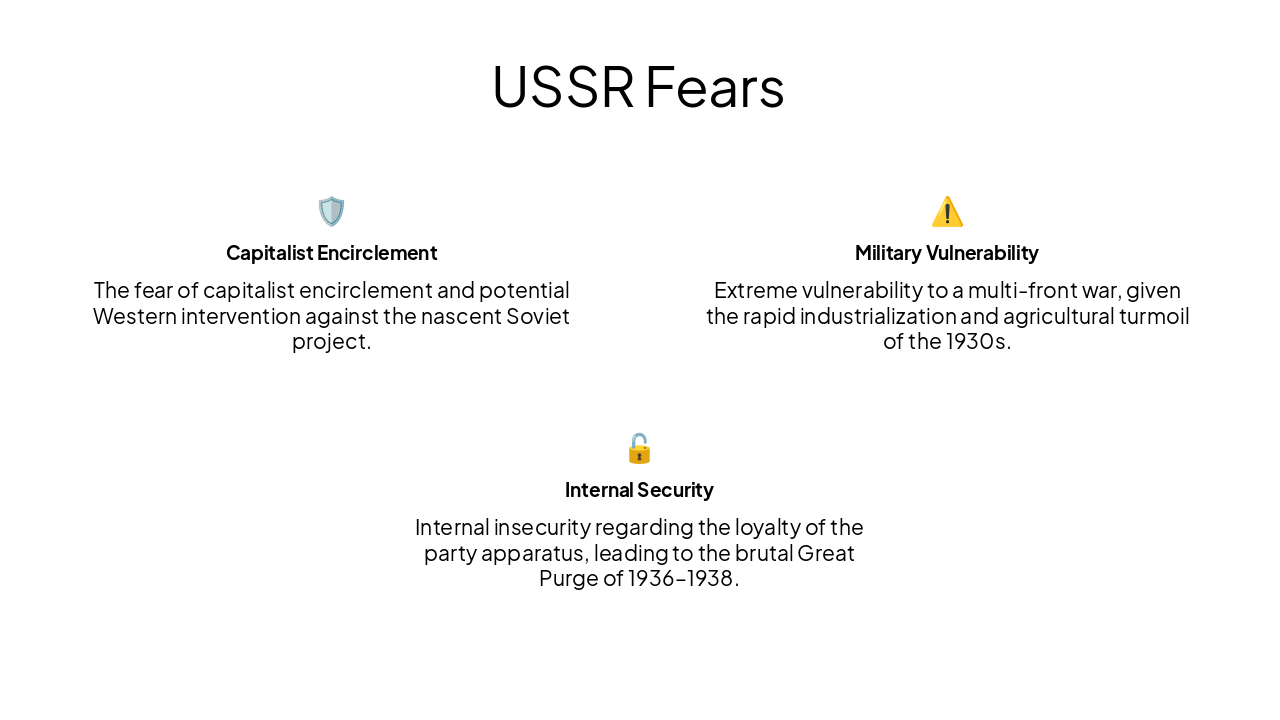
🛡️ Capitalist Encirclement The fear of capitalist encirclement and potential Western intervention against the nascent Soviet project.
⚠️ Military Vulnerability Extreme vulnerability to a multi-front war, given the rapid industrialization and agricultural turmoil of the 1930s.
🔓 Internal Security Internal insecurity regarding the loyalty of the party apparatus, leading to the brutal Great Purge of 1936–1938.
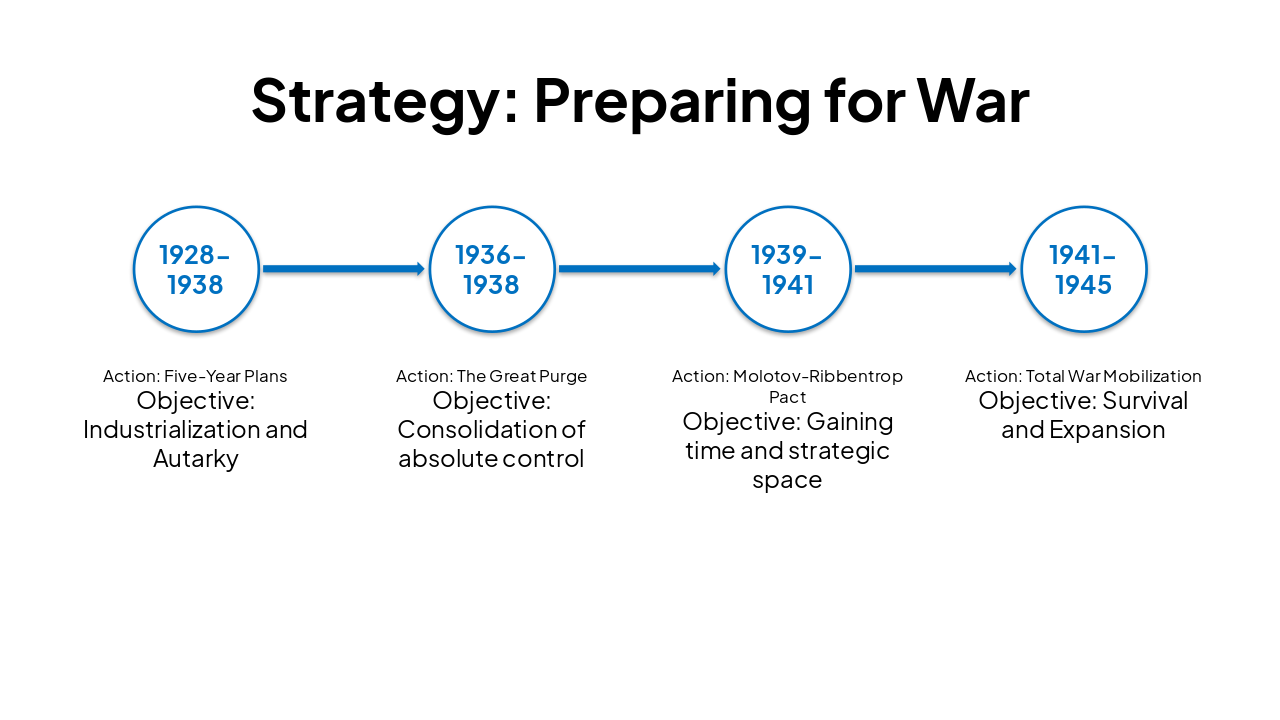
| Phase | Action | Objective |
|---|---|---|
| 1928-1938 | Five-Year Plans | Industrialization and Autarky |
| 1936-1938 | The Great Purge | Consolidation of absolute control |
| 1939-1941 | Molotov-Ribbentrop Pact | Gaining time and strategic space |
| 1941-1945 | Total War Mobilization | Survival and Expansion |
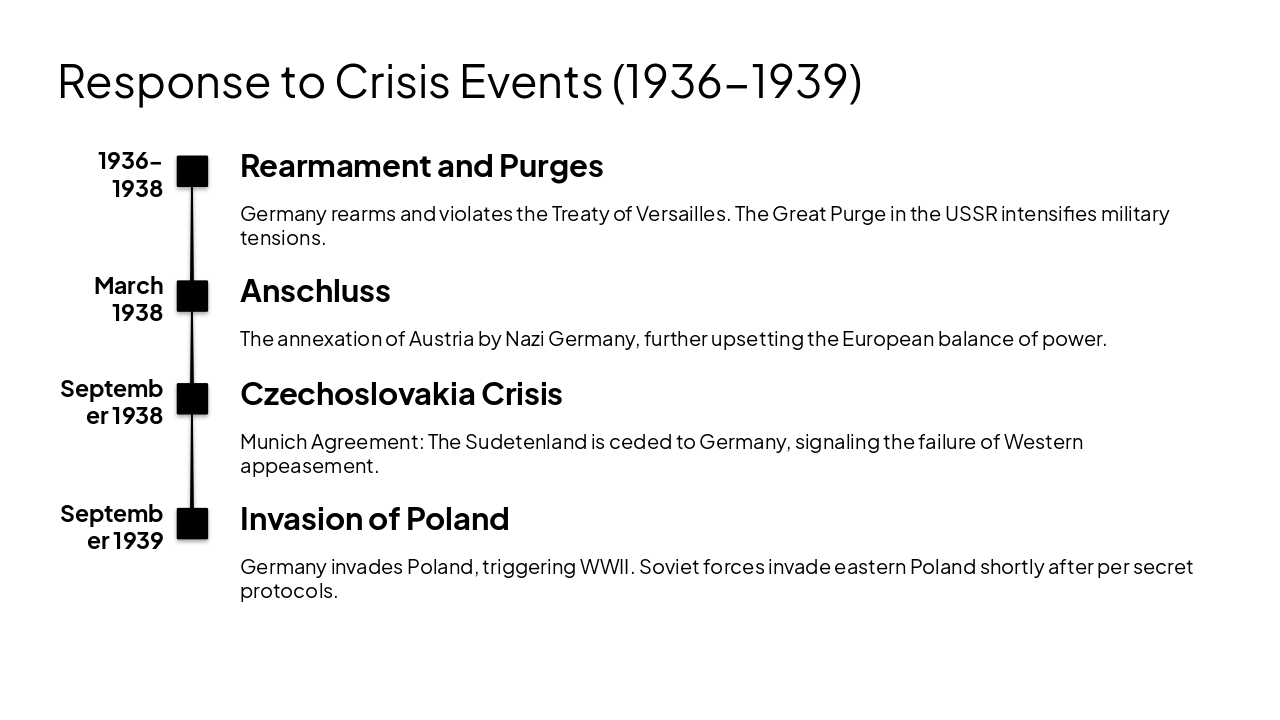
1936-1938: Rearmament and Purges Germany rearms and violates the Treaty of Versailles. The Great Purge in the USSR intensifies military tensions. March 1938: Anschluss The annexation of Austria by Nazi Germany, further upsetting the European balance of power. September 1938: Czechoslovakia Crisis Munich Agreement: The Sudetenland is ceded to Germany, signaling the failure of Western appeasement. September 1939: Invasion of Poland Germany invades Poland, triggering WWII. Soviet forces invade eastern Poland shortly after per secret protocols.
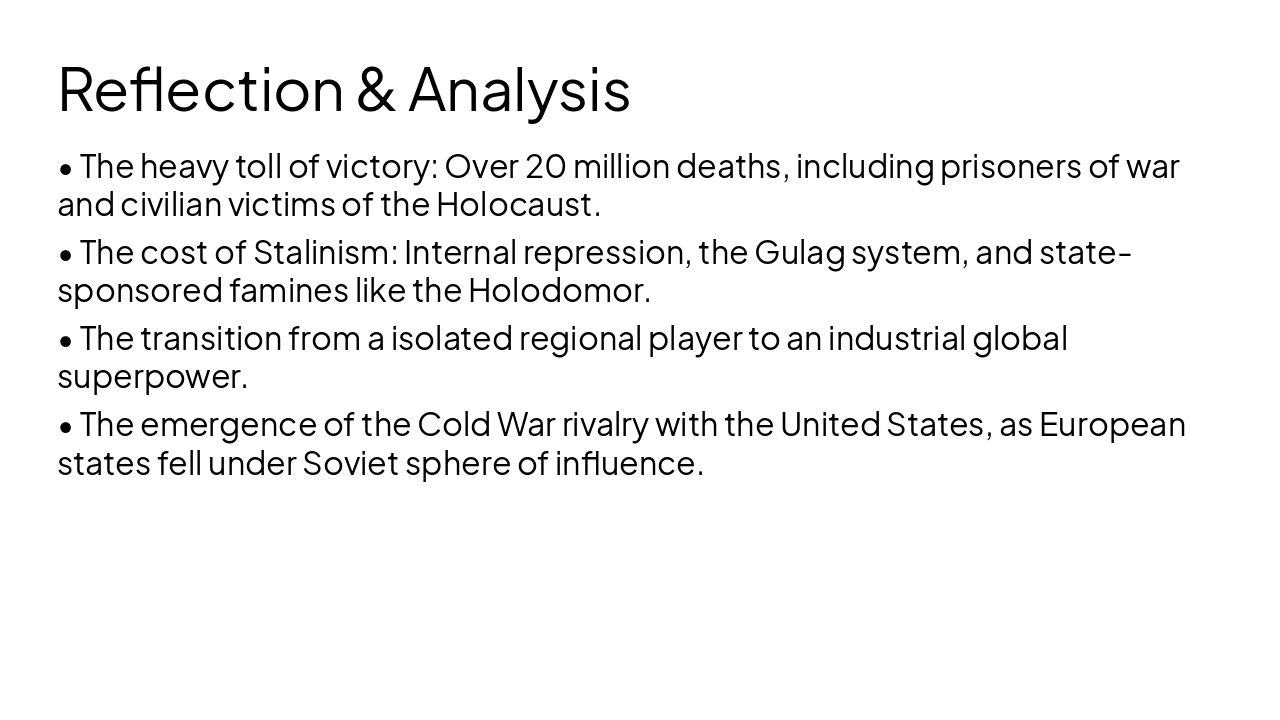
The legacy of Joseph Stalin remains a paradox: he transformed the USSR into a superpower while presiding over the death of millions.
Victory through sacrifice, dominance through total control.
Explore thousands of AI-generated presentations for inspiration
Generate professional presentations in seconds with Karaf's AI. Customize this presentation or start from scratch.