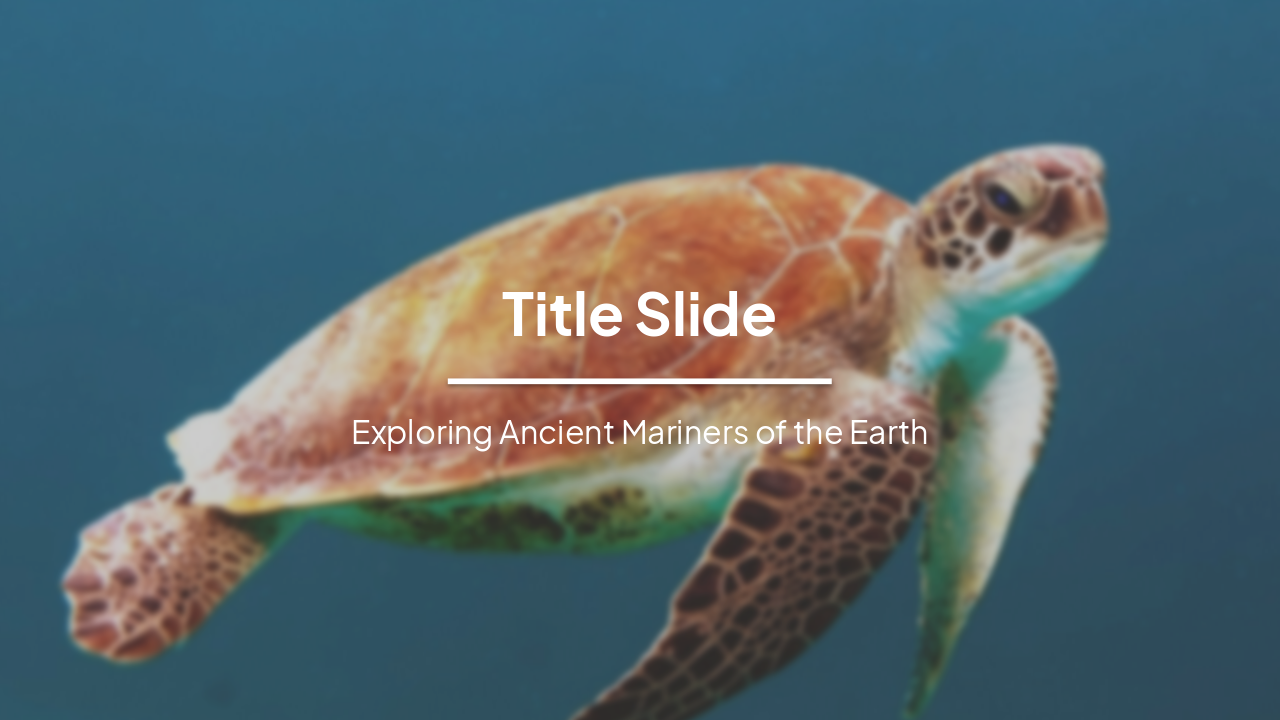
The Fascinating World of Turtles: Ancient Mariners
Generated from prompt:
Create a visually engaging Google Slides presentation about Turtles. Include the following slides: 1. Title Slide – "The Fascinating World of Turtles" with subtitle "Exploring Ancient Mariners of the Earth". 2. Introduction – Overview of turtles and their significance in nature. 3. Types of Turtles – Sea turtles, freshwater turtles, and tortoises with brief descriptions. 4. Anatomy of a Turtle – Shell structure, flippers, and unique adaptations. 5. Habitat and Distribution – Where turtles live around the world. 6. Diet and Feeding Habits – What different turtles eat. 7. Life Cycle of Turtles – From eggs to adulthood. 8. Fun Facts About Turtles – Interesting and surprising facts. 9. Threats and Conservation – Environmental challenges and conservation efforts. 10. Famous Turtle Species – Examples such as the Leatherback Sea Turtle and Green Sea Turtle. 11. Importance of Turtles in Ecosystems – Their ecological role. 12. How We Can Help – Ways individuals can contribute to turtle conservation. 13. Conclusion – Summary and key takeaways. 14. References – Credible sources and image credits. Design Guidelines: - Use ocean-inspired colors such as blue, teal, and sandy beige. - Include icons and visuals of turtles and marine environments. - Maintain clean layouts with minimal text and engaging visuals. - Use modern, readable fonts suitable for educational presentations.
This presentation dives into the captivating world of turtles, exploring their types, anatomy, habitats, diet, life cycle, fun facts, conservation threats, ecological importance, and actionable ways to protect these ancient reptiles.
Slide 2 - Introduction to Turtles
- Turtles (order Testudines) are ancient reptiles known for their unique protective shells.
- There are 360 living and recently extinct species, ranging from land-dwelling tortoises to sea turtles.
- They have evolved to inhabit diverse environments, from deserts and forests to vast oceans.
- Turtles are integral to many ecosystems and hold significant cultural meaning in myths and folktales worldwide.
Slide 3 - Types of Turtles
- Sea Turtles: Adapted for life in the ocean with paddle-like flippers and streamlined shells.
- Freshwater Turtles: Often referred to as terrapins, they live in rivers, ponds, and lakes.
- Tortoises: Primarily land-dwelling, characterized by sturdier, domed shells and elephant-like feet for walking on land.
Slide 4 - Anatomy of a Turtle
- Shell Structure: Composed of the upper carapace (dome) and lower plastron (belly-plate).
- Material: The shell is made of bone covered by keratin scales—the same material as hair and claws.
- Adaptations: Flippers in sea turtles aid in long-distance swimming, while strong limbs support movement on land.
Slide 5 - Habitat and Distribution
- Global Reach: Found on most continents and many islands worldwide.
- Sea Turtles: Inhabit tropical and subtropical seas across the Atlantic, Pacific, and Indian Oceans.
- Terrestrial Habitats: Tortoises occupy environments ranging from arid deserts to dense tropical forests.
- Aquatic Connectivity: Many species migrate seasonally between habitats, with sea turtles traveling thousands of miles.
Slide 6 - Diet and Feeding Habits
- Opportunistic Omnivores: Most turtles feed on a variety of plants and slow-moving animals.
- Herbivory: The green sea turtle is unique as the only adult sea turtle that is strictly herbivorous, primarily consuming seagrass.
- Dietary Adaptations: Their feeding habits are closely tied to their specific environments, utilizing aquatic vegetation or terrestrial prey.
Slide 7 - Life Cycle of Turtles
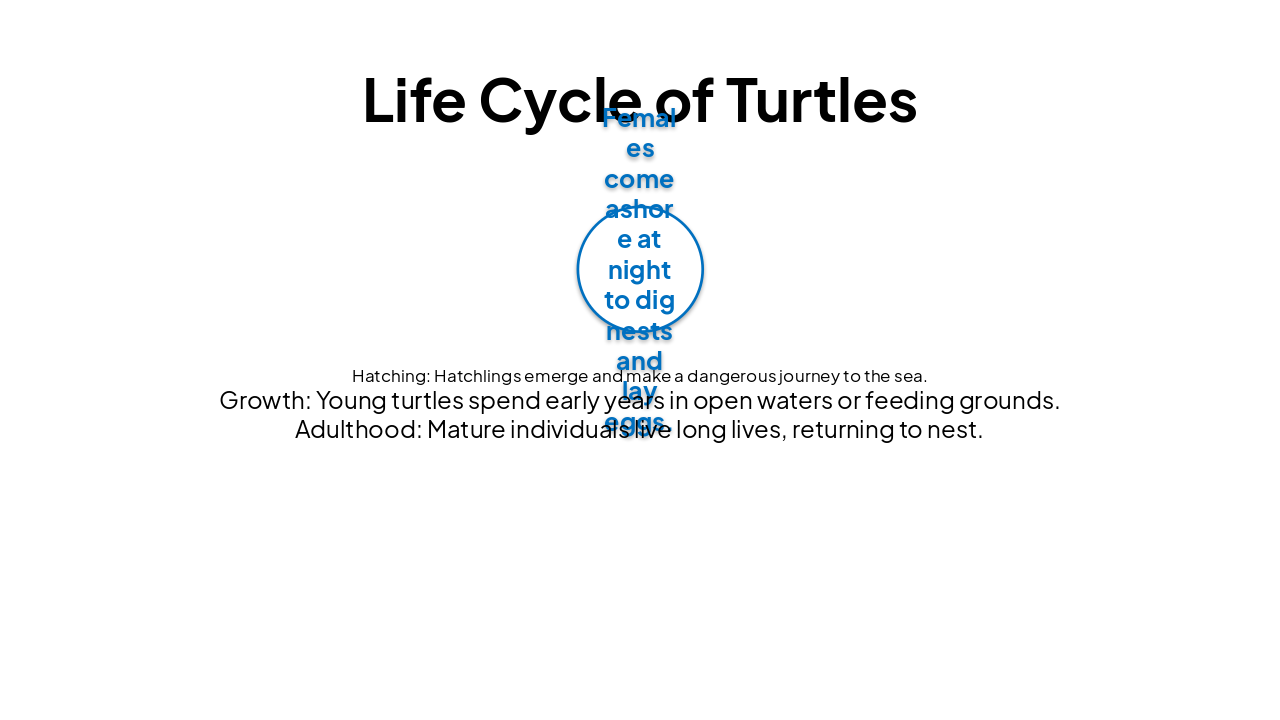
| Nesting | Hatching | Growth | Adulthood |
|---|---|---|---|
| Females come ashore at night to dig nests and lay eggs. | Hatchlings emerge and make a dangerous journey to the sea. | Young turtles spend early years in open waters or feeding grounds. | Mature individuals live long lives, returning to nest. |
Slide 8 - Fun Facts About Turtles
🌡️ Cold-Blooded Nature Turtles are ectotherms, meaning their internal body temperature is regulated by the environment.
🦴 Unique Evolution The carapace develops from the ribs, growing sideways to form protective plates.
🗺️ Great Migrators Some sea turtles are known to migrate long distances between feeding grounds and nesting beaches.
Slide 9 - Threats and Conservation
- Threats: Habitat destruction, pollution, being caught as bycatch in fishing nets, and illegal hunting for meat or shells.
- Conservation Status: Five of seven sea turtle species are listed as threatened with extinction globally.
- Protection: Most countries have implemented laws to protect nesting areas and prohibit harming or collecting turtles.
- International Efforts: Organizations and treaties like CITES work to regulate trade and safeguard vulnerable populations.
Slide 10 - Famous Turtle Species
Leatherback Sea Turtle The only dermochelyid sea turtle, known for its massive, leathery shell instead of a hard one. They are deep-diving giants of the ocean.
Green Sea Turtle A large species that feeds almost exclusively on seagrass as an adult. They are known for their long-distance migrations to nesting islands.
Slide 11 - Importance in Ecosystems
- Seagrass Maintenance: Herbivorous turtles, like the green sea turtle, keep seagrass beds healthy and productive.
- Nutrient Cycling: Their movement between oceans and beaches helps transfer nutrients across ecosystems.
- Habitat Engineering: By grazing and nesting, they contribute to the biodiversity and structure of marine and coastal environments.
Slide 12 - How We Can Help
- Reduce Plastic Use: Minimize single-use plastics that end up polluting oceans.
- Support Conservation: Participate in beach cleanups and support organizations protecting nesting sites.
- Respect Wildlife: Keep distance from nesting sites and never disturb turtles or their hatchlings on beaches.
- Education: Raise awareness about the threats facing turtles and the importance of ocean conservation.
Slide 13 - Conclusion
Thank you for exploring the world of turtles with us.
Protecting these ancient mariners is essential for the health of our oceans and ecosystems.
Slide 14 - References
- Wikipedia: 'Turtle' (https://en.wikipedia.org/wiki/Turtle)
- Wikipedia: 'Sea turtle' (https://en.wikipedia.org/wiki/Seaturtle)
- Wikipedia: 'Green sea turtle' (https://en.wikipedia.org/wiki/Greensea_turtle)
- Image Credits: Images sourced from public domain and nature photography archives.
Discover More Presentations
Explore thousands of AI-generated presentations for inspiration
Create Your Own Presentation
Generate professional presentations in seconds with Karaf's AI. Customize this presentation or start from scratch.