Slide 1 of 8
Slide 1 - Breaking Stereotypes: Teens Changing the World
Breaking Stereotypes: Teens Changing the World
Teen volunteering challenges stereotypes, reveals true impact.
Generated from prompt:
Breaking Stereotypes: How Teenagers Are Changing the World Through Volunteering ⸻ Introduction Teenagers are often judged by negative stereotypes. Many people believe that teens are lazy, irresponsible, or only interested in social media and entertainment. These ideas are common in movies, social media, and even everyday conversations. However, these stereotypes do not represent all teenagers. In reality, many young people are actively involved in volunteering and helping others. This project explores common stereotypes about teenagers and explains how volunteering proves that these stereotypes are unfair and inaccurate. ⸻ 1. Common Stereotypes About Teenagers Stereotypes are generalized beliefs about a group of people. When it comes to teenagers, some of the most common stereotypes include: • Teenagers are lazy and avoid responsibility. • Teenagers only care about their phones, video games, and social media. • Teenagers are selfish and don’t care about others. • Teenagers are rebellious and disrespectful. • Teenagers lack motivation and ambition. These stereotypes are often reinforced by media portrayals, where teens are shown as troublemakers or irresponsible. While some teenagers may behave this way, it is unfair to assume that all teens are the same. Every teenager is different, and many are hardworking, responsible, and compassionate. ⸻ 2. The Reality: Teenagers Who Volunteer Contrary to these stereotypes, many teenagers dedicate their time and energy to helping others. Volunteering is one of the clearest ways teens show responsibility and care for their communities. Examples of teen volunteering include: • Helping at food banks, soup kitchens, and shelters for homeless people. • Volunteering at hospitals, nursing homes, and community centers. • Tutoring younger students or helping classmates with schoolwork. • Participating in environmental projects like beach cleanups, tree planting, and recycling programs. • Fundraising for charities and social causes, such as cancer research, disaster relief, or animal welfare. Many teens volunteer not because they are required to, but because they genuinely want to help. This shows maturity, empathy, and a strong sense of social responsibility. ⸻ 3. How Volunteering Challenges Teen Stereotypes Volunteering directly contradicts many negative stereotypes about teenagers: a. “Teenagers are lazy.” Volunteering requires time, effort, and commitment. Teens who volunteer regularly prove that they are willing to work hard without expecting payment. b. “Teenagers are selfish.” Helping others, especially those in need, shows empathy and compassion. Volunteering is often motivated by a desire to make someone else’s life better. c. “Teenagers are irresponsible.” Many volunteer roles require punctuality, teamwork, and responsibility. Teens must show up on time, follow instructions, and work well with others. d. “Teenagers only care about themselves.” Teen volunteers often care deeply about social issues such as poverty, the environment, education, and health. Their actions show that they think beyond their own lives. Through volunteering, teenagers demonstrate positive values that go against these stereotypes and show their true potential. ⸻ 4. Benefits of Volunteering for Teenagers Volunteering not only helps others, but also benefits teenagers themselves in many ways: • Personal growth: Teens develop confidence, empathy, and a sense of purpose. • Skill development: Volunteering helps build communication, teamwork, leadership, and problem-solving skills. • Academic and career benefits: Volunteering can strengthen college and job applications and help teens explore future career interests. • Mental and emotional well-being: Helping others can reduce stress, improve mood, and create a sense of belonging. These benefits help teenagers grow into responsible, caring adults who contribute positively to society. ⸻ 5. Real-Life Examples Many teenagers around the world have made a difference through volunteering: • Teens organizing food drives in their schools. • Young people raising money for medical treatments or disaster relief. • Students creating clubs to help the environment or support mental health awareness. • Teen activists speaking out about climate change, equality, and social justice. These examples show that teenagers are capable of leadership and meaningful impact. ⸻ Conclusion Teenagers are often misunderstood due to negative stereotypes. However, volunteering and helping others clearly demonstrate that many teens are responsible, compassionate, and motivated to make a difference. Instead of judging teenagers based on stereotypes, society should recognize their positive contributions and support their efforts to help others. By encouraging teen volunteering, we can create stronger communities and help young people develop into caring, responsible adults.
This presentation debunks negative teen stereotypes like laziness and selfishness by highlighting their volunteering efforts in food banks, environmental projects, and fundraising, showcasing maturity
Breaking Stereotypes: Teens Changing the World
Teen volunteering challenges stereotypes, reveals true impact.
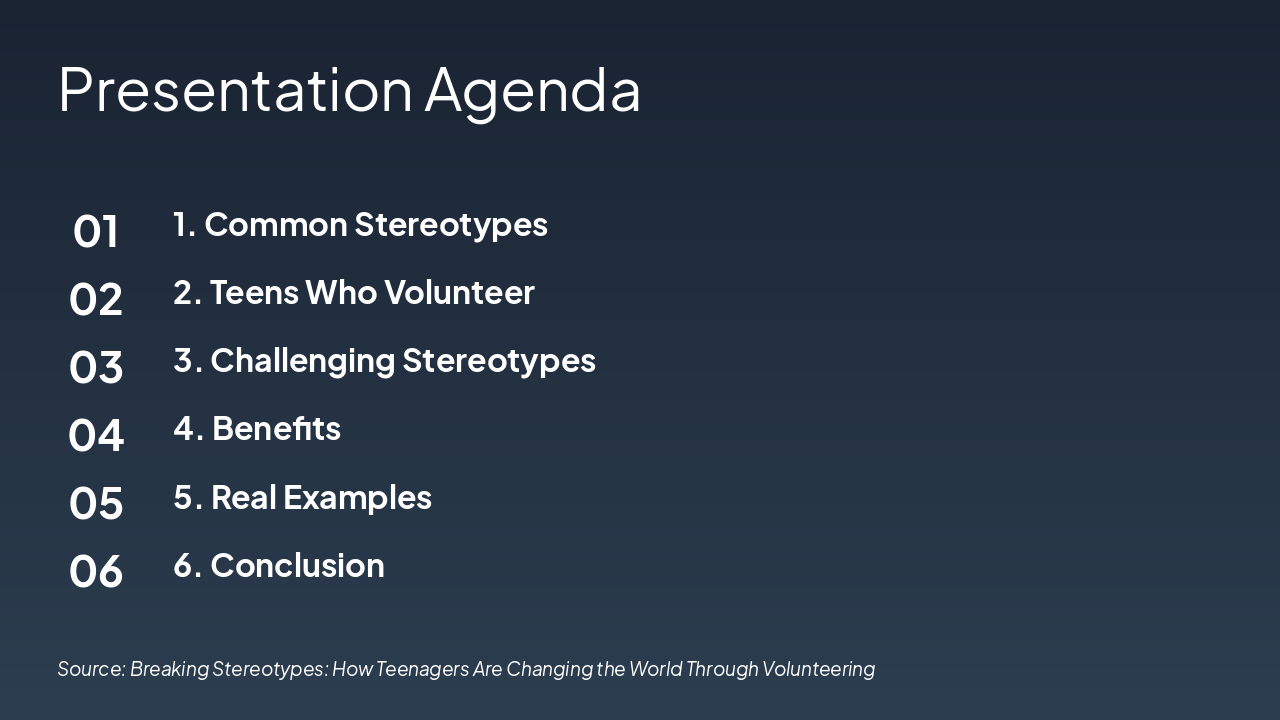
This agenda outlines a presentation on stereotypes related to teens, starting with common stereotypes and featuring teens who volunteer. It continues with challenging stereotypes, benefits, real examples, and ends with a conclusion.
Source: Breaking Stereotypes: How Teenagers Are Changing the World Through Volunteering
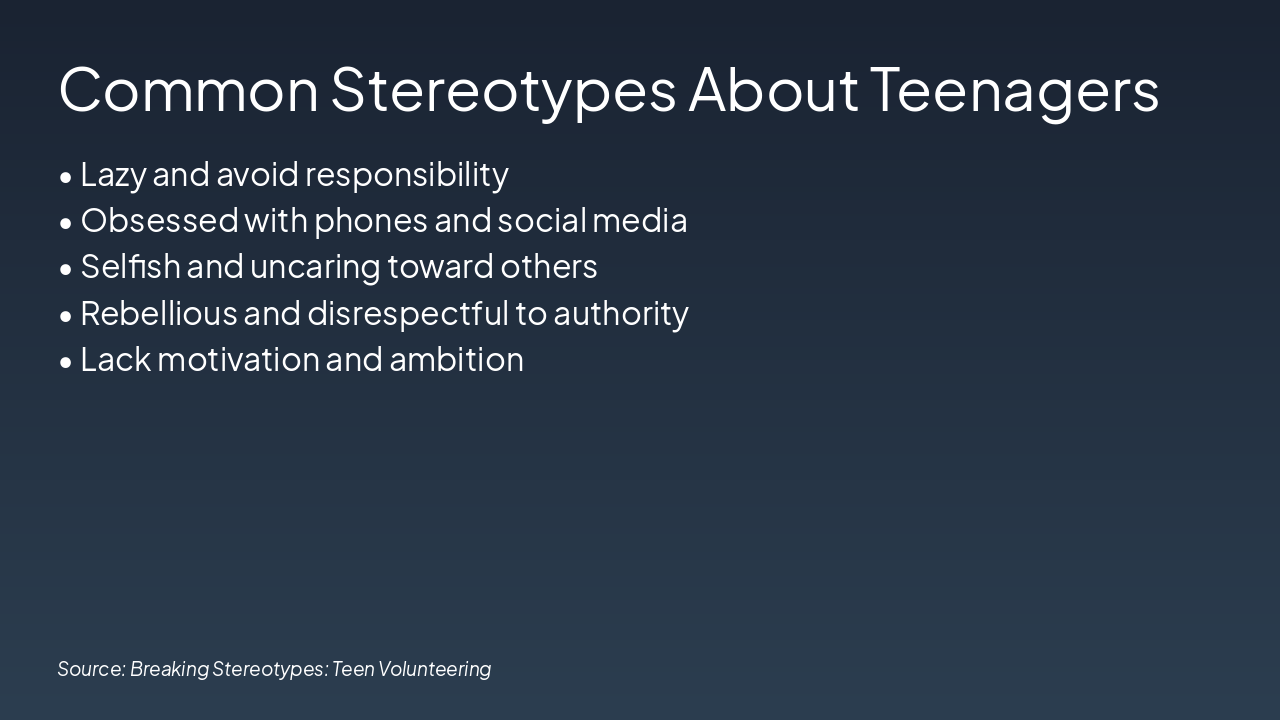
Common stereotypes about teenagers portrayed on this slide include being lazy, avoiding responsibility, and lacking motivation or ambition. They are also depicted as obsessed with phones and social media, selfish, rebellious, and disrespectful to authority.
Source: Breaking Stereotypes: Teen Volunteering
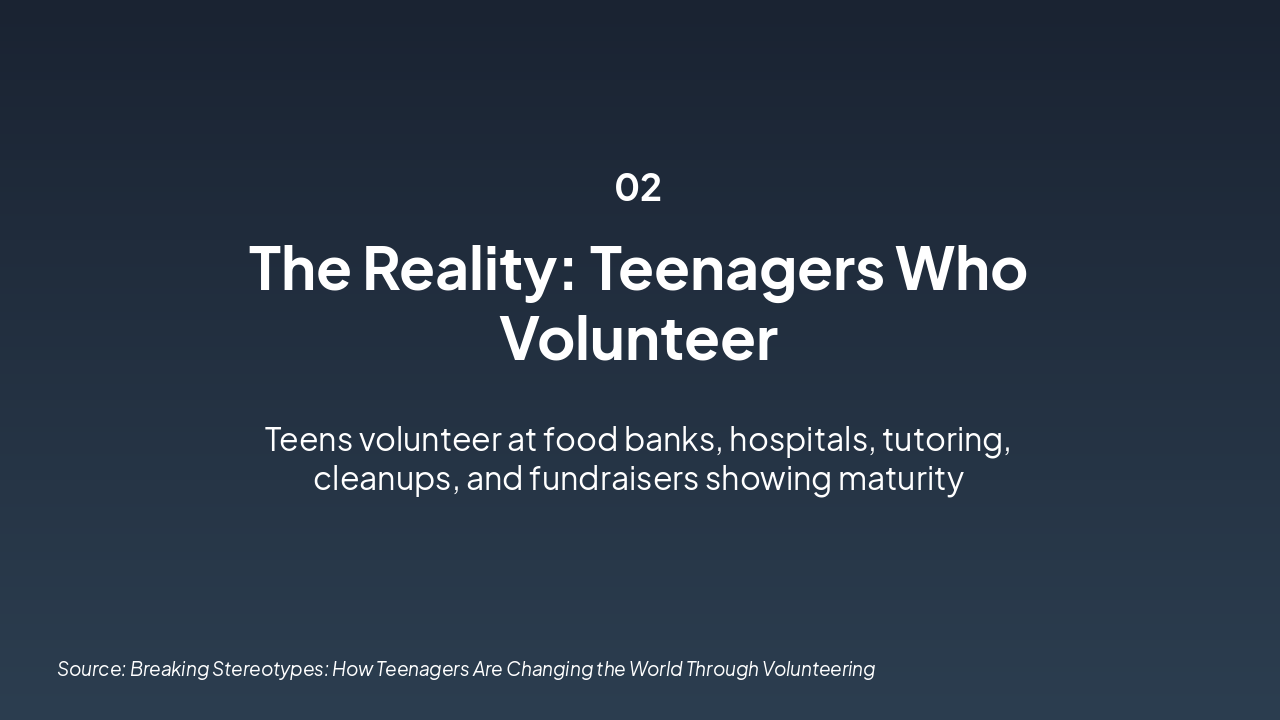
This section header slide, titled "The Reality: Teenagers Who Volunteer" (section 02), highlights real-world examples of teen volunteering. It notes that teens demonstrate maturity through activities like food banks, hospitals, tutoring, cleanups, and fundraisers.
02
Teens volunteer at food banks, hospitals, tutoring, cleanups, and fundraisers showing maturity
Source: Breaking Stereotypes: How Teenagers Are Changing the World Through Volunteering
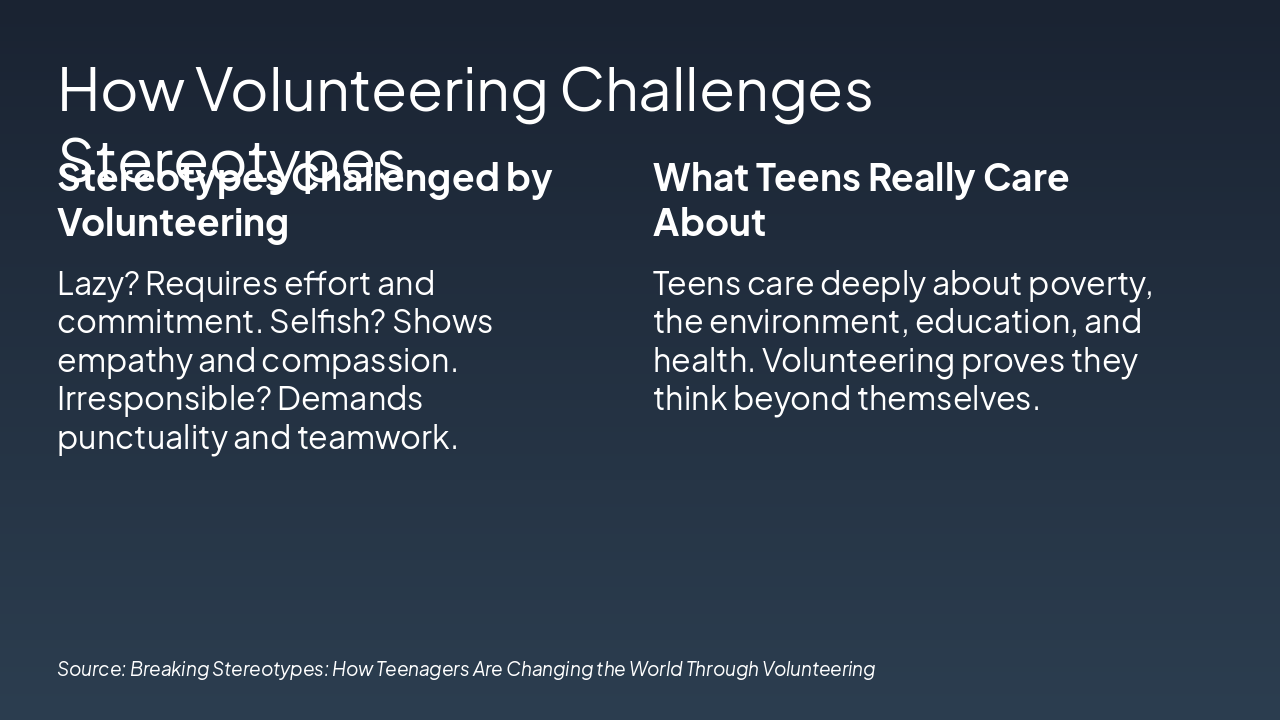
Volunteering challenges stereotypes by demonstrating that volunteers are committed and empathetic, not lazy or selfish, while requiring punctuality and teamwork to counter irresponsibility claims. The slide highlights that teens deeply care about issues like poverty, the environment, education, and health, proving they think beyond themselves through volunteering.
| Stereotypes Challenged by Volunteering | What Teens Really Care About |
|---|---|
| Lazy? Requires effort and commitment. Selfish? Shows empathy and compassion. Irresponsible? Demands punctuality and teamwork. | Teens care deeply about poverty, the environment, education, and health. Volunteering proves they think beyond themselves. |
Source: Breaking Stereotypes: How Teenagers Are Changing the World Through Volunteering
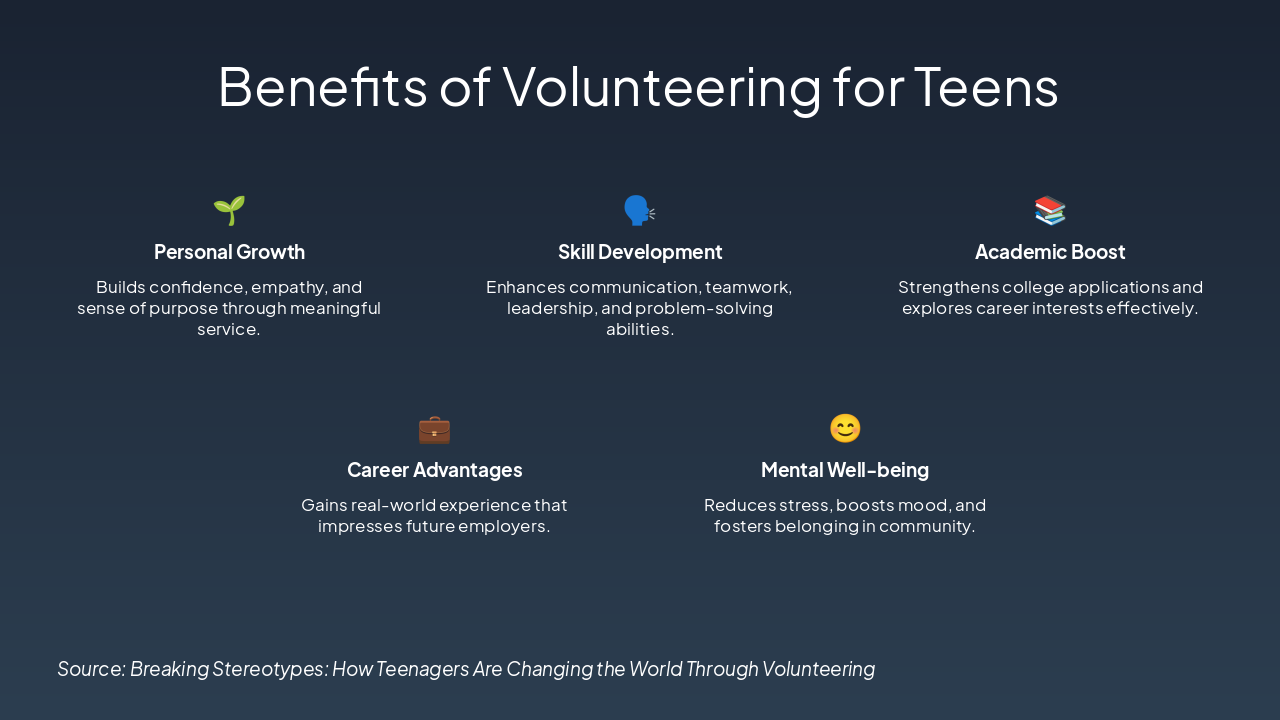
Volunteering offers teens key benefits like personal growth through building confidence, empathy, and purpose, alongside skill development in communication, teamwork, leadership, and problem-solving. It also provides academic boosts for college apps, career advantages with real-world experience, and improved mental well-being by reducing stress and fostering community belonging.
Source: Breaking Stereotypes: How Teenagers Are Changing the World Through Volunteering
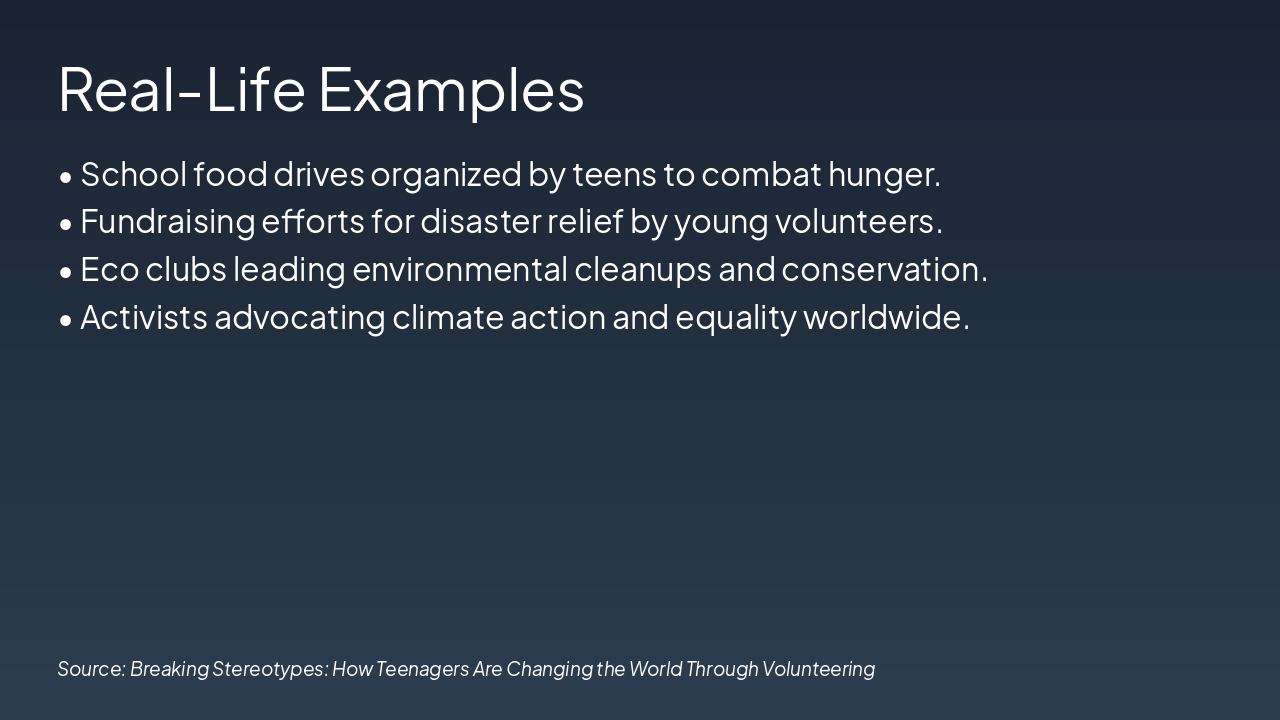
Real-life examples on the slide highlight teen-led initiatives like school food drives to combat hunger and fundraising for disaster relief. It also features eco clubs conducting environmental cleanups and activists pushing for global climate action and equality.
Source: Breaking Stereotypes: How Teenagers Are Changing the World Through Volunteering
The slide's closing message urges celebrating teen contributions and calls for supporting teen volunteering to build stronger communities. Its subtitle emphasizes debunking stereotypes and empowering the next generation.
**Closing Message: Celebrate teen contributions! 🌟
Call-to-Action: Support teen volunteering—build stronger communities today!**
Debunk stereotypes. Empower the next generation.
Source: Breaking Stereotypes: How Teenagers Are Changing the World Through Volunteering
Explore thousands of AI-generated presentations for inspiration
Generate professional presentations in seconds with Karaf's AI. Customize this presentation or start from scratch.