Best Practices for Inclusive Educational Excursions for Kids

Generated from prompt:

Організація та методика проведення пізнавальної екскурсії з дітьми з порушеннями психофізичного розвитку. Що має знати екскурсовод при проведенні екскурсій дітям з особливими потребами Маршрут та текст екскурсії з огляду на особливості дітей Особливості проведення екскурсії для дітей з особливими потребами Основні етапи проведення екскурсій

This deck covers organization, methodology, guide knowledge, route planning, special features, and stages for conducting safe, engaging educational field trips tailored to children with psychophysical impairments like autism, ADHD, and intellectual障害

March 1, 202615 slides
Slide 1 of 15

Slide 1 - Conducting Educational Excursions for Children with Special Needs

Organization and Methodology for Children with Psychophysical Impairments

Best Practices for Guides, Routes, Features, and Stages
Slide 1 - Conducting Educational Excursions for Children with Special Needs
Slide 2 of 15

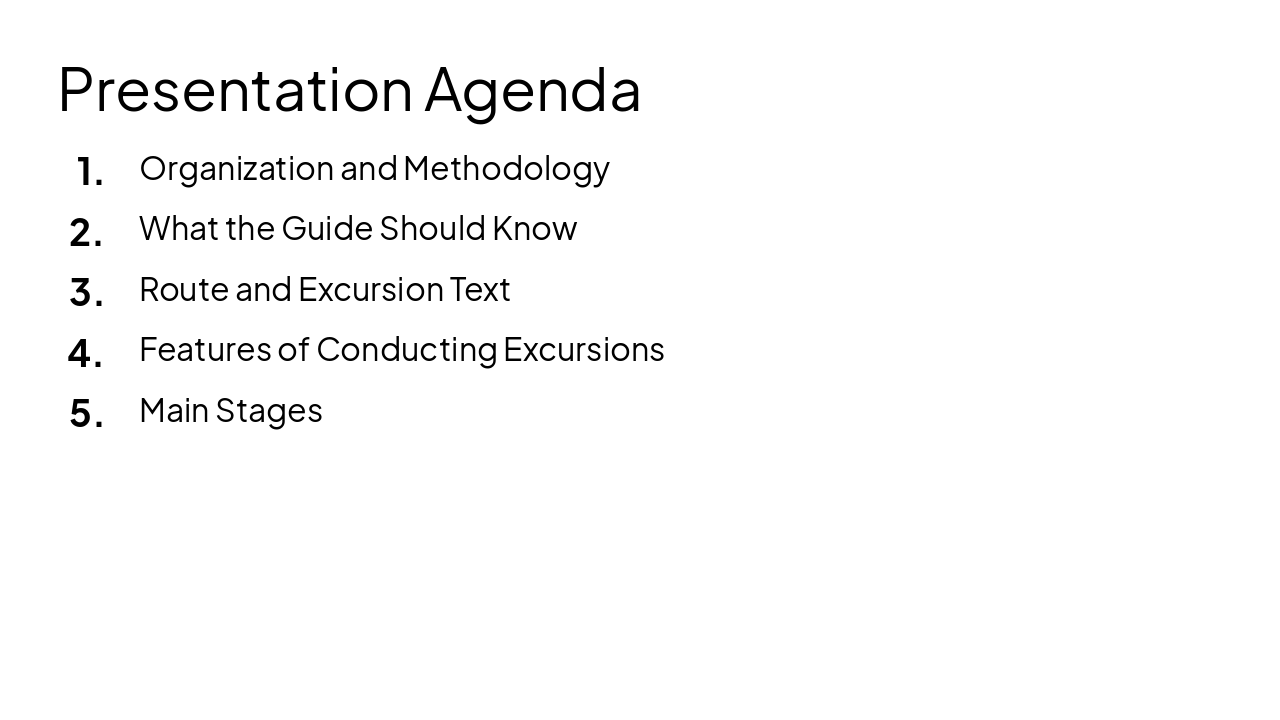
Slide 2 - Presentation Agenda

  • Organization and Methodology
  • What the Guide Should Know
  • Route and Excursion Text
  • Features of Conducting Excursions
  • Main Stages
Slide 2 - Presentation Agenda
Slide 3 of 15

Slide 3 - Organization and Methodology

1

Organization and Methodology

Planning Pіznavnа Excursions for Children with Psychophysical Development Disorders
Slide 3 - Organization and Methodology
Slide 4 of 15

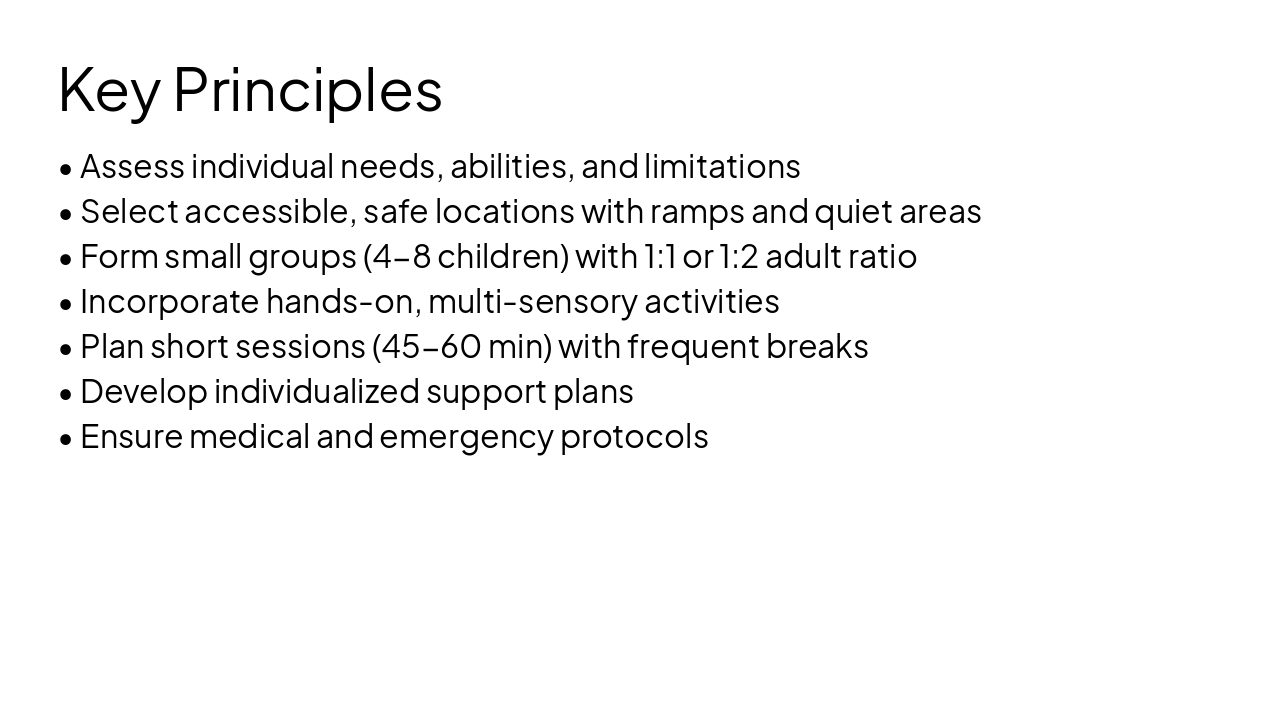
Slide 4 - Key Principles

  • Assess individual needs, abilities, and limitations
  • Select accessible, safe locations with ramps and quiet areas
  • Form small groups (4-8 children) with 1:1 or 1:2 adult ratio
  • Incorporate hands-on, multi-sensory activities
  • Plan short sessions (45-60 min) with frequent breaks
  • Develop individualized support plans
  • Ensure medical and emergency protocols
Slide 4 - Key Principles
Slide 5 of 15

Slide 5 - Methodology Techniques

👥 Group Dynamics Small, homogeneous groups based on similar needs

🎯 Activity Adaptation Visual aids, tactile elements, simplified language

⏱️ Pacing Control Slow pace, pauses for processing

🛡️ Safety Measures Risk assessment, constant supervision

📋 Preparation Pre-excursion visits, parent involvement

🔄 Feedback Loop Post-excursion evaluation
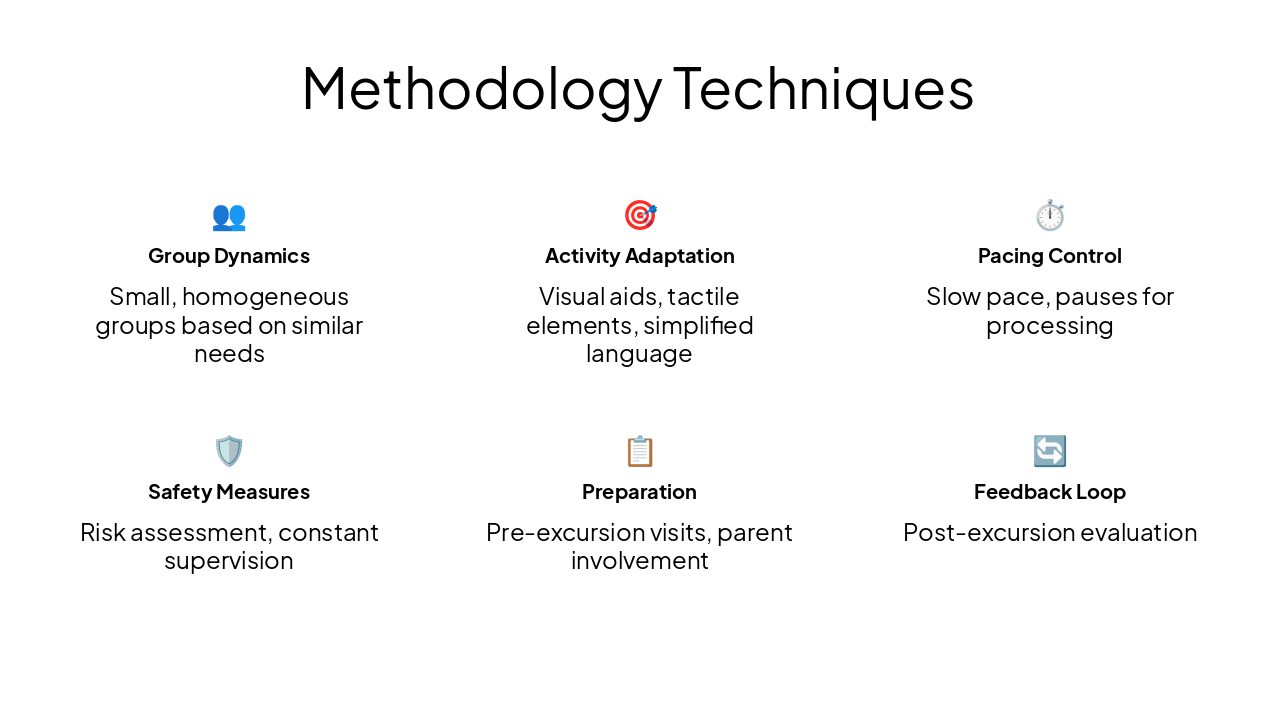
Slide 5 - Methodology Techniques
Slide 6 of 15

Slide 6 - Guide's Required Knowledge

2

What the Excursion Guide Should Know

Essential Skills for Children with Special Needs
Slide 6 - Guide's Required Knowledge
Slide 7 of 15

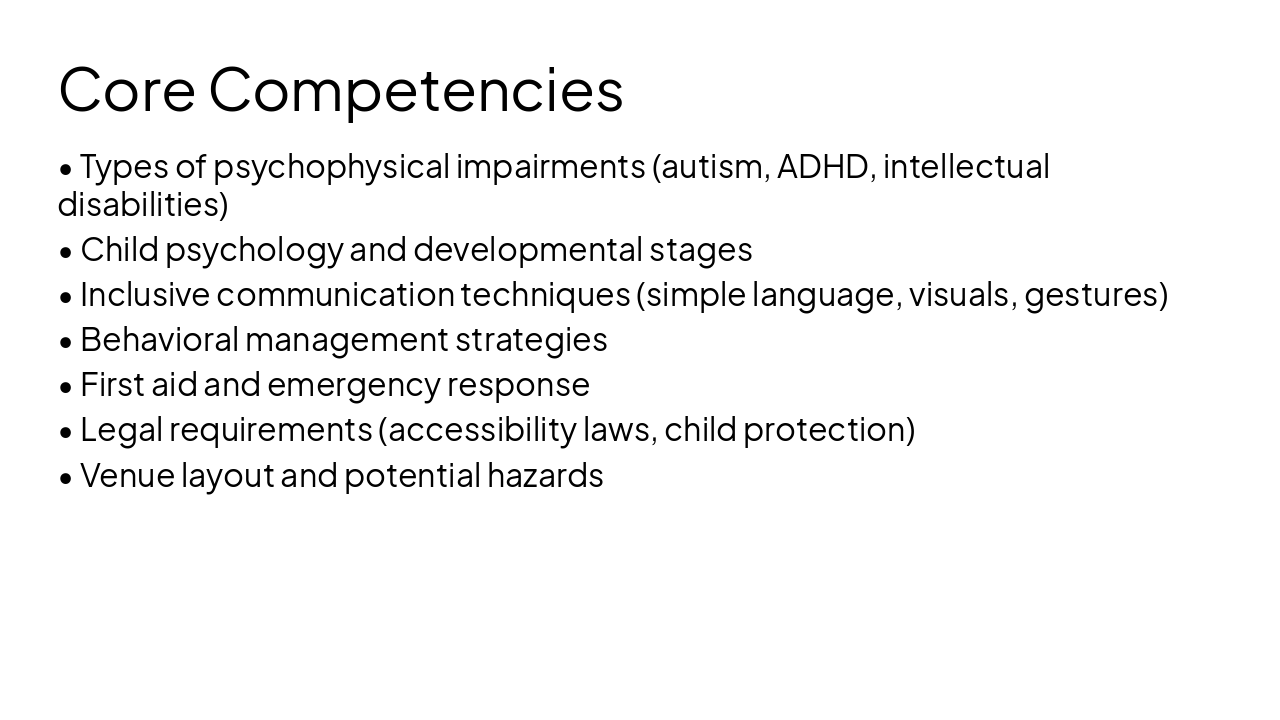
Slide 7 - Core Competencies

  • Types of psychophysical impairments (autism, ADHD, intellectual disabilities)
  • Child psychology and developmental stages
  • Inclusive communication techniques (simple language, visuals, gestures)
  • Behavioral management strategies
  • First aid and emergency response
  • Legal requirements (accessibility laws, child protection)
  • Venue layout and potential hazards
Slide 7 - Core Competencies
Slide 8 of 15

Slide 8 - Route and Excursion Text

3

Route and Text Adapted to Children's Features

Practical Planning Examples

Slide 8 - Route and Excursion Text
Slide 9 of 15

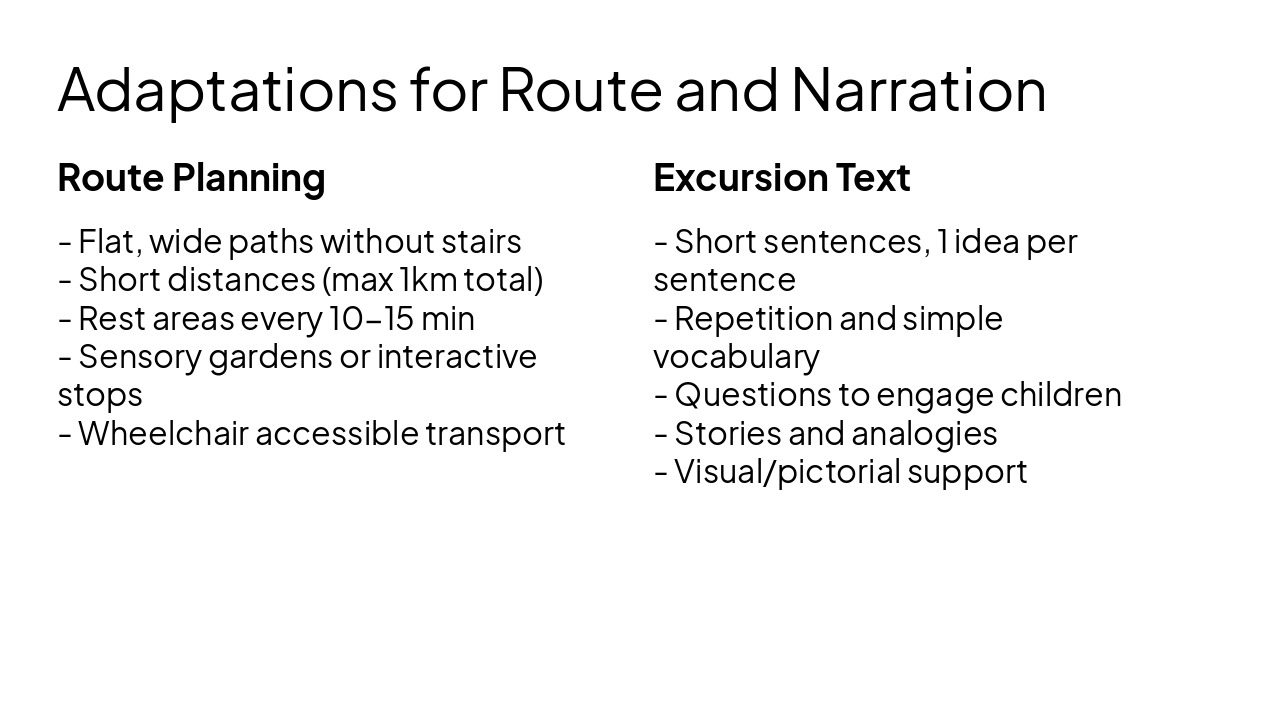
Slide 9 - Adaptations for Route and Narration

Route Planning

  • Flat, wide paths without stairs
  • Short distances (max 1km total)
  • Rest areas every 10-15 min
  • Sensory gardens or interactive stops
  • Wheelchair accessible transport

Excursion Text

  • Short sentences, 1 idea per sentence
  • Repetition and simple vocabulary
  • Questions to engage children
  • Stories and analogies
  • Visual/pictorial support
Slide 9 - Adaptations for Route and Narration
Slide 10 of 15

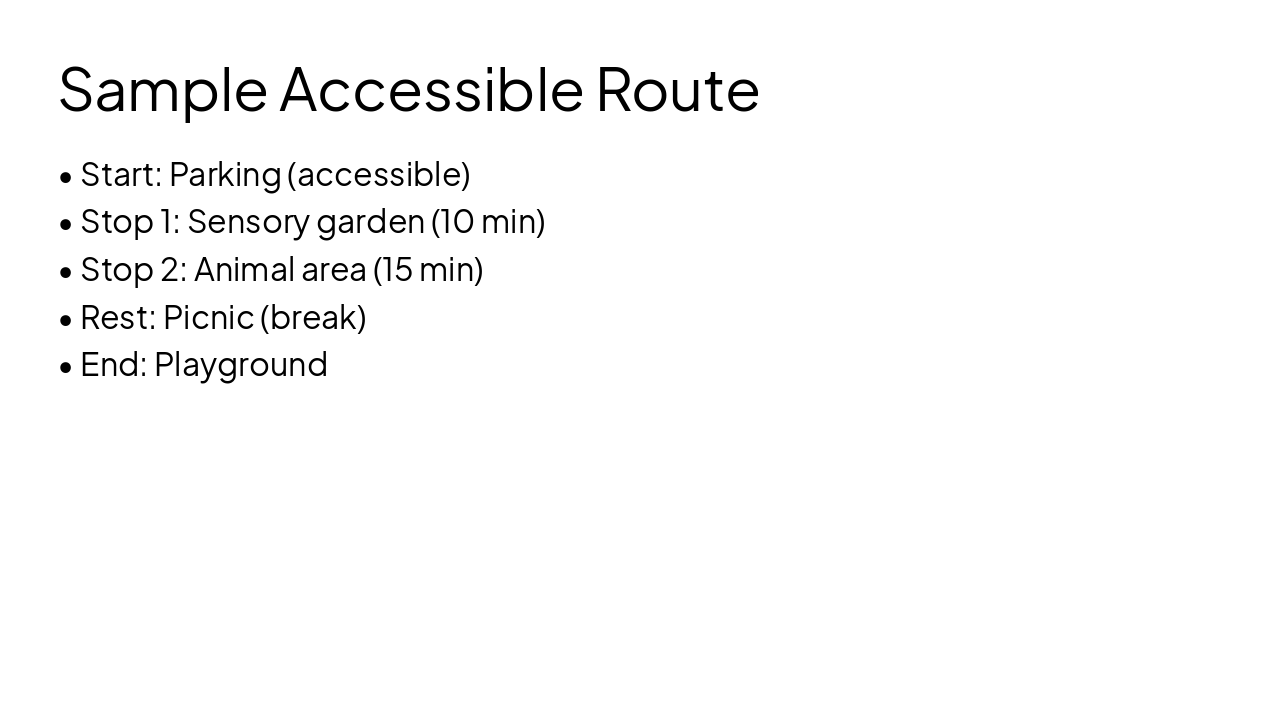
Slide 10 - Sample Accessible Route

  • Start: Parking (accessible)

Stop 1: Sensory garden (10 min) Stop 2: Animal area (15 min) Rest: Picnic (break) End: Playground
Slide 10 - Sample Accessible Route
Slide 11 of 15

Slide 11 - Features of Conducting

4

Special Features for Children with Special Needs

Inclusive and Engaging Practices

Slide 11 - Features of Conducting
Slide 12 of 15

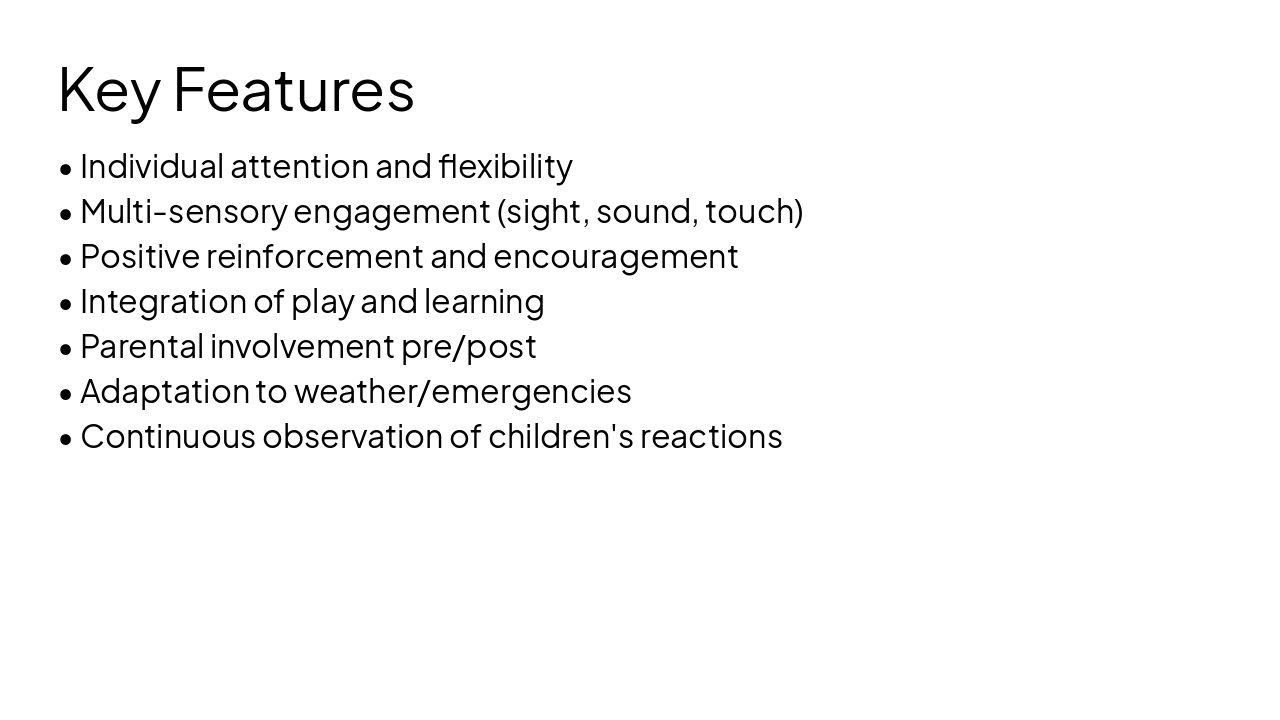
Slide 12 - Key Features

  • Individual attention and flexibility
  • Multi-sensory engagement (sight, sound, touch)
  • Positive reinforcement and encouragement
  • Integration of play and learning
  • Parental involvement pre/post
  • Adaptation to weather/emergencies
  • Continuous observation of children's reactions
Slide 12 - Key Features
Slide 13 of 15

Slide 13 - Main Stages

5

Main Stages of Conducting Excursions

Structured Approach for Success

---

Photo by Urban Vintage on Unsplash
Slide 13 - Main Stages
Slide 14 of 15

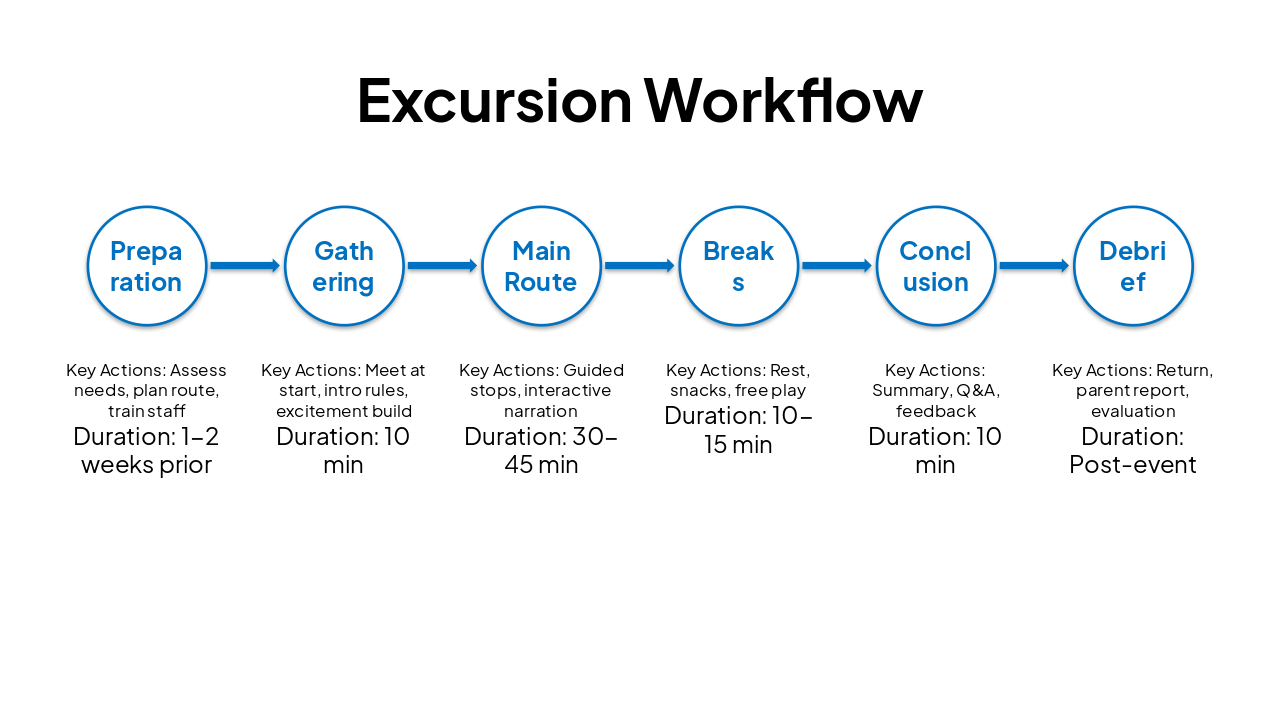
Slide 14 - Excursion Workflow

StageKey ActionsDuration
PreparationAssess needs, plan route, train staff1-2 weeks prior
GatheringMeet at start, intro rules, excitement build10 min
Main RouteGuided stops, interactive narration30-45 min
BreaksRest, snacks, free play10-15 min
ConclusionSummary, Q&A, feedback10 min
DebriefReturn, parent report, evaluationPost-event
Slide 14 - Excursion Workflow
Slide 15 of 15

Slide 15 - Conclusion

Tailored excursions empower children with special needs through inclusive, engaging experiences.

Thank you! Questions?
Slide 15 - Conclusion

Discover More Presentations

Explore thousands of AI-generated presentations for inspiration

Browse Presentations
Powered by AI

Create Your Own Presentation

Generate professional presentations in seconds with Karaf's AI. Customize this presentation or start from scratch.

Create New Presentation

Powered by Karaf.ai — AI-Powered Presentation Generator