Slide 1 of 21
Slide 1 - The American Civil War
The American Civil War
Presented by [Your Name] Teacher: [Teacher Name] Date: [Current Date]
---
Photo by Charlie Hales on Unsplash
Generated from prompt:
45 Slides Intro Slide , Name , Teacher name , Date Short Term causes of the Civil War Long Term causes of the Civil War - 2 slides States that were a part of the confederacy States that were a part of the union Border states and which side they eventually sided with The leaders and the capital of the Union The leader and capital of the Confederacy The war strategy for the Confederacy The war strategy for the union The advantages and disadvantages of the union and the confederacy - 2 slides Not counting Vicksburg and Gettysburg , 15 major battles , why they matter , and the results . Emancipation Proclamation - What is it , the point of it , why does it matter The campaign for Vicksburg - 3 slides The Gettysburg Campaign - 3 slides also something about the Gettysburg Address Total war in the South - Sherman’s march to sea - 2 slides Appalachian Courthouse - 2 slides Reconstruction - 1 slides (10% Plan ) President Lincoln’s assassination The Reconstruction Amendments Presidential Reconstruction vs Congressional Reconstruction - 3 slides The end of reconstruction , Compromise of 1877 25 images throughout the slideshow
This presentation offers a comprehensive overview of the American Civil War, covering short-term and long-term causes such as slavery, sectionalism, and Lincoln's election; the seceding Confederate states and loyal Union states; key leaders like Abraham Lincoln and Jefferson Davis; military strategies including the Anaconda Plan; advantages and disadvantages for each side; major battles excluding Vicksburg and Gettysburg initially, then focusing on those campaigns, Sherman's March, Appomattox, the Emancipation Proclamation, and the Reconstruction Era.
The American Civil War
Presented by [Your Name] Teacher: [Teacher Name] Date: [Current Date]
---
Photo by Charlie Hales on Unsplash
---
Photo by Filip Andrejevic on Unsplash
1
Deep-rooted sectional differences building for decades
---
Photo by Denny Müller on Unsplash

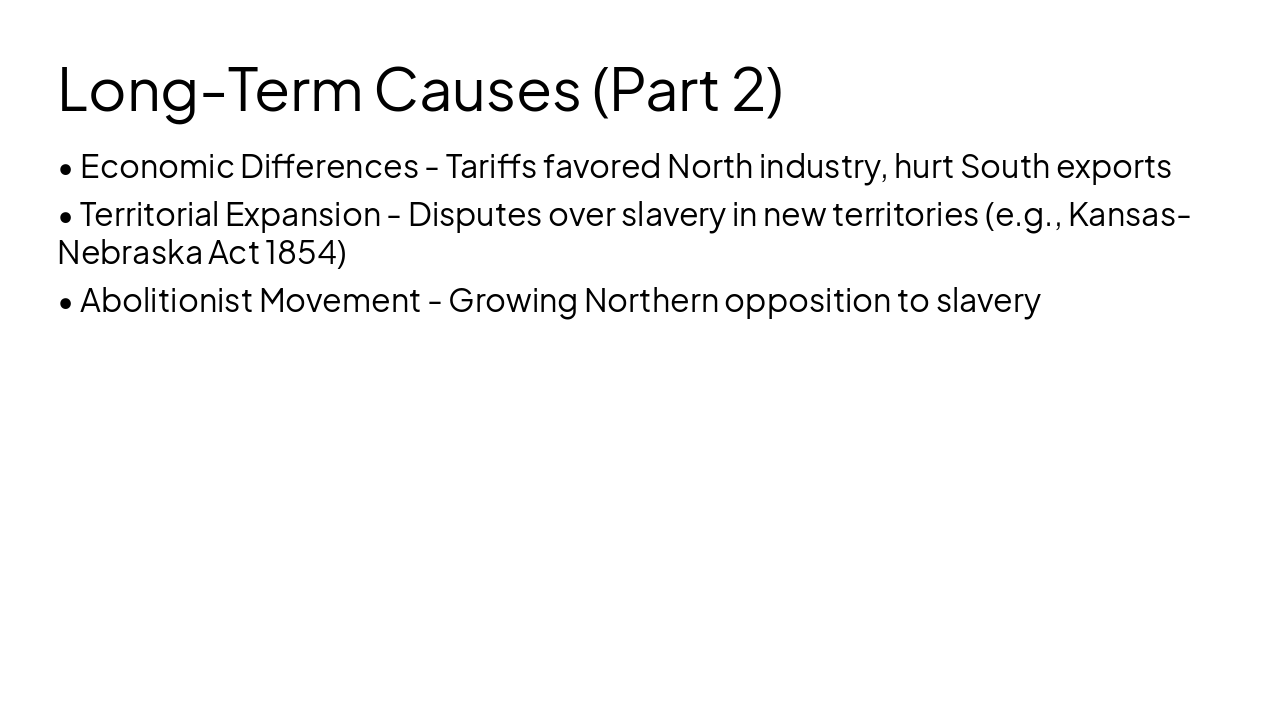
| State | Order of Secession |
|---|---|
| South Carolina | 1 (Dec 20, 1860) |
| Mississippi | 2 (Jan 9, 1861) |
| Florida | 3 (Jan 10) |
| Alabama | 4 (Jan 11) |
| Georgia | 5 (Jan 19) |
| Louisiana | 6 (Jan 26) |
| Texas | 7 (Feb 1) |
| Virginia | 8 (Apr 17) |
| Arkansas | 9 (May 6) |
| North Carolina | 10 (May 20) |
| Tennessee | 11 (Jun 8) |
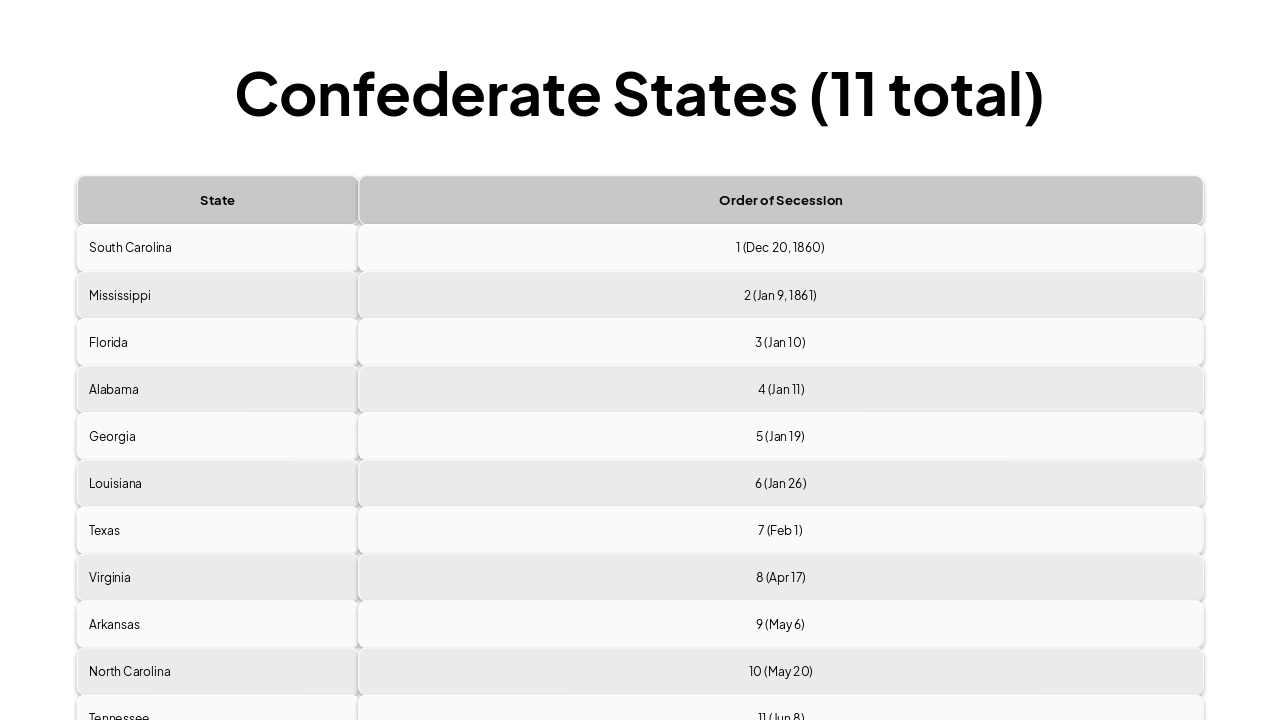
| Union Loyal Border States | Status |
|---|---|
| Delaware | |
| Maryland | |
| Kentucky | |
| Missouri | |
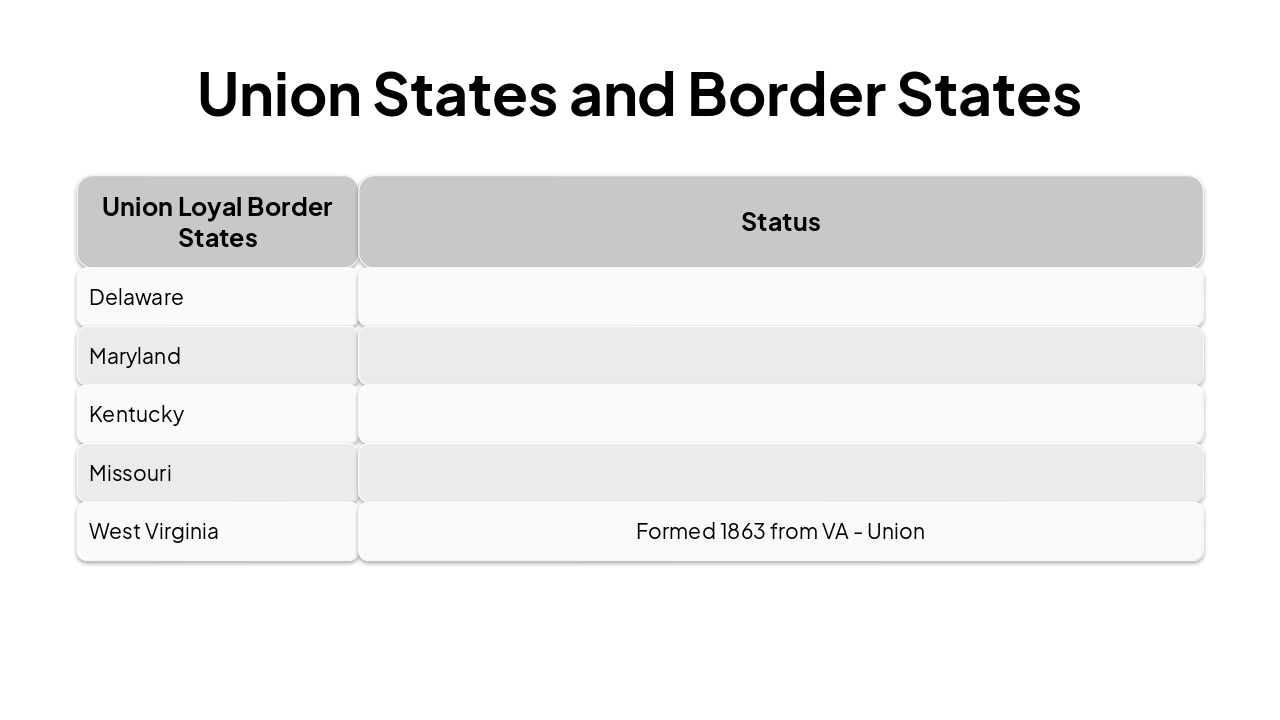
| West Virginia | Formed 1863 from VA - Union |
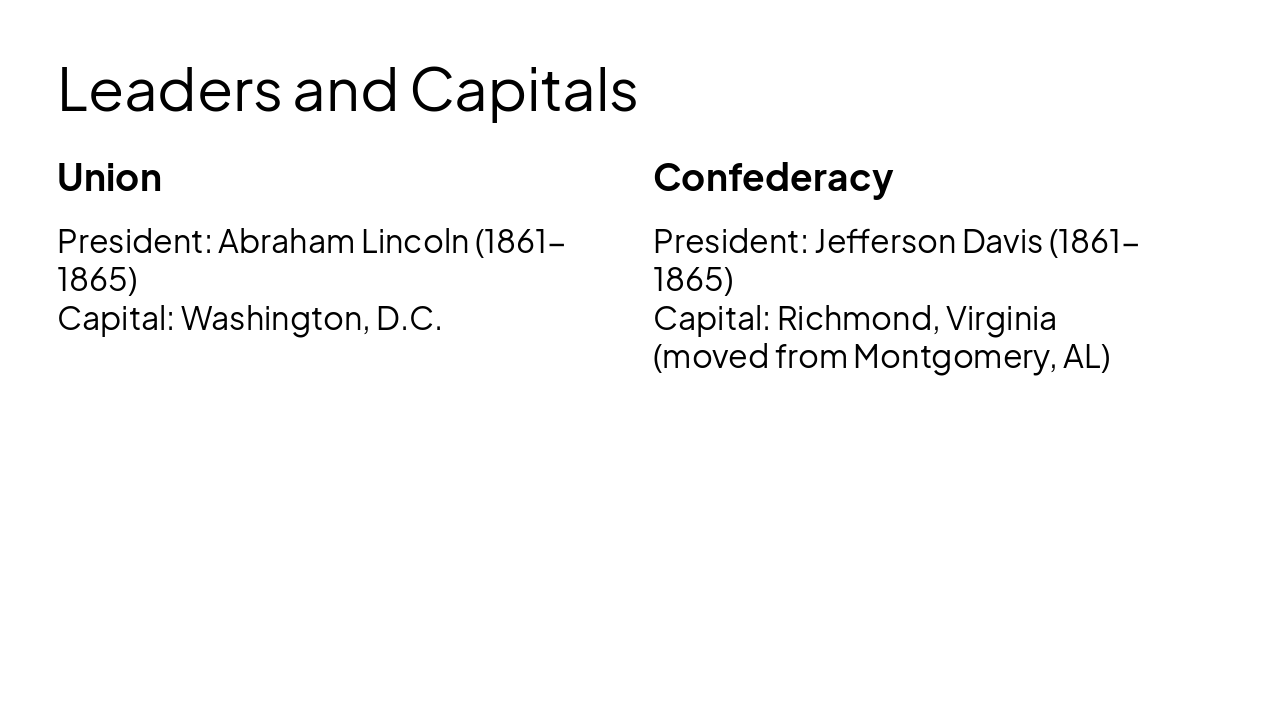
Union President: Abraham Lincoln (1861-1865) Capital: Washington, D.C.
Confederacy President: Jefferson Davis (1861-1865) Capital: Richmond, Virginia (moved from Montgomery, AL)
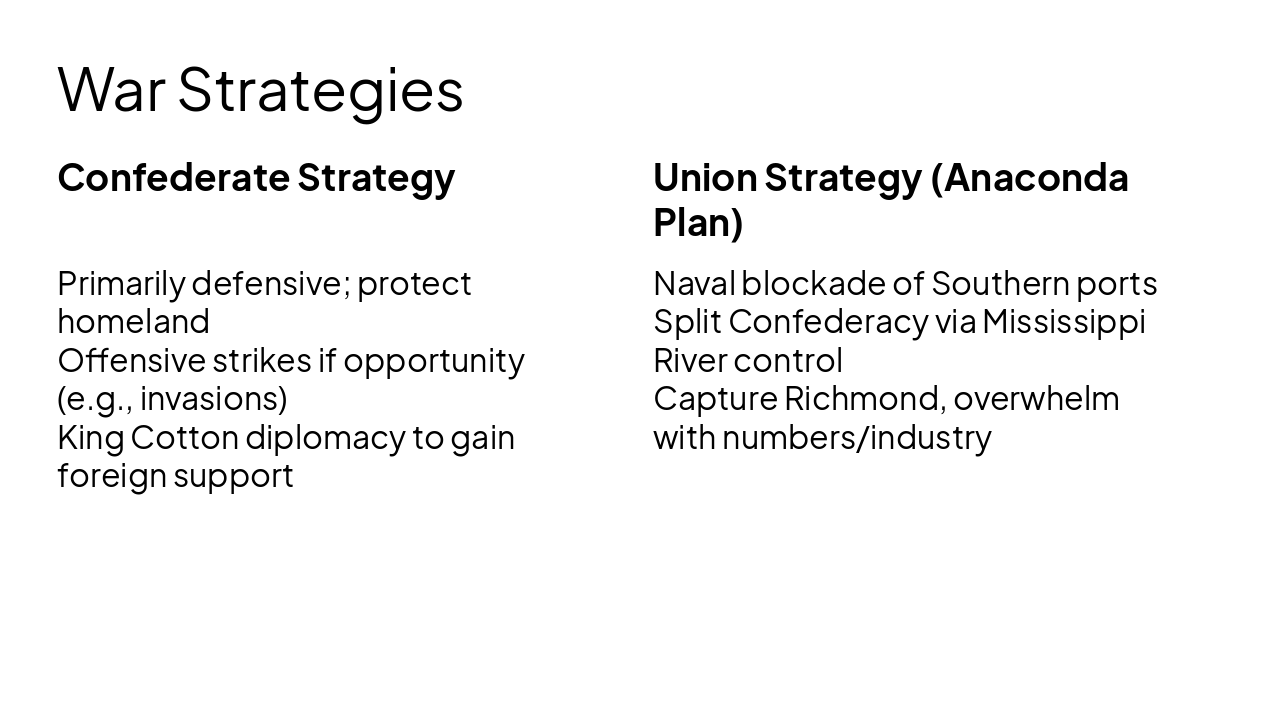
Confederate Strategy Primarily defensive; protect homeland Offensive strikes if opportunity (e.g., invasions) King Cotton diplomacy to gain foreign support
Union Strategy (Anaconda Plan) Naval blockade of Southern ports Split Confederacy via Mississippi River control Capture Richmond, overwhelm with numbers/industry
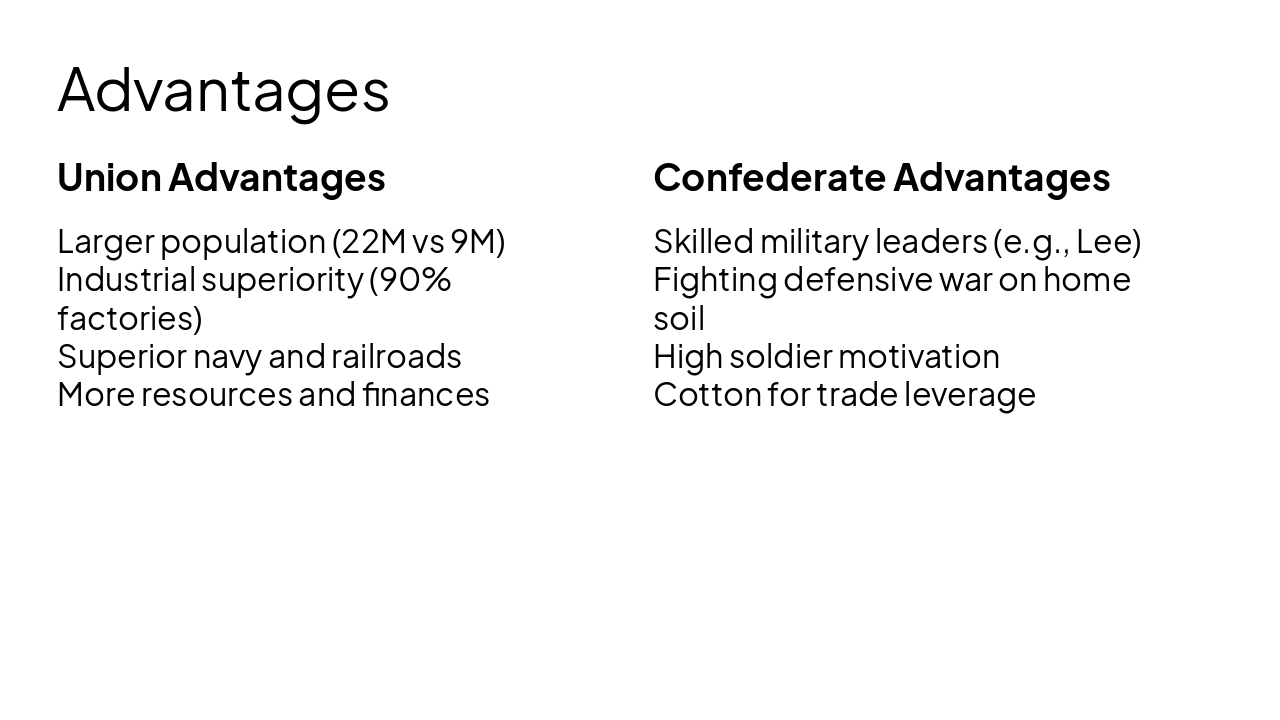
Union Advantages Larger population (22M vs 9M) Industrial superiority (90% factories) Superior navy and railroads More resources and finances
Confederate Advantages Skilled military leaders (e.g., Lee) Fighting defensive war on home soil High soldier motivation Cotton for trade leverage
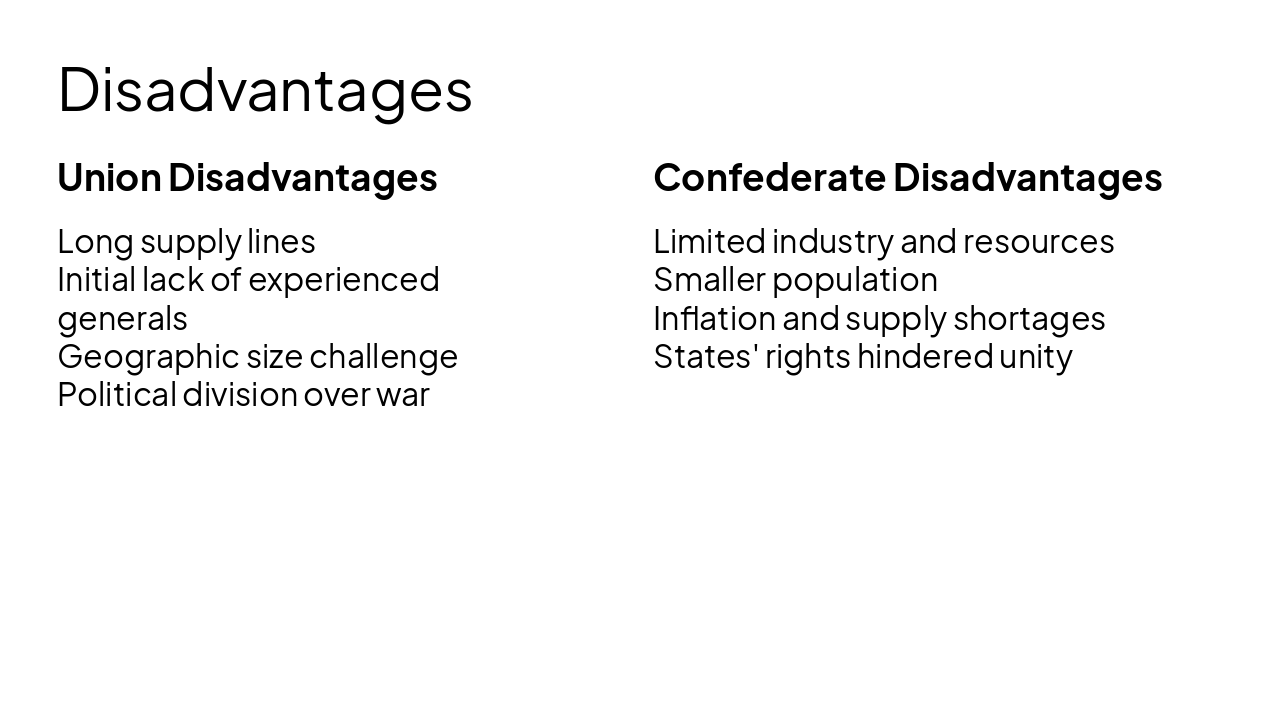
Union Disadvantages Long supply lines Initial lack of experienced generals Geographic size challenge Political division over war
Confederate Disadvantages Limited industry and resources Smaller population Inflation and supply shortages States' rights hindered unity
2
Key engagements shaping the war, 1861-1865
---
Photo by Hasan Almasi on Unsplash
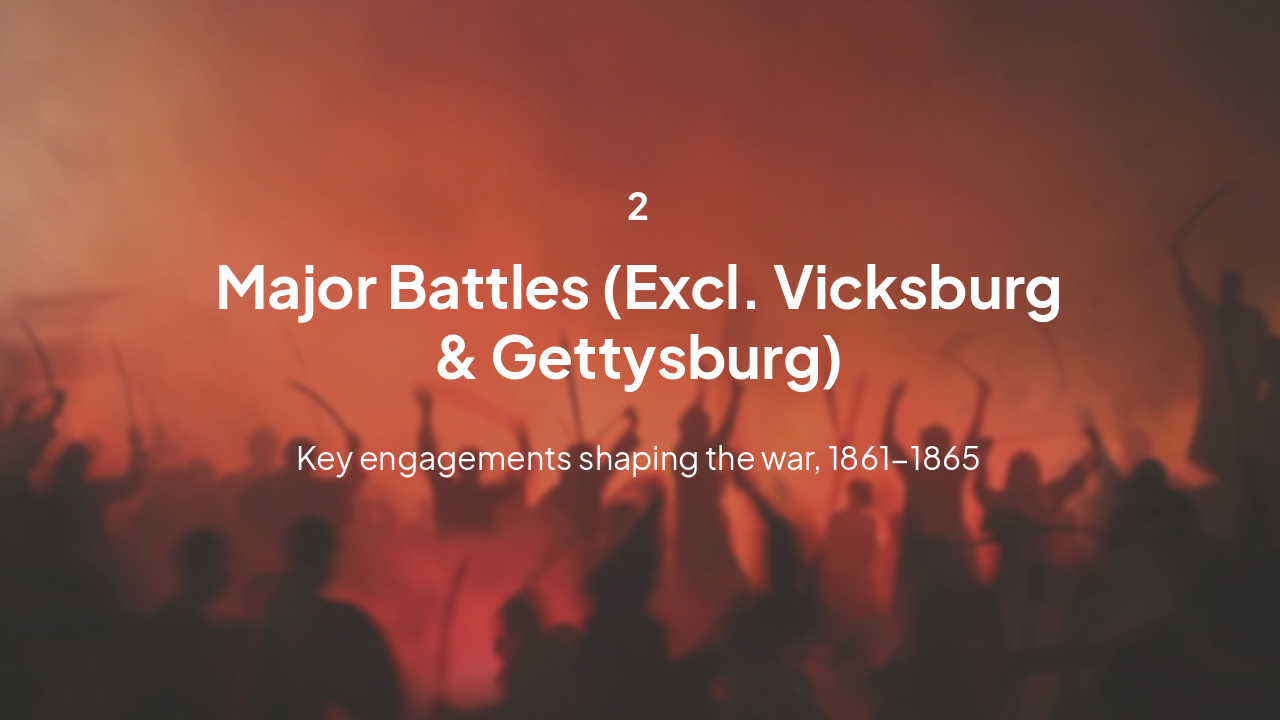
| Battle | Date | Why Matters | Result |
|---|---|---|---|
| First Bull Run | Jul 1861 | First major battle; shattered illusions of quick war | Confederate victory; boosted Southern morale |
| Shiloh | Apr 1862 | Bloodiest battle yet; Union holds | Union victory; Grant advances |
| Antietam | Sep 1862 | Bloodiest single day (23K casualties); allowed Emancipation Proclamation | Tactical Union draw, strategic Union win |
| Fredericksburg | Dec 1862 | Union disaster; 12K casualties | Confederate victory |
| Chancellorsville | May 1863 | Lee defeats larger army; Stonewall Jackson killed | Confederate victory |
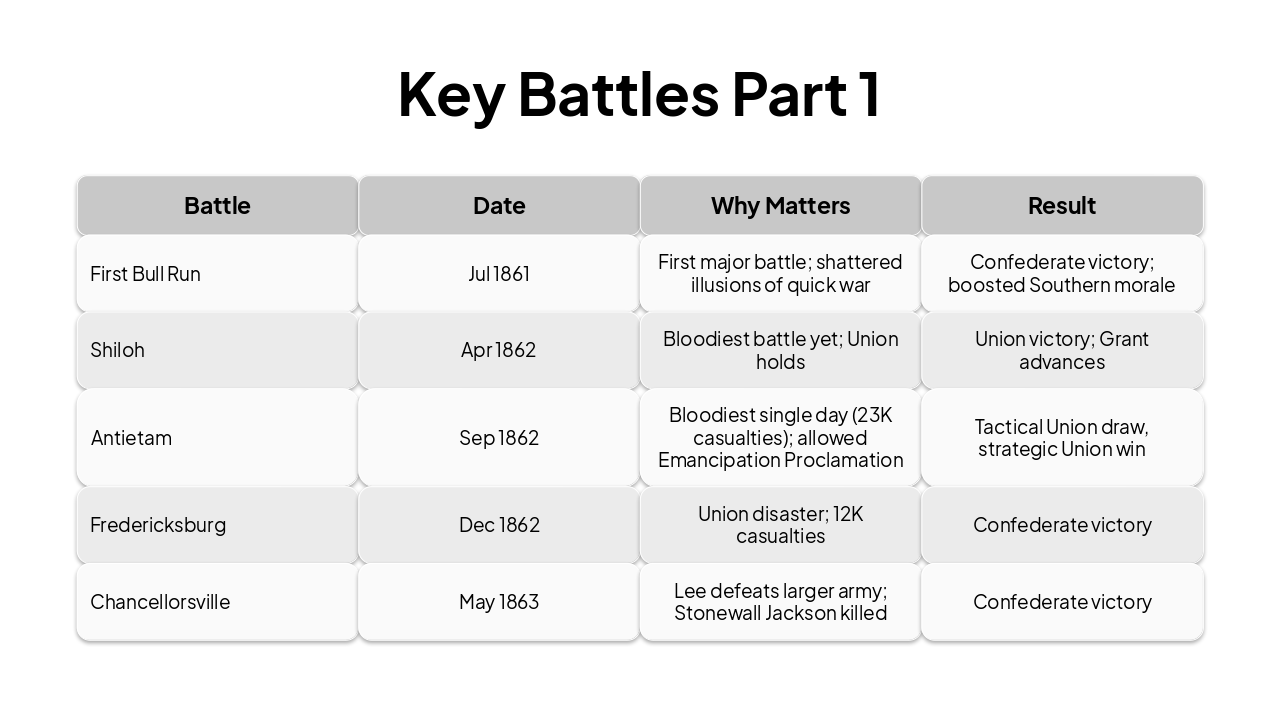
| Battle | Date | Why Matters | Result |
|---|---|---|---|
| Chickamauga | Sep 1863 | Largest Western battle; Union retreat | Confederate victory |
| Chattanooga | Nov 1863 | Union breaks siege; opens path to Atlanta | Union victory |
| Wilderness | May 1864 | Grant vs Lee; brutal stalemate | Inconclusive; Grant advances |
| Spotsylvania | May 1864 | Bloody Angle; high casualties | Inconclusive |
| Cold Harbor | Jun 1864 | Union assault disaster (7K in 20 min) | Confederate victory |
| Petersburg | Jun 1864-Apr 1865 | 9-month siege; weakened Confederacy | Union victory; led to end |
---
---
Photo by Scott Umstattd on Unsplash
4
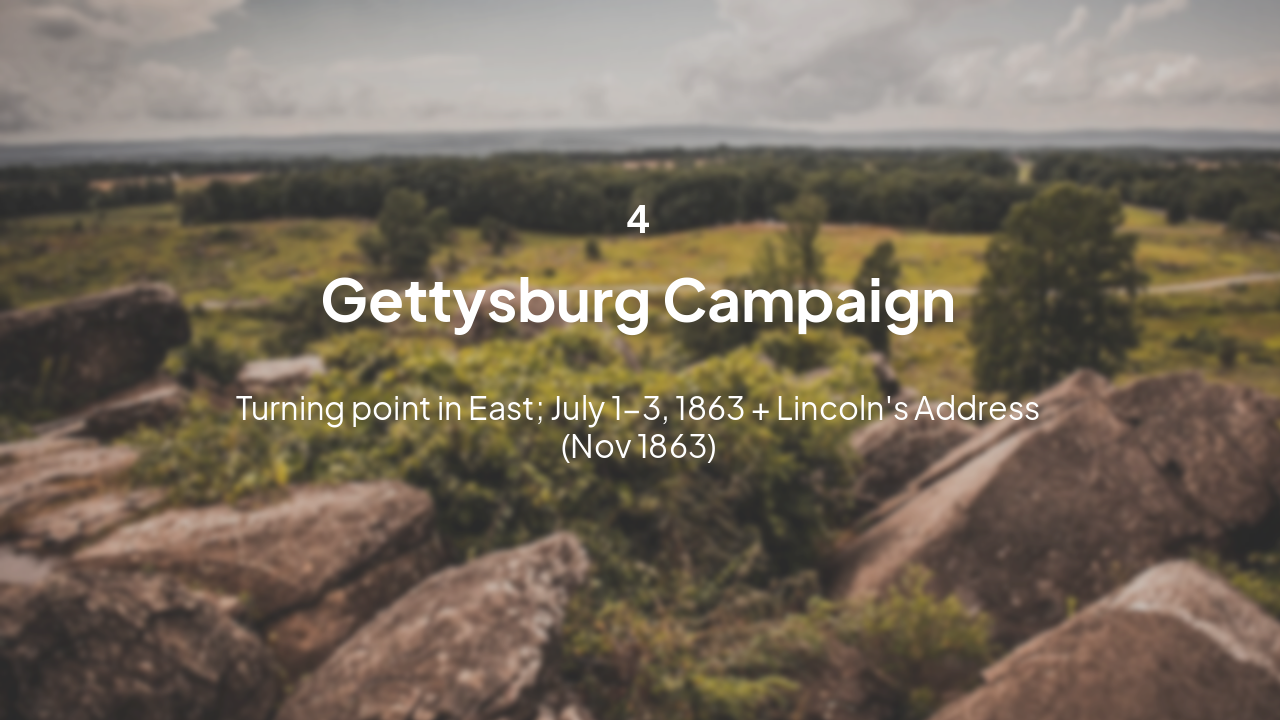
Turning point in East; July 1-3, 1863 + Lincoln's Address (Nov 1863)
---
Photo by Nehemias Mazariegos on Unsplash
Explore thousands of AI-generated presentations for inspiration
Generate professional presentations in seconds with Karaf's AI. Customize this presentation or start from scratch.
