Price Elasticity of Cloud Services: CS Students' Demand

Generated from prompt:

Update the existing 15-slide presentation titled "Price Elasticity of Cloud Services: How Sensitive Are CS Students to Price Changes?". Add a NEW visually strong graph slide specifically dedicated to Price Elasticity. Requirements: - Keep same blue, purple, neon modern theme - Keep image-heavy design and minimal text - Add one dedicated slide after 'What is Price Elasticity?' titled: "Price Elasticity Graph Analysis" On that slide include: - Large clear demand curve graph - Show: * Elastic demand (flat curve) * Inelastic demand (steep curve) * Label axes (Price, Quantity) - Highlight a price increase and quantity drop visually - Include a small boxed formula: PED = %ΔQ / %ΔP - Minimal text (2-3 short labels only) Keep all other slides the same. Ensure graph is clear, colorful, professional, and presentation-ready. Total slides should now be 16 slides.

This deck analyzes price elasticity of demand for cloud services among CS students, covering fundamentals of elasticity, cloud market overview, student price sensitivity factors, comparative data, and strategic implications for providers emphasizing

February 25, 202616 slides
Slide 1 of 16

Slide 1 - Price Elasticity of Cloud Services

How Sensitive Are CS Students to Price Changes?

Analyzing Demand Responsiveness in Student Cloud Computing

---

Photo by Liana S on Unsplash

Slide 1 - Price Elasticity of Cloud Services
Slide 2 of 16

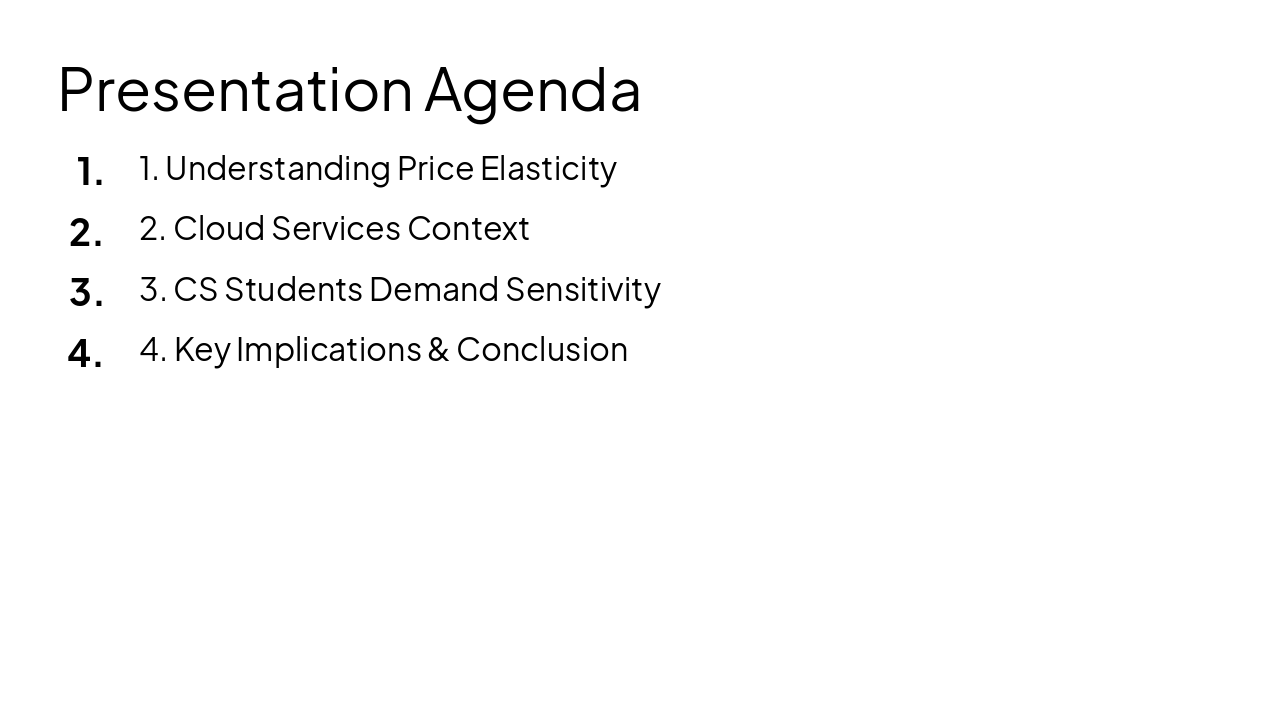
Slide 2 - Presentation Agenda

  • 1. Understanding Price Elasticity
  • 2. Cloud Services Context
  • 3. CS Students Demand Sensitivity
  • 4. Key Implications & Conclusion
Slide 2 - Presentation Agenda
Slide 3 of 16

Slide 3 - Fundamentals of Elasticity

1

Understanding Price Elasticity

Core Concepts and Graphical Representation

---

Photo by Jakub Żerdzicki on Unsplash

Slide 3 - Fundamentals of Elasticity
Slide 4 of 16

Slide 4 - What is Price Elasticity?

  • Price Elasticity of Demand (PED): %ΔQuantity Demanded / %ΔPrice
  • Typically negative (law of demand)
  • Elastic if |PED| > 1 (responsive)
  • Inelastic if |PED| < 1 (less responsive)
  • Unit elastic |PED| = 1 (revenue maximized)

Source: Wikipedia: Price elasticity of demand
Slide 4 - What is Price Elasticity?
Slide 5 of 16

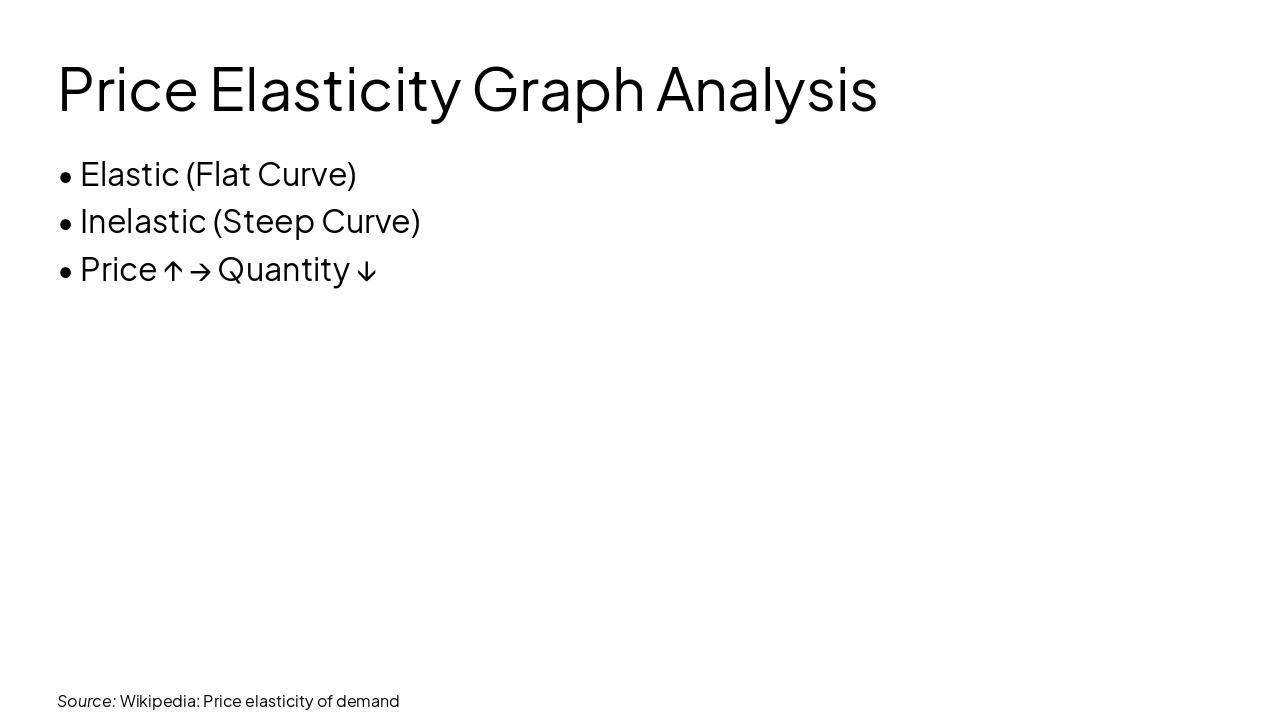
Slide 5 - Price Elasticity Graph Analysis

  • Elastic (Flat Curve)
  • Inelastic (Steep Curve)
  • Price ↑ → Quantity ↓

Source: Wikipedia: Price elasticity of demand
Slide 5 - Price Elasticity Graph Analysis
Slide 6 of 16

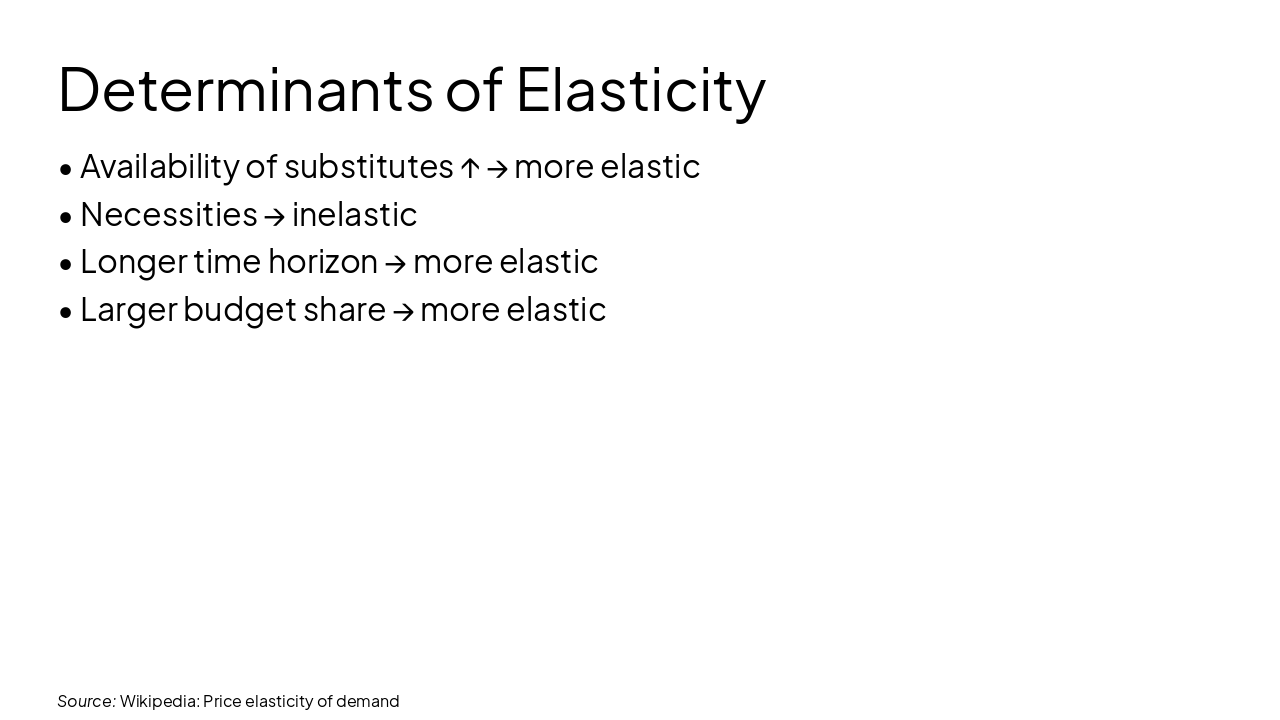
Slide 6 - Determinants of Elasticity

  • Availability of substitutes ↑ → more elastic
  • Necessities → inelastic
  • Longer time horizon → more elastic
  • Larger budget share → more elastic

Source: Wikipedia: Price elasticity of demand
Slide 6 - Determinants of Elasticity
Slide 7 of 16

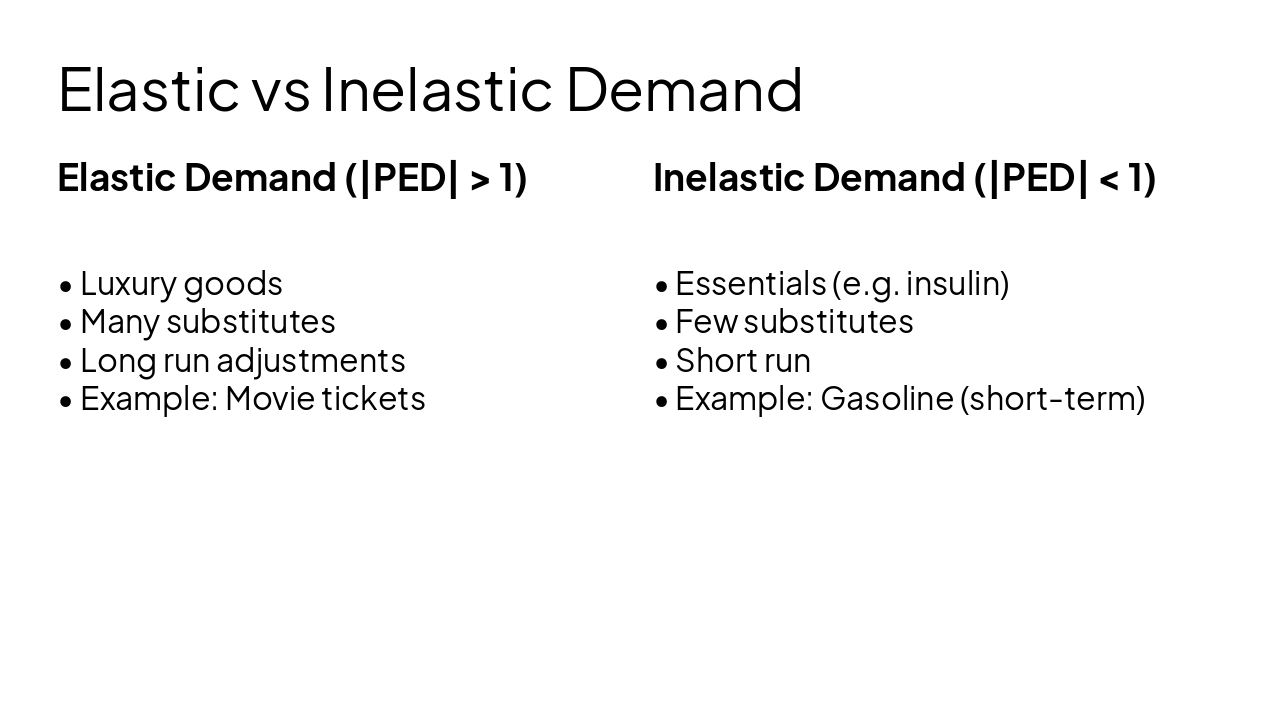
Slide 7 - Elastic vs Inelastic Demand

Elastic Demand (|PED| > 1)

  • Luxury goods
  • Many substitutes
  • Long run adjustments
  • Example: Movie tickets

Inelastic Demand (|PED| < 1)

  • Essentials (e.g. insulin)
  • Few substitutes
  • Short run
  • Example: Gasoline (short-term)
Slide 7 - Elastic vs Inelastic Demand
Slide 8 of 16

Slide 8 - Cloud Services Market

2

Cloud Services Context

Pricing and Usage Among Students

---

Photo by Liana S on Unsplash

Slide 8 - Cloud Services Market
Slide 9 of 16

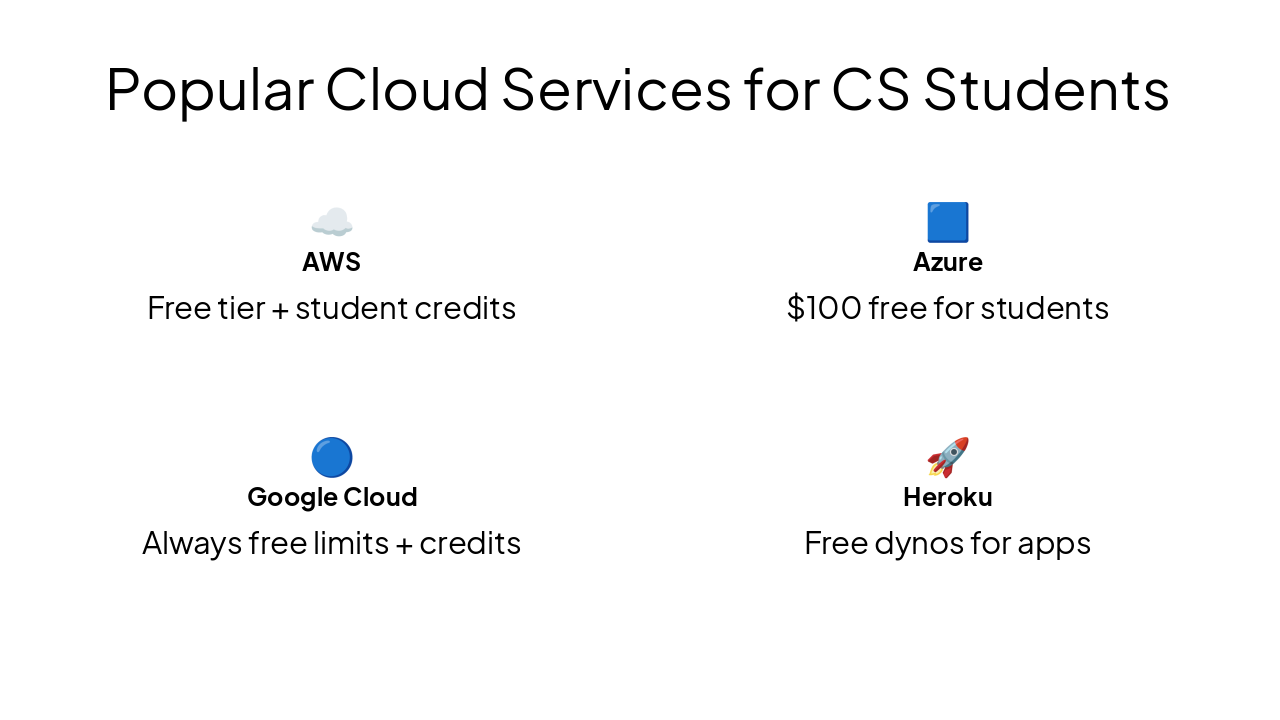
Slide 9 - Popular Cloud Services for CS Students

☁️ AWS Free tier + student credits

🟦 Azure $100 free for students

🔵 Google Cloud Always free limits + credits

🚀 Heroku Free dynos for apps
Slide 9 - Popular Cloud Services for CS Students
Slide 10 of 16

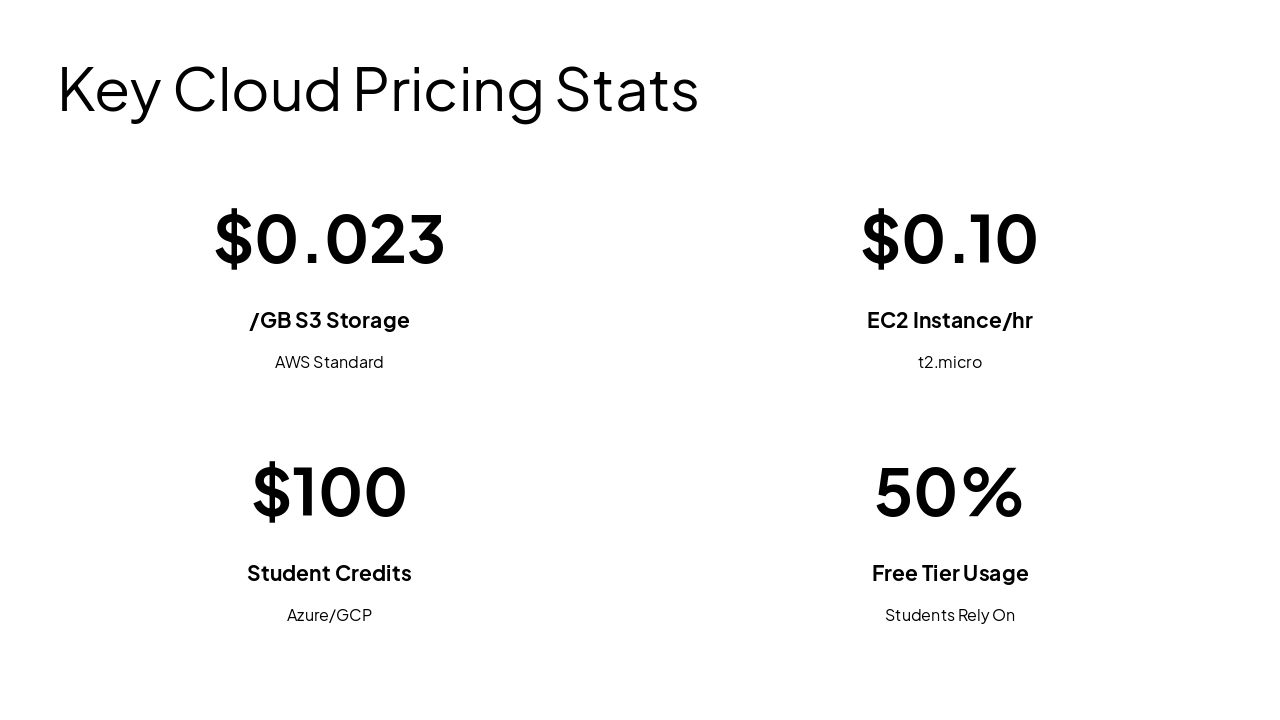
Slide 10 - Key Cloud Pricing Stats

  • $0.023: /GB S3 Storage
  • $0.10: EC2 Instance/hr
  • $100: Student Credits
  • 50%: Free Tier Usage
Slide 10 - Key Cloud Pricing Stats
Slide 11 of 16

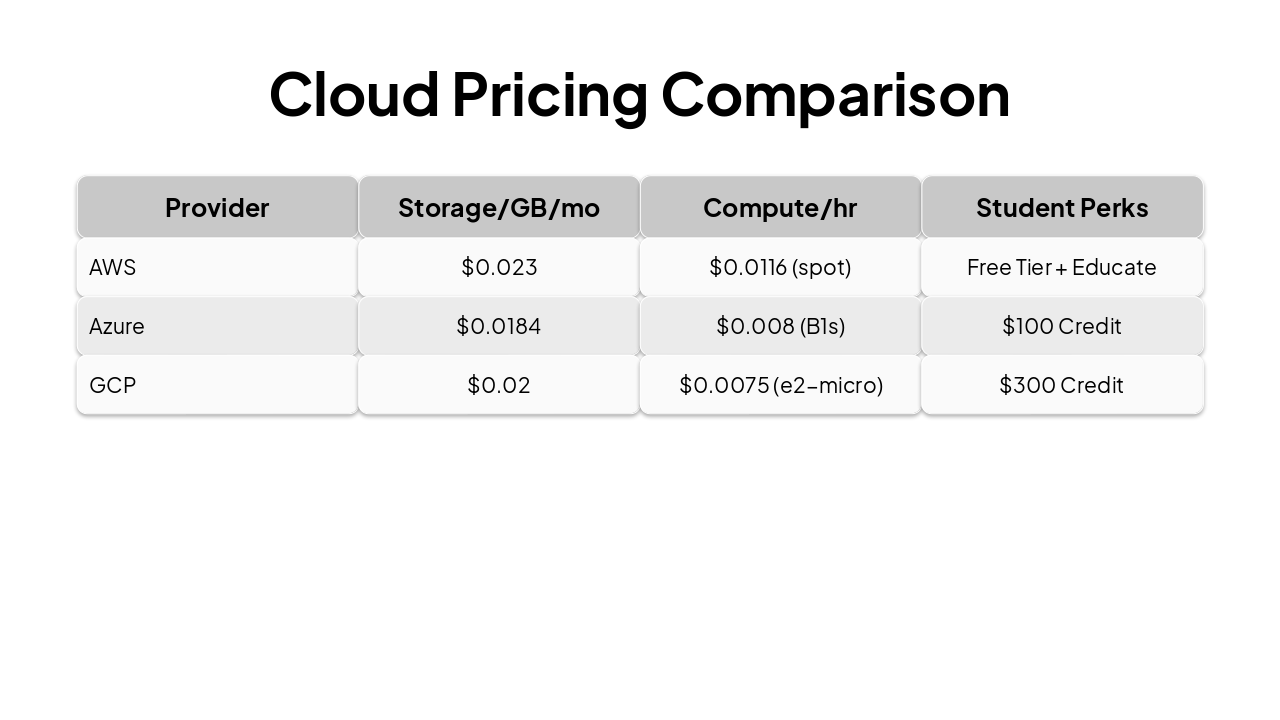
Slide 11 - Cloud Pricing Comparison

ProviderStorage/GB/moCompute/hrStudent Perks
AWS$0.023$0.0116 (spot)Free Tier + Educate
Azure$0.0184$0.008 (B1s)$100 Credit
GCP$0.02$0.0075 (e2-micro)$300 Credit
Slide 11 - Cloud Pricing Comparison
Slide 12 of 16

Slide 12 - Student Demand Analysis

3

CS Students Demand Sensitivity

Insights on Price Responsiveness

---

Photo by Liana S on Unsplash

Slide 12 - Student Demand Analysis
Slide 13 of 16

Slide 13 - Why CS Students Are Price-Sensitive

  • Limited budgets (tuition, living costs)
  • Abundant free/open-source alternatives (local dev)
  • Many substitutes (AWS vs Azure vs GCP)
  • Non-essential for most coursework
  • High time flexibility to switch providers
Slide 13 - Why CS Students Are Price-Sensitive
Slide 14 of 16

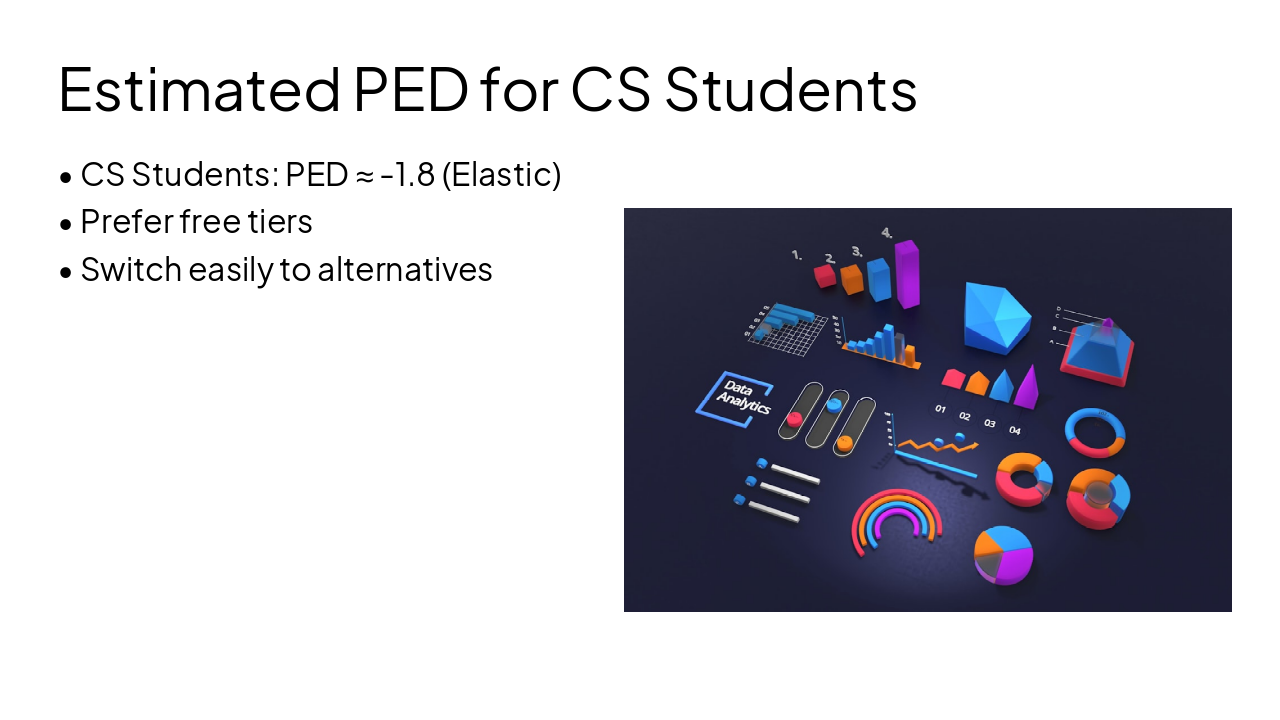
Slide 14 - Estimated PED for CS Students

  • CS Students: PED ≈ -1.8 (Elastic)
  • Prefer free tiers
  • Switch easily to alternatives

---

Photo by Deng Xiang on Unsplash

Slide 14 - Estimated PED for CS Students
Slide 15 of 16

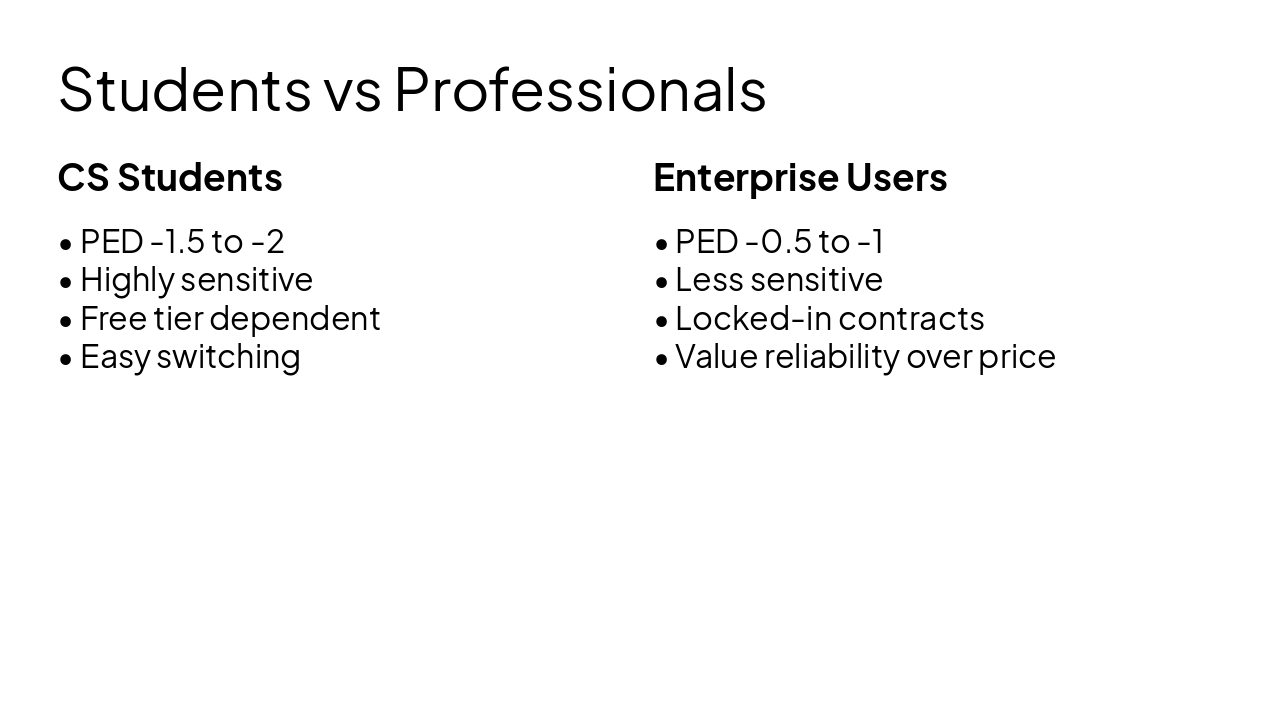
Slide 15 - Students vs Professionals

CS Students

  • PED -1.5 to -2
  • Highly sensitive
  • Free tier dependent
  • Easy switching

Enterprise Users

  • PED -0.5 to -1
  • Less sensitive
  • Locked-in contracts
  • Value reliability over price
Slide 15 - Students vs Professionals
Slide 16 of 16

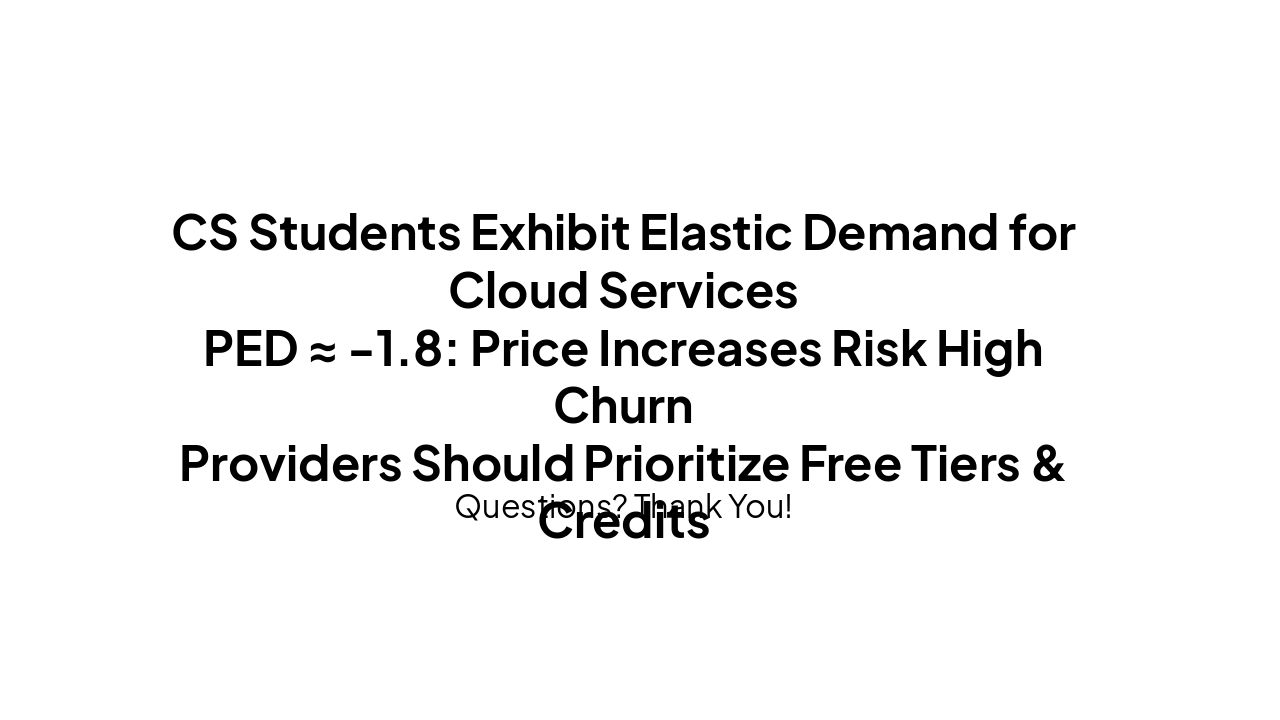
Slide 16 - Key Takeaways

CS Students Exhibit Elastic Demand for Cloud Services PED ≈ -1.8: Price Increases Risk High Churn Providers Should Prioritize Free Tiers & Credits

Questions? Thank You!
Slide 16 - Key Takeaways

Discover More Presentations

Explore thousands of AI-generated presentations for inspiration

Browse Presentations
Powered by AI

Create Your Own Presentation

Generate professional presentations in seconds with Karaf's AI. Customize this presentation or start from scratch.

Create New Presentation

Powered by Karaf.ai — AI-Powered Presentation Generator