Slide 1 of 7
Slide 1 - Title Slide
The Economic System of the Netherlands in the European Union
An Analysis of Economic Integration and Impact for University Studies
Generated from prompt:
Make a presentation about Create a professional presentation in British English about “The Economic System of the Netherlands in the European Union” for a university course. The presentation should be clear, structured, and not too text-heavy. Include explanations, key facts, and visuals like charts, graphs, and a map of Europe. ⸻ Content: The Netherlands is a highly developed country in Western Europe with a strong, open, and trade-oriented economy. It plays an important role in the European Union due to its strategic location and advanced infrastructure. Before joining the European Union, the Netherlands already had a strong economy based on international trade, agriculture, and shipping. The Port of Rotterdam was an important centre for global trade, and the country followed an independent economic policy. The Netherlands became a founding member of the EU in 1957. It played a key role in the creation of the common market and supports economic cooperation between member states. After joining the EU, the Dutch economy grew significantly. The single market allowed free movement of goods, services, and capital, which increased exports and trade. The adoption of the euro made transactions easier and improved economic stability. Today, the main sectors of the economy include trade and logistics, agriculture, finance, services, and technology. The Netherlands is one of the largest exporters of agricultural products in the world and a major logistics hub in Europe. In the EU economy, the Netherlands is known as one of the most open and competitive economies. It plays a key role in transportation and distribution across Europe. The country has many advantages, such as a high standard of living, strong economic performance, and stable institutions. However, it also faces challenges, including dependence on global trade, environmental issues, and rising housing prices. In conclusion, membership in the European Union has strengthened the economy of the Netherlands and increased its importance in Europe. ⸻ Design instructions: • Use a modern, minimalistic style • Add a map of Europe highlighting the Netherlands • Include charts (GDP, trade, exports) • Use icons and visuals instead of long text • Keep slides clean and professional ⸻ Sources: Eurostat World Bank OECD European Commission
This presentation provides an in-depth analysis of the Dutch economic system within the European Union, covering its profile, EU integration history, key sectors like agriculture, logistics, finance, and technology, SWOT overview, opportunities, and結
The Economic System of the Netherlands in the European Union
An Analysis of Economic Integration and Impact for University Studies
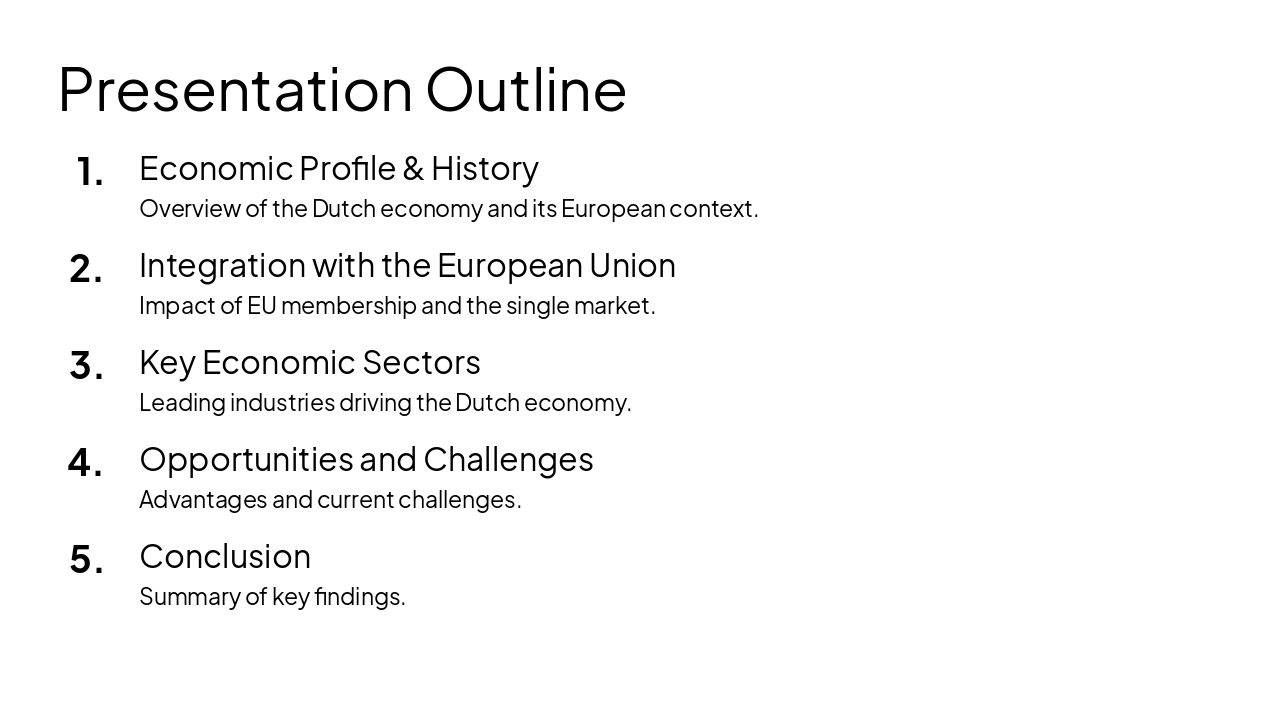
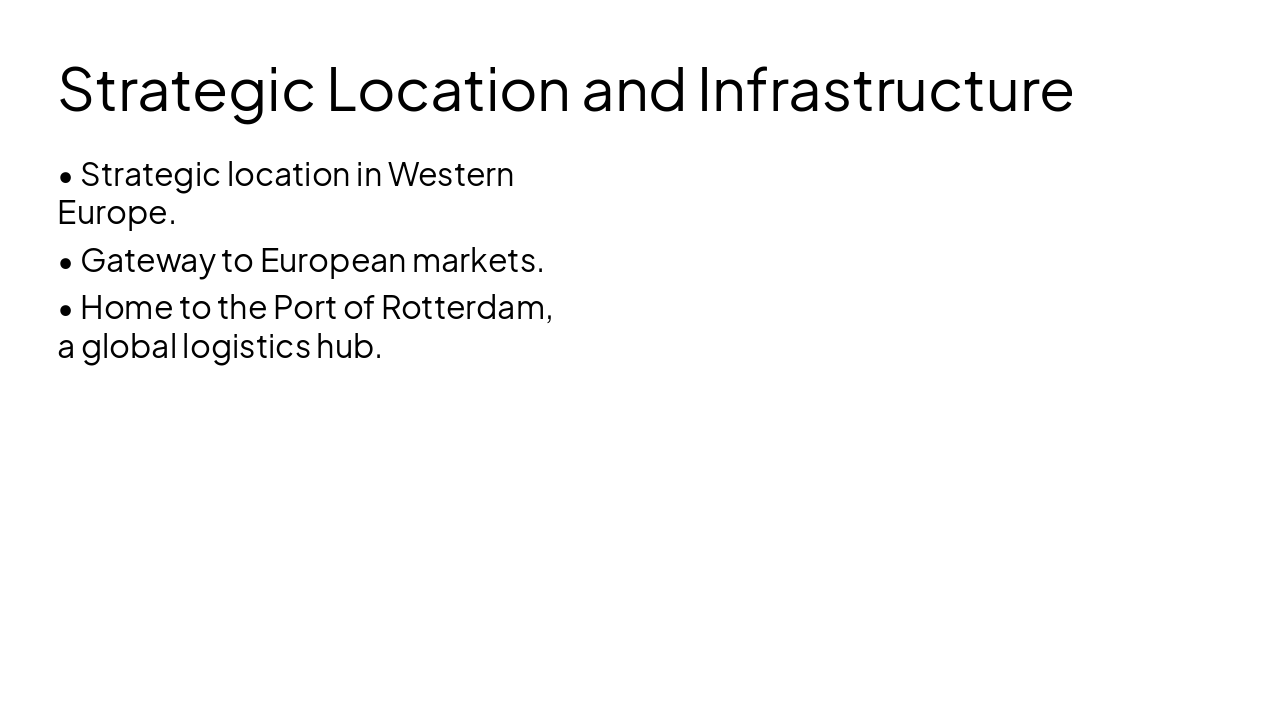
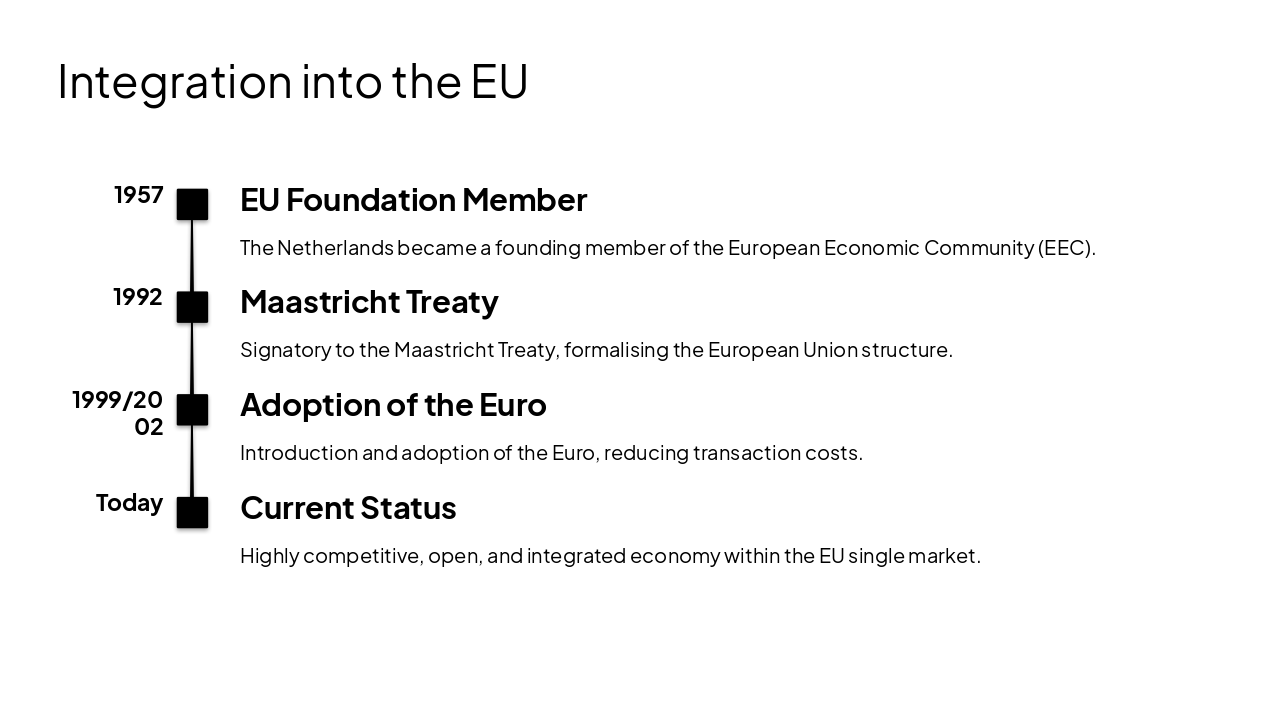
1957: EU Foundation Member The Netherlands became a founding member of the European Economic Community (EEC). 1992: Maastricht Treaty Signatory to the Maastricht Treaty, formalising the European Union structure. 1999/2002: Adoption of the Euro Introduction and adoption of the Euro, reducing transaction costs. Today: Current Status Highly competitive, open, and integrated economy within the EU single market.
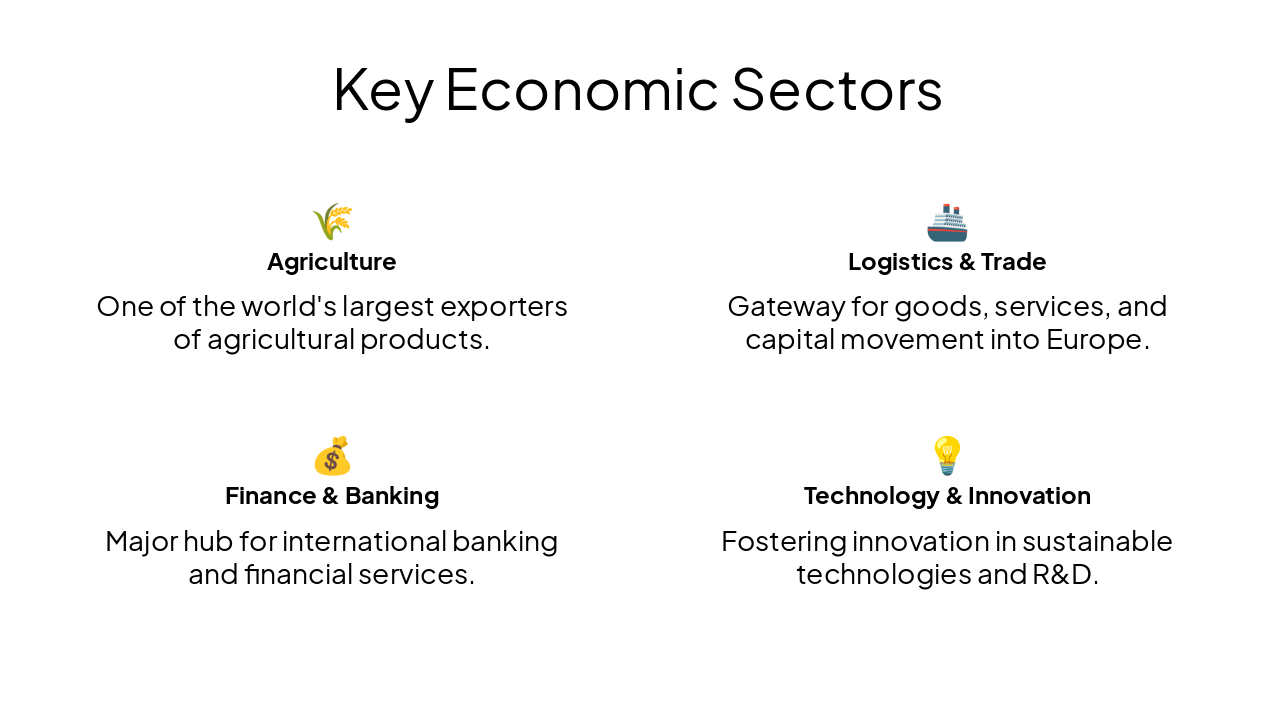
🌾 Agriculture One of the world's largest exporters of agricultural products.
🚢 Logistics & Trade Gateway for goods, services, and capital movement into Europe.
💰 Finance & Banking Major hub for international banking and financial services.
💡 Technology & Innovation Fostering innovation in sustainable technologies and R&D.
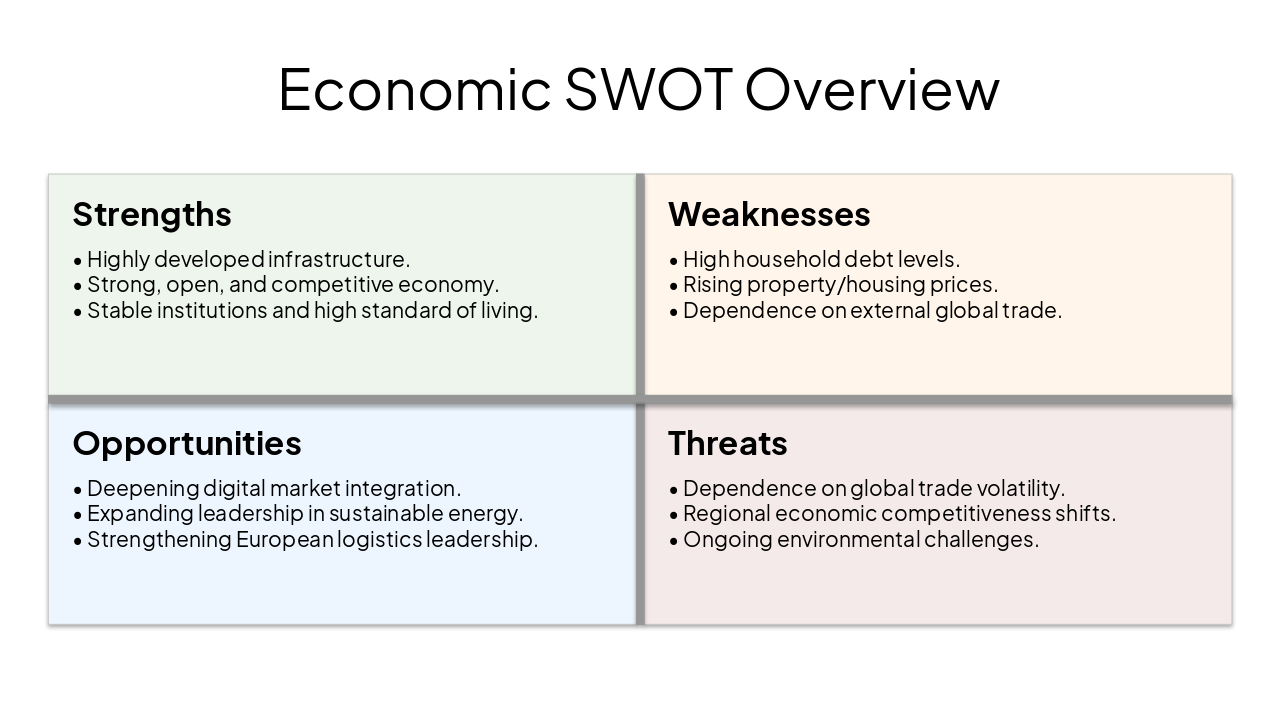
Strengths
Weaknesses
Opportunities
Threats
Membership in the European Union has significantly strengthened the Dutch economy and increased its importance in Europe.
The Netherlands continues to thrive as a key economic pillar of the European Union, balancing traditional trade strengths with modern technological and service-based innovation.
---
Photo by Anastasia Yaroshenko on Unsplash
Explore thousands of AI-generated presentations for inspiration
Generate professional presentations in seconds with Karaf's AI. Customize this presentation or start from scratch.