Slide 1 of 9
Slide 1 - Viruses and Bacteria
Viruses and Bacteria
Your Name Grade 10 Period 3
---
Photo by CDC on Unsplash
Generated from prompt:
Make a presentation about virus and bacteria’s. first slide is title, name, grade & period, second slide introduction of topic, third slide is 5 vocabulary and definitions, fourth slide is main concept (important information), fifth slide is structures, 6th is real life applications (make an example on how you’re going to apply your topic in real life), 7th is importance of your topic in your daily life, 8th is a summary, 9th is a reflection on what you learned
This educational presentation for Grade 10 explores viruses and bacteria as microorganisms. It defines key terms, highlights differences in size, structure, reproduction, and treatment—antibiotics for bacteria, antivirals or vaccines for viruses. Covers bacterial components like cell walls and ribosomes versus viral capsids and genetic material. Discusses real-life applications such as proper antibiotic use, hygiene to prevent infections, and vaccination for viral diseases like flu and COVID-19. Emphasizes informed health decisions to combat resistance and promote wellness.
Viruses and Bacteria
Your Name Grade 10 Period 3
---
Photo by CDC on Unsplash
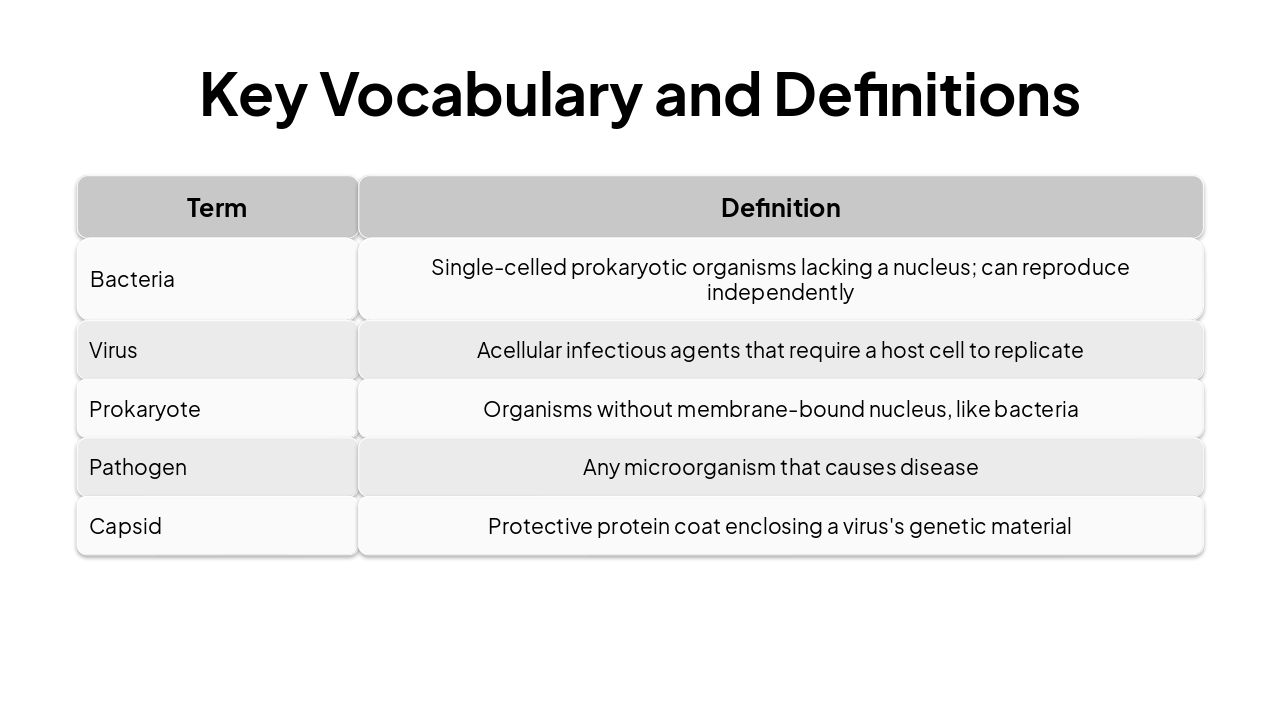
| Term | Definition |
|---|---|
| Bacteria | Single-celled prokaryotic organisms lacking a nucleus; can reproduce independently |
| Virus | Acellular infectious agents that require a host cell to replicate |
| Prokaryote | Organisms without membrane-bound nucleus, like bacteria |
| Pathogen | Any microorganism that causes disease |
| Capsid | Protective protein coat enclosing a virus's genetic material |
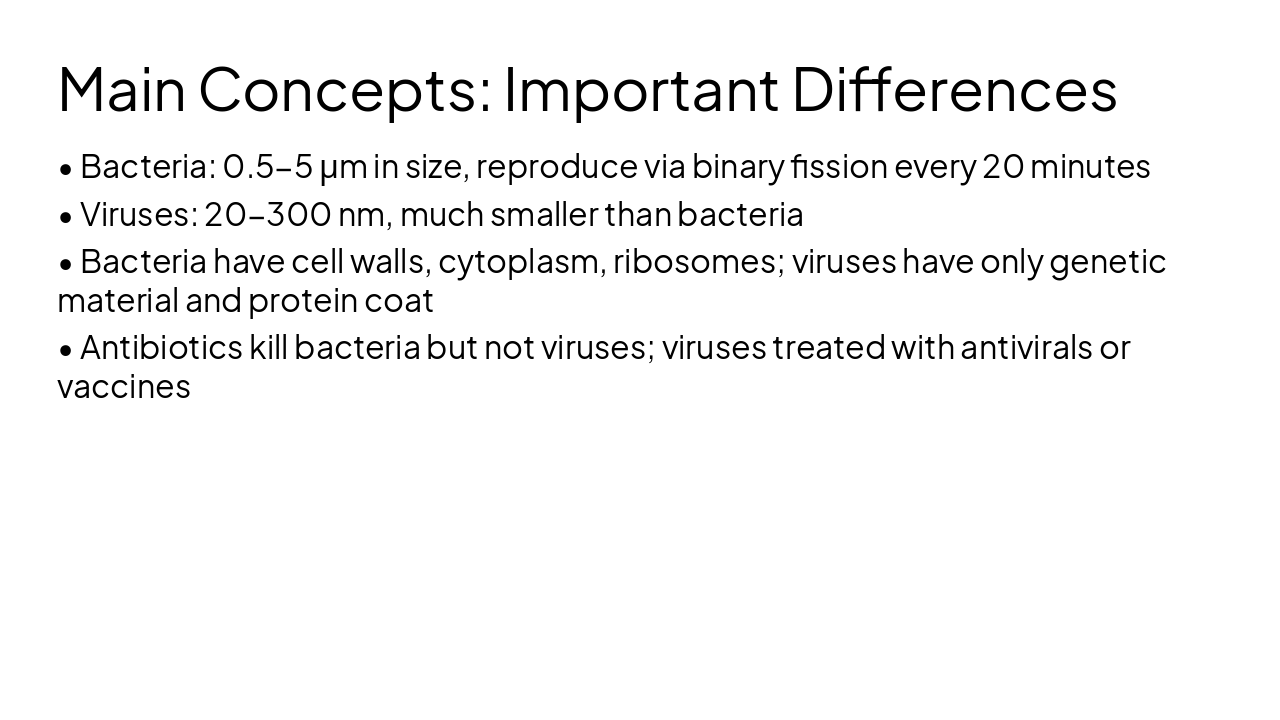
Bacteria
Viruses

---
Photo by Paul Zoetemeijer on Unsplash
Viruses need hosts; bacteria live independently. Structures, sizes, treatments differ. Apply knowledge for better health choices.
Stay informed, stay healthy!
---
Photo by Mehrnegar Dolatmand on Unsplash
> I learned viruses are not alive outside hosts and can't be killed by antibiotics, unlike bacteria. This knowledge will guide my daily hygiene and treatment choices.
— Student Reflection
---
Photo by Navy Medicine on Unsplash
Explore thousands of AI-generated presentations for inspiration
Generate professional presentations in seconds with Karaf's AI. Customize this presentation or start from scratch.