The Letter G: Typography and Greek Origins
Generated from prompt:
g
This deck explores the letter G in the Latin alphabet, its typographical variations (single- and double-storey forms), case distinctions, pronunciation, and its Greek equivalent Gamma, including historical and phonetic details.
Slide 2 - Overview of G
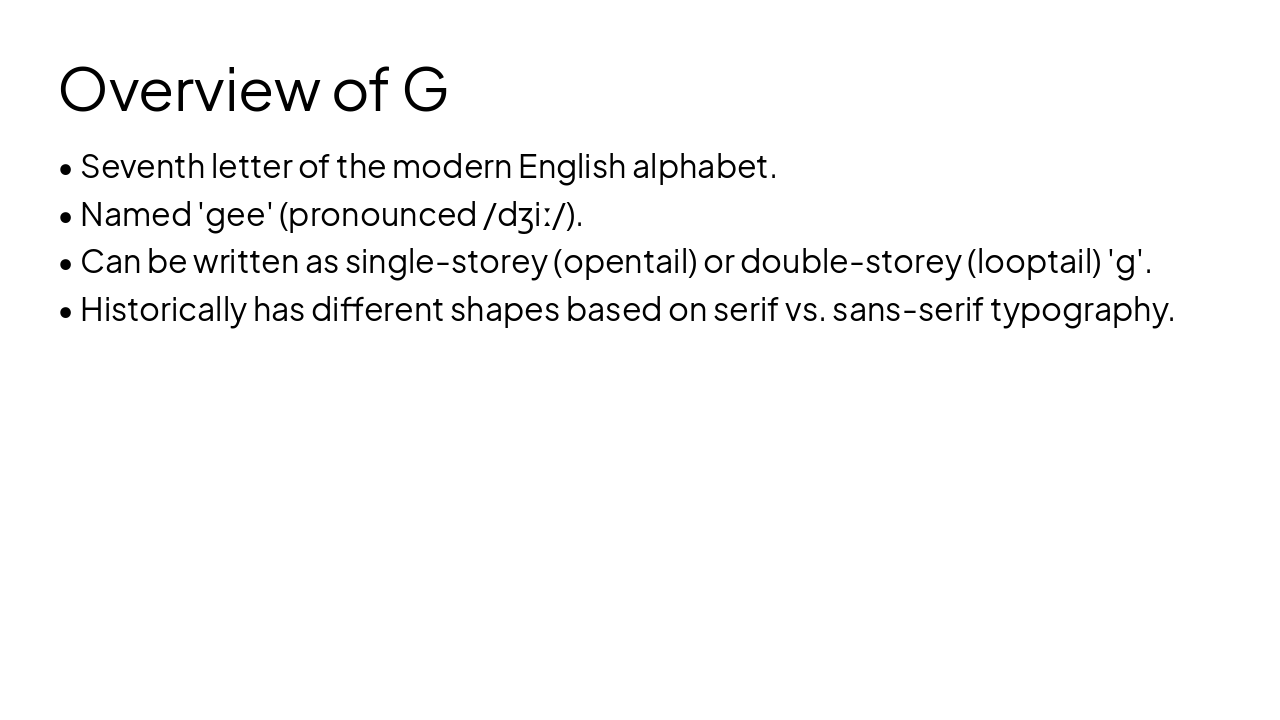
- Seventh letter of the modern English alphabet.
- Named 'gee' (pronounced /dʒiː/).
- Can be written as single-storey (opentail) or double-storey (looptail) 'g'.
- Historically has different shapes based on serif vs. sans-serif typography.
Slide 3 - Typography and Case
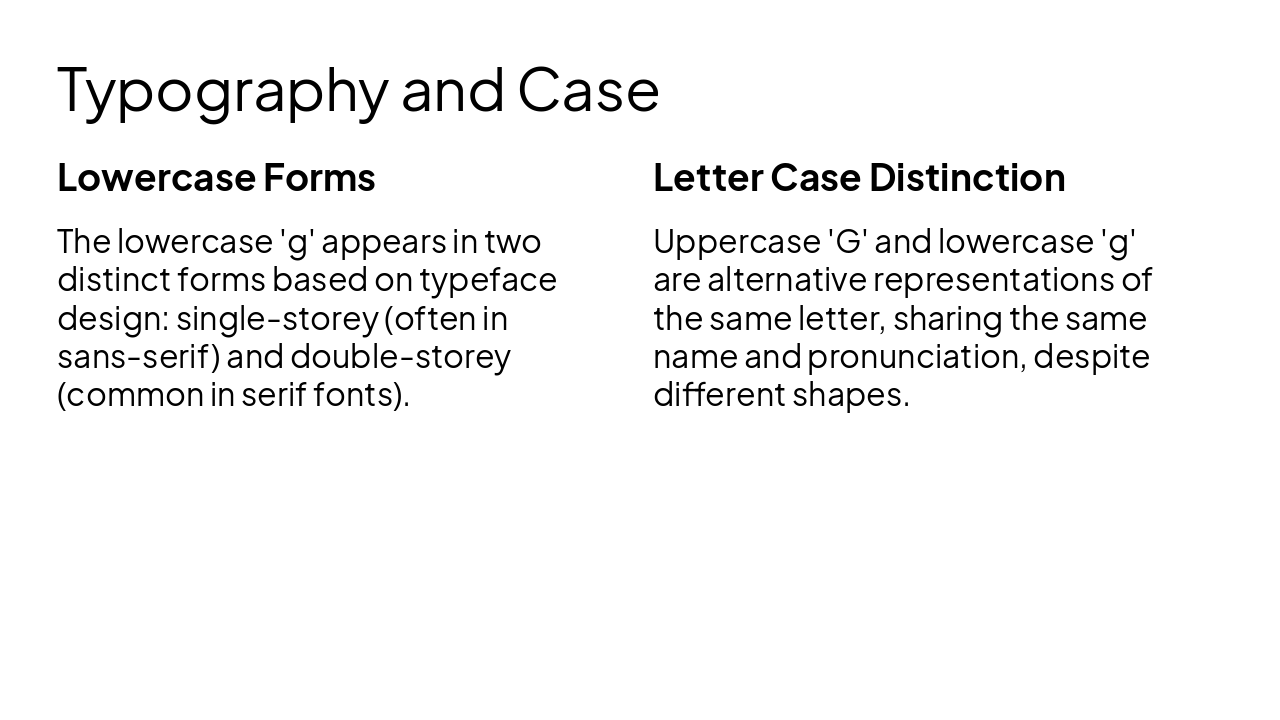
Lowercase Forms The lowercase 'g' appears in two distinct forms based on typeface design: single-storey (often in sans-serif) and double-storey (common in serif fonts).
Letter Case Distinction Uppercase 'G' and lowercase 'g' are alternative representations of the same letter, sharing the same name and pronunciation, despite different shapes.
Slide 4 - Gamma (Greek Equivalent)
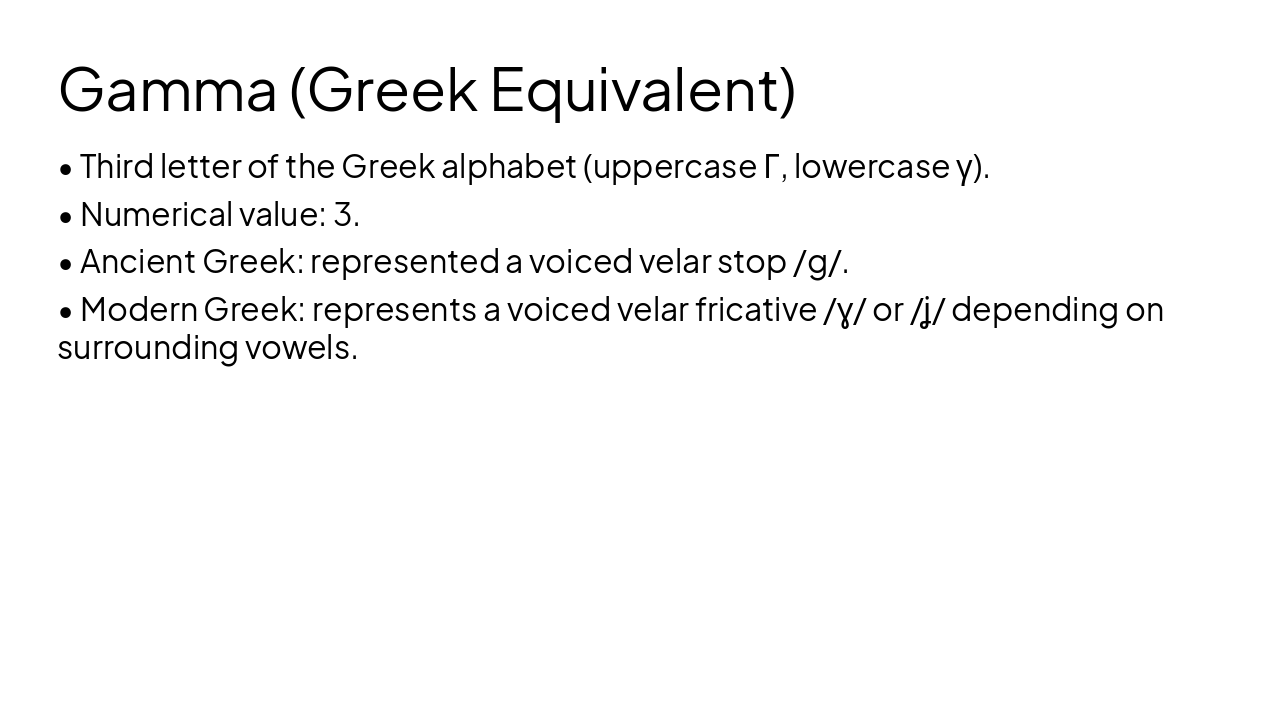
- Third letter of the Greek alphabet (uppercase Γ, lowercase γ).
- Numerical value: 3.
- Ancient Greek: represented a voiced velar stop /g/.
- Modern Greek: represents a voiced velar fricative /ɣ/ or /ʝ/ depending on surrounding vowels.
Slide 5 - Conclusion
The letter G serves as a vital foundation in both Latin and Greek orthography.
Summary of linguistic and typographical characteristics
Discover More Presentations
Explore thousands of AI-generated presentations for inspiration
Create Your Own Presentation
Generate professional presentations in seconds with Karaf's AI. Customize this presentation or start from scratch.