Slide 1 of 19
Slide 1 - Teaching-Learning Process
Teaching-Learning Process
A comprehensive guide to educational pedagogy and practice
Generated from prompt:
Create a complete set of teaching PowerPoint slides for the topic: Teaching Learning Process (Education). Slides should be detailed but simple for classroom teaching. Include: 1. Title Slide – Teaching Learning Process 2. Objectives of the Lesson 3. Meaning of Teaching 4. Meaning of Learning 5. Difference between Teaching and Learning 6. Nature of Teaching-Learning Process 7. Components of Teaching-Learning Process (Teacher, Student, Content, Method, Environment) 8. Role of Teacher (points + example) 9. Role of Student (points + example) 10. Methods of Teaching (lecture, discussion, activity-based, etc.) 11. Teaching Aids (charts, projector, board, etc.) 12. Classroom Environment (importance + example) 13. Factors Affecting Learning (internal & external) 14. Effective Teaching Strategies (engagement, feedback, motivation) 15. Assessment and Evaluation (formative & summative) 16. Barriers in Teaching-Learning Process 17. Solutions to Improve Learning 18. Conclusion 19. Thank You Slide Use very simple English, clear bullet points, examples from school classroom, and attractive slide structure. Include image suggestions for each slide.
This presentation offers a thorough exploration of the teaching-learning process, covering definitions of teaching and learning, key components, roles of teachers and students, effective methods and strategies, classroom environment, factors and aids
Teaching-Learning Process
A comprehensive guide to educational pedagogy and practice
Teaching Focused on the teacher (giving information). Aimed at providing guidance and resources.
Learning Focused on the student (receiving/constructing meaning). Aimed at internalizing knowledge and skills.
---
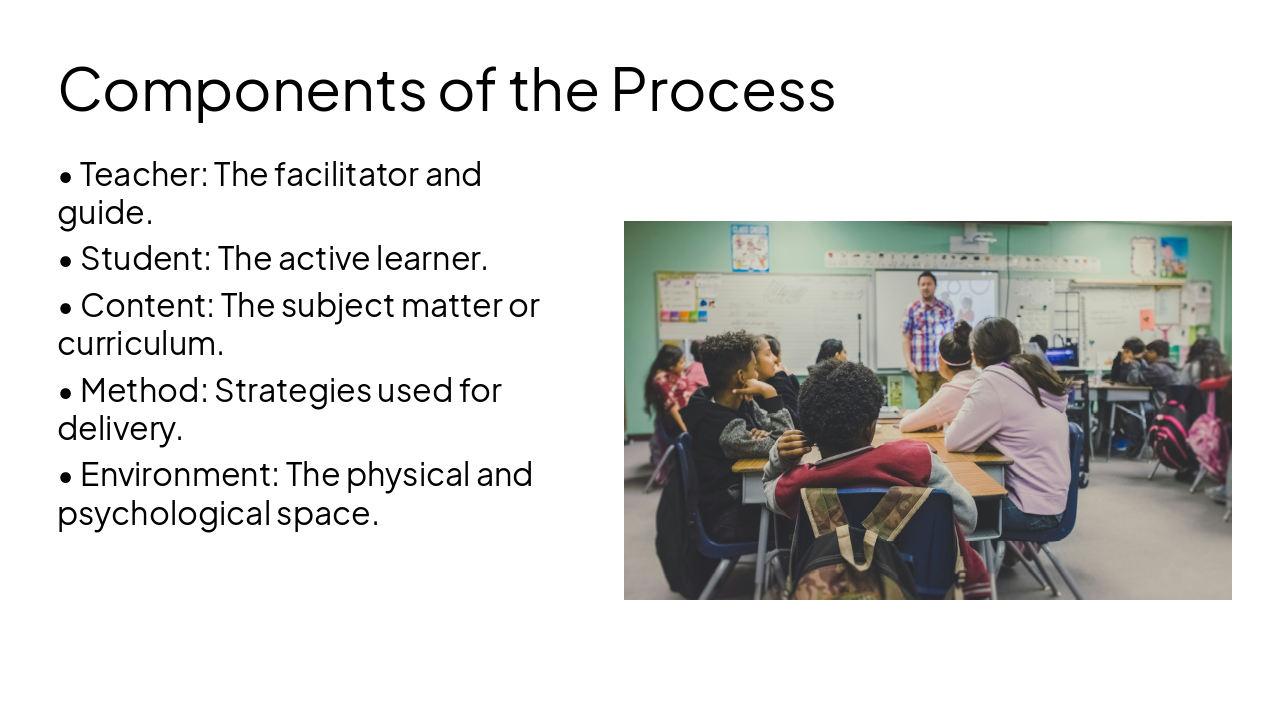
Photo by Kenny Eliason on Unsplash
Internal Factors Intelligence, motivation, health, and interest of the student.
External Factors Teaching quality, classroom environment, family support, and curriculum.
Formative Assessment Ongoing, during the lesson (e.g., quizzes, observations). Helps improve learning.
Summative Assessment At the end of a unit or term (e.g., final exams). Measures overall achievement.
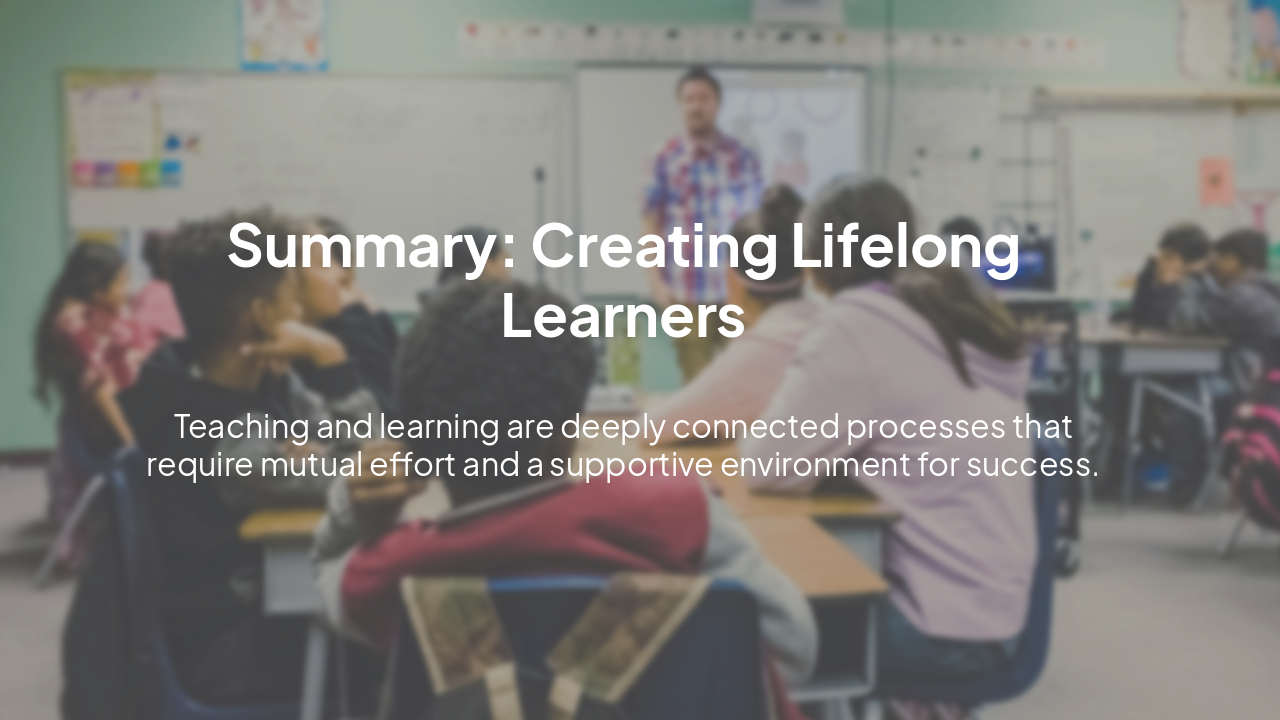
Summary: Creating Lifelong Learners
Teaching and learning are deeply connected processes that require mutual effort and a supportive environment for success.
---
Photo by Kenny Eliason on Unsplash
Thank You!
Questions? Thank you for your attention.
---
Photo by Sergey Shmidt on Unsplash

Explore thousands of AI-generated presentations for inspiration
Generate professional presentations in seconds with Karaf's AI. Customize this presentation or start from scratch.