Intervention Program: Mitigating Stress and Morbidity for SUNY Old Westbury Undergraduates
Generated from prompt:
I need at least 20 slides for a public health research, also include literature background, reference slide,
This presentation details an intervention program at SUNY Old Westbury to address long-term psychological stress and physical morbidity among undergraduates, particularly first-generation and low-income students. It covers the abstract and objectives, literature on national student stress trends, target population, mixed-methods approach using Theory of Planned Behavior, intervention phases, key results on stress impacts like sleep deprivation and somatic issues, analysis plan, and conclusions emphasizing stigma reduction and resilience building.
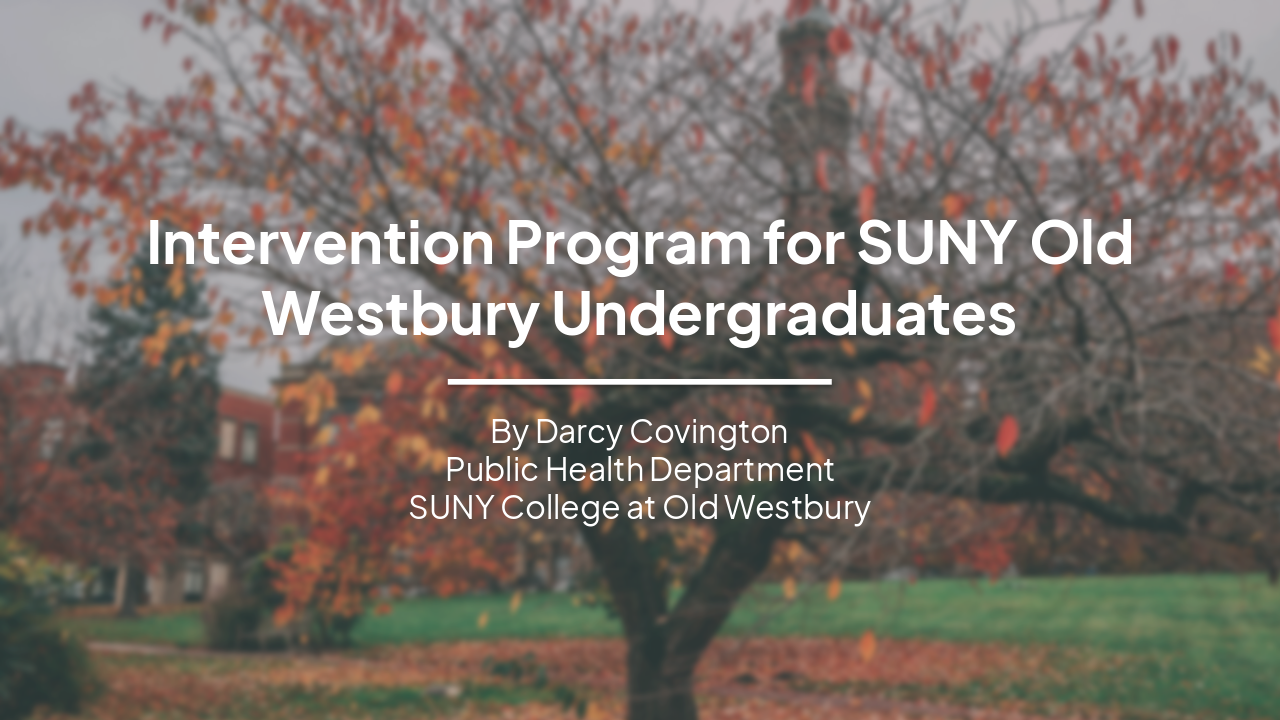
Slide 2 - Presentation Agenda
- Abstract and Objectives
- Literature Background
- Target Population
- Methods and Theoretical Framework
- Key Results
- Intervention Phases
- Analysis Plan
- Conclusion and Impact
---
Photo by Ionela Mat on Unsplash
Slide 3 - Section 1: Abstract and Objectives
1
Abstract and Objectives
Mitigating long-term psychological stress and physical morbidity among undergraduates
---
Photo by Daria Nepriakhina 🇺🇦 on Unsplash
Slide 4 - Program Abstract
- Mitigate impact of long-term psychological stress and physical morbidity
- Change stigma surrounding stress/anxiety via accessible services
- Empower first-gen/low-income undergrads with coping techniques
- Rapid Mixed-Methods Assessment + Theory of Planned Behavior
Source: Covington_Darcy_Finalized Program Planning.docx
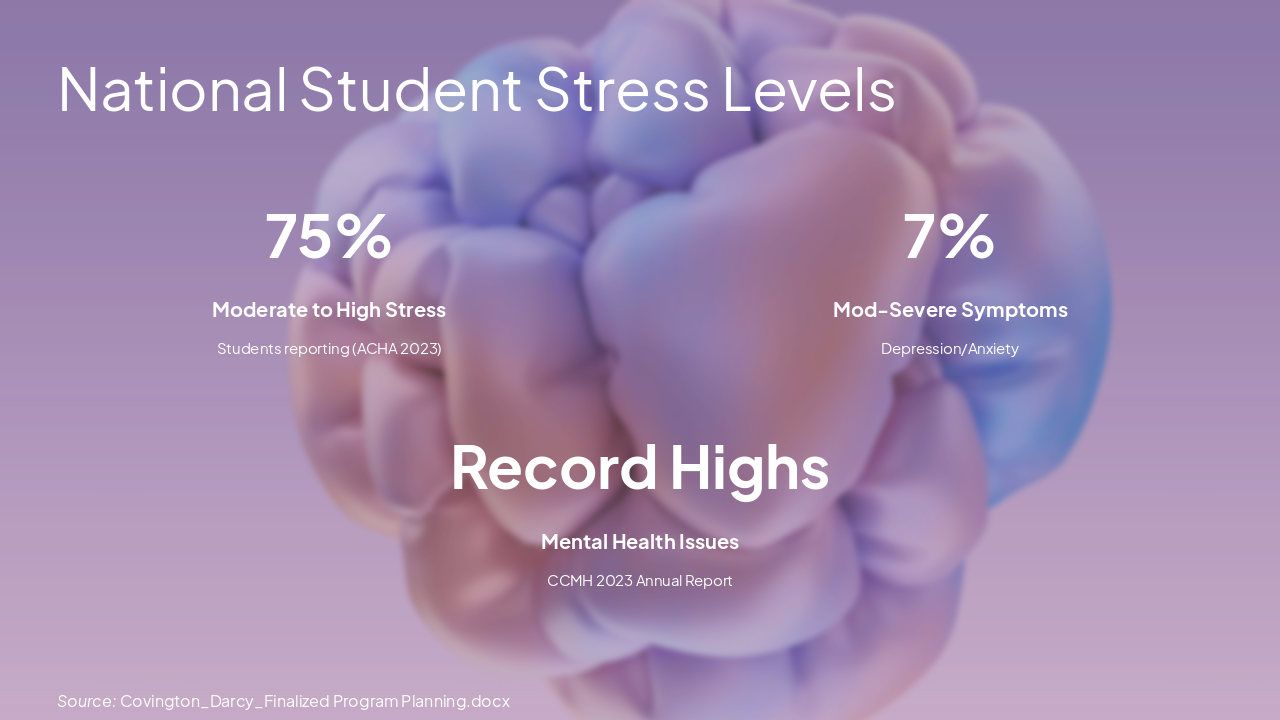
Slide 5 - National Student Stress Levels
- 75%: Moderate to High Stress
- 7%: Mod-Severe Symptoms
- Record Highs: Mental Health Issues
---
Photo by Irene Demetri on Unsplash
Source: Covington_Darcy_Finalized Program Planning.docx
Slide 6 - Section 2: Literature Background
2
Literature Background
National trends and studies on student stress, anxiety, and morbidity
---
Photo by Ilya Semenov on Unsplash
Slide 7 - Key Literature Findings
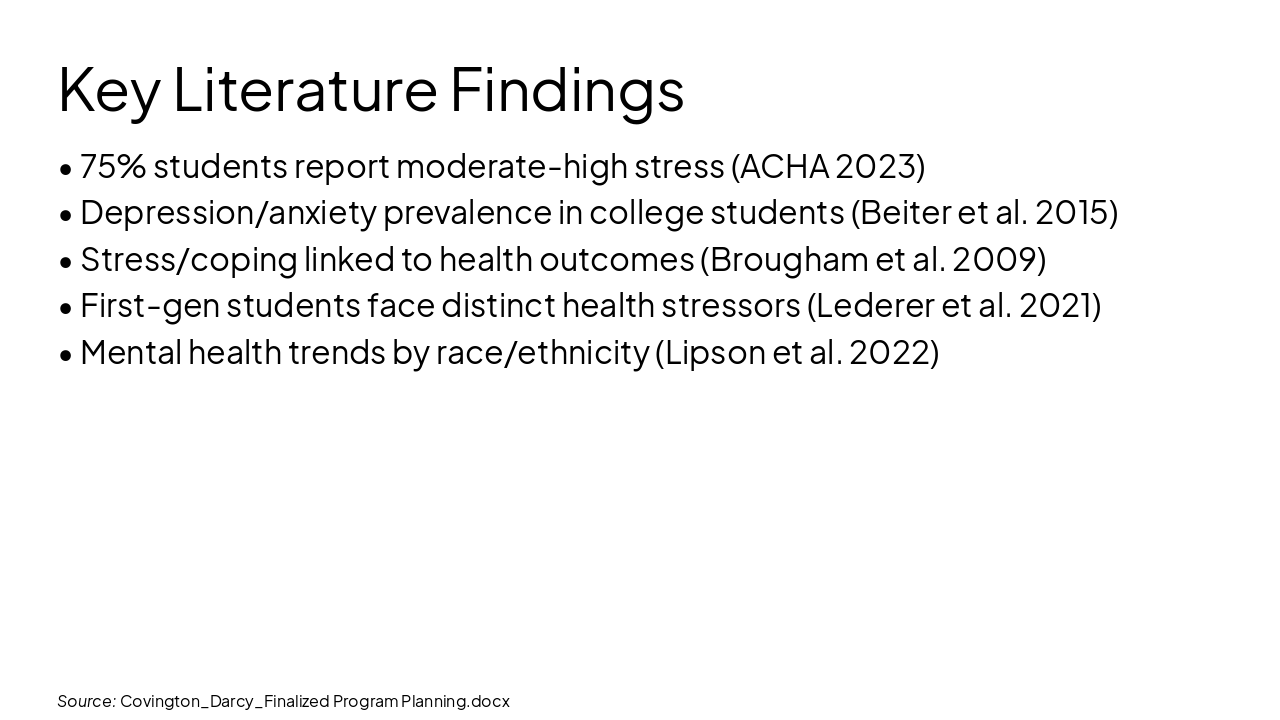
- 75% students report moderate-high stress (ACHA 2023)
- Depression/anxiety prevalence in college students (Beiter et al. 2015)
- Stress/coping linked to health outcomes (Brougham et al. 2009)
- First-gen students face distinct health stressors (Lederer et al. 2021)
- Mental health trends by race/ethnicity (Lipson et al. 2022)
Source: Covington_Darcy_Finalized Program Planning.docx
Slide 8 - Selected References Summary
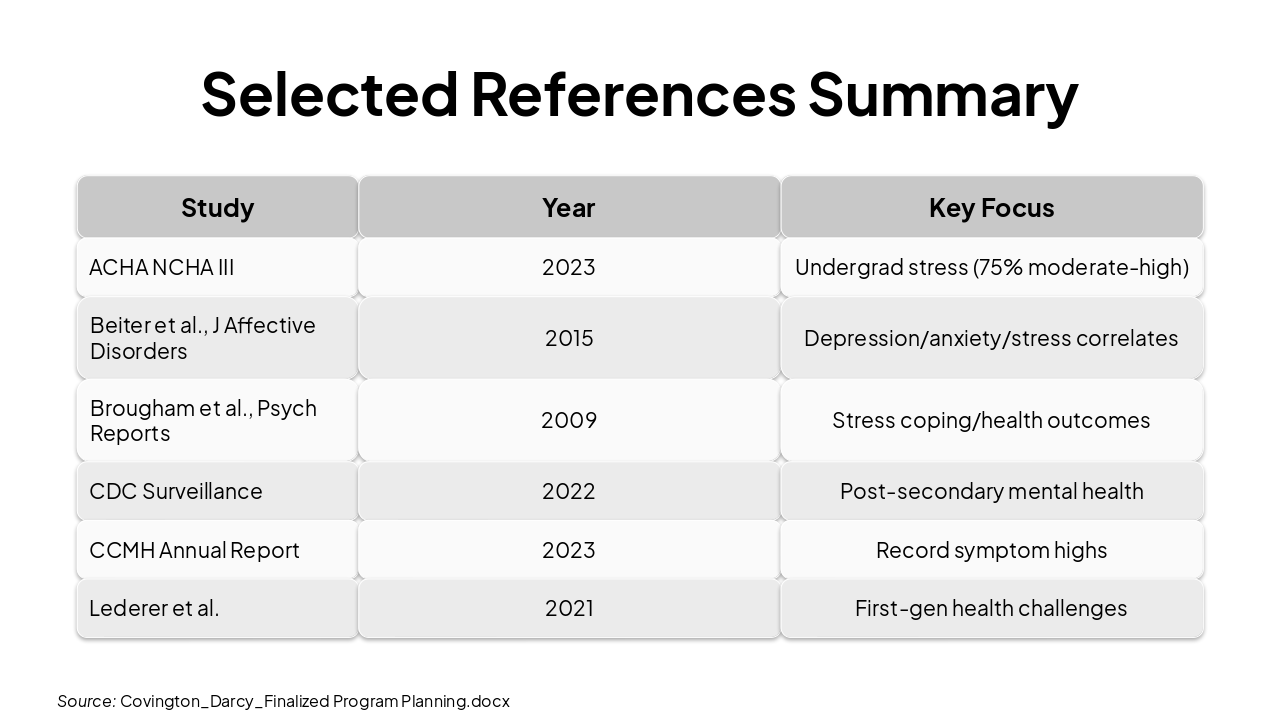
| Study | Year | Key Focus |
|---|---|---|
| ACHA NCHA III | 2023 | Undergrad stress (75% moderate-high) |
| Beiter et al., J Affective Disorders | 2015 | Depression/anxiety/stress correlates |
| Brougham et al., Psych Reports | 2009 | Stress coping/health outcomes |
| CDC Surveillance | 2022 | Post-secondary mental health |
| CCMH Annual Report | 2023 | Record symptom highs |
| Lederer et al. | 2021 | First-gen health challenges |
Source: Covington_Darcy_Finalized Program Planning.docx
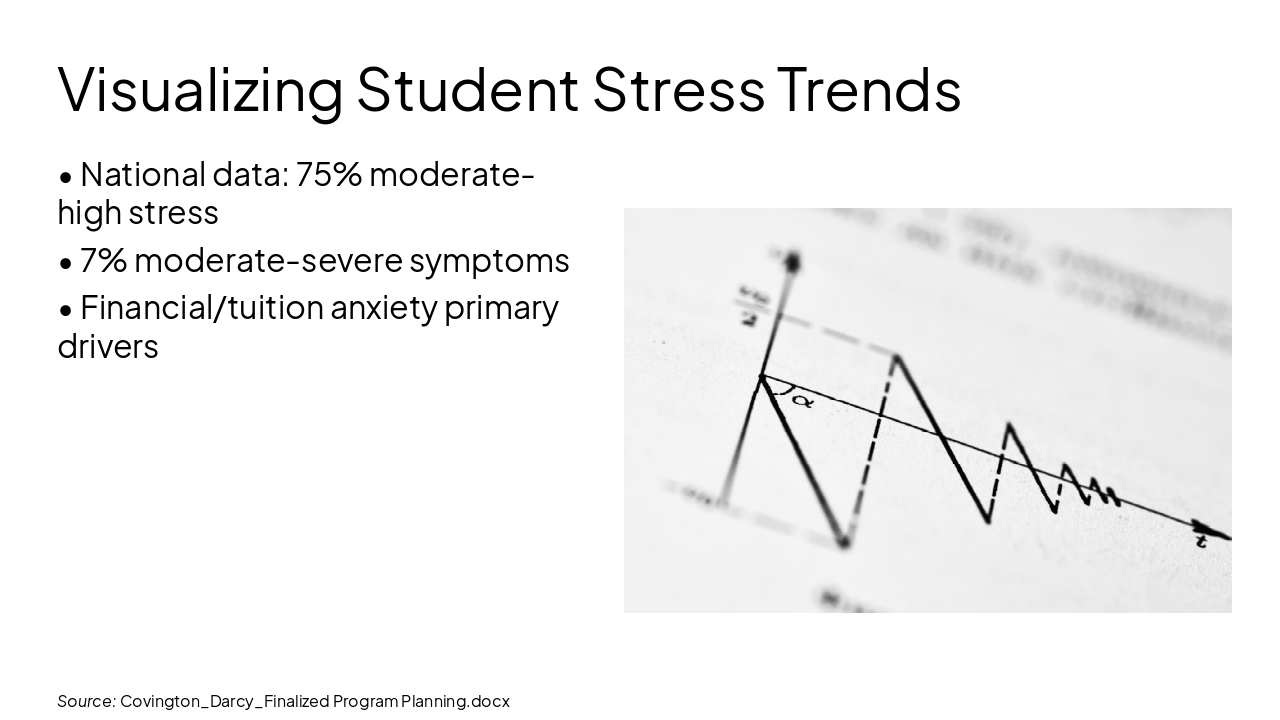
Slide 9 - Visualizing Student Stress Trends
- National data: 75% moderate-high stress
- 7% moderate-severe symptoms
- Financial/tuition anxiety primary drivers
---
Photo by Bozhin Karaivanov on Unsplash
Source: Covington_Darcy_Finalized Program Planning.docx
Slide 10 - Section 3: Program Objectives
3
Program Objectives
Time-bound targets for health improvement and awareness
---
Photo by Anastase Maragos on Unsplash
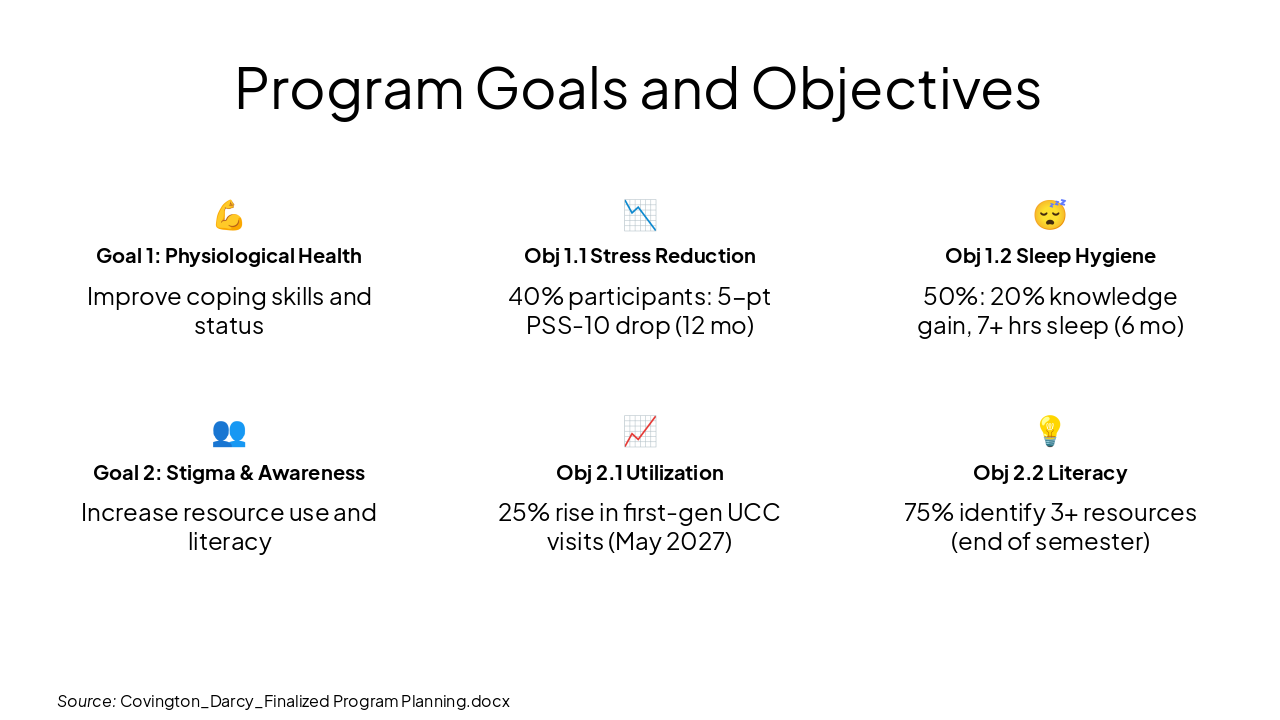
Slide 11 - Program Goals and Objectives
💪 Goal 1: Physiological Health Improve coping skills and status
📉 Obj 1.1 Stress Reduction 40% participants: 5-pt PSS-10 drop (12 mo)
😴 Obj 1.2 Sleep Hygiene 50%: 20% knowledge gain, 7+ hrs sleep (6 mo)
👥 Goal 2: Stigma & Awareness Increase resource use and literacy
📈 Obj 2.1 Utilization 25% rise in first-gen UCC visits (May 2027)
💡 Obj 2.2 Literacy 75% identify 3+ resources (end of semester)
Source: Covington_Darcy_Finalized Program Planning.docx
Slide 12 - Section 4: Methods
4
Methods
Rapid Mixed-Methods Assessment and Theory of Planned Behavior
---
Photo by Beatriz Cattel on Unsplash
Slide 13 - Target Population & Research Methods
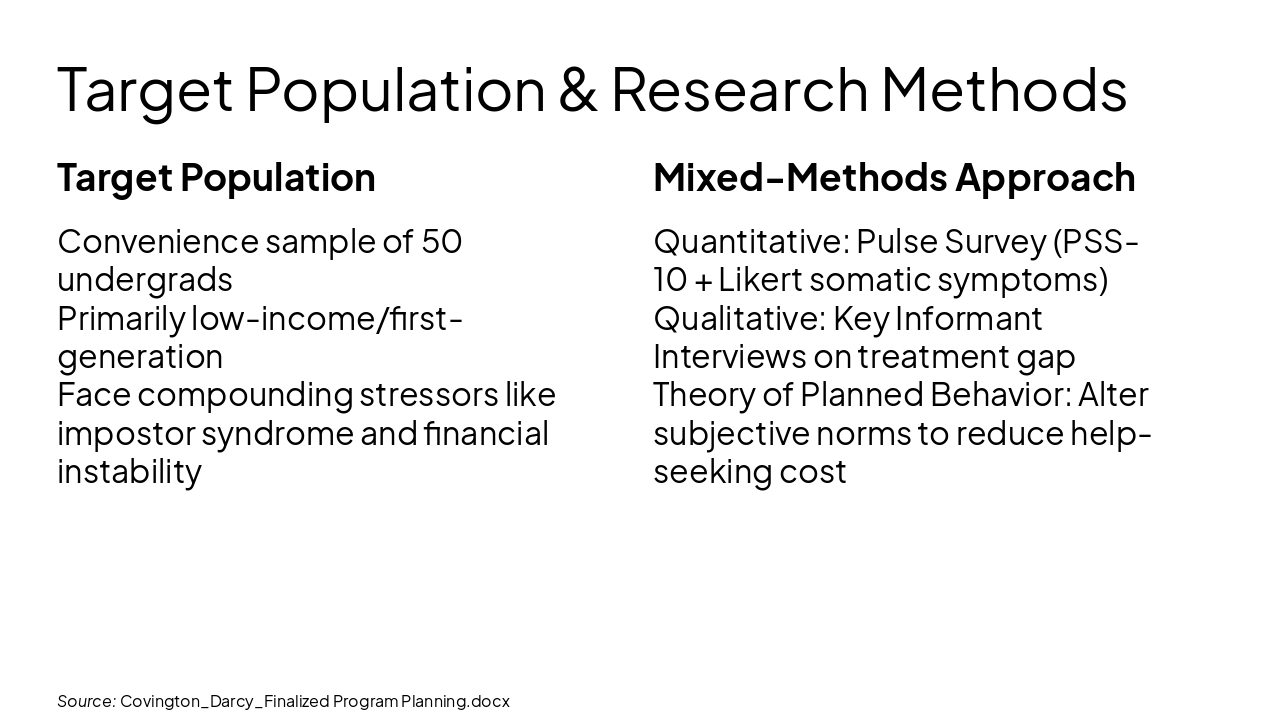
Target Population Convenience sample of 50 undergrads Primarily low-income/first-generation Face compounding stressors like impostor syndrome and financial instability
Mixed-Methods Approach Quantitative: Pulse Survey (PSS-10 + Likert somatic symptoms) Qualitative: Key Informant Interviews on treatment gap Theory of Planned Behavior: Alter subjective norms to reduce help-seeking cost
Source: Covington_Darcy_Finalized Program Planning.docx
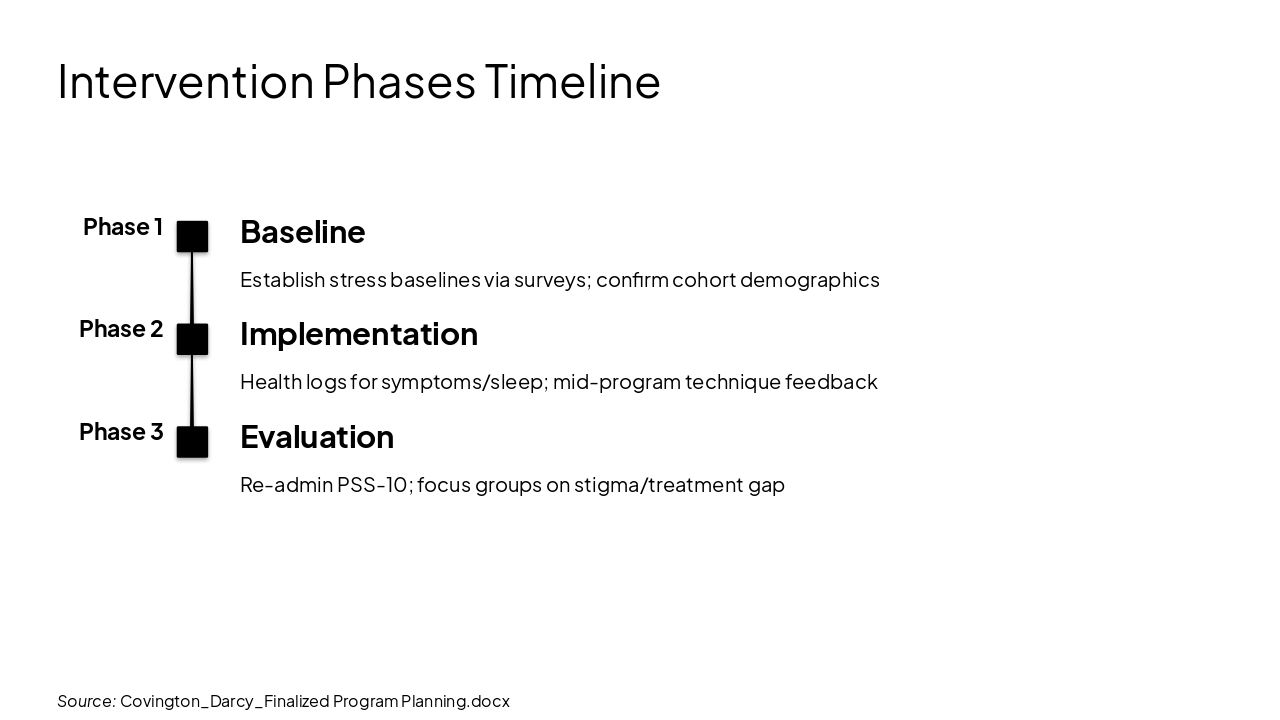
Slide 14 - Intervention Phases Timeline
Phase 1: Baseline Establish stress baselines via surveys; confirm cohort demographics Phase 2: Implementation Health logs for symptoms/sleep; mid-program technique feedback Phase 3: Evaluation Re-admin PSS-10; focus groups on stigma/treatment gap
Source: Covington_Darcy_Finalized Program Planning.docx
Slide 16 - Key Findings
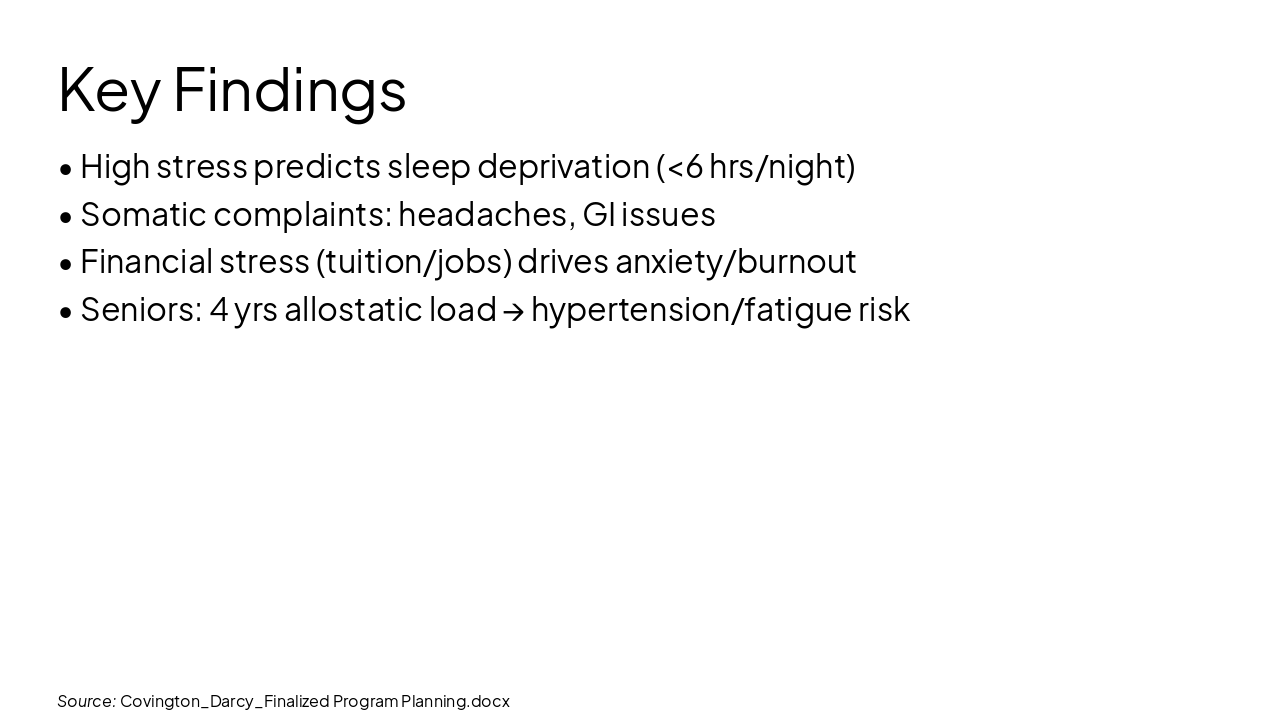
- High stress predicts sleep deprivation (<6 hrs/night)
- Somatic complaints: headaches, GI issues
- Financial stress (tuition/jobs) drives anxiety/burnout
- Seniors: 4 yrs allostatic load → hypertension/fatigue risk
Source: Covington_Darcy_Finalized Program Planning.docx
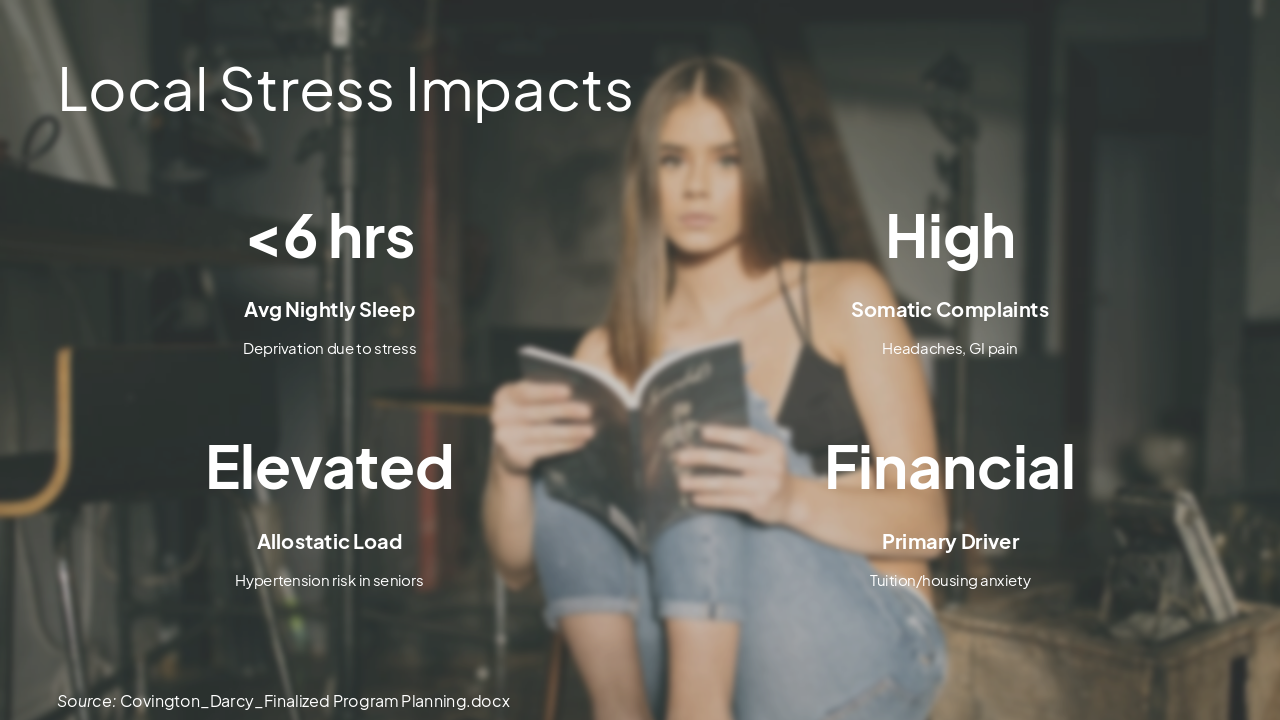
Slide 17 - Local Stress Impacts
- <6 hrs: Avg Nightly Sleep
- High: Somatic Complaints
- Elevated: Allostatic Load
- Financial: Primary Driver
---
Photo by Thought Catalog on Unsplash
Source: Covington_Darcy_Finalized Program Planning.docx
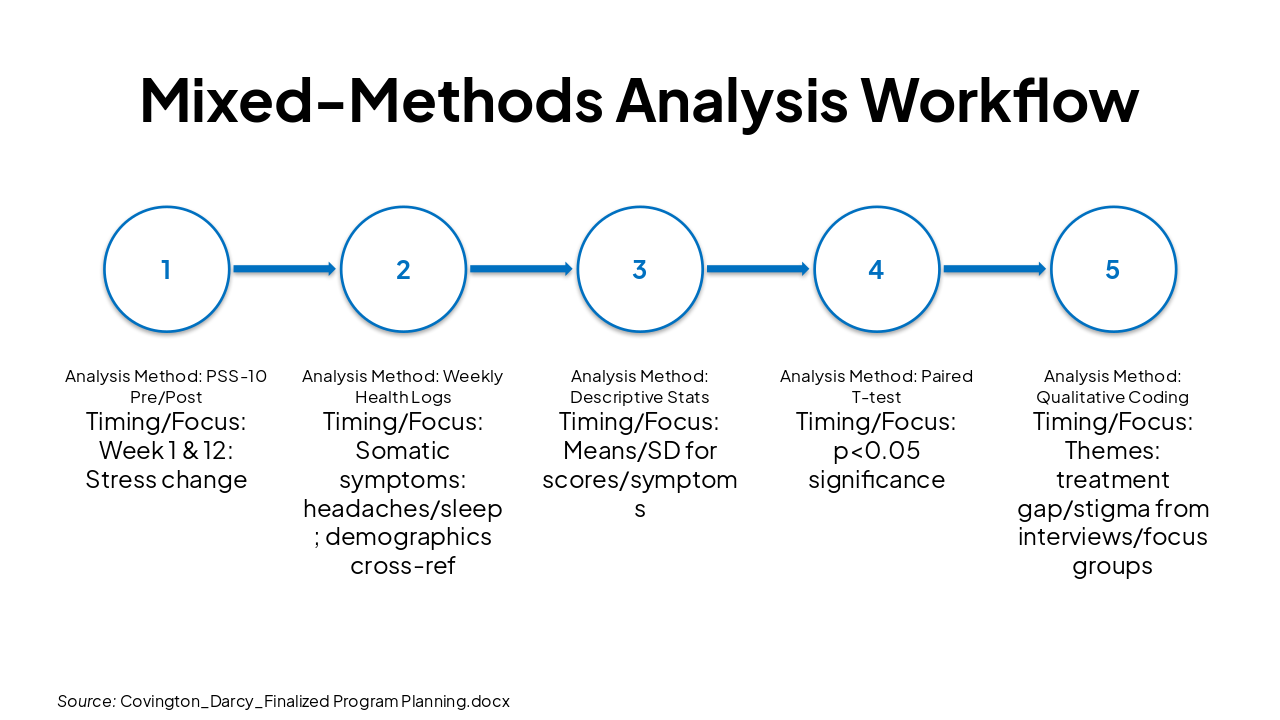
Slide 18 - Mixed-Methods Analysis Workflow
| Step | Analysis Method | Timing/Focus |
|---|---|---|
| 1 | PSS-10 Pre/Post | Week 1 & 12: Stress change |
| 2 | Weekly Health Logs | Somatic symptoms: headaches/sleep; demographics cross-ref |
| 3 | Descriptive Stats | Means/SD for scores/symptoms |
| 4 | Paired T-test | p<0.05 significance |
| 5 | Qualitative Coding | Themes: treatment gap/stigma from interviews/focus groups |
Source: Covington_Darcy_Finalized Program Planning.docx
Slide 19 - From the Conclusion
> This intervention is more than a wellness luxury; it is a professional requirement to address systemic health disparities.
— Darcy Covington
---
Photo by Seiya Maeda on Unsplash
Source: Covington_Darcy_Finalized Program Planning.docx
Slide 20 - Conclusion
Normalize help-seeking to prevent chronic morbidity Foster resilience for first-gen/low-income students
Thank you! Questions? Contact Darcy Covington
---
Photo by proudlyswazi on Unsplash
Source: Covington_Darcy_Finalized Program Planning.docx
Discover More Presentations
Explore thousands of AI-generated presentations for inspiration
Create Your Own Presentation
Generate professional presentations in seconds with Karaf's AI. Customize this presentation or start from scratch.