Slide 1 of 12
Slide 1 - Title Slide
Area Manager Boundaries and Product Targets
Strategic Alignment for Sales Growth and Market Coverage
---
Photo by Nastuh Abootalebi on Unsplash

Generated from prompt:
Create a professional PowerPoint presentation on 'Area Manager Boundaries and Product Targets'. Include slides: 1. Title slide 2. Overview of Area Management 3. Importance of Defining Boundaries 4. Types of Boundaries (geographical, customer segments, product lines) 5. Tools for Mapping Territories 6. Challenges in Boundary Management 7. Introduction to Product Targets 8. Setting SMART Product Targets 9. Aligning Targets with Business Goals 10. Tracking and KPIs 11. Case Study Example 12. Best Practices 13. Summary 14. Q&A Use clean corporate design, icons, charts placeholders.
This deck explores territory management fundamentals, defining boundaries, mapping tools, challenges, SMART product targets, KPIs, best practices, and workflows for aligning sales efforts with business strategy and market coverage.
Area Manager Boundaries and Product Targets
Strategic Alignment for Sales Growth and Market Coverage
---
Photo by Nastuh Abootalebi on Unsplash
---
Photo by Nastuh Abootalebi on Unsplash
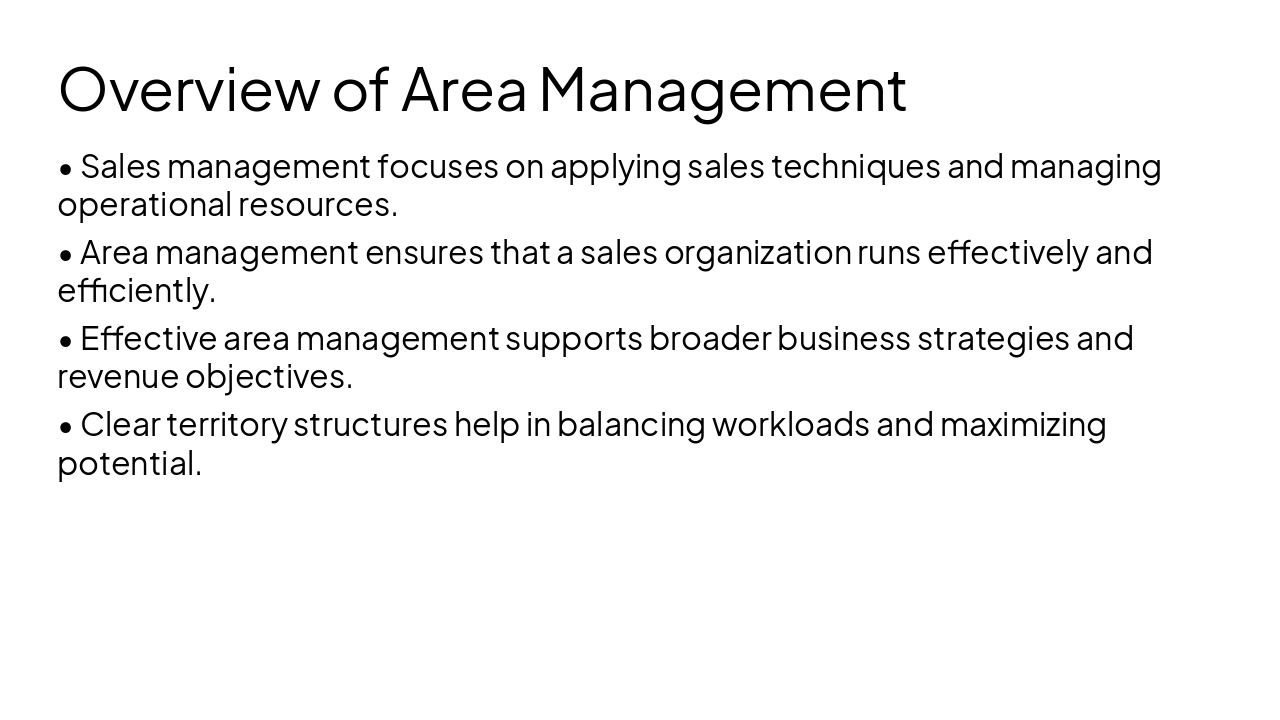
1
Defining boundaries to optimize sales operations and market coverage
---
Photo by Tom Parkes on Unsplash
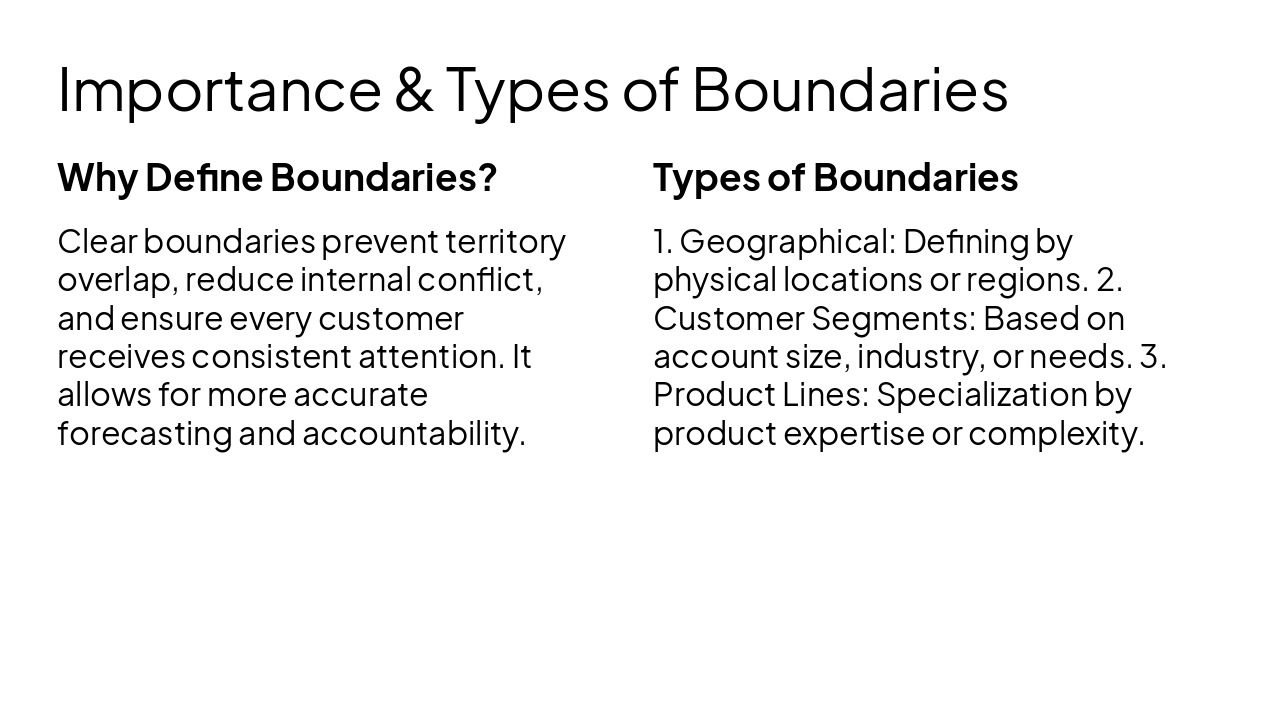
Why Define Boundaries? Clear boundaries prevent territory overlap, reduce internal conflict, and ensure every customer receives consistent attention. It allows for more accurate forecasting and accountability.
Types of Boundaries
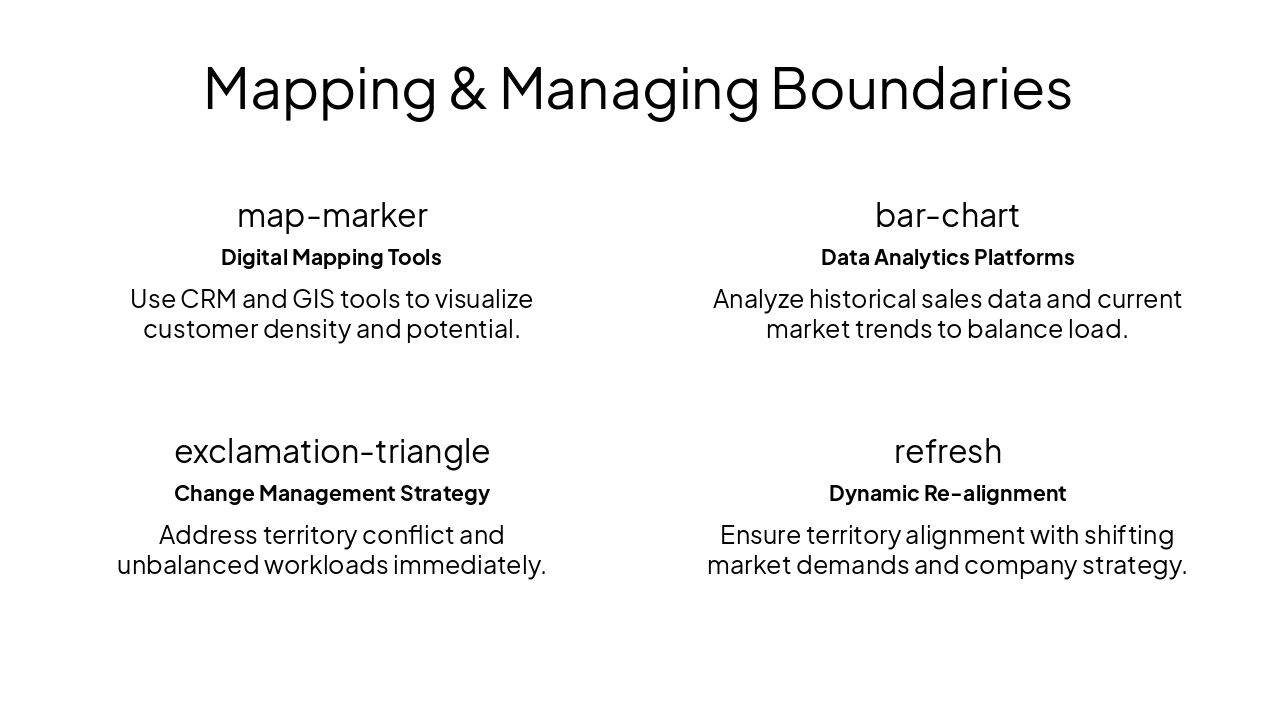
map-marker Digital Mapping Tools Use CRM and GIS tools to visualize customer density and potential.
bar-chart Data Analytics Platforms Analyze historical sales data and current market trends to balance load.
exclamation-triangle Change Management Strategy Address territory conflict and unbalanced workloads immediately.
refresh Dynamic Re-alignment Ensure territory alignment with shifting market demands and company strategy.
2
Setting goals that drive growth and alignment
---
Photo by Tom Parkes on Unsplash

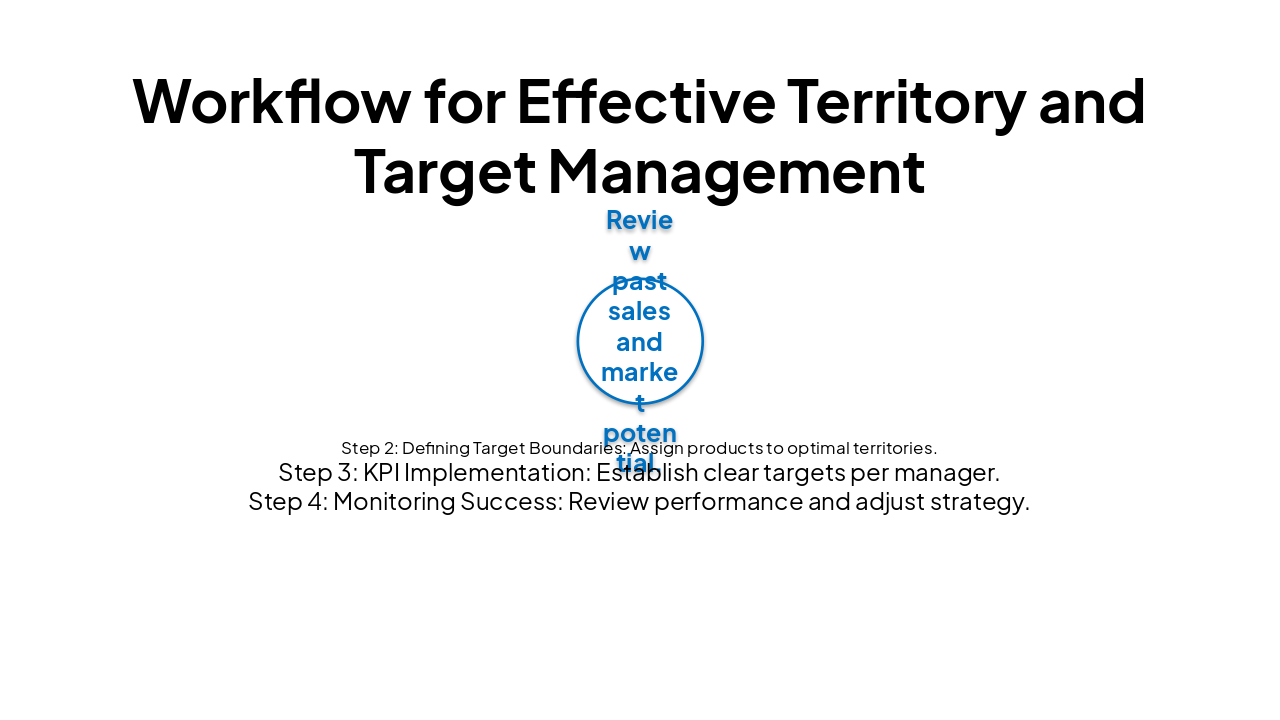
| Step 1: Analysis | Step 2: Defining Target Boundaries | Step 3: KPI Implementation | Step 4: Monitoring Success |
|---|---|---|---|
| Review past sales and market potential. | Assign products to optimal territories. | Establish clear targets per manager. | Review performance and adjust strategy. |
> "Territory balancing is not a one-time project; it is a continuous process of aligning sales efforts with ever-changing market opportunities."
— Industry Best Practice
---
Photo by Bernd 📷 Dittrich (https://unsplash.com/@hdbernd?utmsource=karaf&utmmedium=referral) on Unsplash (https://unsplash.com/?utmsource=karaf&utmmedium=referral)

Questions & Discussion
Thank you for your time. Are there any questions?
---
Photo by Nastuh Abootalebi on Unsplash

Explore thousands of AI-generated presentations for inspiration
Generate professional presentations in seconds with Karaf's AI. Customize this presentation or start from scratch.