Slide 1 of 17
Slide 1 - Research Defence
Beyond Bricks and Mortar
Education Expenditure, Capital Investment, and the Drivers of India's Economic Growth (1991–2023) | Mahdiya Tasneem, St. Xavier's College, Kolkata
---
Photo by Tom Parkes on Unsplash

Generated from prompt:
Create a stunning, high-impact research defence PowerPoint (30-mark level, premium academic design) based on this dissertation: Title: Beyond Bricks and Mortar — Education Expenditure, Capital Investment and the Drivers of India's Economic Growth (1991–2023) Author: Mahdiya Tasneem Institution: St. Xavier's College, Kolkata Design Theme: - Dark academic + modern minimal (black, deep blue, gold accents) - Clean graphs, bold headings, strong visual hierarchy - Suitable for viva/defence with examiners - Use subtle animations and emphasis on key results Structure (expand to ~14–16 slides): 1. Title slide (premium, elegant) 2. Research motivation (why this matters for India) 3. Literature review (Mallick & Dash 2015) 4. Research gap & contribution (highlight novelty strongly) 5. Data & variables (visual icons + clean layout) 6. Methodology flow (ADF → Johansen → VAR) 7. Unit root results (simple, visual) 8. Cointegration result (rank = 0 explained visually) 9. VAR model overview 10. Key regression results (GDP equation focus) 11. System equations insights (UNEMP, EDU, GCF) 12. Diagnostics (clean credibility slide) 13. Granger causality (highlight 4 key findings boldly) 14. IRF insights (visual storytelling) 15. FEVD results (big numbers, impact) 16. Conclusion & policy implications (exam-ready) 17. Thank you + viva questions Special emphasis: - Highlight: Jobless growth (GDP → UNEMP) - Highlight: GCF → EDU (novel finding) - Highlight: Education is long-run only Make it visually stunning, professional, and worthy of top marks. Use minimal text per slide and strong visual storytelling. Return a downloadable PPT and PDF.
Research defence analyzing education expenditure, capital investment, and unemployment's role in India's GDP growth (1991–2023). Employs VAR models, Granger causality, IRFs, and FEVD to reveal physical capital's short-run dominance, education's long跑
Beyond Bricks and Mortar
Education Expenditure, Capital Investment, and the Drivers of India's Economic Growth (1991–2023) | Mahdiya Tasneem, St. Xavier's College, Kolkata
---
Photo by Tom Parkes on Unsplash
📈 Growth Indicator Real GDP (Constant Prices)
🏗️ Physical Capital Gross Capital Formation (% of GDP)
🎓 Human Capital Public Expenditure on Education (% of GDP)
👥 Labour Market Unemployment Rate (LFPR adjusted)
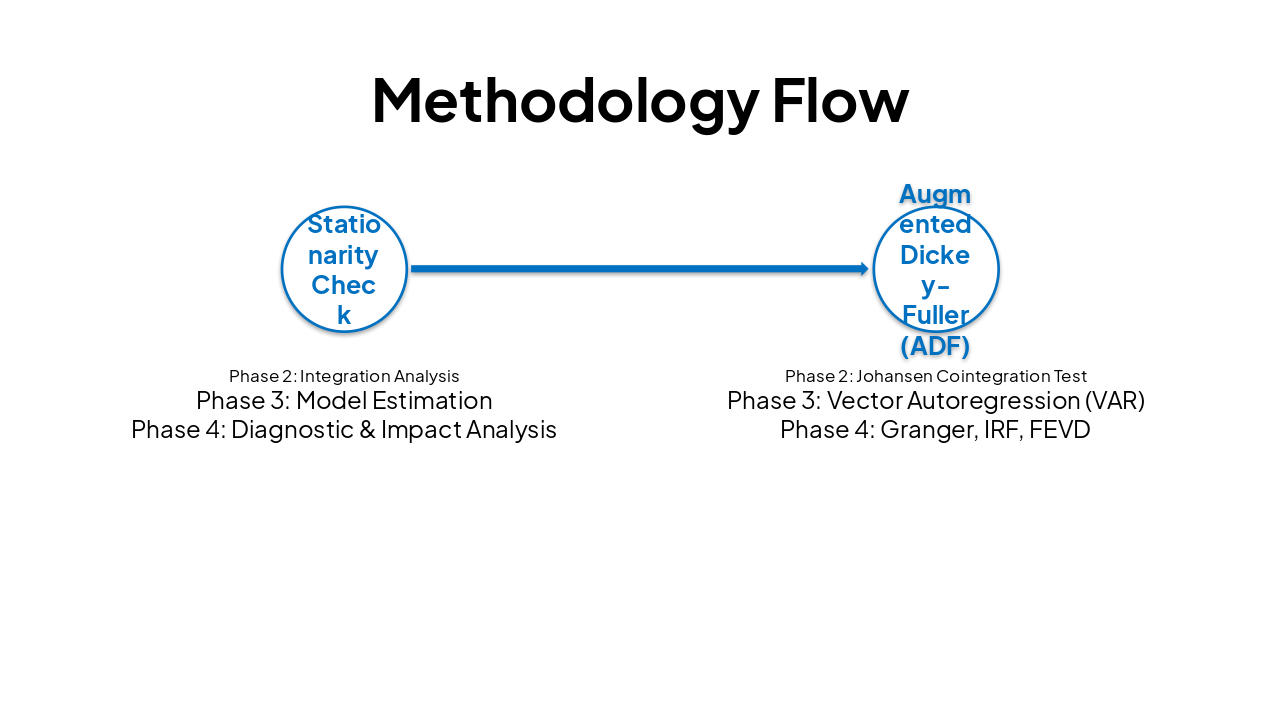
| Phase 1 | Phase 2 | Phase 3 | Phase 4 |
|---|---|---|---|
| Stationarity Check | Integration Analysis | Model Estimation | Diagnostic & Impact Analysis |
| Augmented Dickey-Fuller (ADF) | Johansen Cointegration Test | Vector Autoregression (VAR) | Granger, IRF, FEVD |
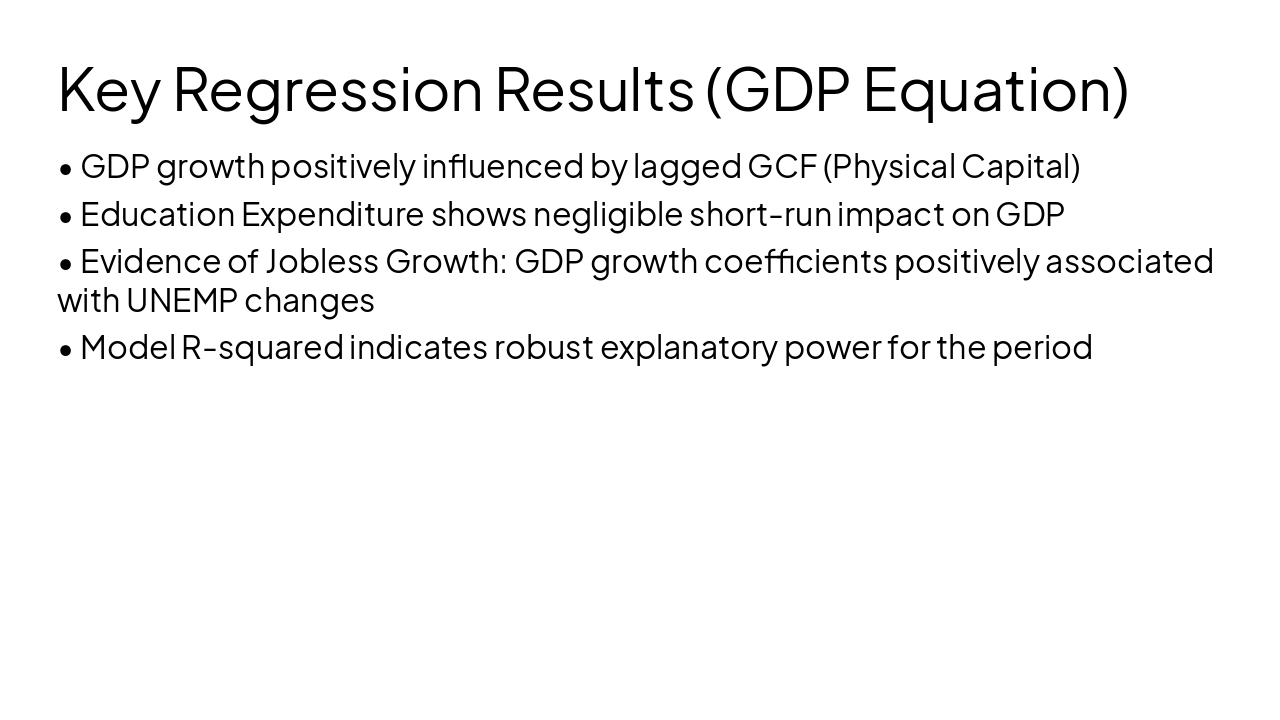
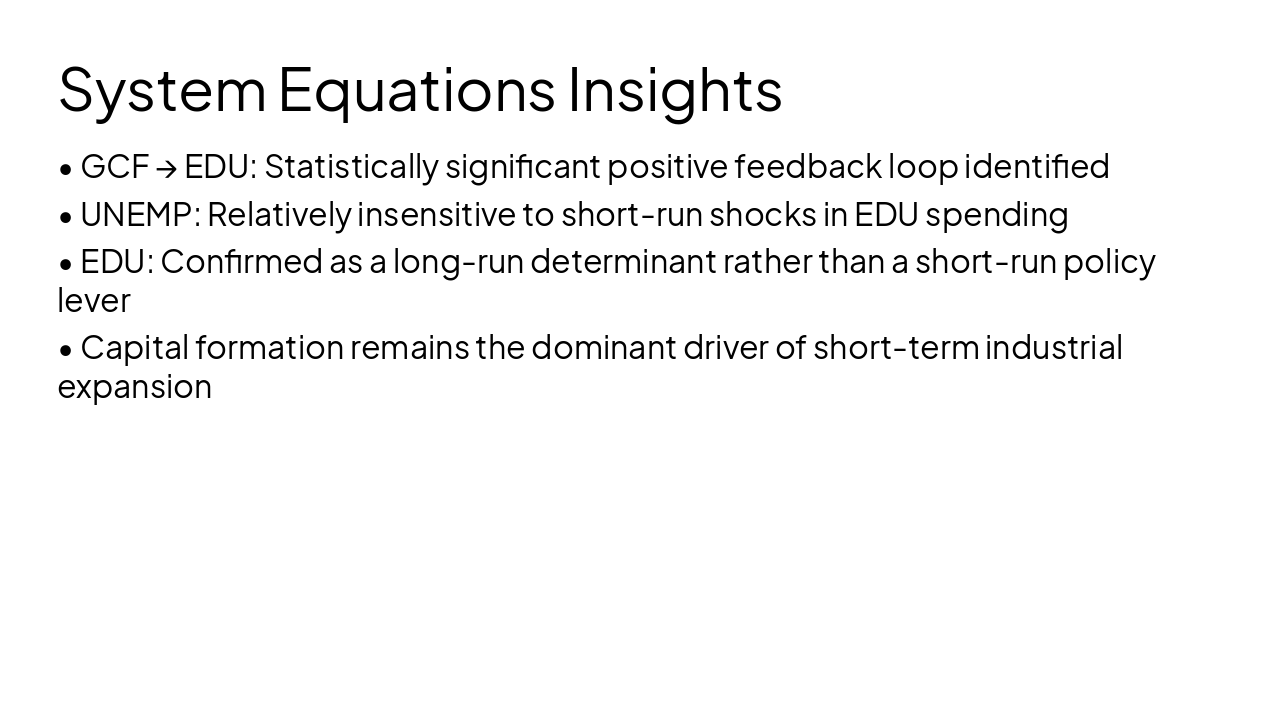
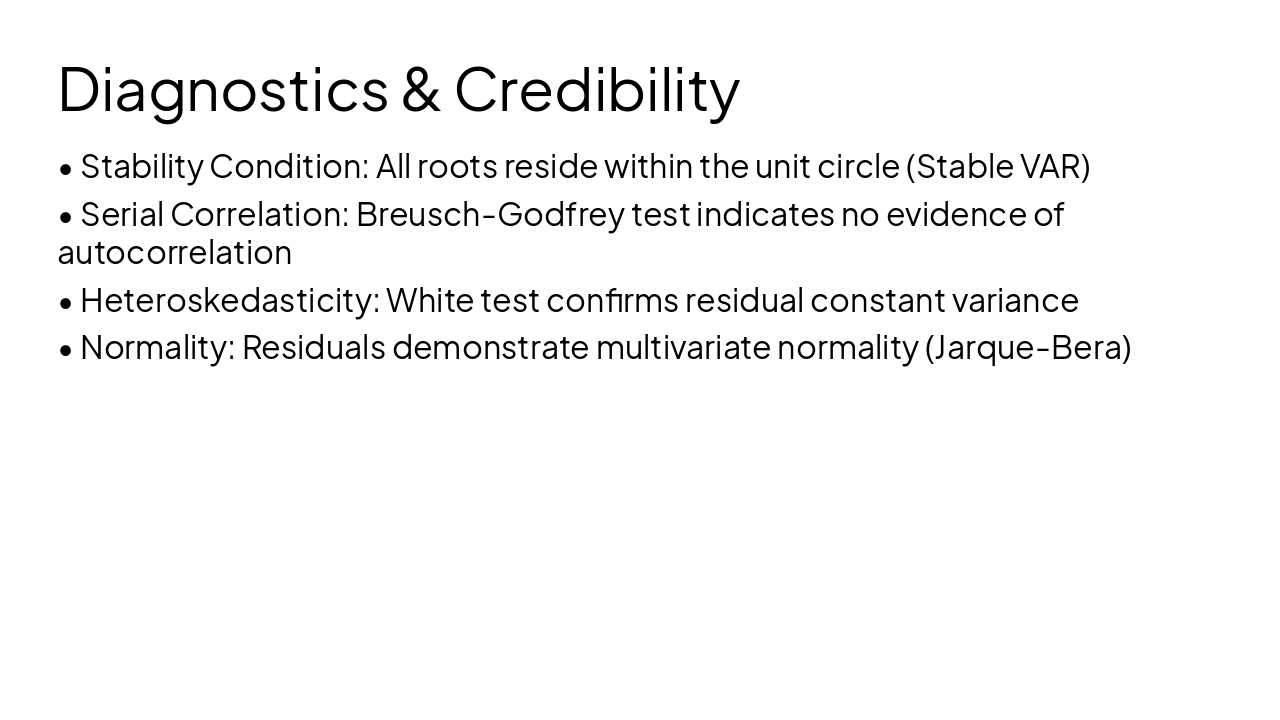
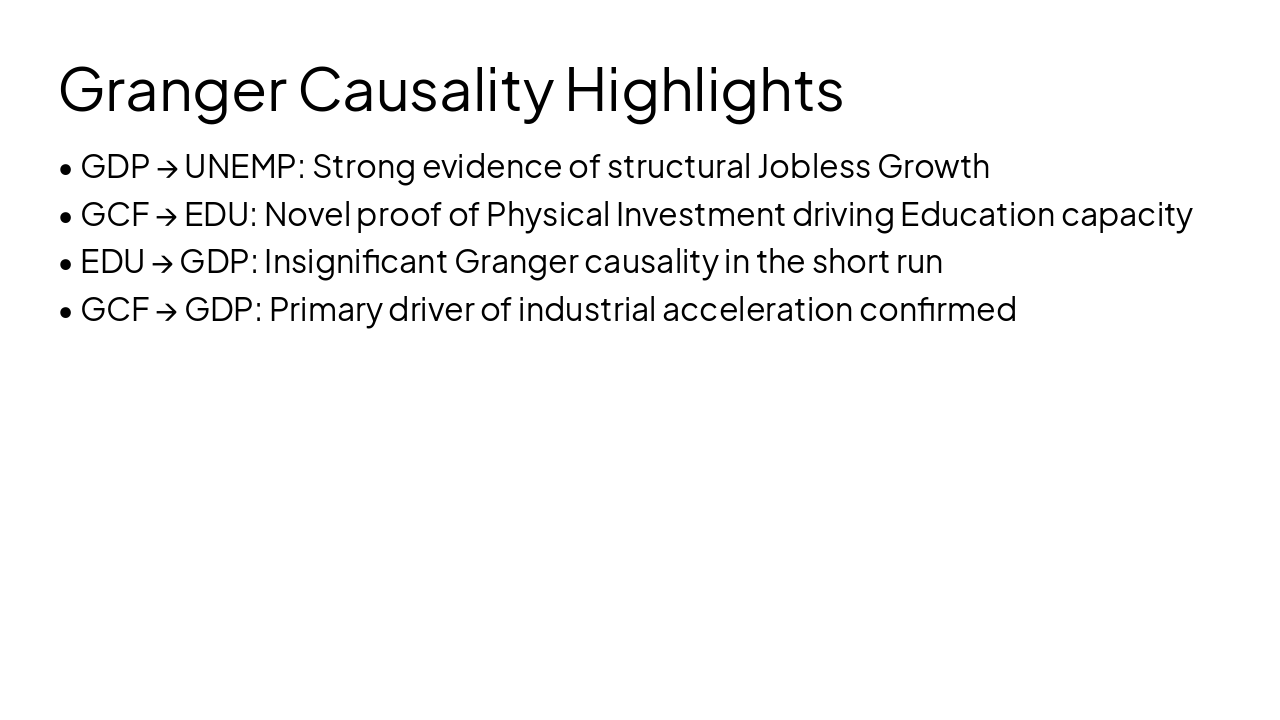
---
Photo by Arturo Añez on Unsplash
Conclusion: Beyond Bricks and Mortar
Policy: Prioritize physical infrastructure in short term; rethink education integration for long-term employability.
Thank You
Thank you for your time. Ready for examiner questions.
---
Photo by Nastuh Abootalebi on Unsplash

Explore thousands of AI-generated presentations for inspiration
Generate professional presentations in seconds with Karaf's AI. Customize this presentation or start from scratch.