Slide 1 of 13
Slide 1 - 上山遗址
This is a title slide titled "上山遗址" (Shangshan Site). The subtitle describes it as "the cradle of Chinese rice farming civilization" with a detailed popular science introduction.
上山遗址
中华稻作文明的摇篮——详细科普介绍

Generated from prompt:
制作一个关于中国上山遗址的详细科普介绍PPT,共10页以上,风格为古朴文史风(仿竹简、青铜纹理)。内容包括: 1. 上山遗址概述 2. 地理位置与发现背景 3. 考古发掘过程 4. 主要出土文物与器具 5. 上山文化的特点 6. 农业起源与稻作文明 7. 上山遗址的学术意义 8. 对中华文明起源的影响 9. 遗址保护与展示现状 10. 结语与文化传承 请配合文史风背景、考古图片与地图说明。
A 13-slide PPT in ancient bamboo-bronze style explores China's earliest rice farming site (11k-8.5k yrs ago) in Zhejiang: discovery, excavations, artifacts, culture, ag origins, academic impact, civil
This is a title slide titled "上山遗址" (Shangshan Site). The subtitle describes it as "the cradle of Chinese rice farming civilization" with a detailed popular science introduction.
中华稻作文明的摇篮——详细科普介绍
This agenda slide outlines a presentation on the Shangshan site, covering its overview and discovery, archaeological excavations with unearthed artifacts, and cultural features linked to early rice agriculture origins. It concludes with the site's academic significance for Chinese civilization, plus current protection status and future cultural inheritance prospects.
介绍遗址地理位置、发现背景及基本概况。
详述发掘过程和主要出土器具文物。
分析文化特征及早期稻作农业证据。
探讨对中华文明起源的学术贡献与影响。
遗址保护现状及未来文化传承展望。 Source: 上山遗址科普PPT

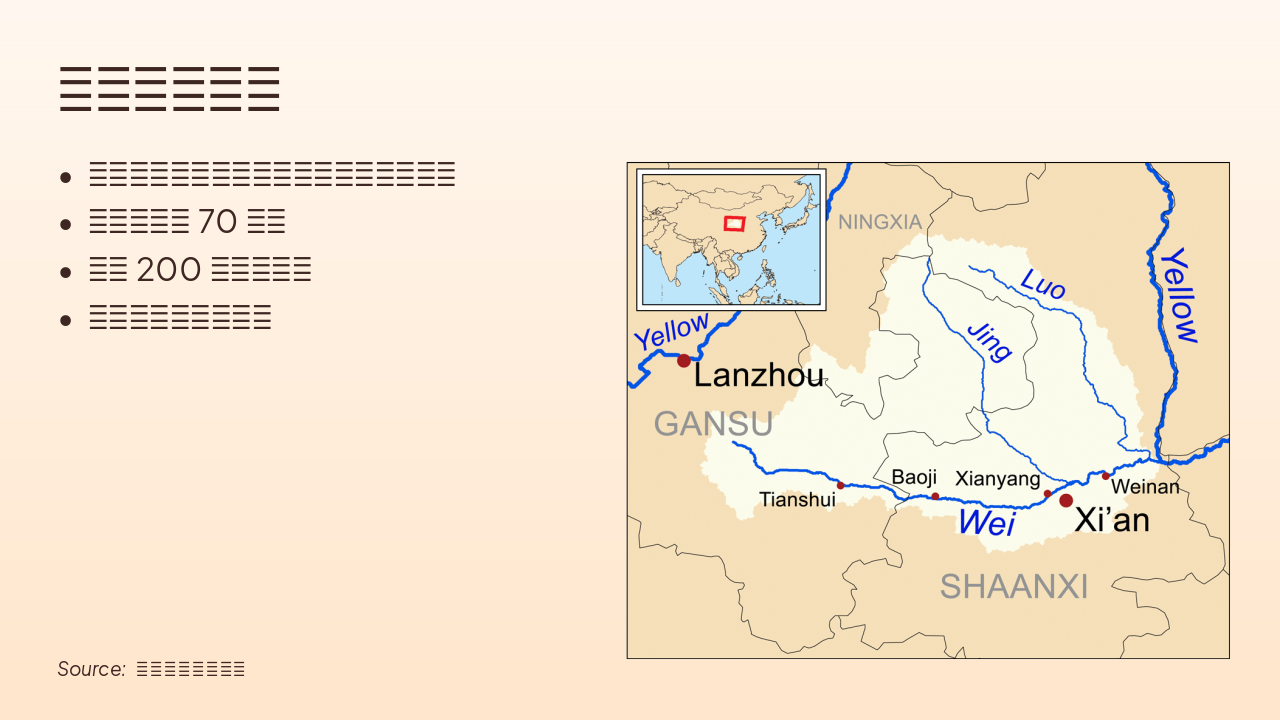
The slide features a geographical location map of an early Neolithic site in northwest Qianqing Street, Shangshan Village, Shengzhou City, Zhejiang Province. It notes the site is about 70 km from Hangzhou, at 200 meters elevation in a river valley basin.
Source: 上山遗址考古资料
The Shangshan site, discovered in 2001, dates to about 11,000–8,500 years ago and represents China's earliest rice farming site from the early Hemudu culture. It spans 20,000 square meters, divided into Shangshan and Meihu areas.

The site is located in the middle and upper reaches of Qianqing River on the eastern branch of Tianmu Mountain in eastern Zhejiang, featuring a subtropical monsoon climate ideal for rice growth. It was discovered during construction in 2001 and excavated by the Zhejiang Provincial Institute of Cultural Relics and Archaeology.

The timeline details the Shangshan site's archaeological excavation, starting with its initial discovery in 2001. It progressed through first pottery finds in 2002-2003, expanded digs uncovering house foundations and pits in 2004-2005, and ongoing systematic research and preservation since 2006.
2001: 上山遗址初步发现 2001年,上山遗址被初步发现并确认。 2002-2003: 首次发掘出土陶器 进行首次考古发掘,出土大量陶器和陶片。 2004-2005: 扩大发掘发现房基 扩大发掘范围,发现房基和灰坑遗迹。 2006至今: 系统研究与保护 开展系统研究、文物保护工作持续至今。
Source: 上山遗址考古报告

The slide "主要出土文物" (Main Excavated Artifacts) highlights key archaeological discoveries from an ancient site. It features early pottery (clay bottles and bowls), polished stone axes as farm tools, bone fish forks for fishing and hunting, and rice remains evidencing the origins of rice agriculture.
Source: Image from Wikipedia article "Neolithic in China"

The slide highlights key features of Shangshan Culture in a feature grid format. It showcases thin-walled sand-tempered pottery, pile-dwelling wooden structures, supine straight-limb burials with sparse goods, and early rice cultivation, each with descriptive icons.
{ "features": [ { "icon": "🏺", "heading": "薄胎夹砂陶", "description": "早期手工捏成,薄壁夹砂陶器工艺发达。" }, { "icon": "🏠", "heading": "干栏式木构", "description": "适应湿热环境的高架木楼建筑形式。" }, { "icon": "🪦", "heading": "仰身直肢墓", "description": "墓葬姿势规范,殉葬品稀少简朴。" }, { "icon": "🌾", "heading": "水稻栽培", "description": "最早水稻种植与田间管理证据确凿。" } ] }
Source: 上山遗址考古发现

The Shangshan site yielded carbonized rice grains and paddy field relics over 10,000 years old, providing direct evidence for the early origins of Neolithic agriculture and China's rice civilization. Flotation analysis confirmed these as the world's earliest cultivated rice, predating other regions and establishing China as the cradle of rice farming.
| 最早稻谷炭化籽粒与田块遗迹 | 浮选法确认栽培稻领先全球 |
|---|---|
| 上山遗址出土距今万年以上的稻谷炭化籽粒及水田块遗迹,揭示新石器时代早期农业萌芽,为中国稻作文明提供直接物证。(约28字) | 浮选技术鉴定籽粒为栽培稻,年代约1万年,早于世界其他地区,奠基中国稻作农业源头,彰显中华农耕文明之肇始。(约32字) |

This slide, titled "Academic Significance of the Shangshan Site," features a quote from the Zhejiang Provincial Institute of Cultural Relics and Archaeology. The quote states that the Shangshan site pushes back the origins of rice cultivation in China to 10,000 years ago, reshaping East Asian agricultural history.
> “上山遗址将中国稻作起源提前至万年前,重塑东亚农业史。”
— 浙江省文物考古所
Source: 浙江省文物考古研究所

This slide discusses the influence on Chinese civilization's origins by proving the independent emergence of agricultural civilization in the Yangtze River Basin. It complements the Yellow River Basin to form a pluralistic yet integrated pattern and impacts subsequent cultures like Hemudu and Majiabang.
Source: 上山遗址研究

The slide "遗址保护与展示现状" reports a total excavation area of 3000㎡ for the site under national-level protection. Artifacts are exhibited at Shengzhou Museum, with a site park and visitor center in planning.
遗址总发掘规模
最高级别文物保护
专业馆藏展示
游客中心建设 Source: 上山遗址考古资料

The conclusion slide states that the Shangshan site witnesses the origins of Chinese rice-farming civilization, inheriting agricultural spirit, and calls for protecting it to let ancient charm illuminate the future. The subtitle affirms that ancient vibes endure with a promising future, urging collective action to safeguard cultural heritage.
上山遗址见证中华稻作文明起源,传承农业精神。保护遗址,弘扬文化,让古韵照亮未来!🌾📜
古韵永存,未来可期!行动起来,共同守护文化遗产。
Source: 上山遗址科普PPT

Explore thousands of AI-generated presentations for inspiration
Generate professional presentations in seconds with Karaf's AI. Customize this presentation or start from scratch.