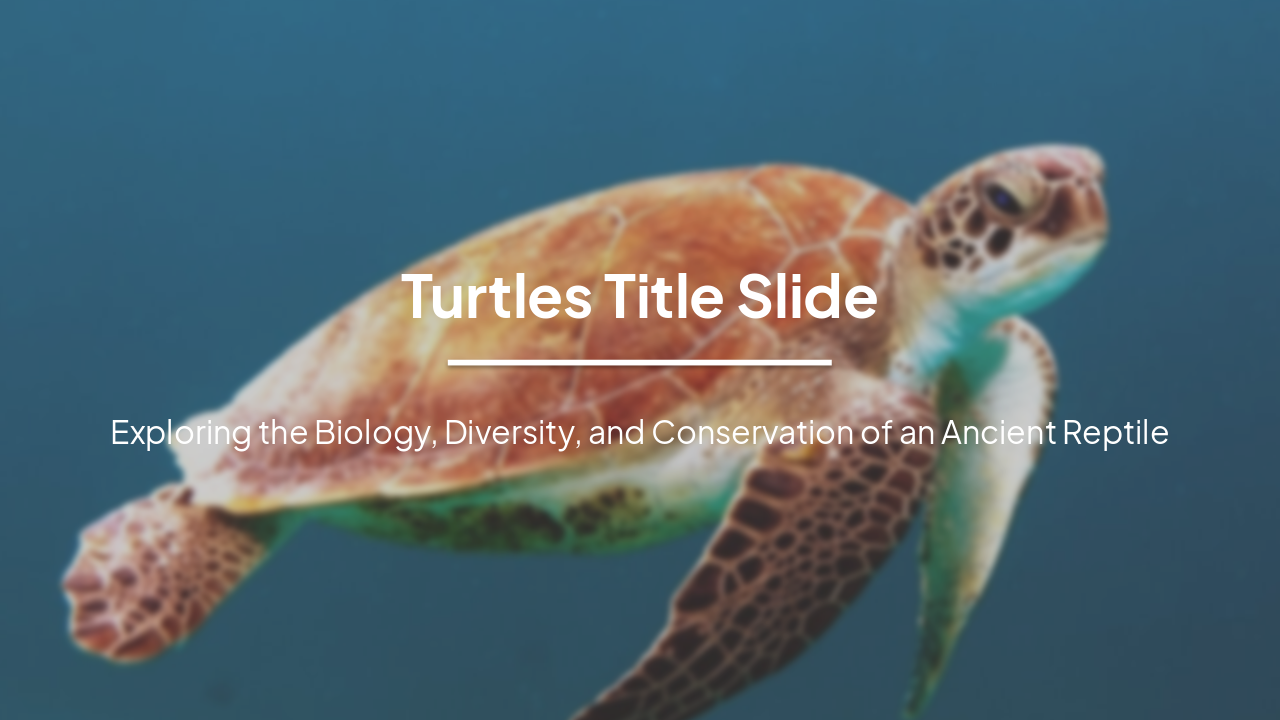
The Remarkable World of Turtles
Generated from prompt:
Presentation about turtles: introduction, types of turtles (sea turtles, freshwater turtles, tortoises), anatomy and adaptations, habitat and diet, life cycle, importance to ecosystems, threats and conservation, fun facts, conclusion.
This presentation delves into the biology, diversity, anatomy, habitats, life cycle, ecological roles, and conservation challenges of turtles, showcasing their ancient adaptations and global significance.
Slide 2 - Presentation Agenda
- Introduction to Turtles: Overview of the Order Testudines
- Types of Turtles: Sea, freshwater, and land-dwelling varieties
- Anatomy and Adaptations: Shell structure and physical traits
- Habitat and Diet: Living environments and feeding habits
- Life Cycle: From hatchling to adult life stages
- Importance and Threats: Ecological roles and conservation status
- Fun Facts and Conclusion: Surprising facts about turtle life
---
Photo by Cristian Palmer on Unsplash
Slide 3 - Introduction to Turtles
- Turtles belong to the order Testudines, a group of reptiles defined by their protective shells.
- There are 360 living and recently extinct species identified to date.
- They are ectotherms (cold-blooded), meaning their body temperature depends on their environment.
- Found globally across most continents, islands, and throughout major oceans.
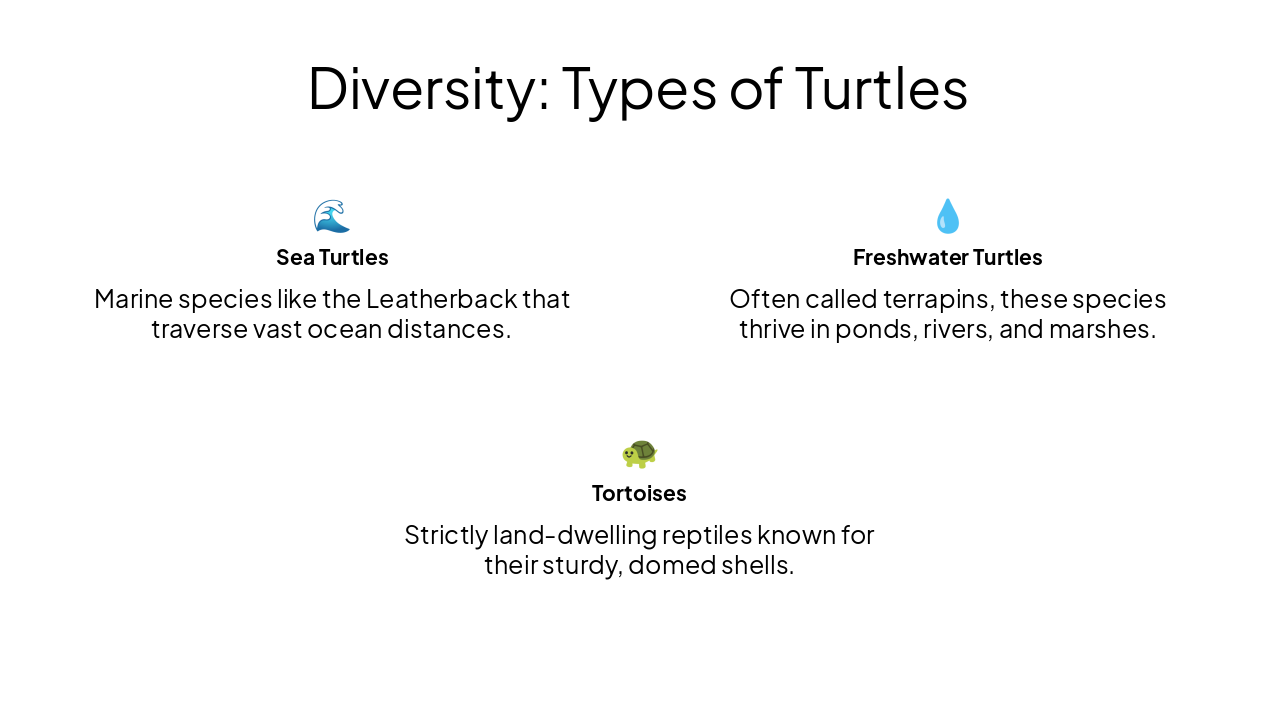
Slide 4 - Diversity: Types of Turtles
🌊 Sea Turtles Marine species like the Leatherback that traverse vast ocean distances.
💧 Freshwater Turtles Often called terrapins, these species thrive in ponds, rivers, and marshes.
🐢 Tortoises Strictly land-dwelling reptiles known for their sturdy, domed shells.
Slide 5 - Anatomy and Adaptations
- Shell Architecture: Comprised of a dorsal carapace and ventral plastron, developed from the rib cage.
- Keratin Covering: The outer shell surface is composed of scales made of keratin, similar to human hair and nails.
- Respiration: Despite many living in water, all turtles are air-breathing amniotes.
- Head Retraction: Divided into Pleurodira (side-necked) and Cryptodira (hidden-necked) based on neck retraction styles.
Slide 6 - Habitat and Diet
Habitat Distribution Turtles inhabit a vast array of ecosystems ranging from arid deserts (tortoises) to freshwater wetlands (terrapins) and the open ocean (sea turtles). Many species migrate seasonally between specific feeding and nesting sites.
Dietary Habits Turtles are generally opportunistic omnivores. While most species consume a mix of plant and animal matter, some exhibit specialized diets, such as the herbivorous Green sea turtle.
Slide 7 - Life Cycle Overview
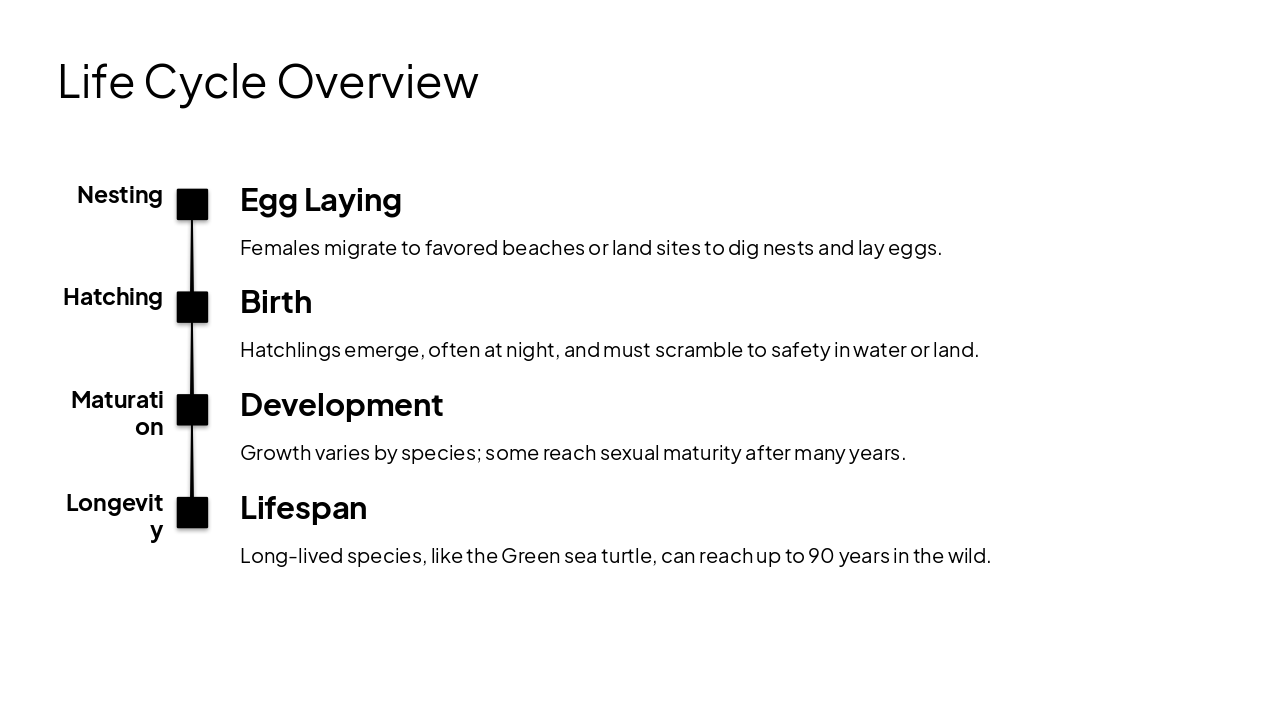
Nesting: Egg Laying Females migrate to favored beaches or land sites to dig nests and lay eggs. Hatching: Birth Hatchlings emerge, often at night, and must scramble to safety in water or land. Maturation: Development Growth varies by species; some reach sexual maturity after many years. Longevity: Lifespan Long-lived species, like the Green sea turtle, can reach up to 90 years in the wild.
Slide 8 - Conservation and Ecosystems
- Threats: Habitat destruction, illegal hunting for food/medicine, accidental bycatch in fishing nets, and pollution.
- Conservation: Many species are protected by international law (e.g., CITES) and national ordinances.
- Ecological Importance: Turtles play vital roles in maintaining healthy marine and freshwater ecosystems, including seagrass bed management.
Discover More Presentations
Explore thousands of AI-generated presentations for inspiration
Create Your Own Presentation
Generate professional presentations in seconds with Karaf's AI. Customize this presentation or start from scratch.