Onion Fungal & Bacterial Diseases

Generated from prompt:

Make a presentation about fungal and bacterial disease of onion

This presentation covers common fungal diseases like downy mildew and purple blotch, bacterial issues such as soft rot and center rot, their symptoms, comparisons, impacts, and prevention strategies i

December 1, 202511 slides
Slide 1 of 11

Slide 1 - Fungal and Bacterial Diseases of Onion

The slide is titled "Fungal and Bacterial Diseases of Onion," focusing on key threats to onion crops. Its subtitle highlights the impacts of these diseases along with effective control measures.

Fungal and Bacterial Diseases of Onion

Impacts and Control Measures for Onion Crops

Source: Introduction to major diseases affecting onion crops, focusing on fungal and bacterial pathogens. Overview of impacts and control measures.
Slide 1
Slide 2 of 11

Slide 2 - Presentation Agenda

The presentation agenda outlines a structured overview of onion diseases, beginning with an introduction to the topic. It then covers fungal and bacterial diseases, followed by strategies for prevention and management, and ends with a conclusion.

Presentation Agenda

  1. Introduction to Onion Diseases
  1. Fungal Diseases
  1. Bacterial Diseases
  1. Prevention and Management
  1. Conclusion

Source: Presentation about fungal and bacterial diseases of onion

Slide 2
Slide 3 of 11

Slide 3 - Introduction to Onion Diseases

This slide serves as a section header titled "Introduction to Onion Diseases." It highlights that onions are vulnerable to multiple pathogens, which lead to substantial yield losses particularly in warm and humid environments.

Introduction to Onion Diseases

Onions are susceptible to various pathogens causing significant yield losses in warm, humid conditions.

Slide 3
Slide 4 of 11

Slide 4 - Common Fungal Diseases

Common fungal diseases affecting plants include Downy Mildew, caused by Peronospora destructor and appearing as yellow spots with gray mold on leaves. Other notable ones are Purple Blotch from Alternaria porri, which produces purple lesions on onion leaves, and White Rot from Sclerotium cepivorum, featuring white fungal growth on roots.

Common Fungal Diseases

  • Downy Mildew (Peronospora destructor): Yellow spots and gray mold on leaves.
  • Purple Blotch (Alternaria porri): Purple lesions on onion leaves.
  • White Rot (Sclerotium cepivorum): White fungal growth on roots.
Slide 4
Slide 5 of 11

Slide 5 - Symptoms of Fungal Diseases

The slide on Symptoms of Fungal Diseases highlights key indicators, including purple lesions on leaves caused by purple blotch and white fuzzy growth on foliage from downy mildew. It also notes that infected leaves may yellow and wilt prematurely.

Symptoms of Fungal Diseases

!Image

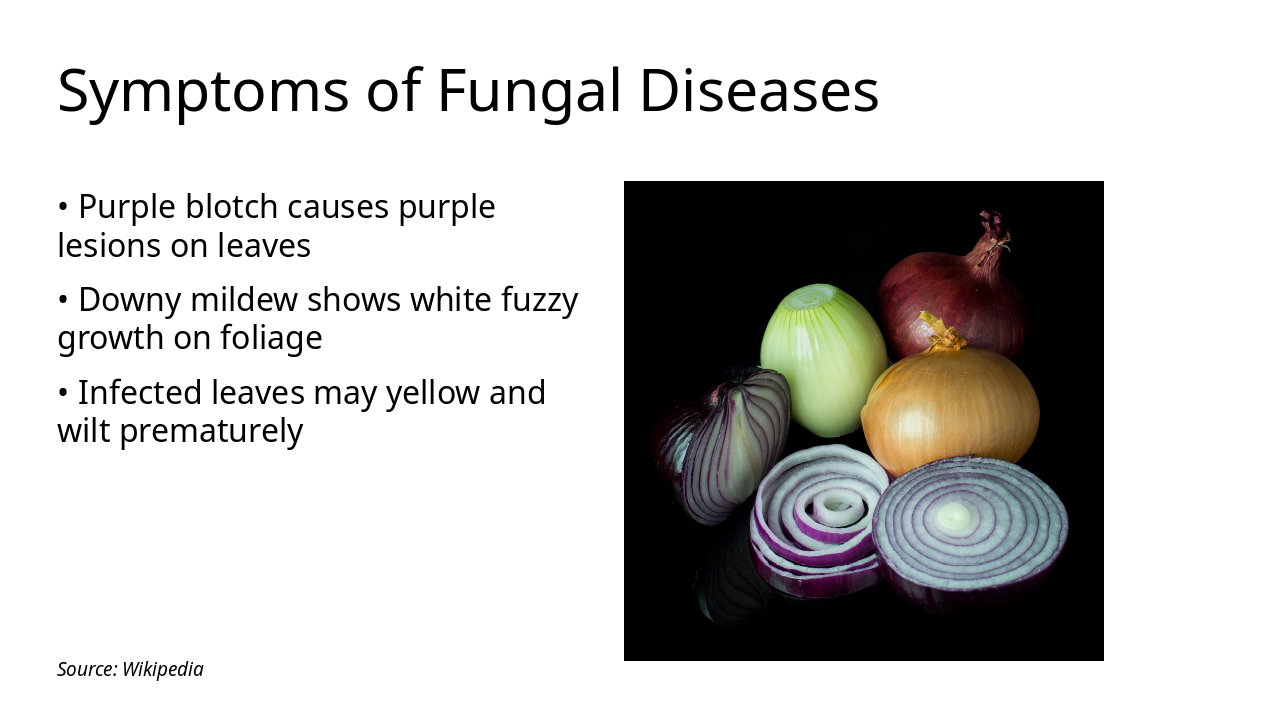
  • Purple blotch causes purple lesions on leaves
  • Downy mildew shows white fuzzy growth on foliage
  • Infected leaves may yellow and wilt prematurely

Source: Wikipedia

--- Speaker Notes: Visual examples: Leaf spots from purple blotch and downy mildew on onion plants. (Placeholder for illustrative images of affected foliage.)

Slide 5
Slide 6 of 11

Slide 6 - Bacterial Diseases

This section header slide introduces the topic of Bacterial Diseases. It highlights how bacterial pathogens, spread through water and tools, cause soft rots and leaf blights in onions.

Bacterial Diseases

Bacterial pathogens spread via water and tools, causing soft rots and leaf blights in onions.

Slide 6
Slide 7 of 11

Slide 7 - Key Bacterial Diseases

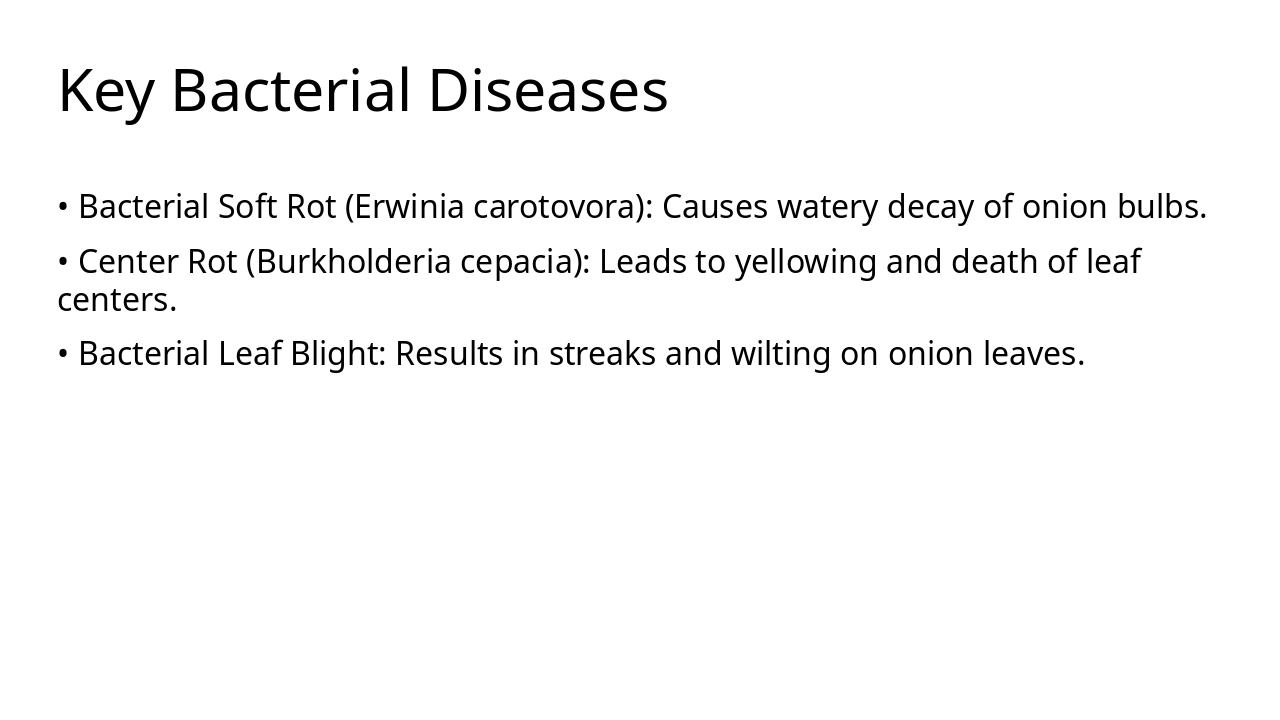
The slide outlines key bacterial diseases affecting onions, including Bacterial Soft Rot caused by Erwinia carotovora, which leads to watery decay of bulbs. It also covers Center Rot from Burkholderia cepacia, resulting in yellowing and death of leaf centers, and Bacterial Leaf Blight, which causes streaks and wilting on leaves.

Key Bacterial Diseases

  • Bacterial Soft Rot (Erwinia carotovora): Causes watery decay of onion bulbs.
  • Center Rot (Burkholderia cepacia): Leads to yellowing and death of leaf centers.
  • Bacterial Leaf Blight: Results in streaks and wilting on onion leaves.
Slide 7
Slide 8 of 11

Slide 8 - Comparison: Fungal vs. Bacterial

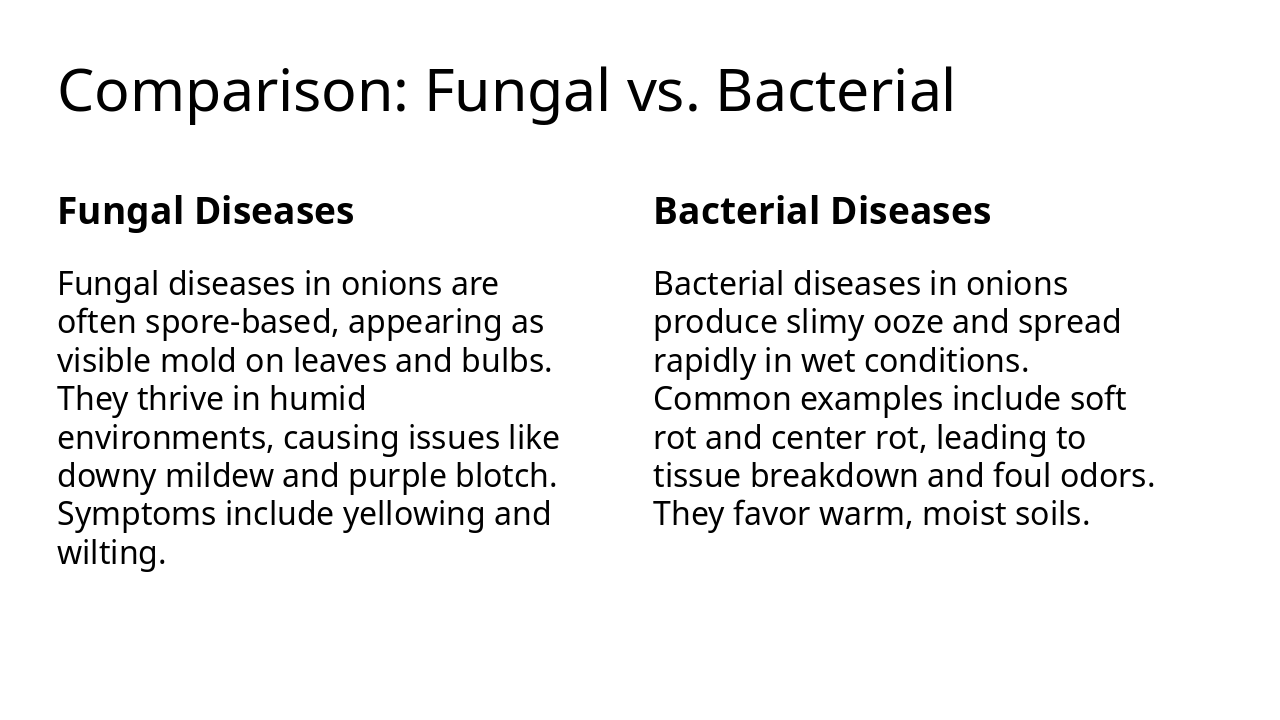
Fungal diseases in onions, such as downy mildew and purple blotch, spread via spores in humid conditions, causing visible mold, yellowing, and wilting on leaves and bulbs. In contrast, bacterial diseases like soft rot and center rot thrive in warm, moist soils, producing slimy ooze, rapid tissue breakdown, and foul odors.

Comparison: Fungal vs. Bacterial

Fungal DiseasesBacterial Diseases
Fungal diseases in onions are often spore-based, appearing as visible mold on leaves and bulbs. They thrive in humid environments, causing issues like downy mildew and purple blotch. Symptoms include yellowing and wilting.Bacterial diseases in onions produce slimy ooze and spread rapidly in wet conditions. Common examples include soft rot and center rot, leading to tissue breakdown and foul odors. They favor warm, moist soils.
Slide 8
Slide 9 of 11

Slide 9 - Impact Statistics

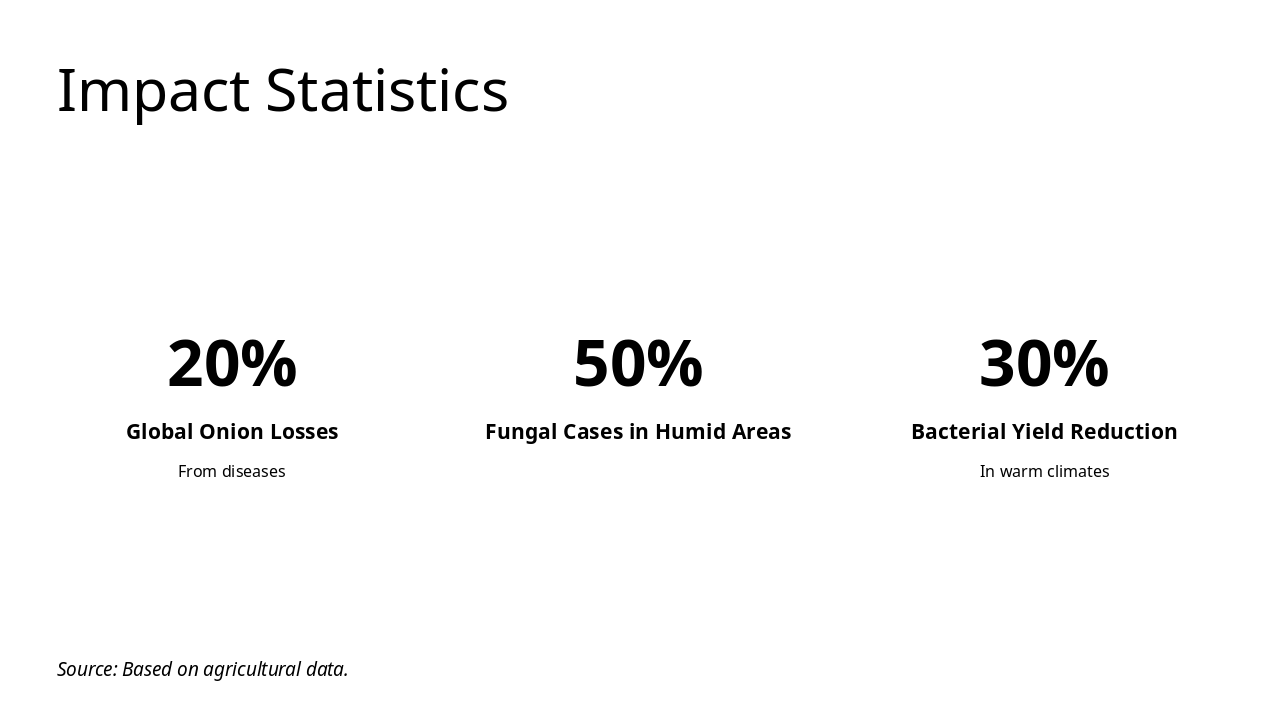
The slide highlights key impact statistics on onion crop losses, noting that diseases cause 20% of global losses. It further details 50% fungal cases in humid areas and 30% bacterial yield reduction in warm climates.

Impact Statistics

  • 20%: Global Onion Losses

From diseases

  • 50%: Fungal Cases in Humid Areas
  • 30%: Bacterial Yield Reduction

In warm climates

Source: Based on agricultural data.

Slide 9
Slide 10 of 11

Slide 10 - Prevention and Management

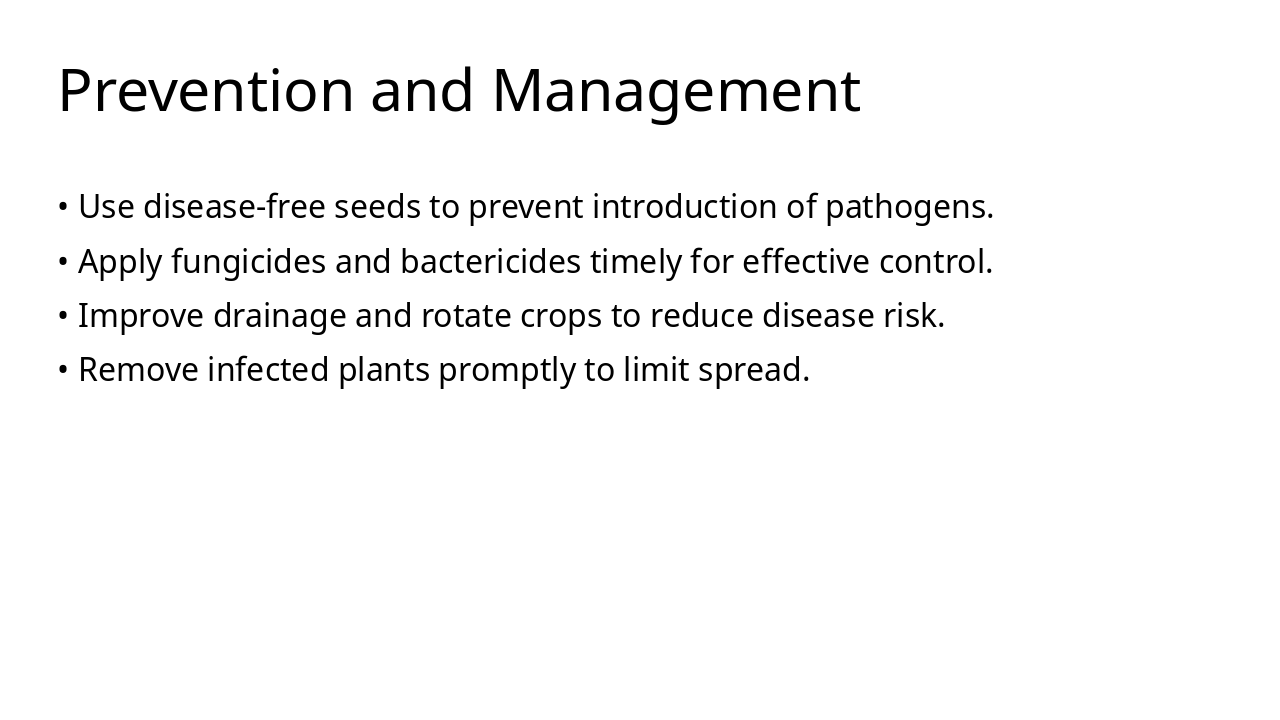
To prevent plant diseases, the slide emphasizes using disease-free seeds and promptly removing infected plants to avoid pathogen introduction and spread. For effective management, it recommends timely application of fungicides and bactericides, alongside improving drainage and rotating crops to minimize risks.

Prevention and Management

  • Use disease-free seeds to prevent introduction of pathogens.
  • Apply fungicides and bactericides timely for effective control.
  • Improve drainage and rotate crops to reduce disease risk.
  • Remove infected plants promptly to limit spread.
Slide 10
Slide 11 of 11

Slide 11 - Conclusion

The conclusion slide emphasizes mastering disease management to ensure thriving onions. It urges adopting Integrated Pest Management (IPM) strategies immediately and invites questions.

Conclusion

Master disease management for thriving onions.

Adopt IPM strategies now. Questions?

--- Speaker Notes: Understanding and managing fungal/bacterial diseases is key to healthy onion production. Implement integrated pest management for sustainable yields. Questions?

Slide 11
Powered by AI

Create Your Own Presentation

Generate professional presentations in seconds with Karaf's AI. Customize this presentation or start from scratch.

Create New Presentation

Powered by Karaf.ai — AI-Powered Presentation Generator