Florida's Colonial Era: Spain to U.S. (1513–1821)

Generated from prompt:

Create a 4-slide PowerPoint presentation titled 'Florida History: From Spain to the United States (1513–1821)'. Slide 1 – FIRST SPANISH RULE (1513–1763): - 1513: Juan Ponce de León landed and named La Florida (“land of flowers”). - Early Spanish explorers failed to colonize: Narváez (1528), de Soto (1539), Luna (1559). - 1565: Pedro Menéndez de Avilés founded St. Augustine, first permanent European settlement. - Spanish missions spread across Florida; over 100 by the 1600s. - 1672–1695: Castillo de San Marcos fortress built to defend St. Augustine. Slide 2 – STRUGGLES AND CHANGES UNDER SPAIN: - English and pirates attacked St. Augustine several times (Drake in 1586). - 1702–1704: Carolina forces destroyed Spanish missions in North Florida. - Refugees and Native Americans formed the Seminole culture. - Spain offered freedom to escaped slaves at Fort Mose (1693). - 1742: Fort Matanzas built near St. Augustine for defense. Slide 3 – BRITISH RULE (1763–1783): - 1763: Spain traded Florida to Britain for Havana, Cuba. - Britain divided the colony into East Florida and West Florida. - Built King’s Road from St. Augustine to Georgia and new settlements like New Smyrna. - Introduced English law, jury trials, and county governments. - Florida remained Loyalist during the American Revolution. Slide 4 – SECOND SPANISH RULE & TRANSFER TO THE U.S. (1783–1821): - Spain regained Florida but few settlers returned. - Seminoles and escaped slaves lived in frontier communities. - 1810–1812: Short-lived “Republics” of West and East Florida formed by Americans. - 1817–1818: First Seminole War led by Andrew Jackson. - 1819: Adams–Onís Treaty – Spain ceded Florida to the U.S. (effective 1821).

Traces Florida's history from Ponce de León's 1513 arrival and St. Augustine founding, through Spanish missions, British rule (1763–83), Seminole emergence, and U.S. acquisition via 1819 Adams-Onís Tr

December 28, 20254 slides
Slide 1 of 4

Slide 1 - Florida History: From Spain to the United States (1513–1821)

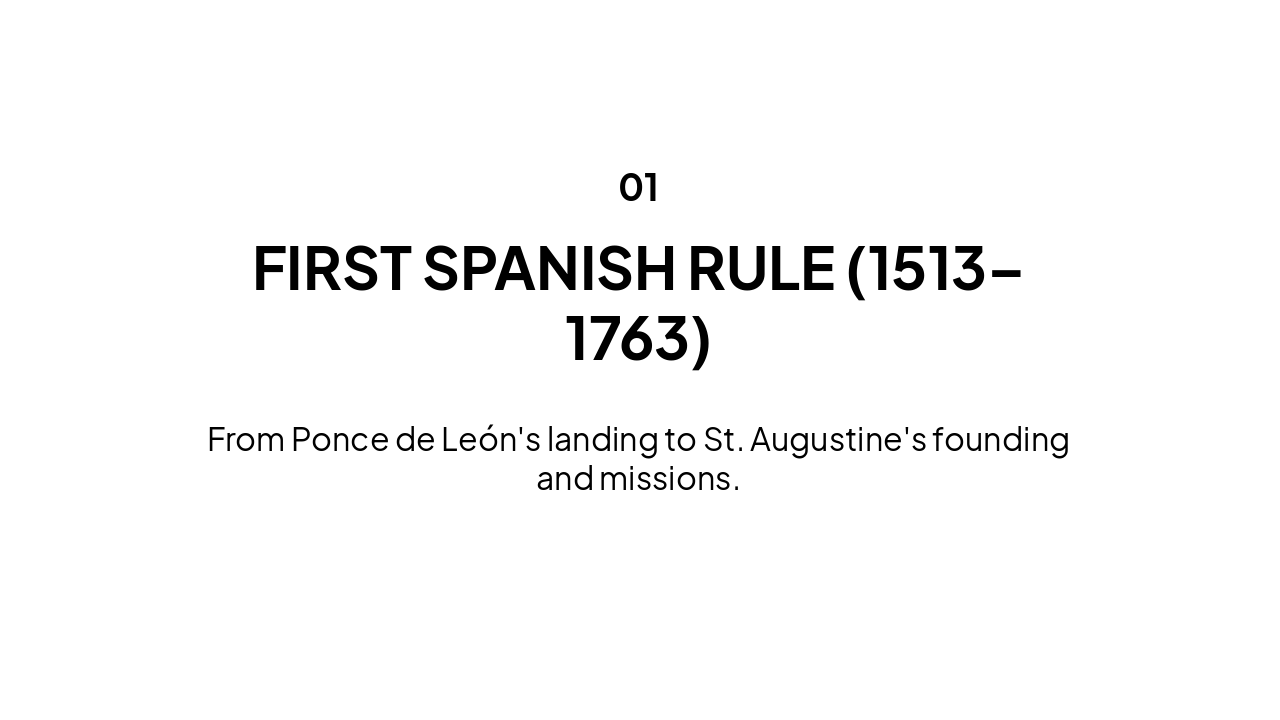
This section header slide covers Florida History from Spain to the United States (1513–1821), focusing on the first Spanish rule period (1513–1763). It highlights Ponce de León's landing, the founding of St. Augustine, and the establishment of missions, marked as section 01.

Florida History: From Spain to the United States (1513–1821)

01

FIRST SPANISH RULE (1513–1763)

From Ponce de León's landing to St. Augustine's founding and missions.
Slide 1 - Florida History: From Spain to the United States (1513–1821)
Slide 2 of 4

Slide 2 - STRUGGLES AND CHANGES UNDER SPAIN

St. Augustine faced English and pirate attacks, including Drake in 1586 and Carolina's destruction of North Florida missions in 1702–1704. Native American refugees formed Seminole culture, while Fort Mose (1693) offered freedom to escaped slaves and Fort Matanzas (1742) provided defense.

STRUGGLES AND CHANGES UNDER SPAIN

  • English/pirate attacks on St. Augustine (Drake 1586)
  • 1702–1704: Carolina destroyed North Florida missions
  • Refugees/Native Americans formed Seminole culture
  • Fort Mose (1693) offered freedom to escaped slaves
  • Fort Matanzas built 1742 for defense
Slide 2 - STRUGGLES AND CHANGES UNDER SPAIN
Slide 3 of 4

Slide 3 - BRITISH RULE (1763–1783)

In 1763, Spain traded Florida to Britain for Havana, dividing it into East and West Florida, where Britain built King's Road to Georgia, established New Smyrna settlement, and introduced English law, jury trials, and county governments. Florida remained Loyalist during the American Revolution.

BRITISH RULE (1763–1783)

  • 1763: Spain traded Florida to Britain for Havana.
  • Divided into East and West Florida.
  • Built King’s Road to Georgia; New Smyrna settlement.
  • Introduced English law, jury trials, county governments.
  • Remained Loyalist during American Revolution.

Source: Florida History: From Spain to the United States (1513–1821)

Slide 3 - BRITISH RULE (1763–1783)
Slide 4 of 4

Slide 4 - SECOND SPANISH RULE & TRANSFER TO U.S. (1783–1821)

Spain regained Florida after 1783 with few settlers returning, while Seminoles and escaped slaves settled the frontiers. Short-lived Florida Republics emerged in 1810–1812, followed by the First Seminole War (1817–1818) led by Andrew Jackson, culminating in the 1819 Adams–Onís Treaty that ceded Florida to the U.S. in 1821.

SECOND SPANISH RULE & TRANSFER TO U.S. (1783–1821)

  • Spain regained Florida; few settlers returned.
  • Seminoles and escaped slaves settled frontiers.
  • 1810–1812: Short-lived West/East Florida Republics.
  • 1817–1818: First Seminole War (Andrew Jackson).
  • 1819: Adams–Onís Treaty ceded Florida to U.S. (1821).
Slide 4 - SECOND SPANISH RULE & TRANSFER TO U.S. (1783–1821)

Discover More Presentations

Explore thousands of AI-generated presentations for inspiration

Browse Presentations
Powered by AI

Create Your Own Presentation

Generate professional presentations in seconds with Karaf's AI. Customize this presentation or start from scratch.

Create New Presentation

Powered by Karaf.ai — AI-Powered Presentation Generator