Mastering Sales Territory Management: Roles, Tools & Targets

Generated from prompt:

Create a professional PowerPoint presentation titled 'Area Manager Boundaries and Product Targets'. Include structured slides with bullet points and visuals: Title, Objectives, Area Manager Role Overview, Defining Boundaries (geographic, customer, product), Importance of Clear Territories, Tools & Mapping Techniques, Common Challenges, Product Targets Overview, SMART Target Setting, Aligning Targets with Sales Strategy, KPIs & Tracking Performance, Example Scenario, Best Practices, Conclusion, Q&A. Use modern corporate theme.

This deck outlines the Area Manager role, territory boundaries, tools and challenges for coverage, SMART product target setting, performance KPIs, realignment scenarios, and best practices for effective sales execution and alignment.

April 2, 202614 slides
Slide 1 of 14

Slide 1 - Section 1: Role Overview

1

Role Overview and Defining Boundaries

Establishing the foundations for effective territory management

---

Photo by Benjamin Child on Unsplash

Slide 1 - Section 1: Role Overview
Slide 2 of 14

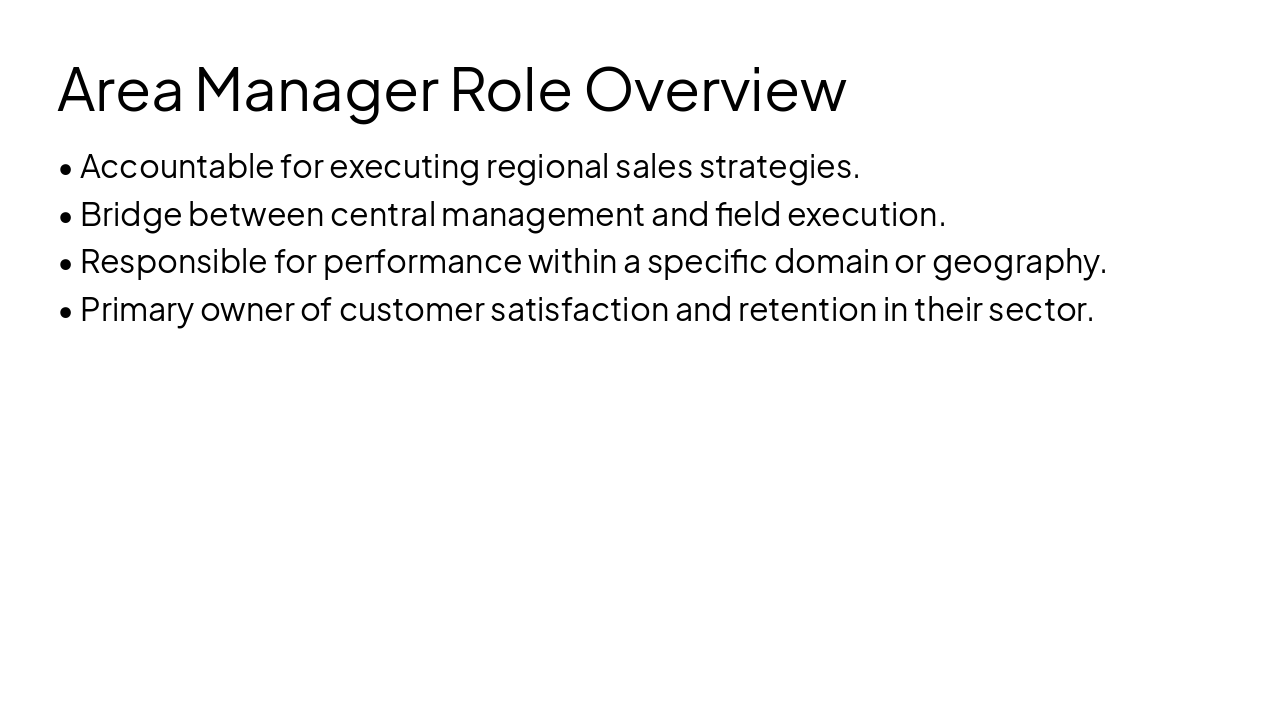
Slide 2 - Area Manager Role Overview

  • Accountable for executing regional sales strategies.
  • Bridge between central management and field execution.
  • Responsible for performance within a specific domain or geography.
  • Primary owner of customer satisfaction and retention in their sector.
Slide 2 - Area Manager Role Overview
Slide 3 of 14

Slide 3 - Defining Boundaries

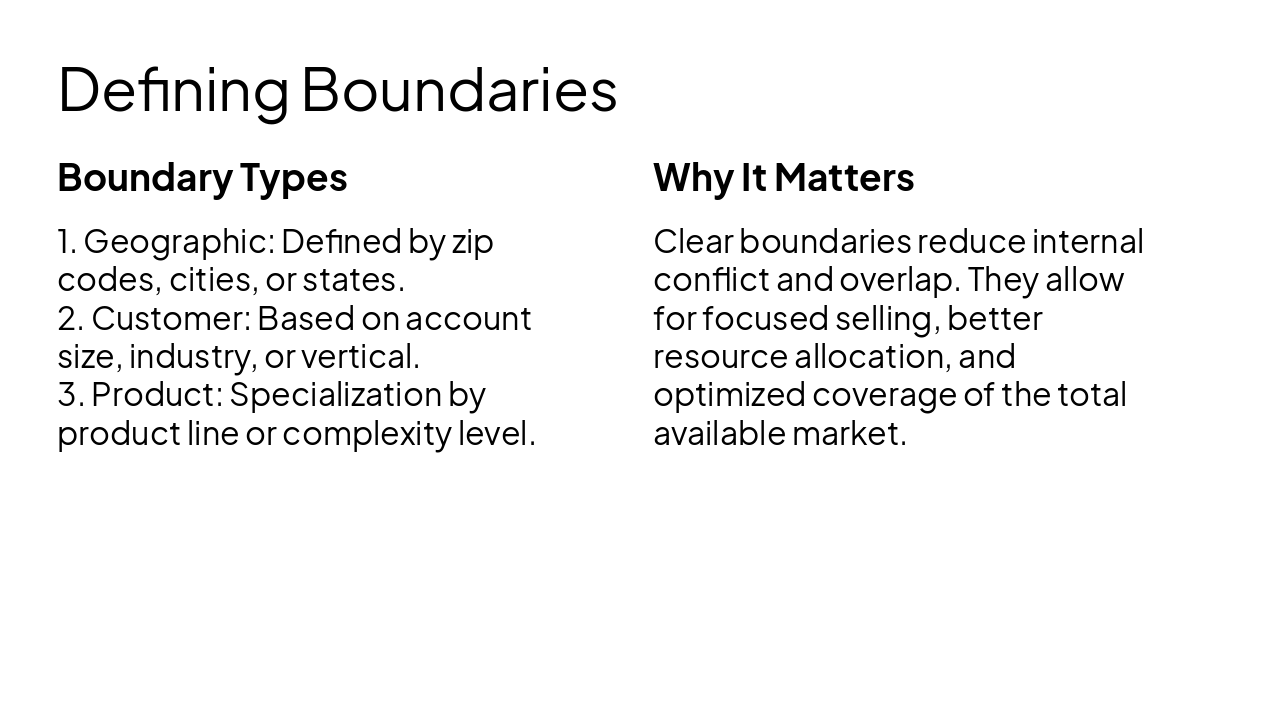
Boundary Types

  1. Geographic: Defined by zip codes, cities, or states.
  2. Customer: Based on account size, industry, or vertical.
  3. Product: Specialization by product line or complexity level.

Why It Matters Clear boundaries reduce internal conflict and overlap. They allow for focused selling, better resource allocation, and optimized coverage of the total available market.
Slide 3 - Defining Boundaries
Slide 4 of 14

Slide 4 - Section 2: Tools and Challenges

2

Tools, Techniques, and Challenges

Optimizing territory coverage and overcoming hurdles

---

Photo by Jakub Żerdzicki on Unsplash

Slide 4 - Section 2: Tools and Challenges
Slide 5 of 14

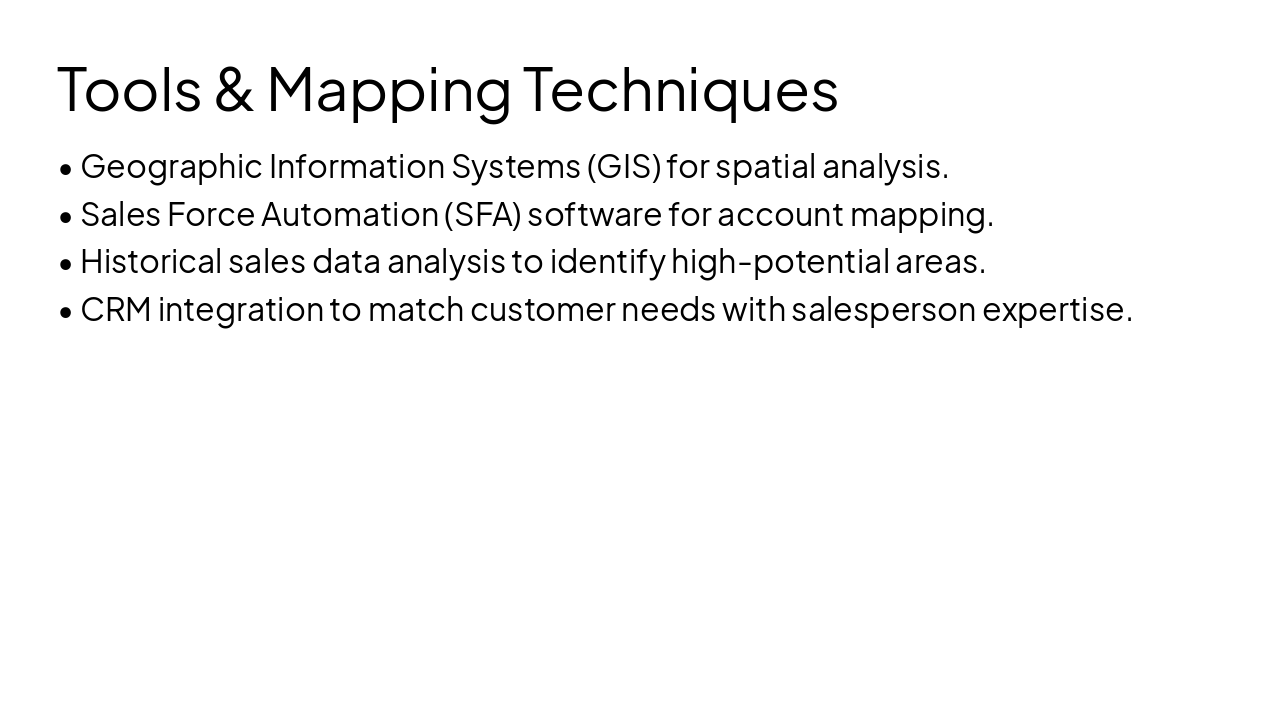
Slide 5 - Tools & Mapping Techniques

  • Geographic Information Systems (GIS) for spatial analysis.
  • Sales Force Automation (SFA) software for account mapping.
  • Historical sales data analysis to identify high-potential areas.
  • CRM integration to match customer needs with salesperson expertise.
Slide 5 - Tools & Mapping Techniques
Slide 6 of 14

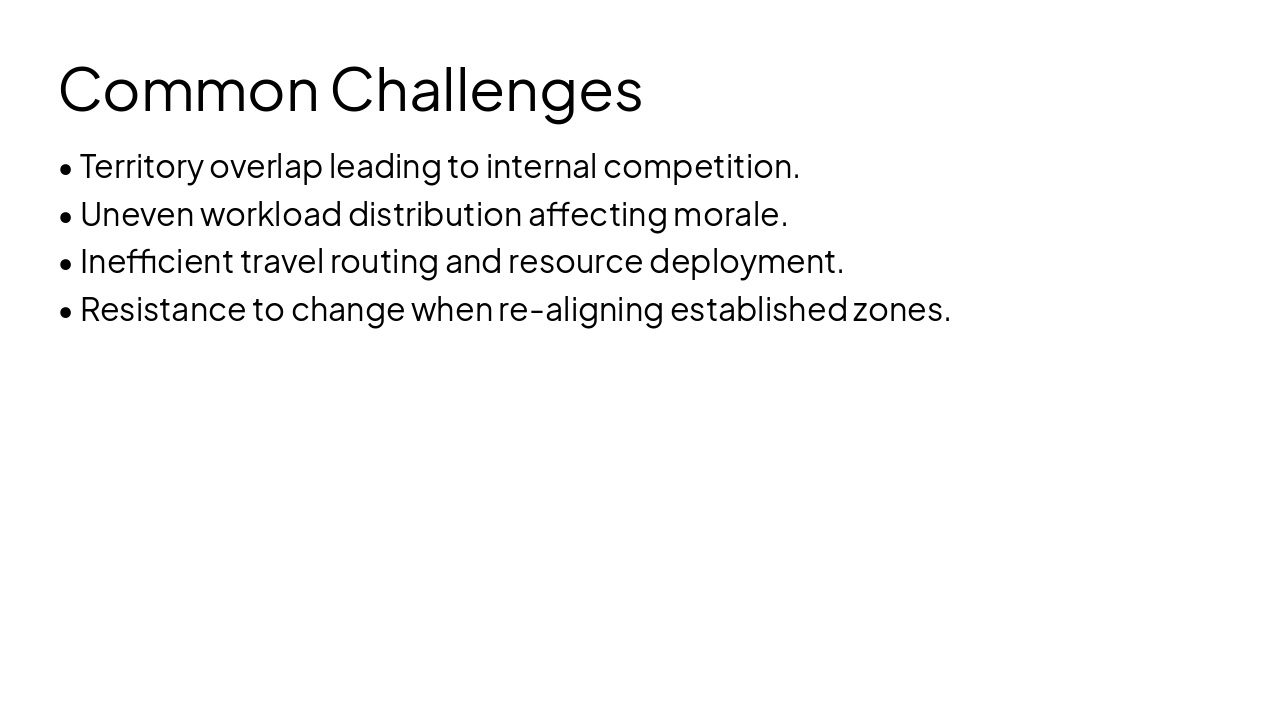
Slide 6 - Common Challenges

  • Territory overlap leading to internal competition.
  • Uneven workload distribution affecting morale.
  • Inefficient travel routing and resource deployment.
  • Resistance to change when re-aligning established zones.
Slide 6 - Common Challenges
Slide 7 of 14

Slide 7 - Section 3: Target Management

3

Product Targets and Performance Tracking

Setting SMART goals and ensuring strategic alignment

---

Photo by Imagine Buddy on Unsplash

Slide 7 - Section 3: Target Management
Slide 8 of 14

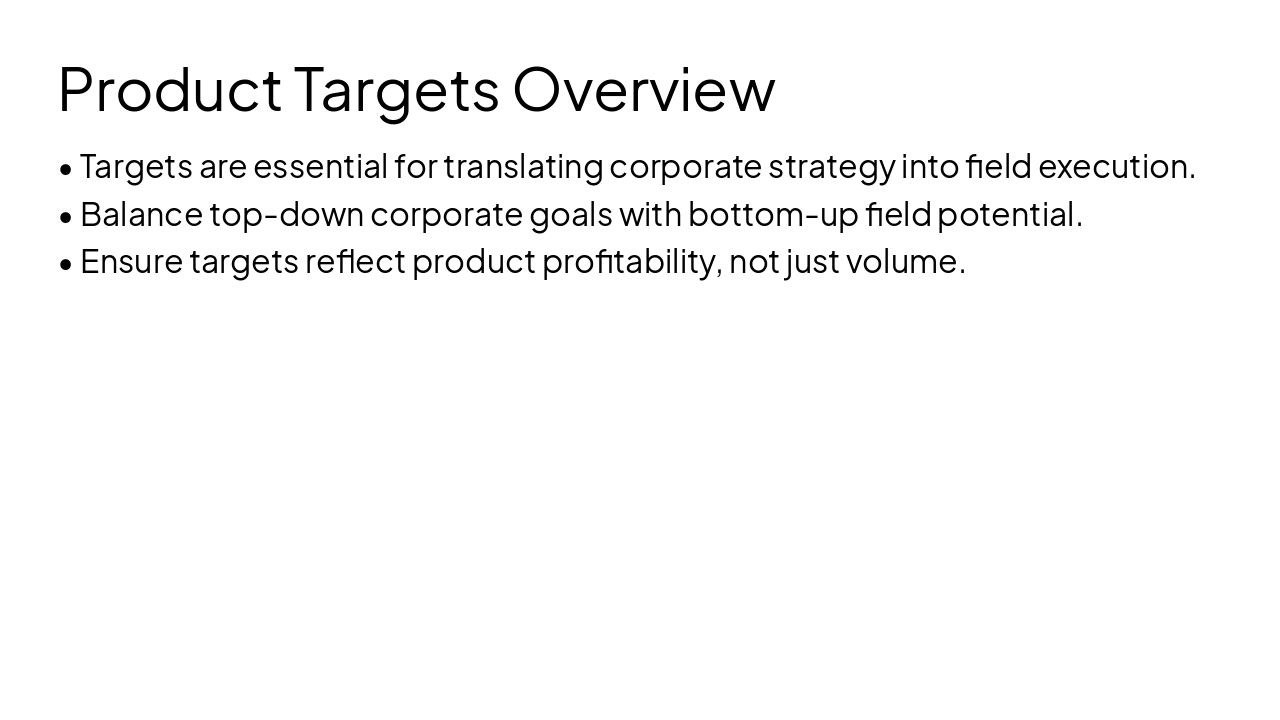
Slide 8 - Product Targets Overview

  • Targets are essential for translating corporate strategy into field execution.
  • Balance top-down corporate goals with bottom-up field potential.
  • Ensure targets reflect product profitability, not just volume.
Slide 8 - Product Targets Overview
Slide 9 of 14

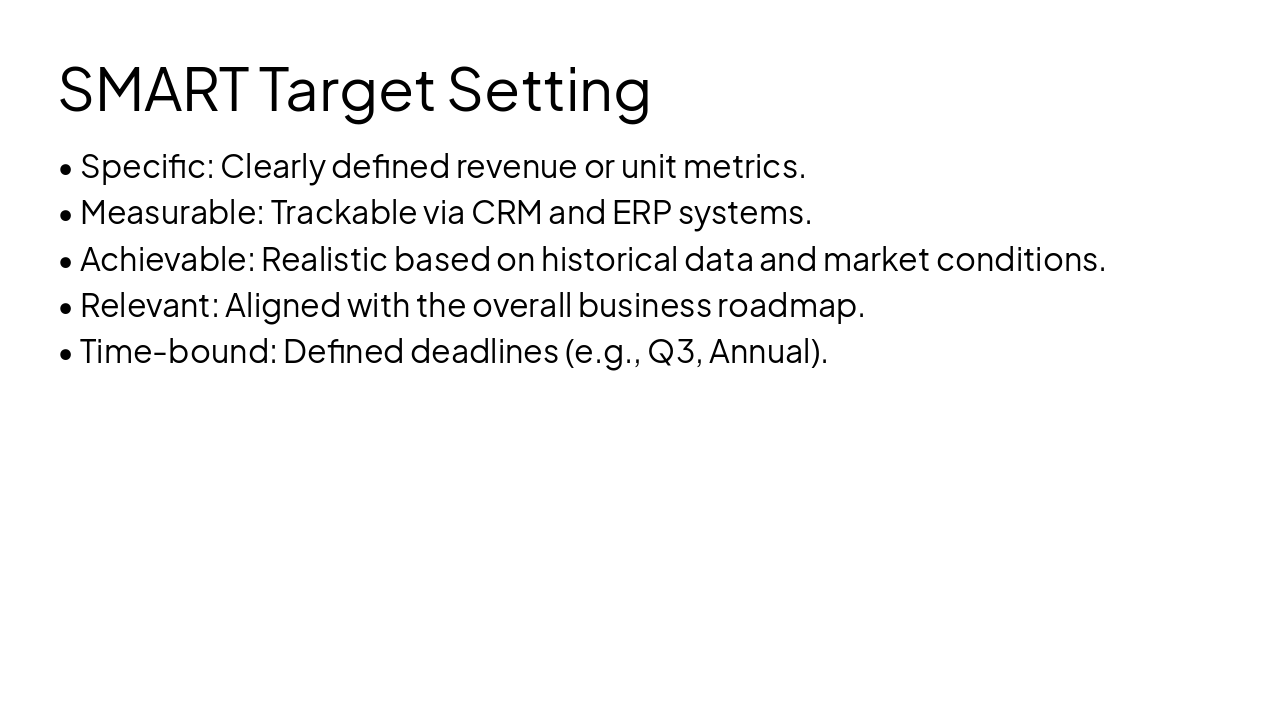
Slide 9 - SMART Target Setting

  • Specific: Clearly defined revenue or unit metrics.
  • Measurable: Trackable via CRM and ERP systems.
  • Achievable: Realistic based on historical data and market conditions.
  • Relevant: Aligned with the overall business roadmap.
  • Time-bound: Defined deadlines (e.g., Q3, Annual).
Slide 9 - SMART Target Setting
Slide 10 of 14

Slide 10 - Aligning Targets with Sales Strategy

  • Ensure targets cascade from corporate financial goals.
  • Incentivize desired behaviors (e.g., cross-selling, new acquisition).
  • Review alignment regularly as market conditions change.
Slide 10 - Aligning Targets with Sales Strategy
Slide 11 of 14

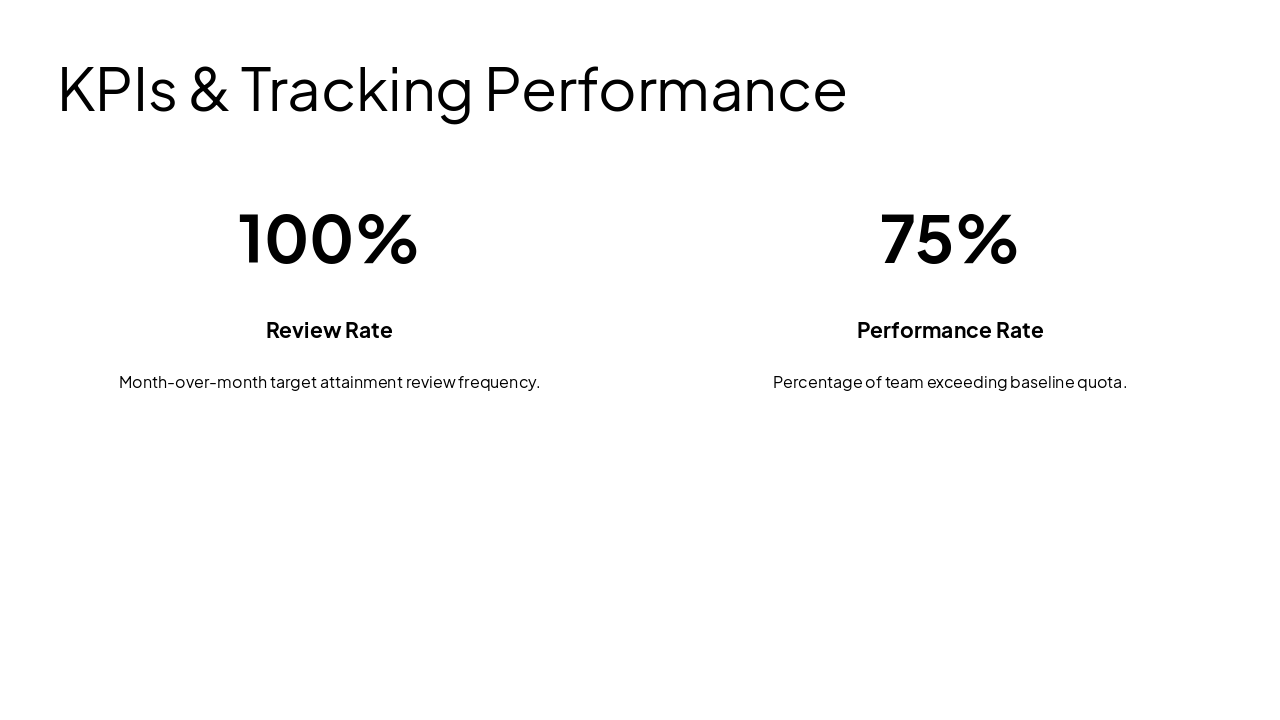
Slide 11 - KPIs & Tracking Performance

  • 100%: Review Rate
  • 75%: Performance Rate
Slide 11 - KPIs & Tracking Performance
Slide 12 of 14

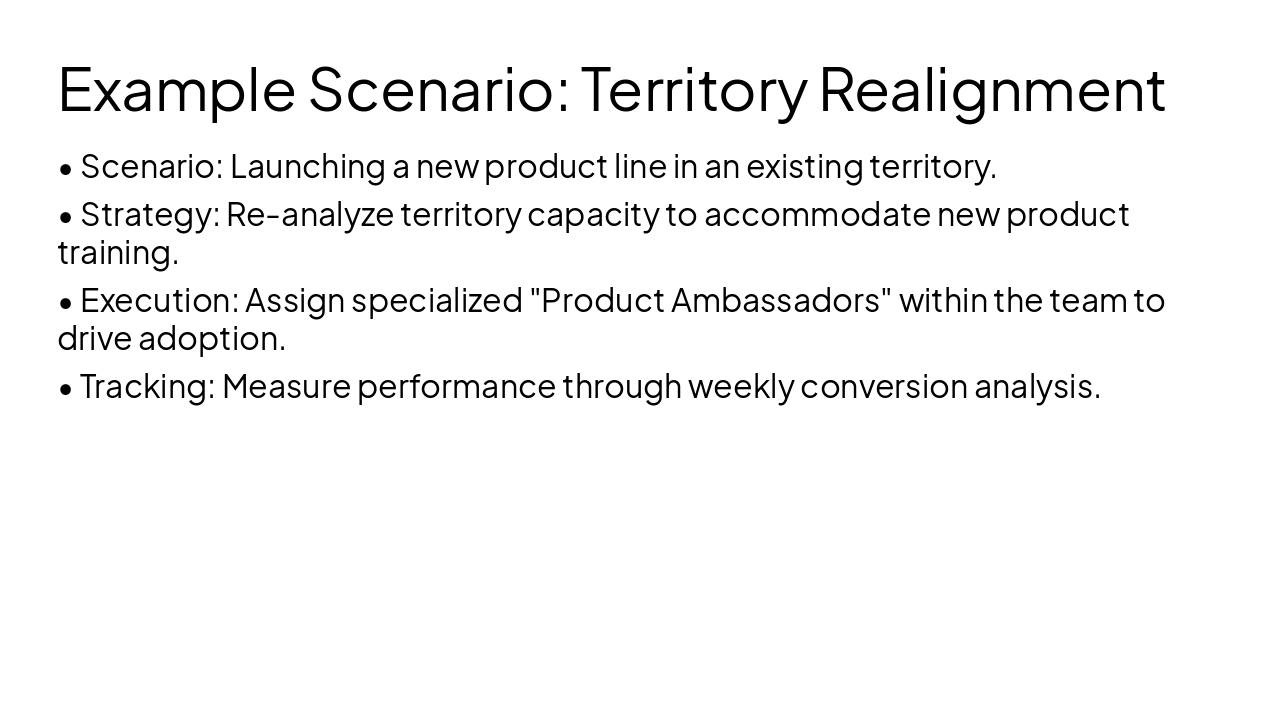
Slide 12 - Example Scenario: Territory Realignment

  • Scenario: Launching a new product line in an existing territory.
  • Strategy: Re-analyze territory capacity to accommodate new product training.
  • Execution: Assign specialized "Product Ambassadors" within the team to drive adoption.
  • Tracking: Measure performance through weekly conversion analysis.
Slide 12 - Example Scenario: Territory Realignment
Slide 13 of 14

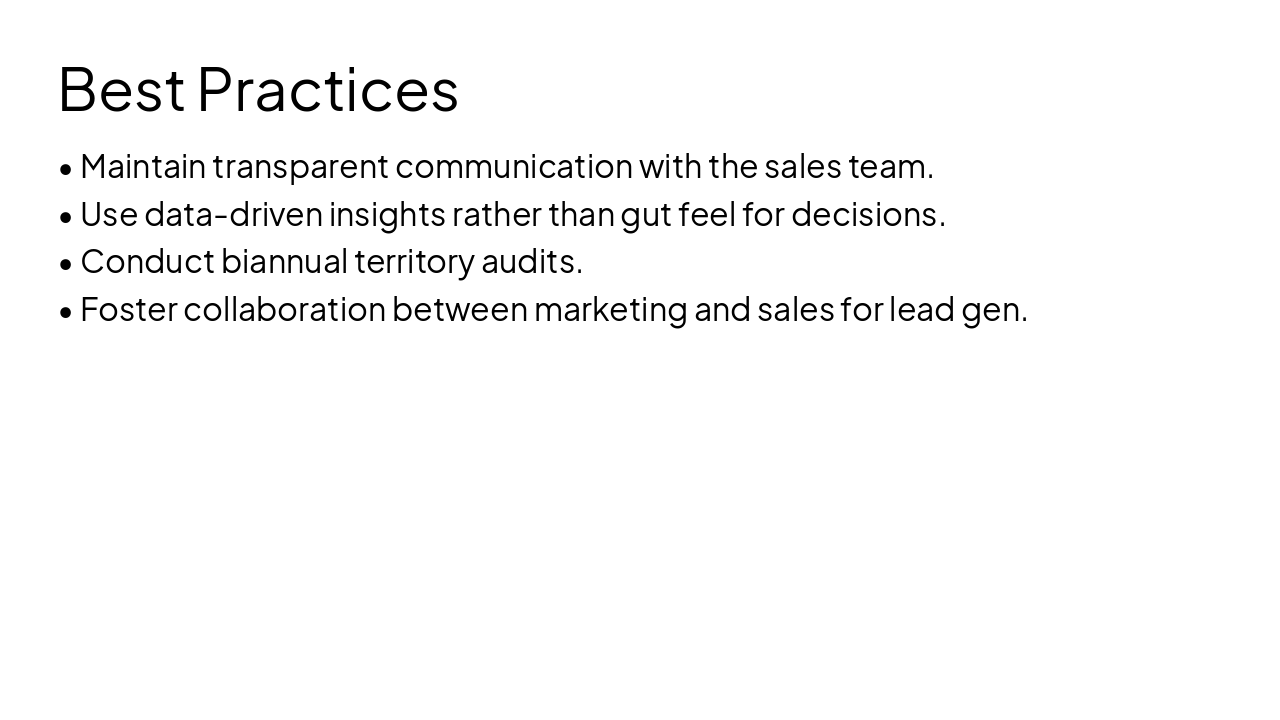
Slide 13 - Best Practices

  • Maintain transparent communication with the sales team.
  • Use data-driven insights rather than gut feel for decisions.
  • Conduct biannual territory audits.
  • Foster collaboration between marketing and sales for lead gen.
Slide 13 - Best Practices
Slide 14 of 14

Slide 14 - Conclusion and Q&A

Questions & Answers / Conclusion

Thank you for your attention. Any questions?

---

Photo by Samantha Gades on Unsplash

Slide 14 - Conclusion and Q&A

Discover More Presentations

Explore thousands of AI-generated presentations for inspiration

Browse Presentations
Powered by AI

Create Your Own Presentation

Generate professional presentations in seconds with Karaf's AI. Customize this presentation or start from scratch.

Create New Presentation

Powered by Karaf.ai — AI-Powered Presentation Generator