Cybersecurity Training: Fundamentals and Defenses

Generated from prompt:

generate a training module on cybersecurity

This training module introduces cybersecurity basics, explores the threat landscape and attacker motivations, and outlines defensive strategies to protect digital assets, networks, and critical services. Includes key principles and best practices for

March 19, 202612 slides
Slide 1 of 12

Slide 1 - Cybersecurity Training Module

Cybersecurity Training Module

Fundamentals of Protecting Digital Assets and Networks

---

Photo by Tom Parkes on Unsplash
Slide 1 - Cybersecurity Training Module
Slide 2 of 12

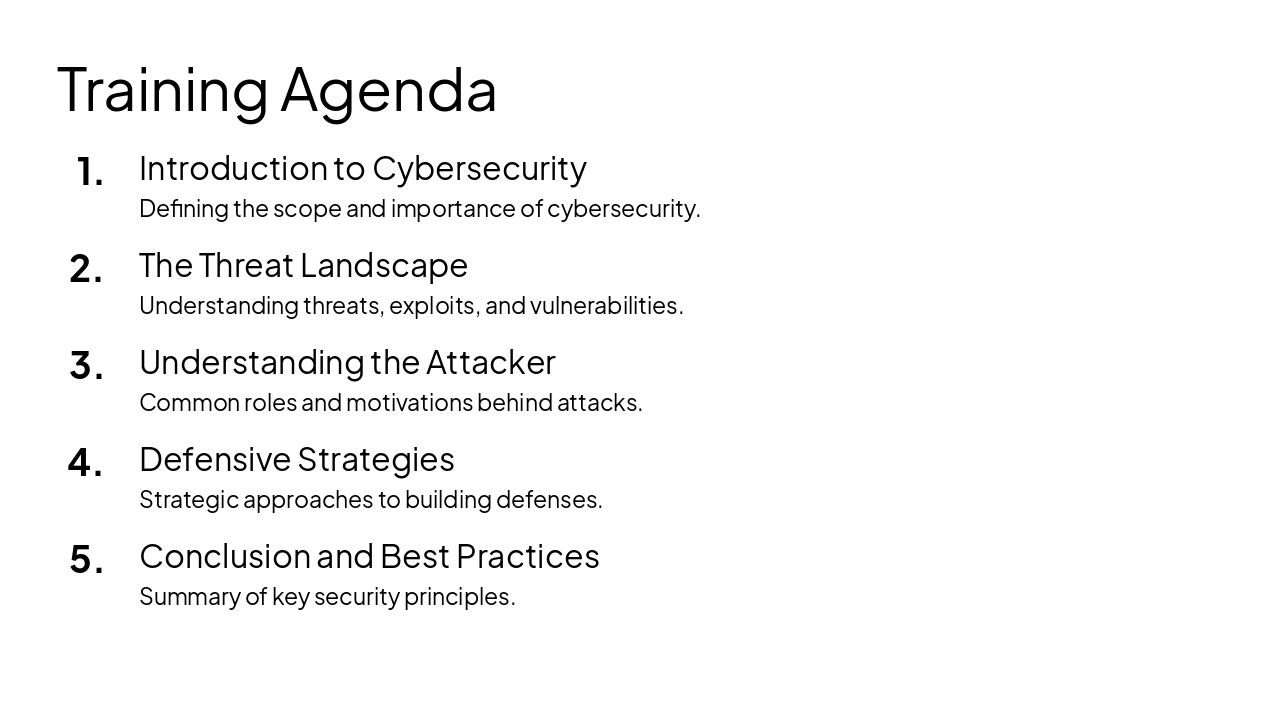
Slide 2 - Training Agenda

  • Introduction to Cybersecurity: Defining the scope and importance of cybersecurity.
  • The Threat Landscape: Understanding threats, exploits, and vulnerabilities.
  • Understanding the Attacker: Common roles and motivations behind attacks.
  • Defensive Strategies: Strategic approaches to building defenses.
  • Conclusion and Best Practices: Summary of key security principles.
Slide 2 - Training Agenda
Slide 3 of 12

Slide 3 - Section 1

1

Introduction to Cybersecurity

Protecting our digital infrastructure and data.

---

Photo by Tom Parkes on Unsplash
Slide 3 - Section 1
Slide 4 of 12

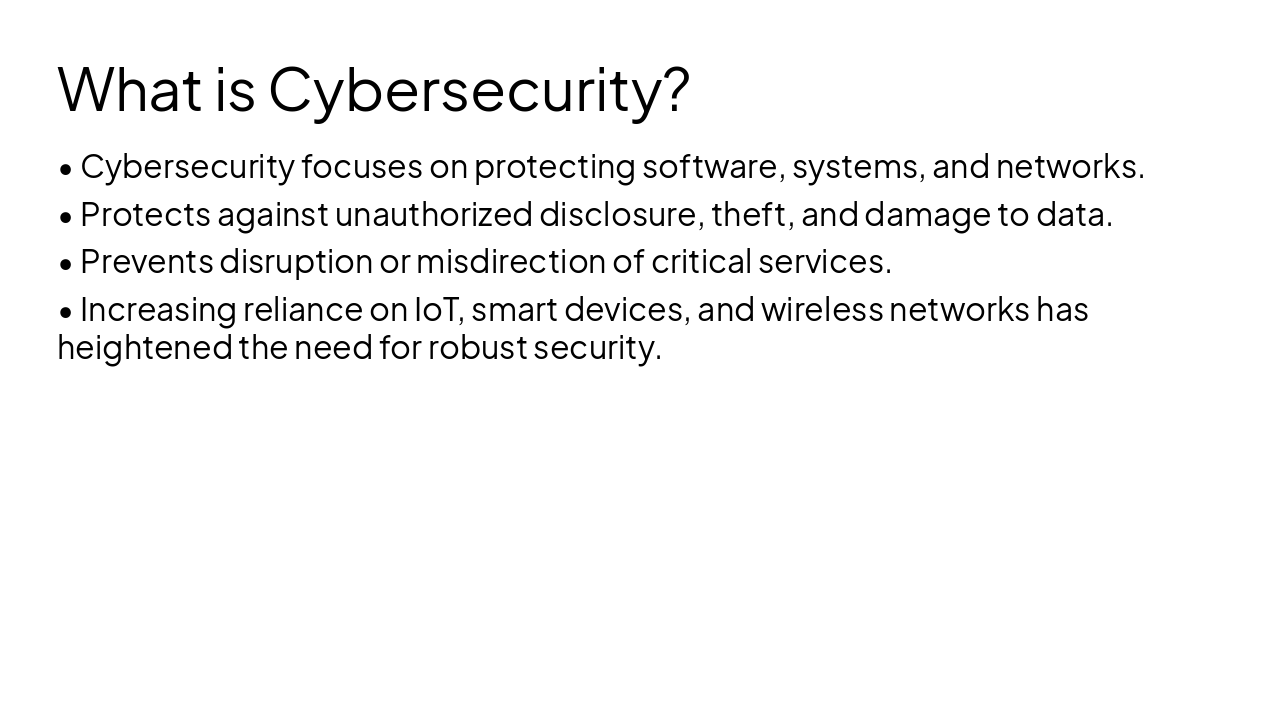
Slide 4 - What is Cybersecurity?

  • Cybersecurity focuses on protecting software, systems, and networks.
  • Protects against unauthorized disclosure, theft, and damage to data.
  • Prevents disruption or misdirection of critical services.
  • Increasing reliance on IoT, smart devices, and wireless networks has heightened the need for robust security.
Slide 4 - What is Cybersecurity?
Slide 5 of 12

Slide 5 - Section 2

2

The Threat Landscape

Understanding exploits and their impact.

---

Photo by Tom Parkes on Unsplash
Slide 5 - Section 2
Slide 6 of 12

Slide 6 - Exploits and Vulnerabilities

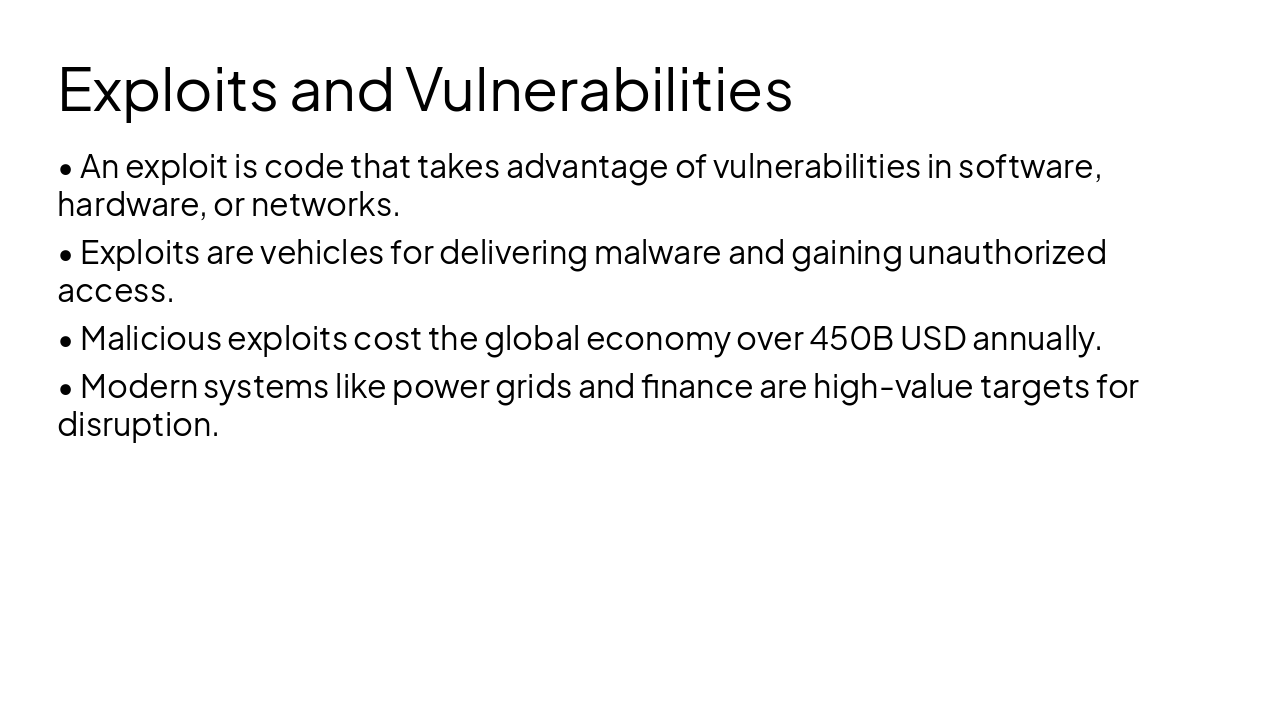
  • An exploit is code that takes advantage of vulnerabilities in software, hardware, or networks.
  • Exploits are vehicles for delivering malware and gaining unauthorized access.
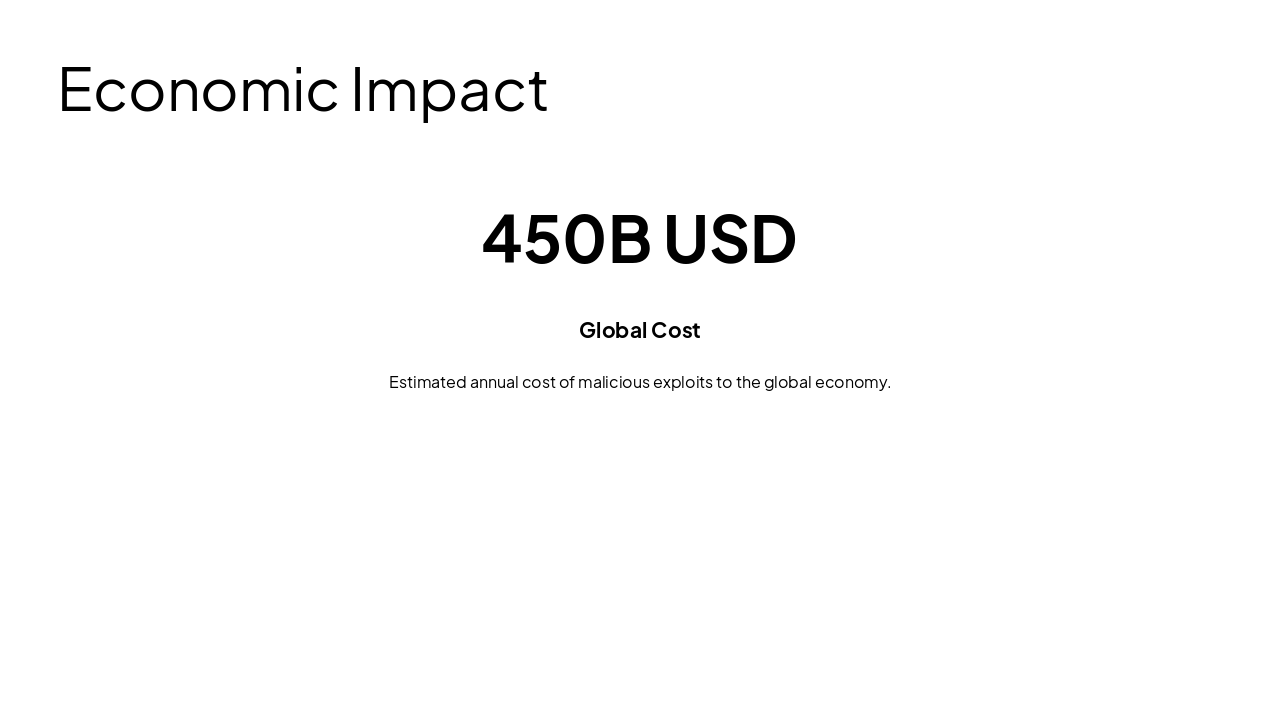
  • Malicious exploits cost the global economy over 450B USD annually.
  • Modern systems like power grids and finance are high-value targets for disruption.
Slide 6 - Exploits and Vulnerabilities
Slide 7 of 12

Slide 7 - Economic Impact

  • 450B USD: Global Cost
Slide 7 - Economic Impact
Slide 8 of 12

Slide 8 - Section 3

3

Understanding the Attacker

Who is behind the cyber threats?

---

Photo by Tom Parkes on Unsplash

Slide 8 - Section 3
Slide 9 of 12

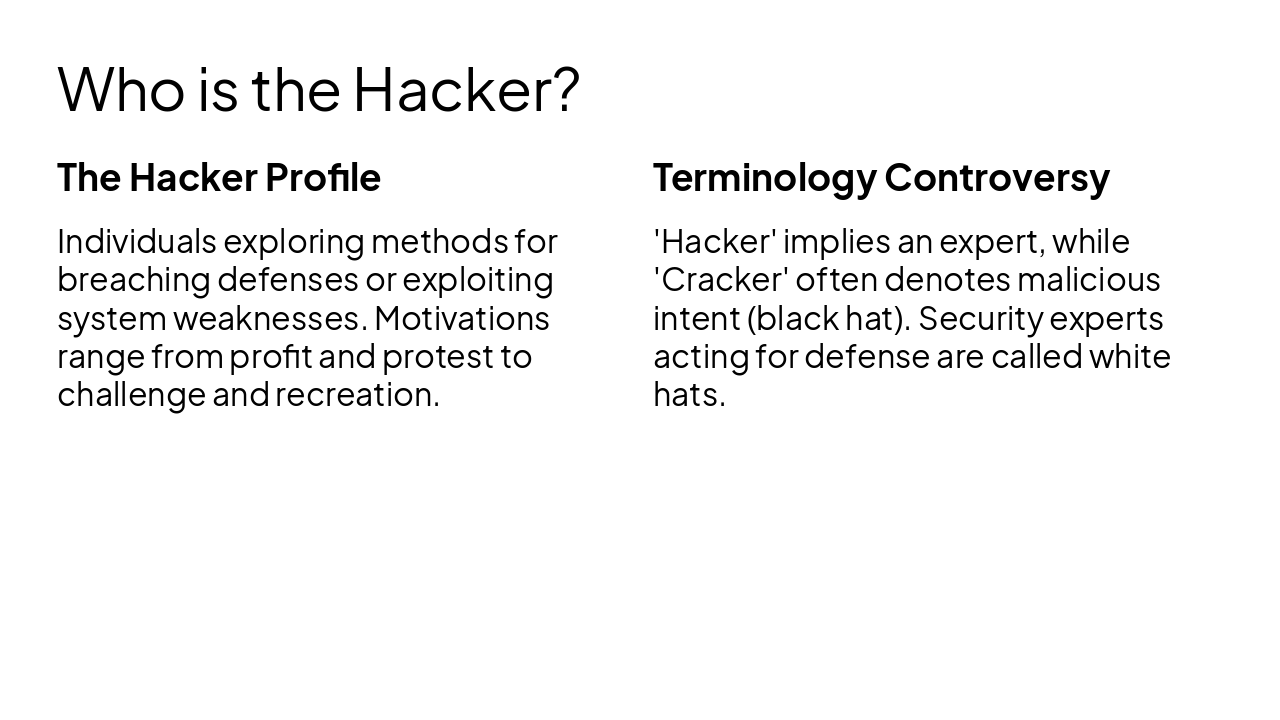
Slide 9 - Who is the Hacker?

The Hacker Profile Individuals exploring methods for breaching defenses or exploiting system weaknesses. Motivations range from profit and protest to challenge and recreation.

Terminology Controversy 'Hacker' implies an expert, while 'Cracker' often denotes malicious intent (black hat). Security experts acting for defense are called white hats.

Slide 9 - Who is the Hacker?
Slide 10 of 12

Slide 10 - Section 4

4

Defensive Strategies

How to build a secure environment.

---

Photo by Tom Parkes on Unsplash
Slide 10 - Section 4
Slide 11 of 12

Slide 11 - Defensive Measures

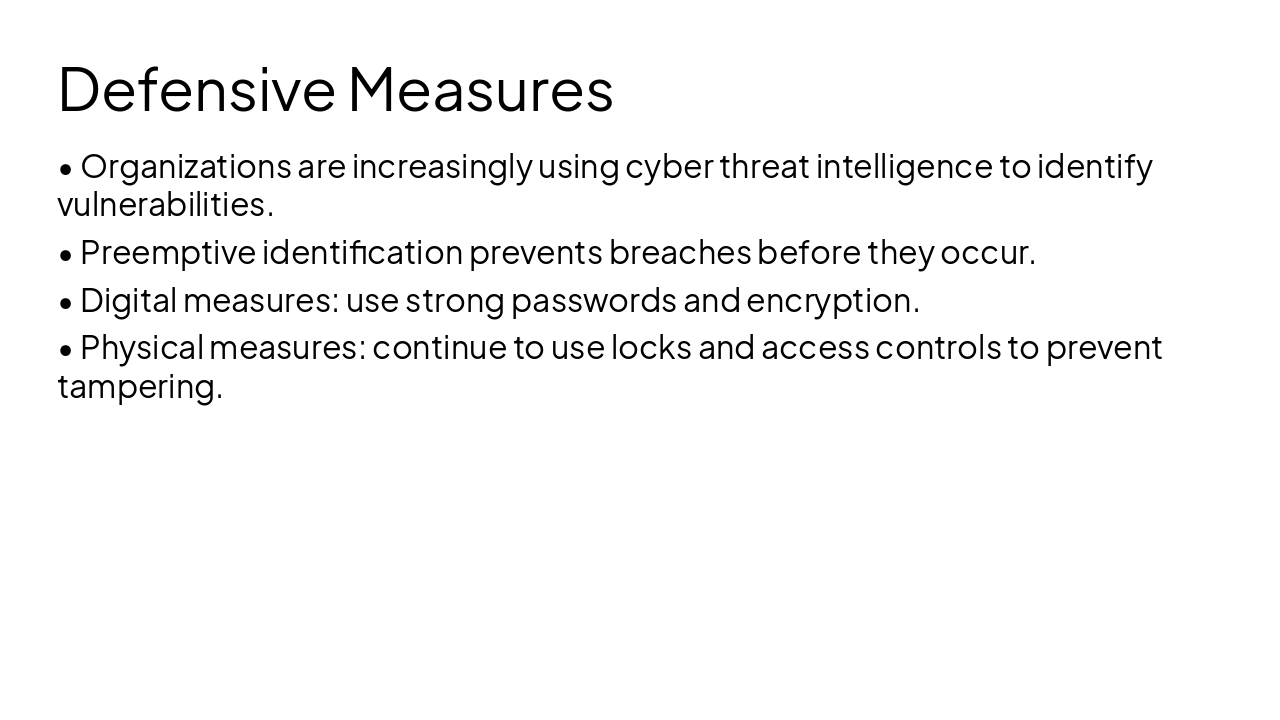
  • Organizations are increasingly using cyber threat intelligence to identify vulnerabilities.
  • Preemptive identification prevents breaches before they occur.
  • Digital measures: use strong passwords and encryption.
  • Physical measures: continue to use locks and access controls to prevent tampering.
Slide 11 - Defensive Measures
Slide 12 of 12

Slide 12 - Conclusion

Stay Secure in a Digital World

Prioritize security, stay vigilant, and embrace proactive defense.

---

Photo by Tom Parkes on Unsplash
Slide 12 - Conclusion

Discover More Presentations

Explore thousands of AI-generated presentations for inspiration

Browse Presentations
Powered by AI

Create Your Own Presentation

Generate professional presentations in seconds with Karaf's AI. Customize this presentation or start from scratch.

Create New Presentation

Powered by Karaf.ai — AI-Powered Presentation Generator