Evaluating the Real Carbon Impact of Green Tourism Certifications in the UK

Generated from prompt:

Create a visually appealing and interactive academic presentation (maximum 13 slides) based on the uploaded dissertation titled 'Evaluating the Real Carbon Impact of Green Tourism Certifications in the UK' by Ramona Pamfile. Use a modern sustainability-themed design with green, blue, and clean infographic visuals. Keep total footer notes/speaker notes under 1000 words combined across all slides. Structure: 1. Title Slide 2. Research Background & Context 3. Problem Statement + Research Gap 4. Research Aim, Objectives & Questions 5. Key Theoretical Frameworks (Institutional Theory, Signaling Theory, Triple Bottom Line) 6. Research Methodology (Research Onion + qualitative secondary data) 7. Certification Schemes Comparison (Green Tourism, Green Key, EarthCheck, Travelife) 8. Carbon Reporting Gaps (Scope 1/2/3 comparison across companies) 9. Key Findings: Operational Improvements vs Real Carbon Reduction 10. Greenwashing & Signaling Insights 11. Recommendations & Policy Implications 12. Limitations + Future Research 13. Conclusion & Thank You Include engaging charts, comparison tables, timelines, icons, callouts, and interactive-style layouts. Add concise citations and academic tone. Emphasize Scope 3 reporting gaps and lack of standardized reporting. Make visuals highly polished and presentation-ready for university submission.

This dissertation presentation examines the true carbon footprint of green tourism certifications in the UK, a sector contributing 10% to GDP. It highlights research gaps in Scope 3 emissions reporting, compares schemes like Green Tourism and EarthCheck, and analyzes 25 certified firms' data from 2018-2022. Key findings show high operational scores (75%) but only 8% verified CO2 reductions, with Scope 3 largely unreported, raising greenwashing concerns. Recommendations advocate mandatory full Scope 1-3 metrics, standardization, and policy frameworks for net-zero tourism by 2050.

May 14, 202613 slides
Slide 1 of 13

Slide 1 - Evaluating the Real Carbon Impact of Green Tourism Certifications in the UK

Evaluating the Real Carbon Impact of Green Tourism Certifications in the UK

Dissertation by Ramona Pamfile [University Submission]

---

Photo by sidath vimukthi on Unsplash
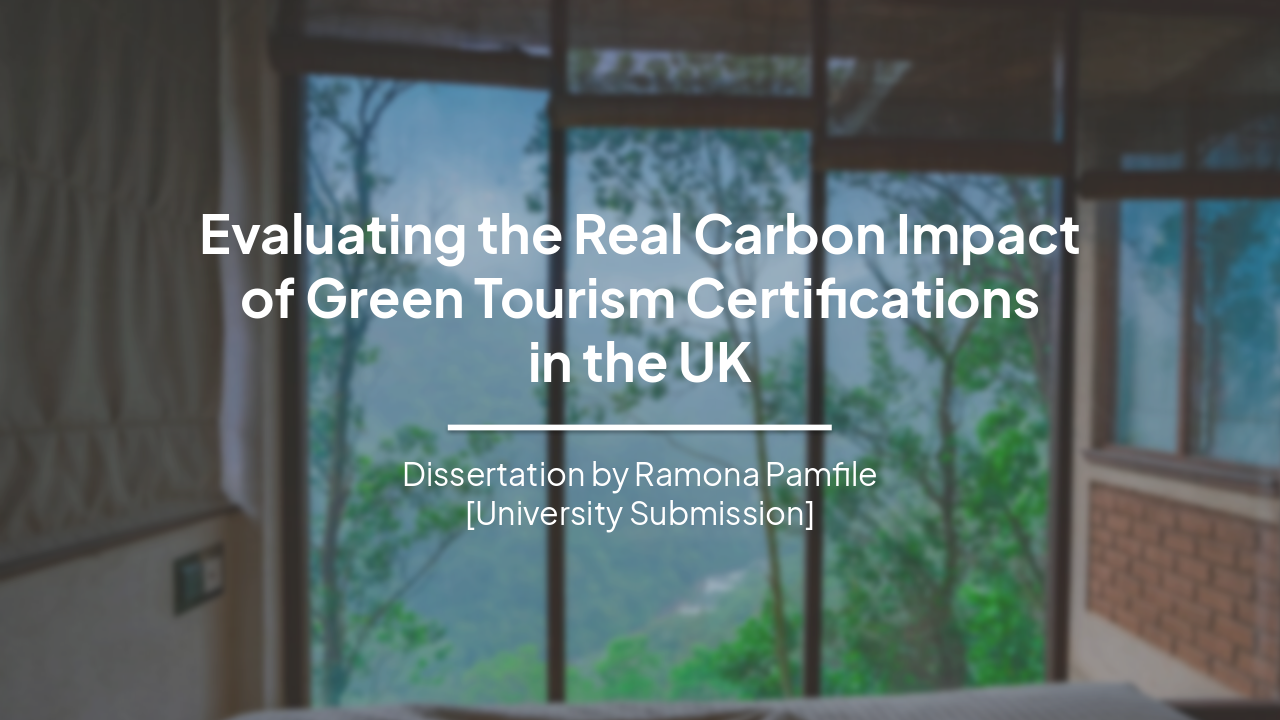
Slide 1 - Evaluating the Real Carbon Impact
of Green Tourism Certifications
in the UK
Slide 2 of 13

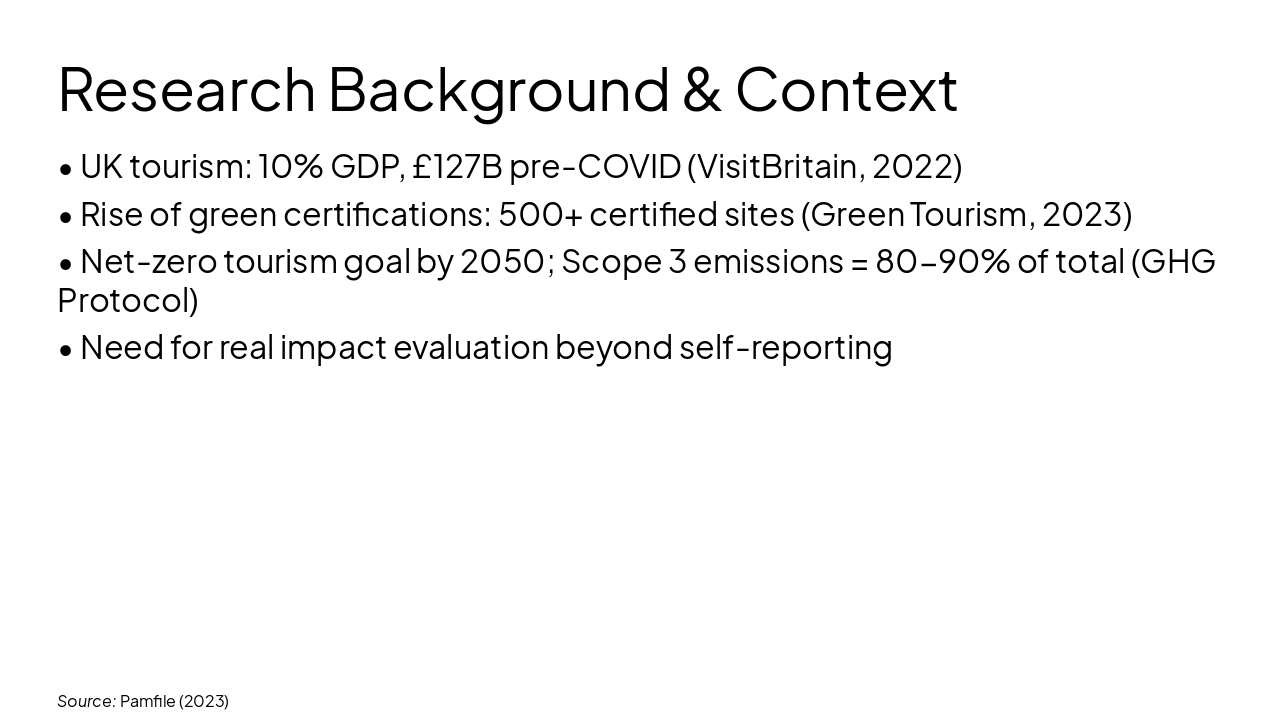
Slide 2 - Research Background & Context

  • UK tourism: 10% GDP, £127B pre-COVID (VisitBritain, 2022)
  • Rise of green certifications: 500+ certified sites (Green Tourism, 2023)
  • Net-zero tourism goal by 2050; Scope 3 emissions = 80-90% of total (GHG Protocol)
  • Need for real impact evaluation beyond self-reporting

Source: Pamfile (2023)

Slide 2 - Research Background & Context
Slide 3 of 13

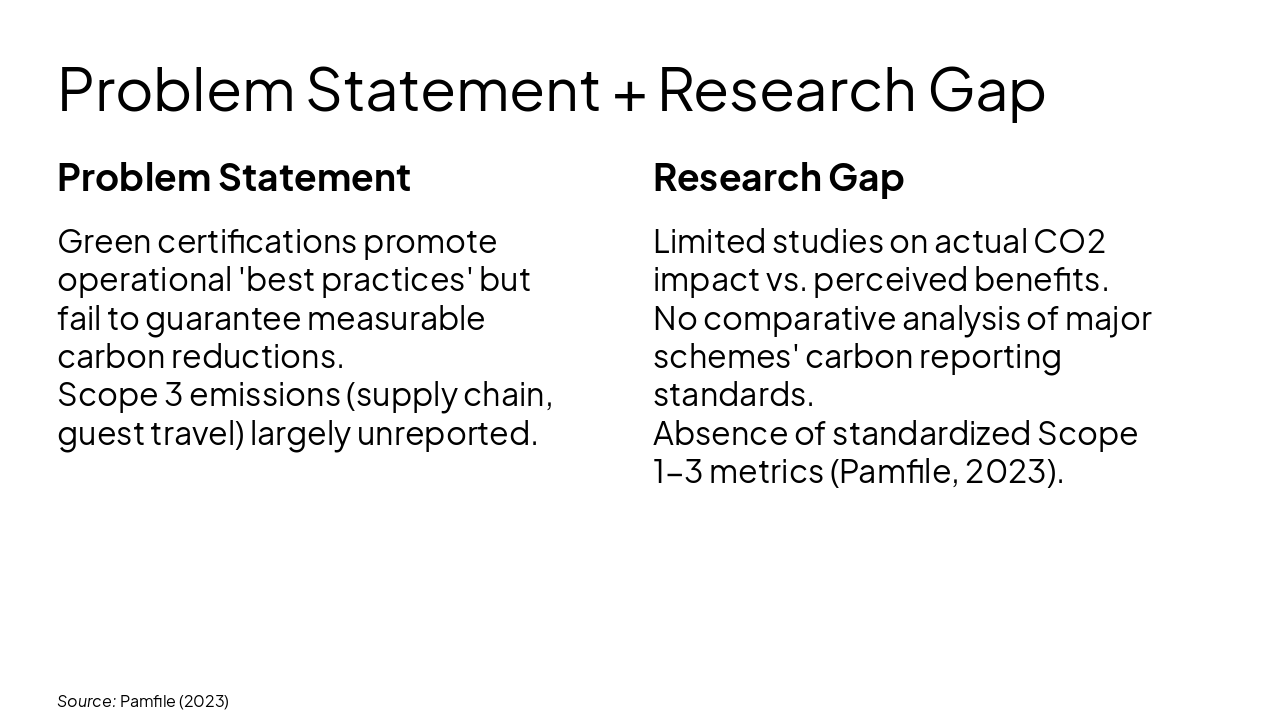
Slide 3 - Problem Statement + Research Gap

Problem Statement Green certifications promote operational 'best practices' but fail to guarantee measurable carbon reductions. Scope 3 emissions (supply chain, guest travel) largely unreported.

Research Gap Limited studies on actual CO2 impact vs. perceived benefits. No comparative analysis of major schemes' carbon reporting standards. Absence of standardized Scope 1-3 metrics (Pamfile, 2023).

Source: Pamfile (2023)

Slide 3 - Problem Statement + Research Gap
Slide 4 of 13

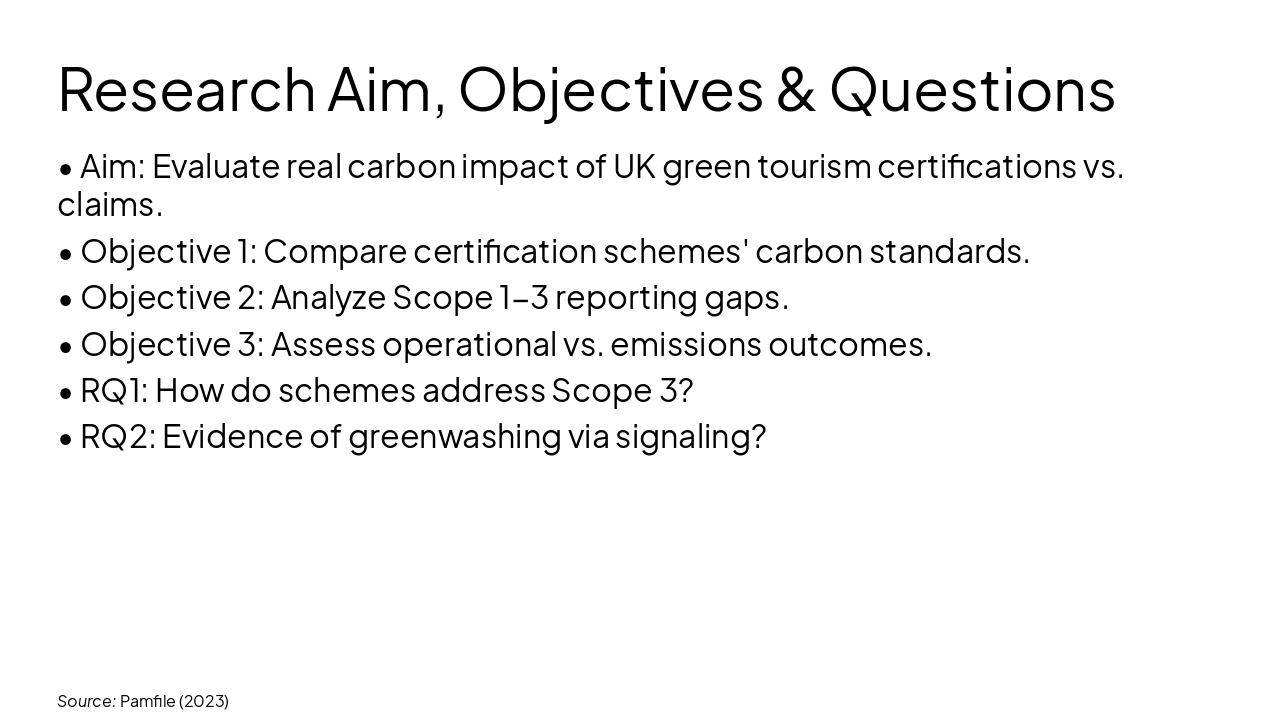
Slide 4 - Research Aim, Objectives & Questions

  • Aim: Evaluate real carbon impact of UK green tourism certifications vs. claims.
  • Objective 1: Compare certification schemes' carbon standards.
  • Objective 2: Analyze Scope 1-3 reporting gaps.
  • Objective 3: Assess operational vs. emissions outcomes.
  • RQ1: How do schemes address Scope 3?
  • RQ2: Evidence of greenwashing via signaling?

Source: Pamfile (2023)

Slide 4 - Research Aim, Objectives & Questions
Slide 5 of 13

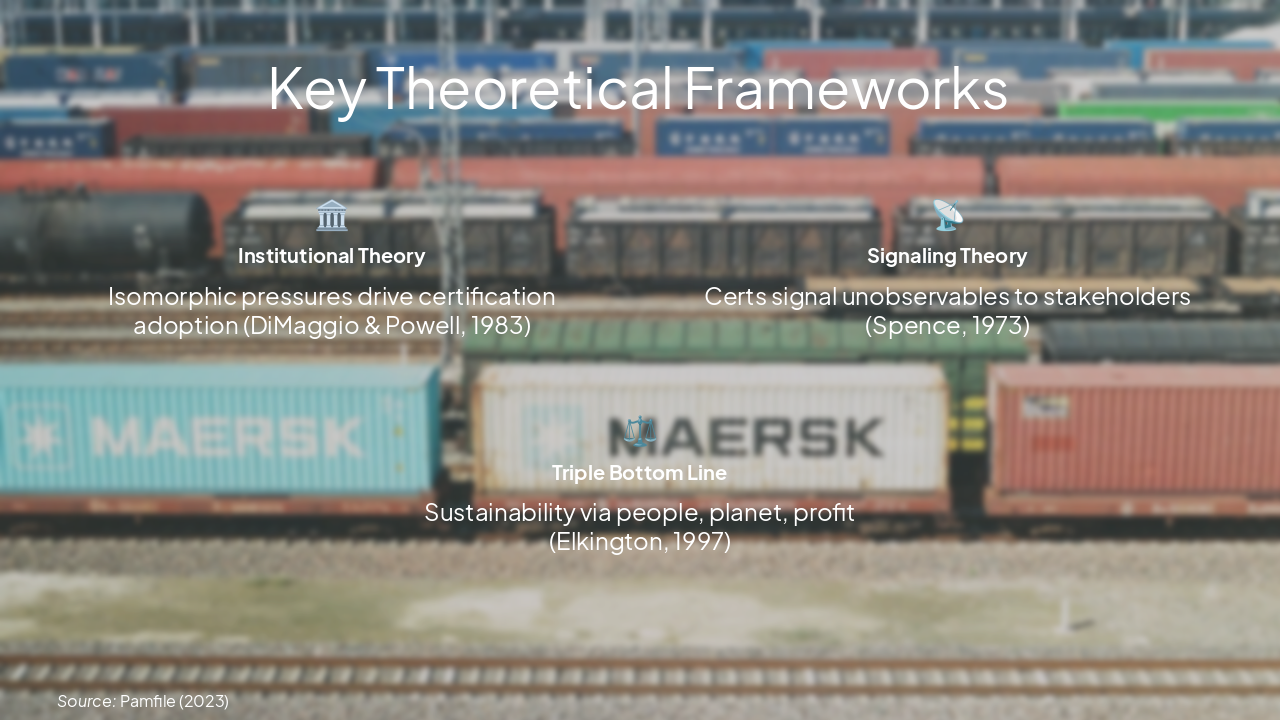
Slide 5 - Key Theoretical Frameworks

🏛️ Institutional Theory Isomorphic pressures drive certification adoption (DiMaggio & Powell, 1983)

📡 Signaling Theory Certs signal unobservables to stakeholders (Spence, 1973)

⚖️ Triple Bottom Line Sustainability via people, planet, profit (Elkington, 1997)

---

Photo by krzhck on Unsplash

Source: Pamfile (2023)

Slide 5 - Key Theoretical Frameworks
Slide 6 of 13

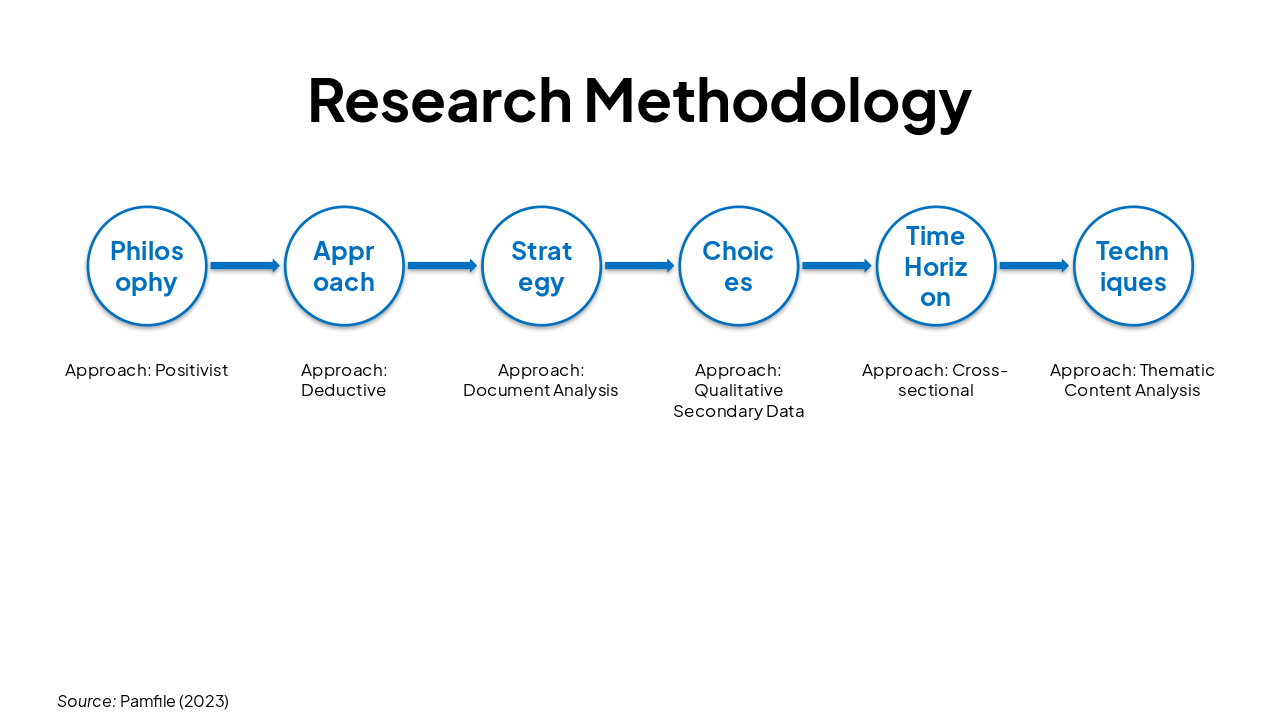
Slide 6 - Research Methodology

LayerApproach
PhilosophyPositivist
ApproachDeductive
StrategyDocument Analysis
ChoicesQualitative Secondary Data
Time HorizonCross-sectional
TechniquesThematic Content Analysis

Source: Pamfile (2023)

Slide 6 - Research Methodology
Slide 7 of 13

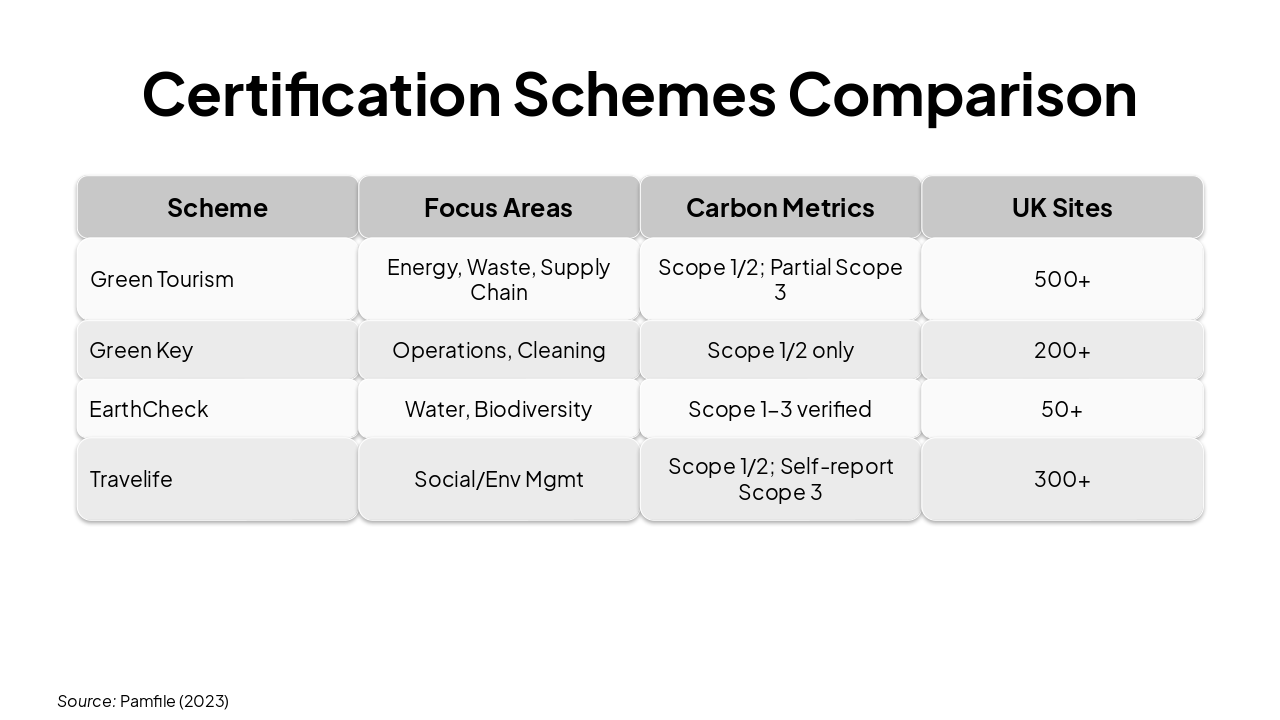
Slide 7 - Certification Schemes Comparison

SchemeFocus AreasCarbon MetricsUK Sites
Green TourismEnergy, Waste, Supply ChainScope 1/2; Partial Scope 3500+
Green KeyOperations, CleaningScope 1/2 only200+
EarthCheckWater, BiodiversityScope 1-3 verified50+
TravelifeSocial/Env MgmtScope 1/2; Self-report Scope 3300+

Source: Pamfile (2023)

Slide 7 - Certification Schemes Comparison
Slide 8 of 13

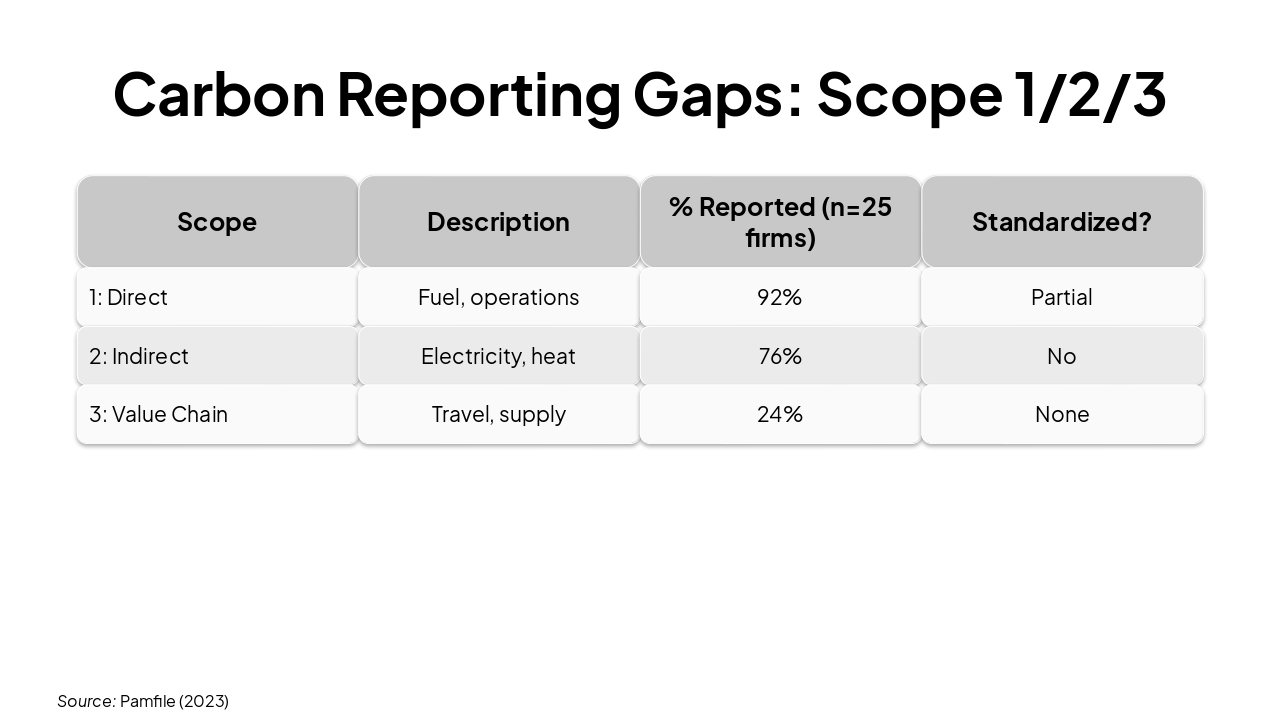
Slide 8 - Carbon Reporting Gaps: Scope 1/2/3

ScopeDescription% Reported (n=25 firms)Standardized?
1: DirectFuel, operations92%Partial
2: IndirectElectricity, heat76%No
3: Value ChainTravel, supply24%None

Source: Pamfile (2023)

Slide 8 - Carbon Reporting Gaps: Scope 1/2/3
Slide 9 of 13

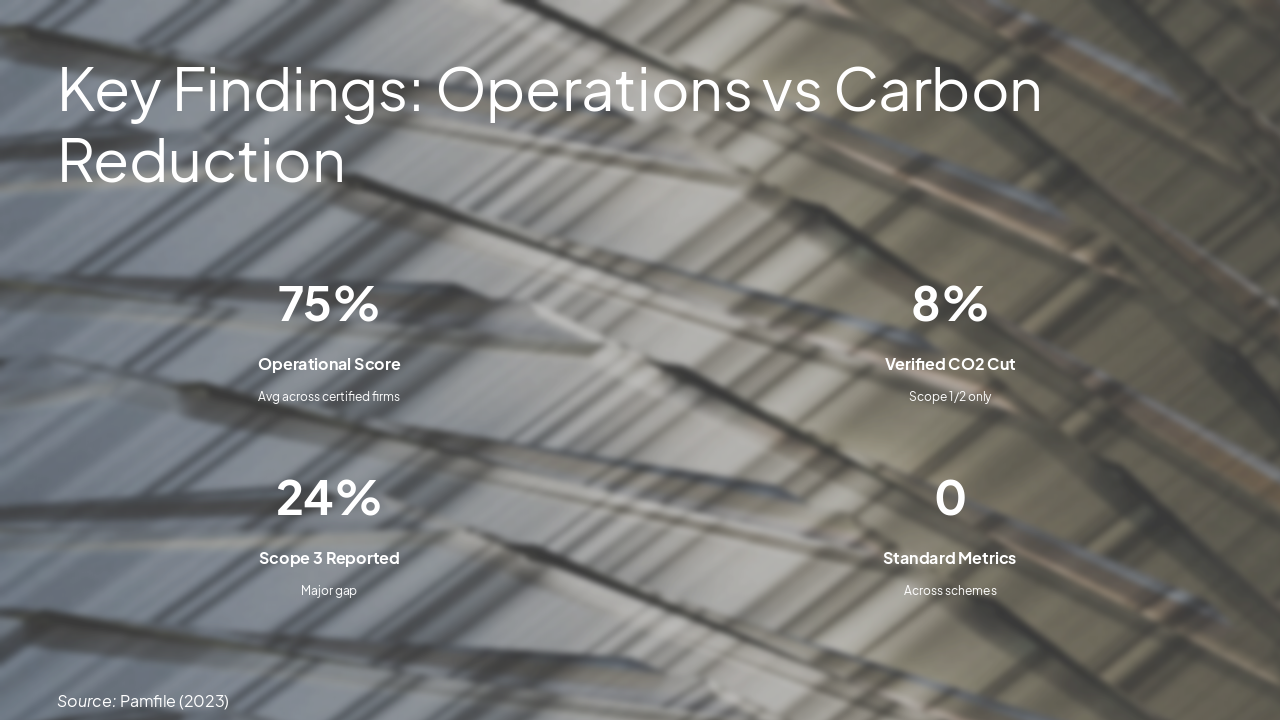
Slide 9 - Key Findings: Operations vs Carbon Reduction

  • 75%: Operational Score
  • 8%: Verified CO2 Cut
  • 24%: Scope 3 Reported
  • 0: Standard Metrics

---

Photo by Logan Voss on Unsplash

Source: Pamfile (2023)

Slide 9 - Key Findings: Operations vs Carbon Reduction
Slide 10 of 13

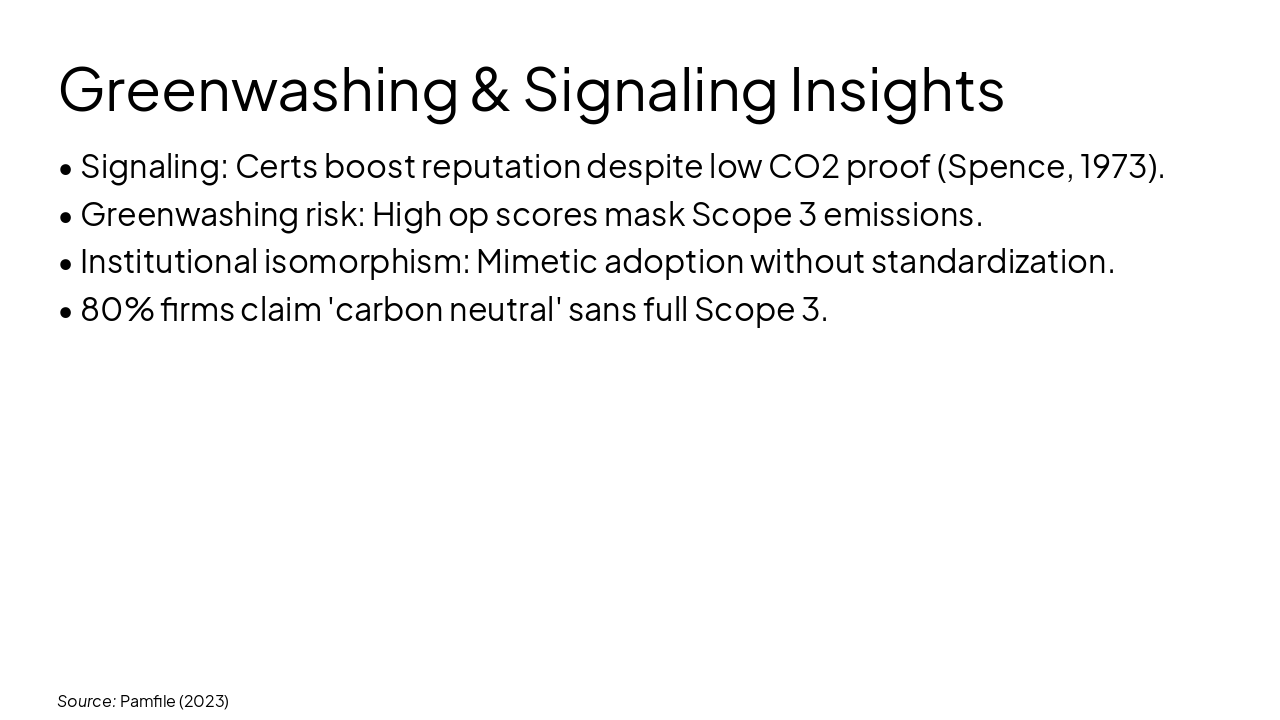
Slide 10 - Greenwashing & Signaling Insights

  • Signaling: Certs boost reputation despite low CO2 proof (Spence, 1973).
  • Greenwashing risk: High op scores mask Scope 3 emissions.
  • Institutional isomorphism: Mimetic adoption without standardization.
  • 80% firms claim 'carbon neutral' sans full Scope 3.

Source: Pamfile (2023)

Slide 10 - Greenwashing & Signaling Insights
Slide 11 of 13

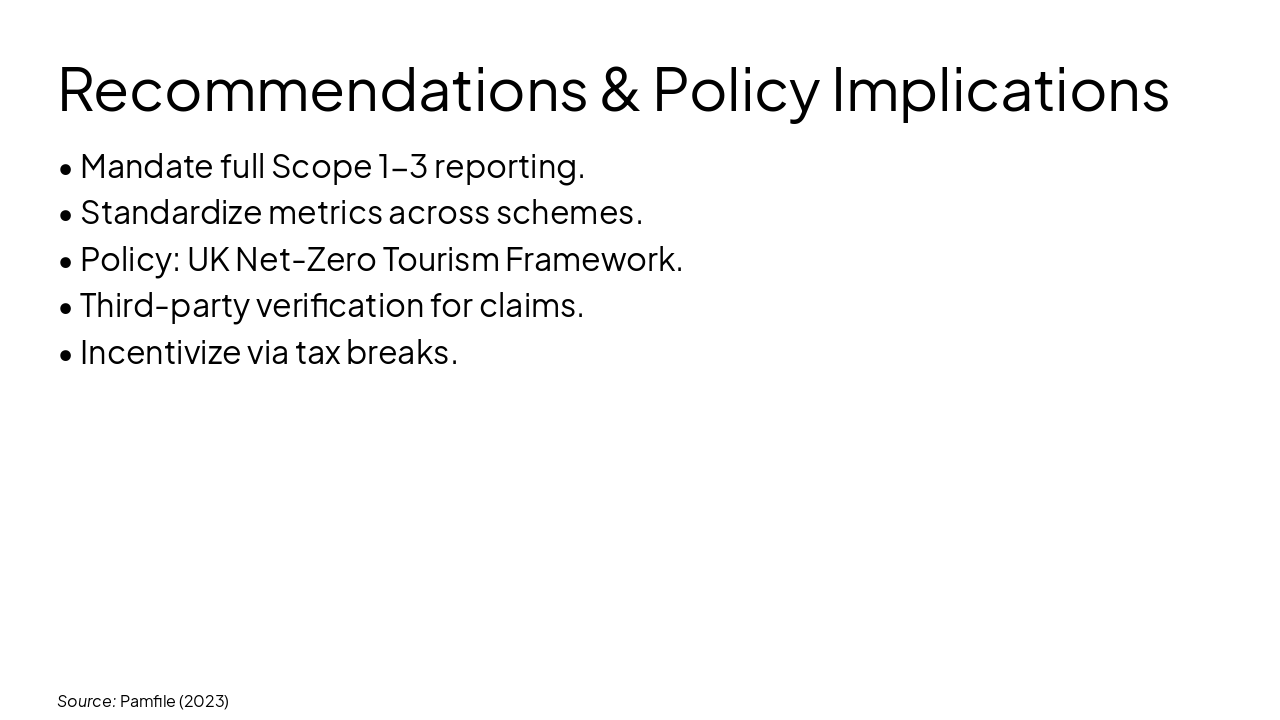
Slide 11 - Recommendations & Policy Implications

  • Mandate full Scope 1-3 reporting.
  • Standardize metrics across schemes.
  • Policy: UK Net-Zero Tourism Framework.
  • Third-party verification for claims.
  • Incentivize via tax breaks.

Source: Pamfile (2023)

Slide 11 - Recommendations & Policy Implications
Slide 12 of 13

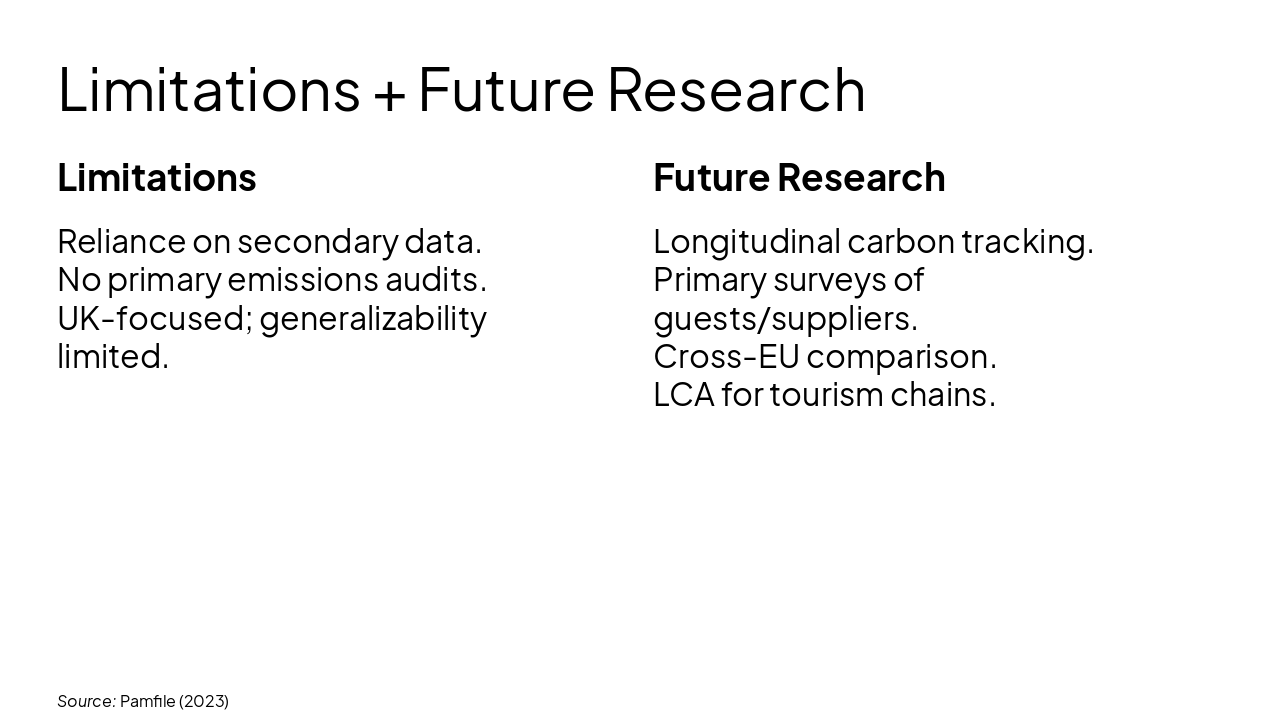
Slide 12 - Limitations + Future Research

Limitations Reliance on secondary data. No primary emissions audits. UK-focused; generalizability limited.

Future Research Longitudinal carbon tracking. Primary surveys of guests/suppliers. Cross-EU comparison. LCA for tourism chains.

Source: Pamfile (2023)

Slide 12 - Limitations + Future Research
Slide 13 of 13

Slide 13 - Conclusion & Thank You

Green certifications show promise but must prioritize verified Scope 3 reductions and standardization for true impact.

Thank you | Questions? | Ramona Pamfile

---

Photo by Zhen Yao on Unsplash

Source: Pamfile (2023)

Slide 13 - Conclusion & Thank You

Discover More Presentations

Explore thousands of AI-generated presentations for inspiration

Browse Presentations
Powered by AI

Create Your Own Presentation

Generate professional presentations in seconds with Karaf's AI. Customize this presentation or start from scratch.

Create New Presentation

Powered by Karaf.ai — AI-Powered Presentation Generator