Unlocking Biodiversity: Essentials and Impacts

Generated from prompt:

Make a presentation about Lesson 1: Biodiversity Defined Etymological Meaning: Coined by Edward O. Wilson in 1985, from bios (life) and diversity (variety). Real Definition: The variety of all living organisms on Earth and the ecosystems they form. It includes genetic, species, and ecosystem diversity, which all interact to keep the planet habitable. 🧠 Key Idea: Biodiversity is not just the number of species—it’s the complex web of life that keeps ecosystems balanced and functional. Lesson 2: Importance of Biodiversity in an Ecosystem Biodiversity keeps ecosystems stable, resilient, and productive. It supports vital ecosystem services like: Food, air, and water supply Soil formation and nutrient cycling Climate regulation and natural disaster recovery Levels of Biodiversity: Genetic Diversity – Variation within species; enables adaptation to changing environments. Species Diversity – Number and variety of species in a habitat; greater species diversity means a healthier ecosystem. Ecosystem Diversity – Variety of ecosystems (forests, oceans, deserts); high ecosystem diversity supports more life and stability. 🌱 Remember: Ecosystem health improves as biodiversity increases. Lesson 3: Importance of Biodiversity to Human Lives Humans rely on biodiversity for survival—it provides: Goods: food, shelter, medicine, air, and water Regulating Services: oxygen production, water purification, soil formation, climate control, and disease regulation Cultural Value: connects human traditions and beliefs to the natural world (biocultural relationship) Biodiversity and Human Health Biodiversity forms the foundation of human health by: Supplying medicines and genetic resources Supporting disease control and ecosystem balance Ensuring food and water security Promoting physical and mental well-being through nature 🩺 Key Message: Healthy ecosystems = healthy people. Protecting biodiversity means protecting life itself.

This presentation explores biodiversity's definition, coined by E.O. Wilson in 1985 as life's variety across genetic, species, and ecosystem levels. It highlights its role in ecosystem stability, serv

November 16, 202511 slides
Slide 1 of 11

Slide 1 - Understanding Biodiversity: Lessons 1-3

This title slide introduces the presentation titled "Understanding Biodiversity: Lessons 1-3," focusing on foundational concepts in the subject. The subtitle highlights that the content spans three key lessons to introduce the topic comprehensively.

Understanding Biodiversity: Lessons 1-3

Introducing the topic across three key lessons
Slide 1
Slide 2 of 11

Slide 2 - Lesson 1: Biodiversity Defined

This section header slide introduces Lesson 1 on "Biodiversity Defined," marking it as section 01 in the presentation. It features a subtitle that highlights an exploration of the term's etymology and its fundamental meaning as the variety of life on Earth.

Lesson 1: Biodiversity Defined

01

Biodiversity Defined

Exploring the etymology and core definition of life's variety on Earth

Slide 2
Slide 3 of 11

Slide 3 - Etymological Meaning and Real Definition

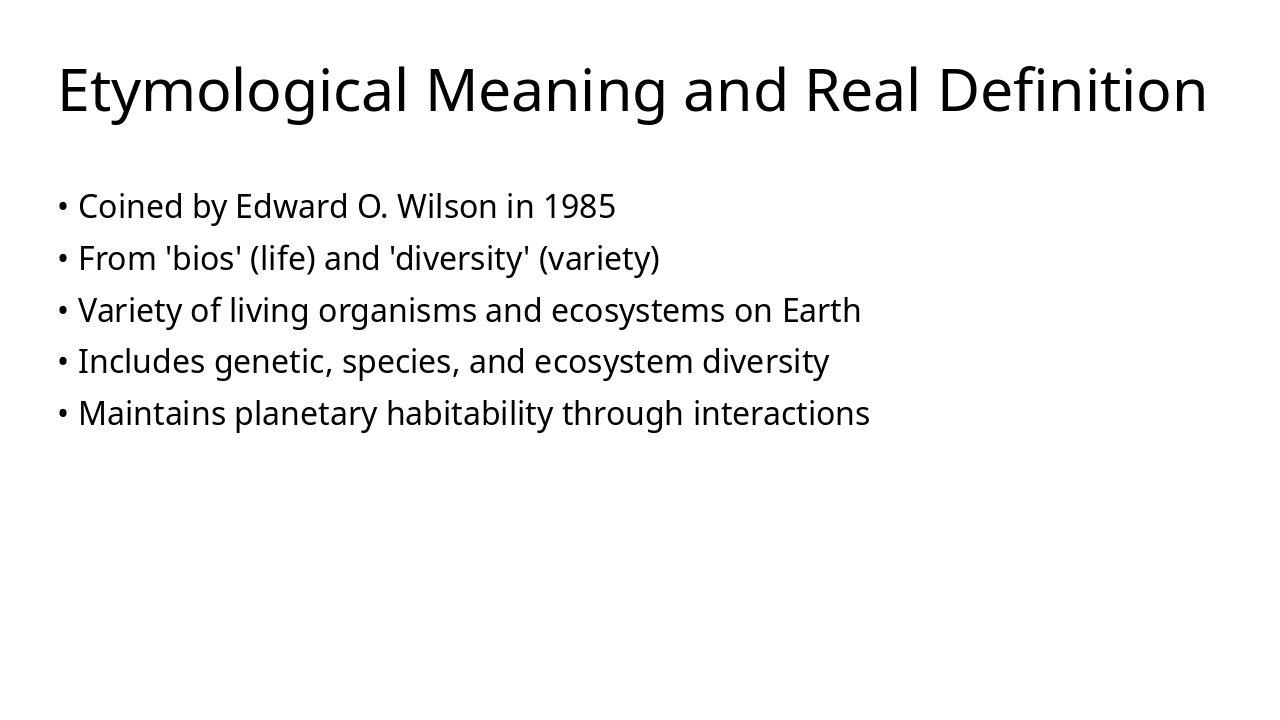
The term "biodiversity" was coined by Edward O. Wilson in 1985, derived from the Greek "bios" meaning life and "diversity" meaning variety, referring to the overall variety of living organisms and ecosystems on Earth. It encompasses genetic, species, and ecosystem diversity, which sustains planetary habitability through interconnected interactions.

Etymological Meaning and Real Definition

  • Coined by Edward O. Wilson in 1985
  • From 'bios' (life) and 'diversity' (variety)
  • Variety of living organisms and ecosystems on Earth
  • Includes genetic, species, and ecosystem diversity
  • Maintains planetary habitability through interactions
Slide 3
Slide 4 of 11

Slide 4 - Key Idea on Biodiversity

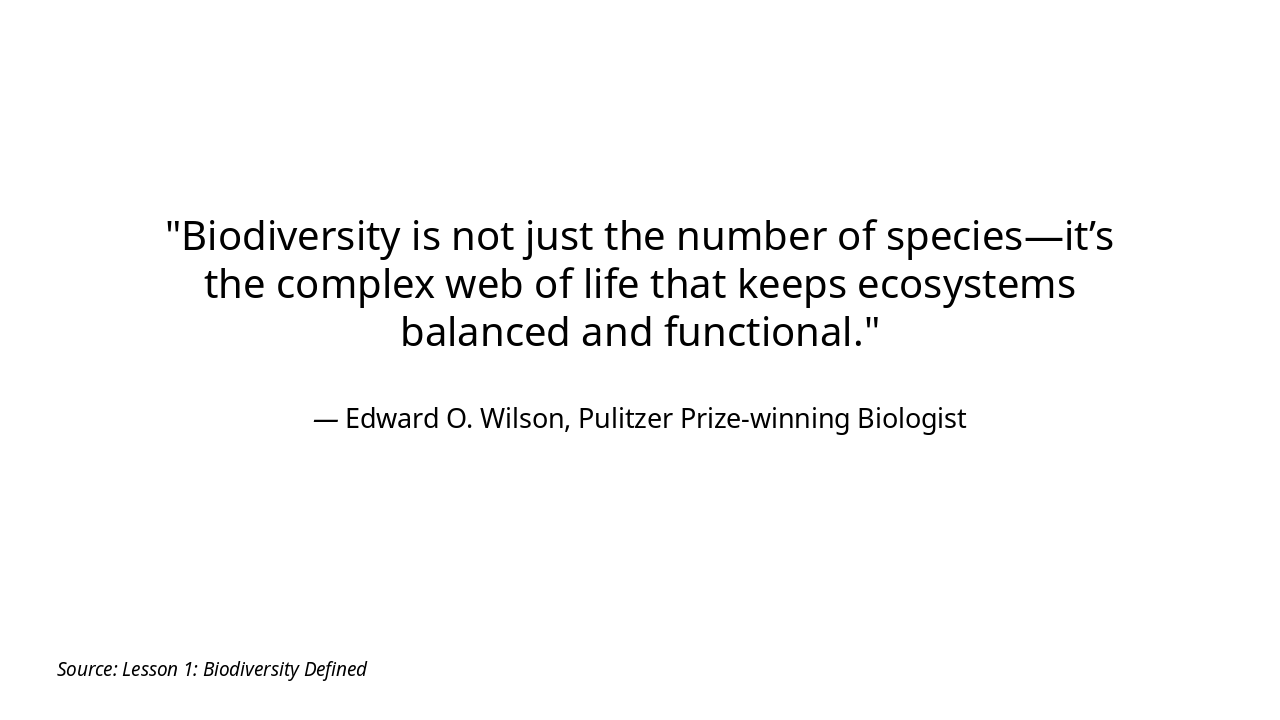
The slide, titled "Key Idea on Biodiversity," features a quote from Pulitzer Prize-winning biologist Edward O. Wilson emphasizing that biodiversity extends beyond merely counting species to encompass the intricate web of life sustaining ecosystem balance and functionality. This quote underscores the vital role of interconnected biological diversity in maintaining healthy environments.

Key Idea on Biodiversity

> Biodiversity is not just the number of species—it’s the complex web of life that keeps ecosystems balanced and functional.

— Edward O. Wilson, Pulitzer Prize-winning Biologist

Source: Lesson 1: Biodiversity Defined

Slide 4
Slide 5 of 11

Slide 5 - Lesson 2: Importance of Biodiversity in an Ecosystem

This section header slide introduces Lesson 2, focusing on the importance of biodiversity within ecosystems. It highlights how biodiversity promotes stability, resilience, and vital services that sustain life.

Lesson 2: Importance of Biodiversity in an Ecosystem

02

Importance of Biodiversity in an Ecosystem

How biodiversity ensures ecosystem stability, resilience, and essential services for life

--- Speaker Notes: Biodiversity maintains ecosystem stability by supporting services like food production, water purification, climate regulation, and resilience to changes. Highlight genetic, species, and ecosystem diversity levels.

Slide 5
Slide 6 of 11

Slide 6 - Ecosystem Services Supported by Biodiversity

Biodiversity supports key ecosystem services by maintaining stability, resilience, and productivity, while providing essential supplies like food, air, and water. It also enables soil formation, nutrient cycling, climate regulation, and aids in disaster recovery.

Ecosystem Services Supported by Biodiversity

  • Maintains ecosystem stability, resilience, and productivity
  • Provides essential food, air, and water supplies
  • Supports soil formation and nutrient cycling
  • Regulates climate and aids disaster recovery
Slide 6
Slide 7 of 11

Slide 7 - Levels of Biodiversity

Biodiversity encompasses genetic diversity, which refers to variations within species that aid adaptation to environmental changes, and species diversity, which measures the number and variety of species in a habitat to promote ecosystem health. It also includes ecosystem diversity, the range of habitats like forests, oceans, and deserts, where greater variety enhances stability and supports more life.

Levels of Biodiversity

Genetic & Species DiversityEcosystem Diversity
Genetic Diversity: Variation within species; enables adaptation to changing environments. Species Diversity: Number and variety of species in a habitat; greater diversity means a healthier ecosystem.Variety of ecosystems (forests, oceans, deserts); high diversity supports more life and stability. Ecosystem health improves as biodiversity increases. 🌱
Slide 7
Slide 8 of 11

Slide 8 - Lesson 3: Importance of Biodiversity to Human Lives

Lesson 3 focuses on the importance of biodiversity to human lives, highlighting its vital role in our survival and health. The slide serves as a section header, introducing this key topic under the subtitle "Biodiversity's Vital Role in Human Survival and Health."

Lesson 3: Importance of Biodiversity to Human Lives

Lesson 3

Importance of Biodiversity to Human Lives

Biodiversity's Vital Role in Human Survival and Health

Slide 8
Slide 9 of 11

Slide 9 - Benefits to Humans

Humans benefit from nature through essential goods like food, shelter, medicine, air, and water. Additionally, it provides regulating services such as oxygen production, water purification, soil formation, climate control, and disease regulation, while offering cultural value via biocultural relationships that connect traditions to the natural world.

Benefits to Humans

  • Provides essential goods: food, shelter, medicine, air, and water.
  • Delivers regulating services: oxygen production, water purification, soil formation, climate control, and disease regulation.
  • Offers cultural value: connects human traditions to nature through biocultural relationships.
Slide 9
Slide 10 of 11

Slide 10 - Biodiversity and Human Health

Biodiversity provides essential medicines, genetic resources for health innovations, and supports disease control by maintaining ecosystem balance. It also ensures food and water security while promoting physical and mental well-being through interactions with nature.

Biodiversity and Human Health

  • Supplies medicines and genetic resources for health innovations
  • Supports disease control through ecosystem balance
  • Ensures food and water security for human survival
  • Promotes physical and mental well-being via nature interaction
Slide 10
Slide 11 of 11

Slide 11 - Key Message and Conclusion

The slide emphasizes that healthy ecosystems are essential for healthy people, and protecting biodiversity is crucial for safeguarding life itself. It concludes with a message that biodiversity sustains both planetary and human health, urging immediate action to preserve it for future generations.

Key Message and Conclusion

Healthy ecosystems = healthy people. Protecting biodiversity means protecting life itself.

Closing Message: Biodiversity sustains planetary and human health.

Call-to-Action: Act now to preserve biodiversity for future generations.

Source: Lesson 1-3: Biodiversity Defined and Its Importance

--- Speaker Notes: Emphasize the interconnectedness of biodiversity, ecosystems, and human health. End with a strong call to action to inspire audience engagement.

Slide 11
Powered by AI

Create Your Own Presentation

Generate professional presentations in seconds with Karaf's AI. Customize this presentation or start from scratch.

Create New Presentation

Powered by Karaf.ai — AI-Powered Presentation Generator