Advanced Persistent Threats (APTs): Stealth and Defense

Generated from prompt:

make a presentation about Advanced Persistent Threats (APTs) in the cybercrime space

Explore Advanced Persistent Threats (APTs) through definitions, core characteristics, attack vectors, global dwell-time impacts, real-world case studies like Helix Kitten and Hainan APT Group, and essential strategies for detection, response, and pro

March 17, 202610 slides
Slide 1 of 10

Slide 1 - Advanced Persistent Threats (APTs)

Advanced Persistent Threats (APTs)

Understanding Sophisticated Cyber Espionage and Targeted Attacks

---

Photo by Philipp Katzenberger on Unsplash
Slide 1 - Advanced Persistent Threats (APTs)
Slide 2 of 10

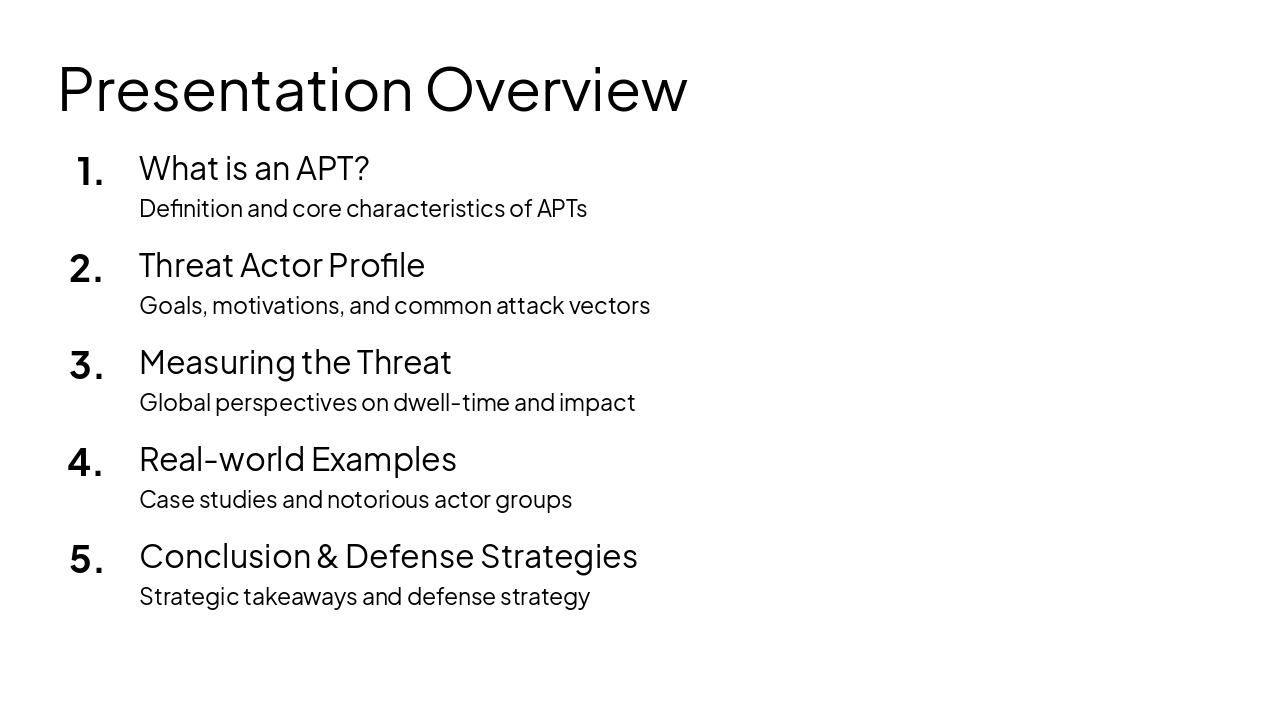
Slide 2 - Presentation Overview

  • What is an APT?: Definition and core characteristics of APTs
  • Threat Actor Profile: Goals, motivations, and common attack vectors
  • Measuring the Threat: Global perspectives on dwell-time and impact
  • Real-world Examples: Case studies and notorious actor groups
  • Conclusion & Defense Strategies: Strategic takeaways and defense strategy
Slide 2 - Presentation Overview
Slide 3 of 10

Slide 3 - Defining APTs

1

Defining APTs

What makes an Advanced Persistent Threat different?

---

Photo by Declan Sun on Unsplash

Slide 3 - Defining APTs
Slide 4 of 10

Slide 4 - Core Characteristics of APTs

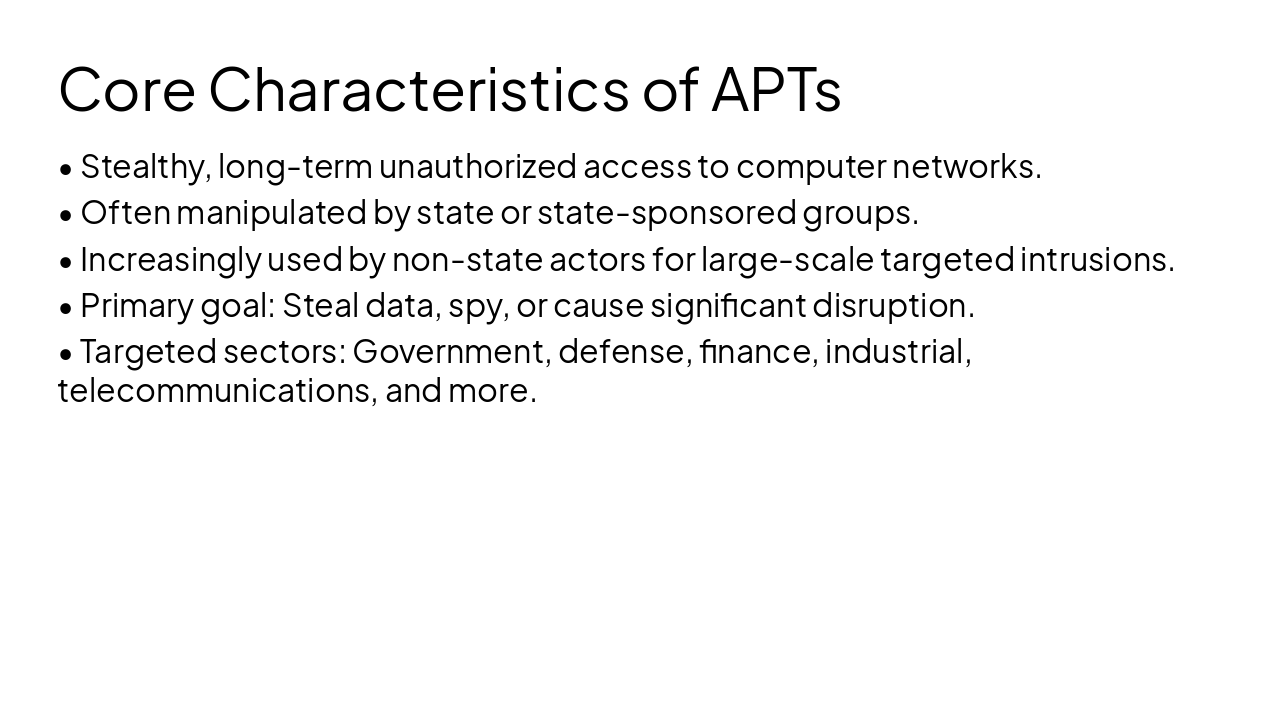
  • Stealthy, long-term unauthorized access to computer networks.
  • Often manipulated by state or state-sponsored groups.
  • Increasingly used by non-state actors for large-scale targeted intrusions.
  • Primary goal: Steal data, spy, or cause significant disruption.
  • Targeted sectors: Government, defense, finance, industrial, telecommunications, and more.
Slide 4 - Core Characteristics of APTs
Slide 5 of 10

Slide 5 - The Anatomy of the Threat

2

The Anatomy of the Threat

How these attackers operate and endure

---

Photo by Markus Spiske on Unsplash
Slide 5 - The Anatomy of the Threat
Slide 6 of 10

Slide 6 - Attack Vectors and Methods

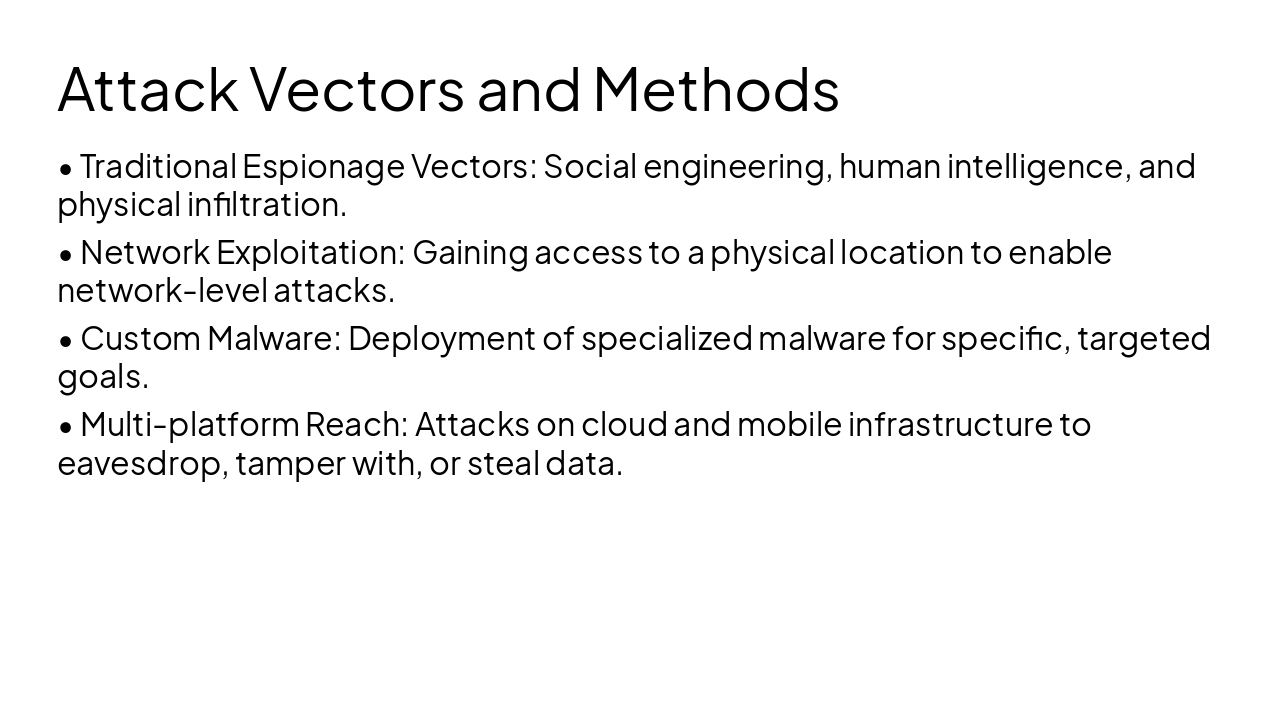
  • Traditional Espionage Vectors: Social engineering, human intelligence, and physical infiltration.
  • Network Exploitation: Gaining access to a physical location to enable network-level attacks.
  • Custom Malware: Deployment of specialized malware for specific, targeted goals.
  • Multi-platform Reach: Attacks on cloud and mobile infrastructure to eavesdrop, tamper with, or steal data.
Slide 6 - Attack Vectors and Methods
Slide 7 of 10

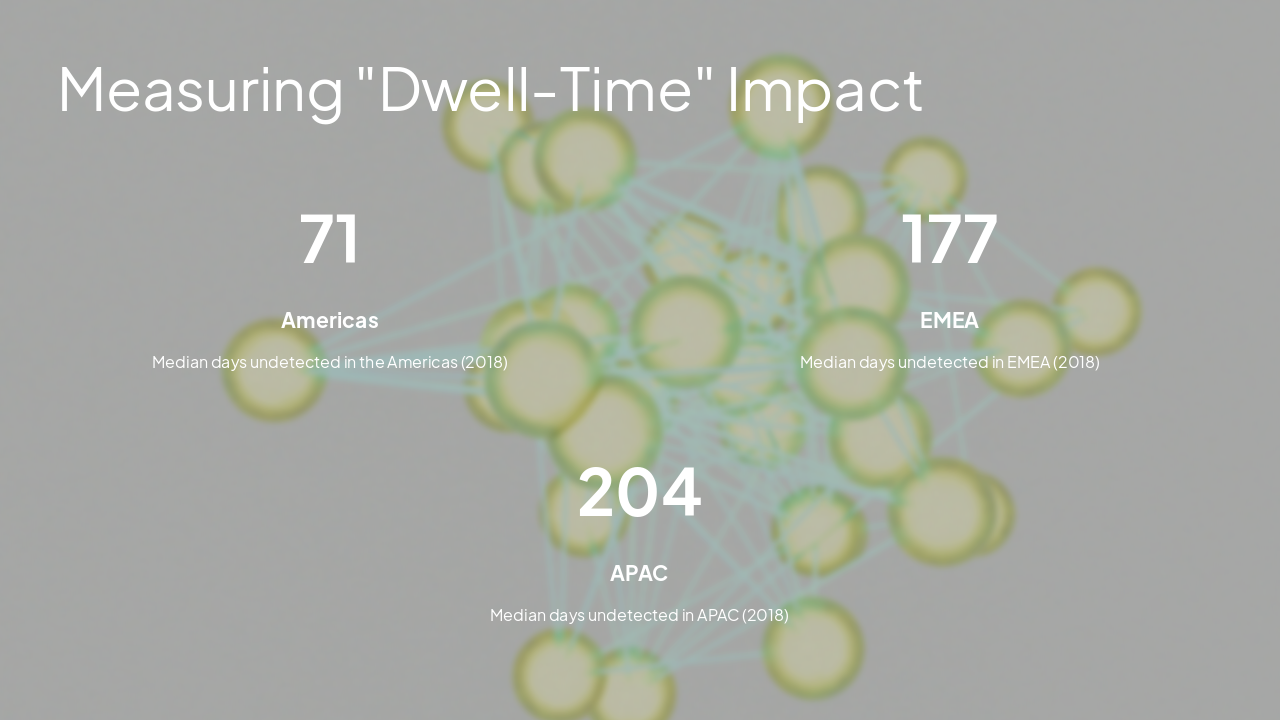
Slide 7 - Measuring "Dwell-Time" Impact

  • 71: Americas
  • 177: EMEA
  • 204: APAC

---

Photo by Logan Voss on Unsplash

Slide 7 - Measuring "Dwell-Time" Impact
Slide 8 of 10

Slide 8 - Case Studies & Known Actors

3

Case Studies & Known Actors

Examples of identified threat groups

---

Photo by NASA on Unsplash
Slide 8 - Case Studies & Known Actors
Slide 9 of 10

Slide 9 - Identified Threat Actors

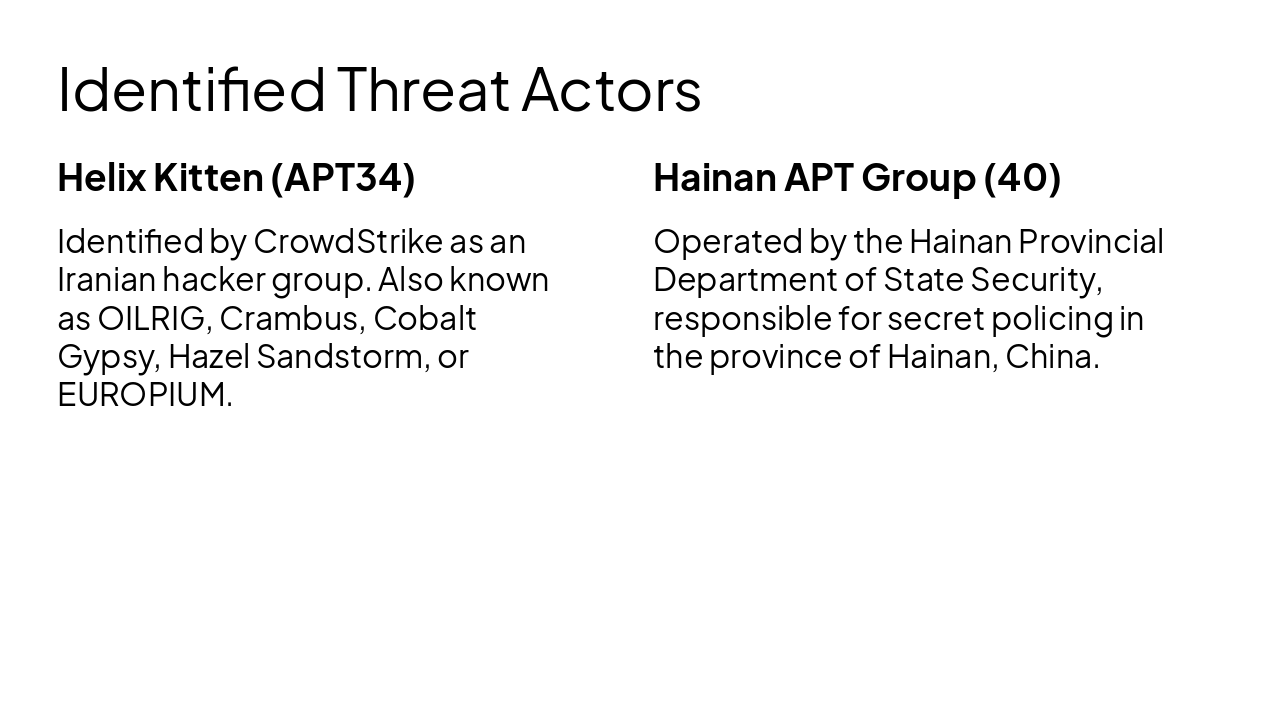
Helix Kitten (APT34) Identified by CrowdStrike as an Iranian hacker group. Also known as OILRIG, Crambus, Cobalt Gypsy, Hazel Sandstorm, or EUROPIUM.

Hainan APT Group (40) Operated by the Hainan Provincial Department of State Security, responsible for secret policing in the province of Hainan, China.
Slide 9 - Identified Threat Actors
Slide 10 of 10

Slide 10 - Summary & Recommendations

Staying Ahead of Advanced Threats

APTs represent a sophisticated evolution in cybercrime, characterized by long-term stealth, persistence, and strategic state-backed motivations. Strengthening defense against these threats requires continuous monitoring, rapid incident response, and proactive threat intelligence.

---

Photo by Kedibone Isaac Makhumisane on Unsplash
Slide 10 - Summary & Recommendations

Discover More Presentations

Explore thousands of AI-generated presentations for inspiration

Browse Presentations
Powered by AI

Create Your Own Presentation

Generate professional presentations in seconds with Karaf's AI. Customize this presentation or start from scratch.

Create New Presentation

Powered by Karaf.ai — AI-Powered Presentation Generator